
Art Lovers discussion
Paintings of the Same Subject
>
Cloudscapes/Storms/Sky
date newest »
newest »

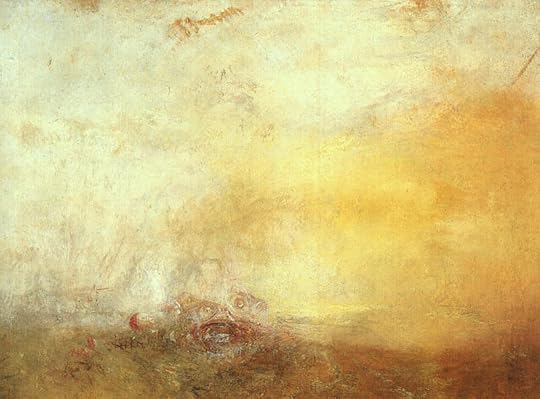
Sunrise with Sea Monsters
J.M.W. Turner

Sky Above Clouds IV
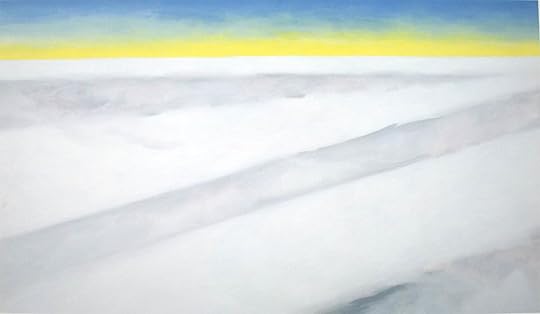
Above Clouds Again
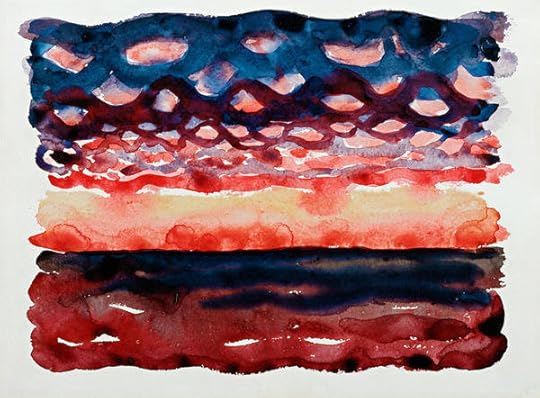
Sunrise and Little Clouds II
Georgia O'Keeffe
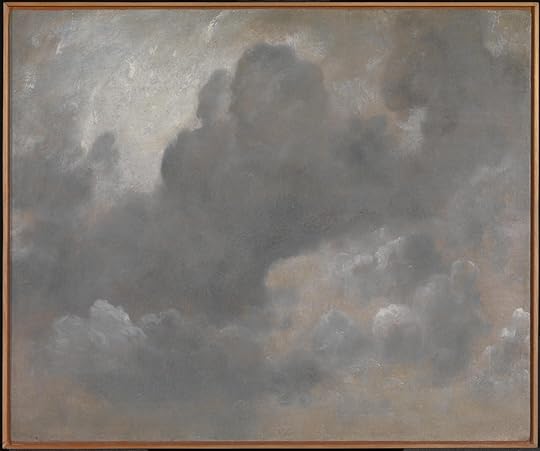
Cloud Study by John ConstableThe Tate
https://www.tate.org.uk/art/artworks/...
Constable’s oil studies of skies show a remarkable understanding of the structure and movement of clouds. Most also give a good impression of their three-dimensional volume.
The studies vary in size. The larger the scale the more difficult Constable found it to balance crispness of detail with speed of execution. This is why the larger cloud studies tend to be more generalized.
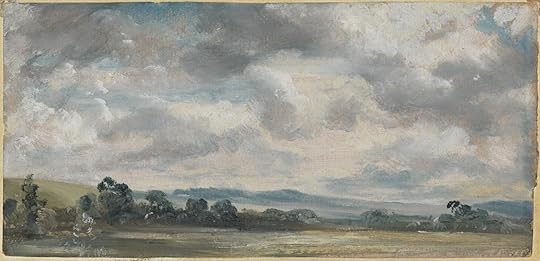
Harnham Ridge, Salisbury
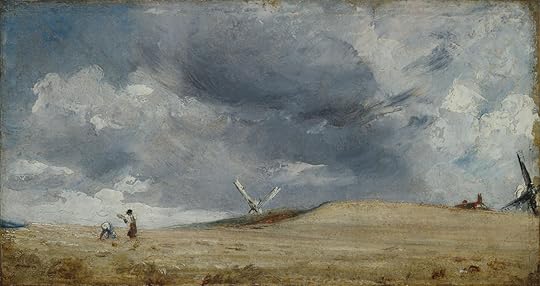
The Gleaners, Brighton
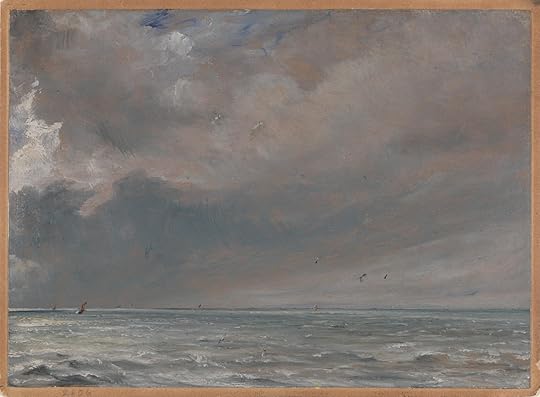
The Sea Near Brighton
 J.M.W. Turner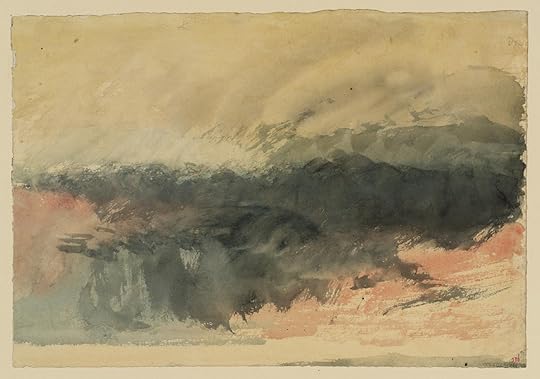
Storm Clouds at Dusk
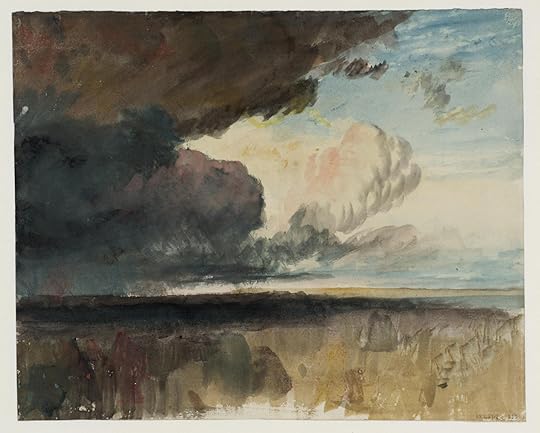
Rain Clouds Approaching over a Landscape
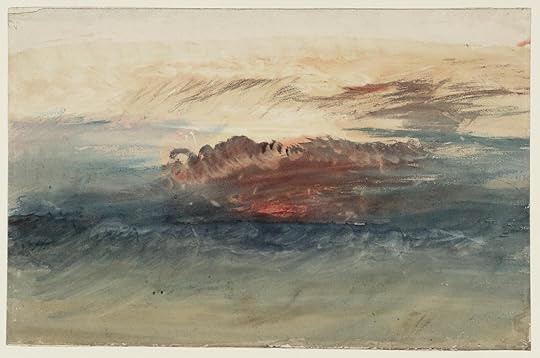
Sunset Behind Clouds over the Sea
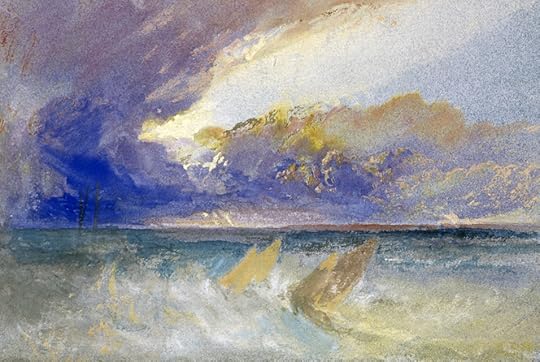
Sea View
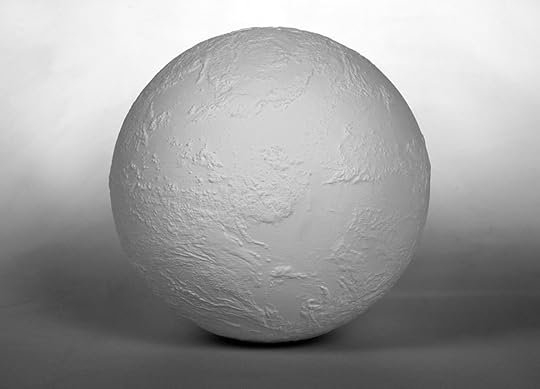
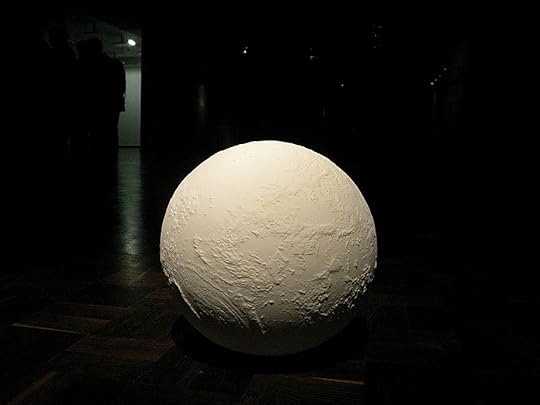
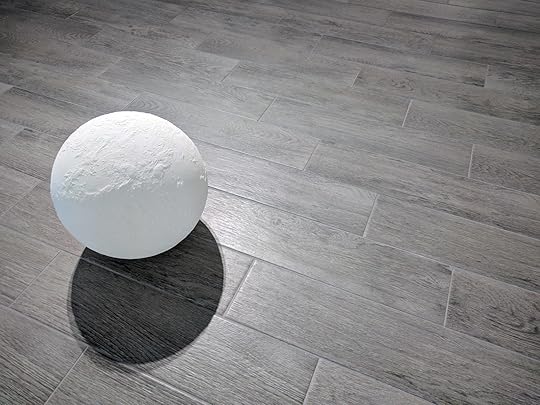
A Planetary Order (Terrestrial Cloud Globe)
A Planetary Order is a terrestrial globe showing clouds from one single moment in time, thereby subtly highlighting the fragility and interdependence of the Earth’s environmental systems.
Showing the earth’s cloud cover from one second in time, the shimmering white cloud globe freeze-frames the entire operation of the global atmospheric regime, and highlights how fragile the environmental (and informational) systems are that operate across the world. For the globe is created from raw information, being a physical visualization of real-time scientific data. One second’s worth of readings from all six cloud-monitoring satellites that are currently overseen by NASA and the European Space Agency was transformed into the delicate outlines and profiles of the clouds emerging across the surface of the sphere.
Unlike most of NASA’s own data visualizations, the globe features no added colour, only the sculpted whiteness of the raw material that throws a maze of faint shadows across the structure. From out of these shadows, in the right angles of light, emerge the global cloud patterns taken on 2 February 2009 at 0600 UTC precisely, and, under them, the implied outlines of the continents below, seen as though glimpsed through mist, or rather, through the mystifying quantity of atmospheric data that is currently being collected from the silent fleet of satellites in orbit some 36,000 kilometres out in space — an increasingly hertzian environment, where an electronic Babel of satellites, radio signals, and security frequencies vibrate with an invisible stream of man-made weather.Though far from earth’s surface, we have nevertheless made it back to something resembling Borges’s 1:1 scale Map of the Empire, for, by taking a single second’s worth of transmitted information, our entire world has been made anew, pristine, white, and wreathed in the haze of an artificial atmosphere, held aloft like the fossilized egg of a long-extinct species that is about to be brought back to life from a single rescued strand of DNA.
http://greyisgood.eu/globe/
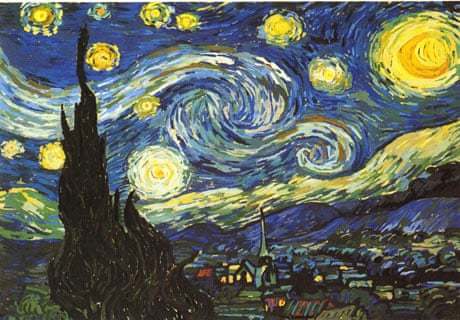
Starry Night
Vincent van Gogh
1889
Arguably the most famous sky in art, The Starry Night gives the view outside Van Gogh's sanatorium window at Saint- Rémy by dark, although it was painted the next day from memory. With its crackling cypresses and spiral constellations, its sun-like moon and its whirling clouds, this is an ecstatic expression of country skies as "purer than the suburbs or bars of Paris", in the artist's humble words. Swirls, dabs, hyphens and speeding vectors: the electrifying brushmarks seem to channel the flow of his sensations in a surging tide. The night sky, for Van Gogh, shines as bright as day.
https://www.theguardian.com/culture/2...
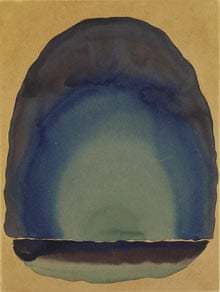 (For some reason this won't post any writing. Only the pictures when I include a pic in the comment. So here is the rest of the comment to the above painting:)
Skies have obvious affinities with pictures. They fill our field of vision like a painting - figurative when sun, moon and clouds are present, abstract when emptied of all but colour, light and air. Some artists simply want to paint those truths. Enthralled by the immense skies over Texas, Georgia O'Keeffe paints everything her eyes can take in at daybreak in this great arch of a watercolour, the last in a celebrated series from 1917 made near Amarillo. The sky hovers in her art between evocative naturalism and pure abstraction.
https://www.theguardian.com/culture/2...
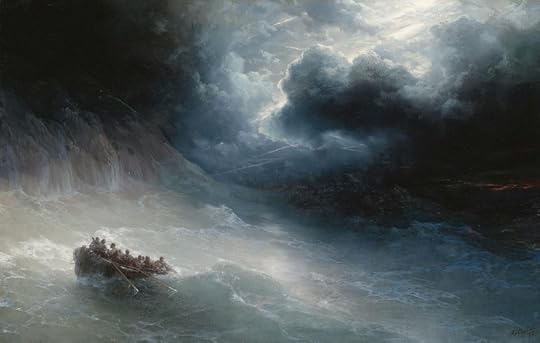
The Wrath of the Seas
Ivan Aivazovsky
1886
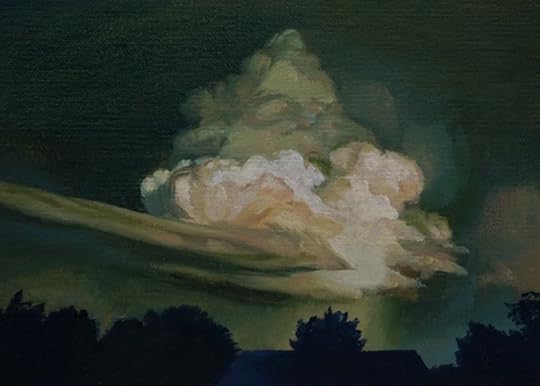
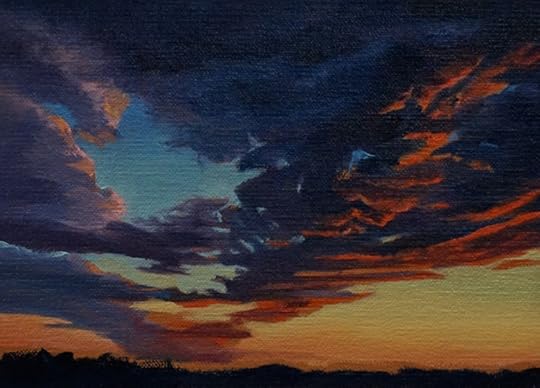

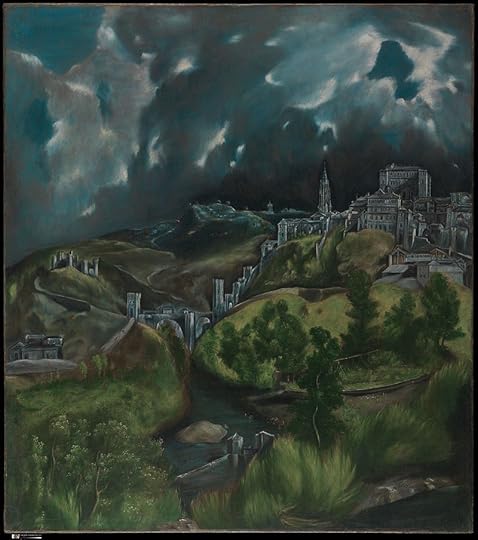 More Turner...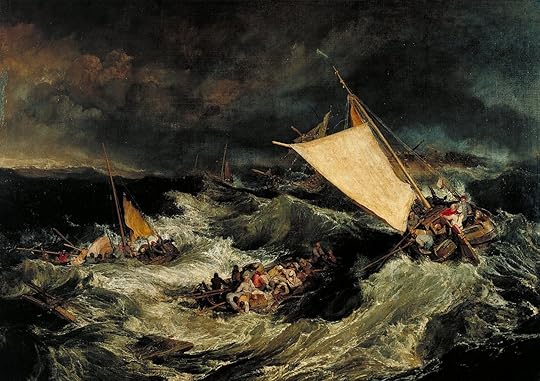
The shipwreck
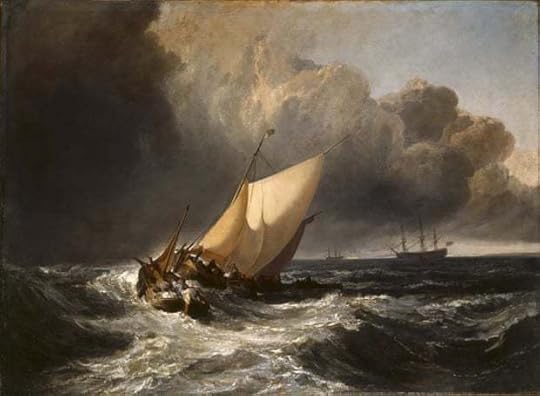
Dutch Boats in a Gale – otherwise known as The Bridgewater Sea Piece
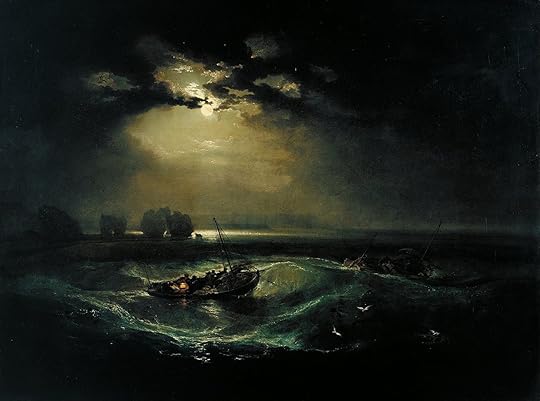
Fishermen at Sea
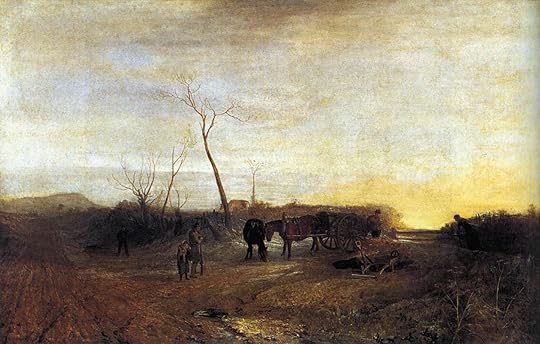
Frosty Morning
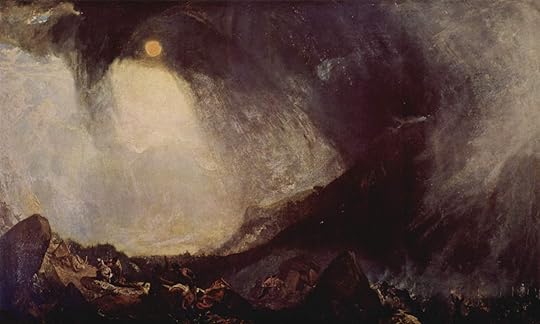
Snowstorm: Hannibal and his Men crossing the Alps
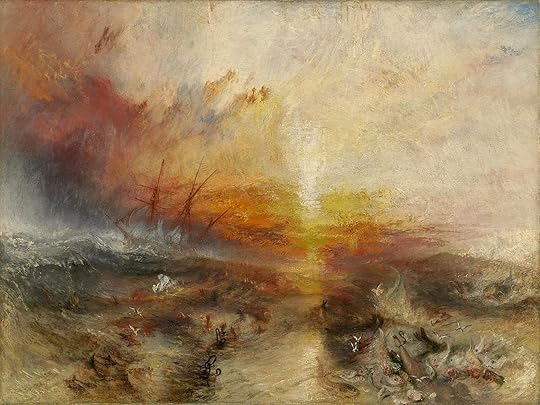
The Slave Ship
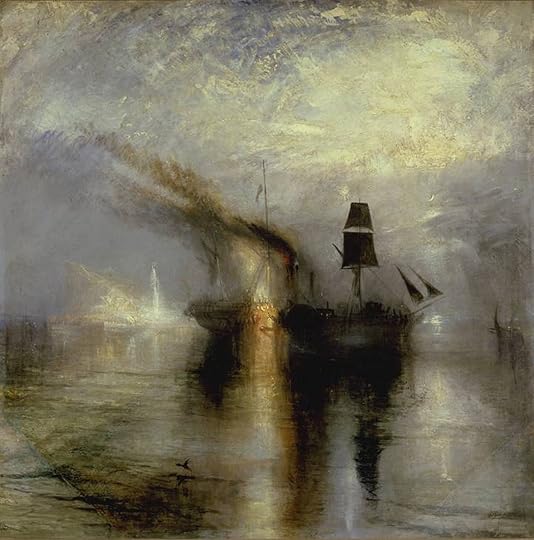
Peace-Burial at Sea
And for more neat paintings with incredible skies by Turner, Dirk posted many of them in his thread https://www.goodreads.com/topic/show/... you can check them out.

A highly complex cloudscape—as in some works of J. M. W. Turner, for example—within an otherwise conventional landscape painting, can sometimes seem like an abstract painting-within-a-painting, nearly obliterating the realistic setting with a grand display of gestural force. Some critics have explicitly cited 19th century cloudscapes and seascapes as precursors of the work of abstract expressionist artists such as Helen Frankenthaler.
Thus, commenting on a 1999 Turner exhibition, The New York Times art critic Roberta Smith writes that, in 1966, "the Museum of Modern Art established the artist's lush late works ... as precursors of both Impressionism and modernist abstraction. The current show is a feast of Frankenthaleresque plumes of color....". Smith further observes that such works "conflate extremes of sea and sky with extremes of painting, showing both to contain elements of the unfathomable and the unknown."
There are some later cloudscape paintings - for example, the famous cloudscapes of Georgia O'Keeffe - in which the clouds are seen from above, as though viewed from an airplane.
According to an essay at the website of the Metropolitan Museum of Art, "Among the most dramatic and well-known images of O'Keeffe's later years are her cloudscapes of the 1960s and '70s. Traveling around the world, she was exhilarated by the views seen from an airplane window."
https://en.wikipedia.org/wiki/Cloudsc...