
The History Book Club discussion
NORTH AMERICA (US/CANADA/ETC.)
>
PENNSYLVANIA
date newest »
newest »
 Mod
Mod
 Mod
Mod
 Mod
Mod
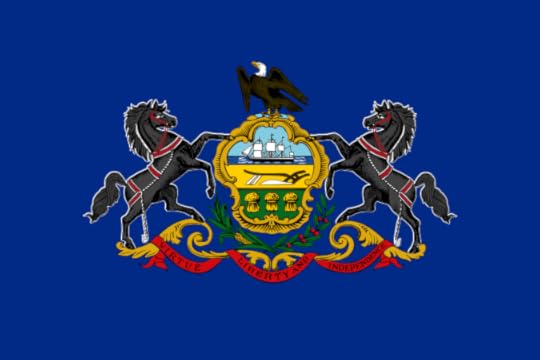
Nickname(s): Keystone State; Quaker State
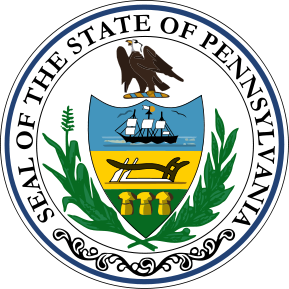
Motto(s): Virtue, Liberty and Independence
State song(s): "Pennsylvania"
"Pennsylvania" is the official state song of the Commonwealth of Pennsylvania. The song was written and composed by Eddie Khoury and Ronnie Bonner and serves as the official song for all public purposes. State Representative Frank L. Oliver introduced the bill for the song, and it was adopted by the General Assembly and signed into law by Governor Robert P. Casey on November 29, 1990.
Lyrics:
Pennsylvania, Pennsylvania,
Mighty is your name,
Steeped in glory and tradition,
Object of acclaim.
Where brave men fought the foe of freedom,
Tyranny decried,
Til the bell of independence
filled the countryside.
Chorus
Pennsylvania, Pennsylvania,
May your future be,
filled with honor everlasting
as your history.
Pennsylvania, Pennsylvania,
Blessed by God's own hand,
Birthplace of a mighty nation,
Keystone of the land.
Where first our country's flag unfolded,
Freedom to proclaim,
May the voices of tomorrow
glorify your name.
Chorus
Pennsylvania, Pennsylvania,
May your future be,
filled with honor everlasting
as your history.
Here it is being performed:
https://www.youtube.com/watch?v=gtQo-...
This is the PA State Song sung in 1988 by the Men's Chorale. Became State Song in 1991
Mod
 Mod
Mod
Spoken languages: English 90.1%
Spanish: 4.1%
Other: 5.8%[2]
Demonym Pennsylvanian
Capital Harrisburg
Largest city Philadelphia
Largest metro Delaware Valley
Area Ranked 33rd
- Total 46,055 sq mi
(119,283 km2)
- Width 280 miles (455 km)
- Length 160 miles (255 km)
- % water 2.7
- Latitude 39° 43′ to 42° 16′ N
- Longitude 74° 41′ to 80° 31′ W
Population Ranked 6th
- Total 12,787,209 (2014 est)[3]
- Density 284/sq mi (110/km2)
Ranked 9th
- Median household income US$48,562 (26th)
Elevation
- Highest point Mount Davis[4][5]
3,213 ft (979 m)
- Mean 1,100 ft (340 m)
- Lowest point Delaware River at Delaware border[4]
sea level
Before statehood Province of Pennsylvania
Admission to Union December 12, 1787 (2nd)
Governor Tom Corbett (R)
Lieutenant Governor Jim Cawley (R)
Legislature: General Assembly
- Upper house State Senate
- Lower house House of Representatives
U.S. Senators Bob Casey, Jr. (D) and Pat Toomey (R)
U.S. House delegation 13 Republicans, 5 Democrats (list)
Time zone Eastern: UTC −5/−4
Abbreviations PA, Pa. or Penna. US-PA
Website www.pa.gov
Mod
The U.S. state of Pennsylvania has 21 official emblems, as designated by the Pennsylvania General Assembly and signed into law by the Governor of Pennsylvania.
Here is a link to the list:
http://en.wikipedia.org/wiki/List_of_...
Mod
The Second Continental Congress, which also met in Philadelphia (in May 1775), drew up and signed the Declaration of Independence in Philadelphia, but when that city was captured by the British, the Continental Congress escaped westward, meeting at the Lancaster courthouse on Saturday, September 27, 1777, and then to York. There they and its primary author, John Dickinson, drew up the Articles of Confederation that formed 13 independent colonies into a new nation. Later, the Constitution was written, and Philadelphia was once again chosen to be cradle to the new American Nation.
Pennsylvania became the second state to ratify the U.S. Constitution on December 12, 1787, five days after Delaware became the first.
Dickinson College of Carlisle was the first college founded in the United States. Established in 1773, the college was ratified five days after the Treaty of Paris on September 9, 1783. The school was founded by Benjamin Rush and named after John Dickinson.
Here is John Dickinson:
 Mod
Mod
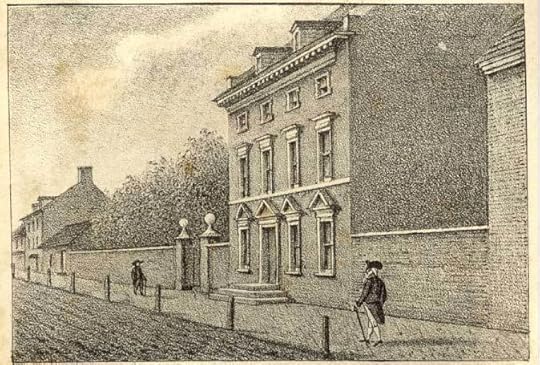
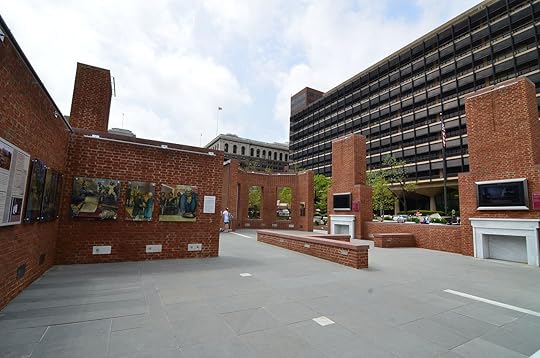
President's House (Philadelphia). The Masters-Penn mansion housed Pennsylvania's governor in the early 1770s. It later served as the presidential mansion of George Washington and John Adams, 1790–1800, while Philadelphia was the temporary national capital.
The President's House, at 524-30 Market Street in Philadelphia, Pennsylvania, was the third Presidential Mansion. It housed George Washington from November 27, 1790 to March 10, 1797, and John Adams from March 21, 1797 to May 30, 1800. It was where the Independence Mall happens to be now. It is too bad that is was not saved. Hard to believe that this was the third President's House.
Brief History:
http://www.ushistory.org/presidentsho...
More:
http://digitallibrary.hsp.org/index.p...
http://www.phila.gov/presidentshouse/...
The First Presidential Mansion was in New York (Samuel Osgood House (New York City)):
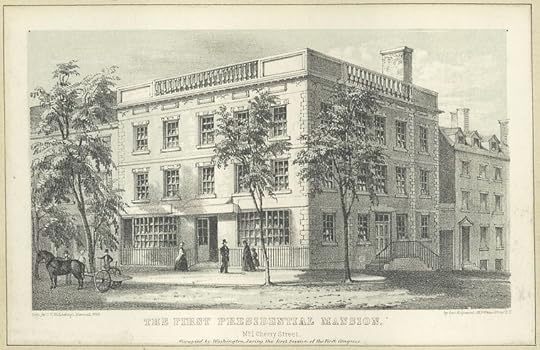
First Presidential Mansion,
occupied by George Washington,
April 1789 - February 1790
General information
Address 1 Cherry Street
Town or city New York, New York
Country United States
Coordinates 40°42′34.3″N 74°00′05.4″WCoordinates: 40°42′34.3″N 74°00′05.4″W
Construction started 1770
Demolished 1856
Client Walter Franklin
The Second Presidential Mansion was in New York ( (New York City) - (Alexander Macomb):
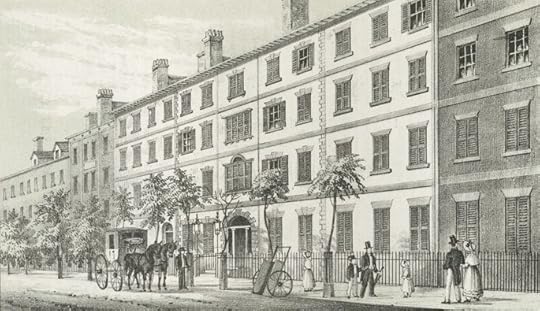
Second Presidential Mansion,
occupied by George Washington,
February - August 1790.
Former names Mansion House Hotel, Bunker's Mansion House Hotel
General information
Address 39-41 Broadway
Town or city New York, New York
Country United States
Coordinates 40.7063°N 74.0132°WCoordinates: 40.7063°N 74.0132°W
Construction started 1786-88
Demolished 1940
Client Alexander Macomb
More:
http://www.mlloyd.org/gen/macomb/text...
Germantown White House - occupied during battles
The Germantown White House (formerly the Deshler-Morris House,[2] Deshler House or Perot-Morris House) is a historic mansion in the Germantown section of Philadelphia, Pennsylvania. It was the scene of fighting in the Battle of Germantown, and it is the oldest surviving presidential residence, having twice sheltered George Washington during his term of office.
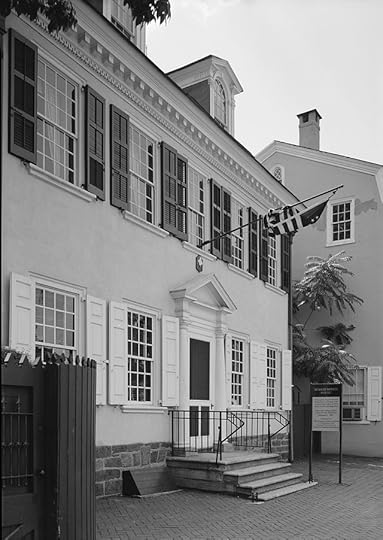
Germantown White House, aka the Deshler-Morris House, on Germantown Ave., Philadelphia, PA. Photo taken by Jack Boucher of HABS.
More:
http://en.wikipedia.org/wiki/Germanto...
http://www.ushistory.org/germantown/l...
http://loc.gov/pictures/search/?q=Pho...
Others:
Government House, New York (1790-91). Built to be the permanent presidential mansion, Congress moved the national capital to Philadelphia before its completion.
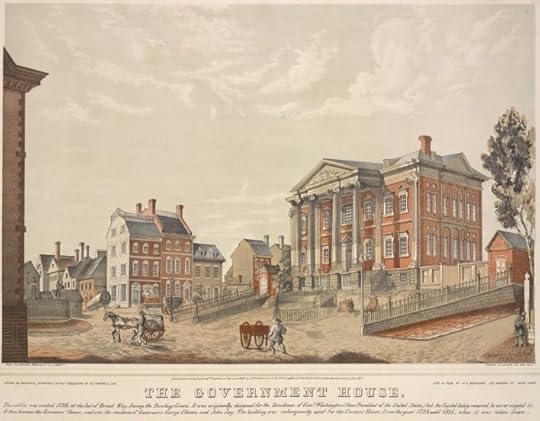
More:
http://upload.wikimedia.org/wikipedia...
House intended for the President, Philadelphia, Pennsylvania (1790s). Built to be the permanent presidential mansion, neither Washington nor Adams would occupy it.
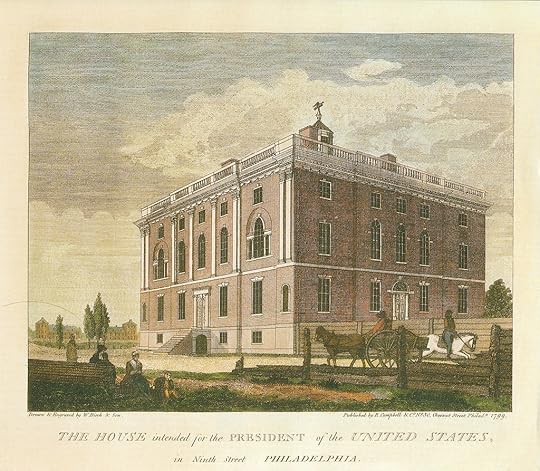
"The House intended for the President of the United States, in Ninth Street Philadelphia." W. Birch & Son, The City of Philadelphia, in the State of Pennsylvania North America, as it appeared in the Year 1800 (Published by W. Birch, Springland Cut, near Neshamany Bridge on the Bristol Road; Pennsylvania. Decr 31st 1800), Plate 13. Built in the 1790s by the State of Pennsylvania to be the Executive Mansion of the United States, neither President George Washington nor President John Adams would occupy it. Following the national capital's move from Philadelphia to the District of Columbia in 1800, the building housed the University of Pennsylvania. It was demolished in the 1820s
And of course now the residence is the White House.
The White House is the official residence and principal workplace of the President of the United States, located at 1600 Pennsylvania Avenue NW in Washington, D.C. It has been the residence of every U.S. president since John Adams in 1800.
Mod
More:
http://www.ushistory.org/presidentsho...
http://www.ushistory.org/presidentsho...
Mod
 by Terry Bouton
Synopsis:
Americans are fond of reflecting upon the Founding Fathers, the noble group of men who came together to force out the tyranny of the British and bring democracy to the land. Unfortunately, as Terry Bouton shows in this highly provocative first book, the Revolutionary elite often seemed as determined to squash democracy after the war as they were to support it before.
Centering on Pennsylvania, the symbolic and logistical center of the Revolution, Bouton shows how this radical shift in ideology spelled tragedy for hundreds of common people. Leading up to the Revolution, Pennsylvanians were united in their opinion that "the people" (i.e. white men) should be given access to the political system, and that some degree of wealth equality (i.e. among white men) was required to ensure that political freedom prevailed. As the war ended, Pennsylvania's elites began brushing aside these ideas, using their political power to pass laws to enrich their own estates and hinder political organization by their opponents. By the 1780s, they had reenacted many of the same laws that they had gone to war to abolish, returning Pennsylvania to a state of economic depression and political hegemony. This unhappy situation led directly to the Whiskey and Fries rebellions, popular uprisings both put down by federal armies.
Bouton's work reveals a unique perspective, showing intimately how the war and the events that followed affected poor farmers and working people. Bouton introduces us to unsung heroes from this time--farmers, weavers, and tailors who put their lives on hold to fight to save democracy from the forces of "united avarice." We also get a starkly new look at some familiar characters from the Revolution, including Benjamin Franklin, Alexander Hamilton, and George Washington, who Bouton strives to make readers see as real, flawed people, blinded by their own sense of entitlement.
Taming Democracy represents a turning point in how we view the outcomes of the Revolutionary War and the motivations of the powerful men who led it. Its eye-opening revelations and insights make it an essential read for all readers with a passion for uncovering the true history of America.
Awards:
The Philip S. Klein Book Prize is awarded in even numbered years for the best book on Pennsylvania History - this book received the award on October 2008.
Mod
Mod
 Not that many years ago, the city of Pittsburgh was ugly, dirty, and dying. Today, it is a Renaissance city. Coming through the "Tubes" (the tunnel traveled into the city from the south), with PNC Park and Heinz Field on your left at the convergence of the Three Rivers, it is really breathtaking. A true city success story.
Pittsburgh: A New Portrait
 by Franklin Toker (no photo)
Synopsis:
From its founding in 1758, Pittsburgh has experienced several epic transformations. It began its existence as a fortress, on a site originally selected by George Washington. A hundred years later, and well into our own time, no other American city was as intensively industrialized, only to be later consigned to “rustbelt” status. Remade as a thriving twenty-first-century city and an international center for science, medicine, biotechnology, and financial services, Pittsburgh is now routinely acclaimed as one of the most promising and livable of America's cities. Franklin Toker shows us why.
Toker highlights this remarkable story of urban reinvention by focusing on what makes Pittsburgh so resilient and appealing - its strong neighborhoods and their surprisingly rich architectural history. The many unique, lively urban communities that make up Pittsburgh are a treasure trove of every imaginable style of structure, from Victorian to Bauhaus, Gothic to Art Deco, and from Industrial to Green. These ordinary homes expressed the aspirations of people who came from around the world to settle in Pittsburgh, while they built the city itself into an economic powerhouse. With the wealth generated by this everyday work, local captains of industry could build their own monumental additions to Pittsburgh's urban landscape, including two of America's greatest buildings: H. H. Richardson's Allegheny Courthouse and Frank Lloyd Wright's Fallingwater.
With accessible prose, Toker examines Pittsburgh in its historical context (from Indian settlement to postmodern city), in its regional setting (from the playgrounds of the Laurel Highlands to the hard-working mill towns dotting the landscape), and from the street level (leading the reader on a personal tour through every neighborhood). Lavishly illustrated with photos and maps, Pittsburgh: A New Portrait reveals the true colors of a truly great American city.
One of my favorite towns, Pittsburgh, is a Renaissance city which has come from a filthy steel town to a model of downtown restoration. (Plus it has great sports teams!) This book is a visual ride through the good and bad years of the Steel City. Pittsburgh Then and Now
 by Walter C. Kidney (no photo)
Synopsis:
Pittsburgh Then and Now matches historic images of the early city with modern photographs that show the city as a compact blend of old and new buildings. Downtown, the office blocks are punctuated by the traces of Pittsburgh's industrial heritage, the so-called "sliver" warehouses . Further out, there are older stone structures such as the Burtner House and the block house at Fort Pitt.
Mod
When you come through The Tubes (the tunnels that lead into the city), you come out at the Three Rivers.......it is truly a beautiful sight where the sports complex sits at the Golden Triangle. This is a city that has made an amazing comeback.
Mod
 by Bill O'Neill (no photo)
Synopsis:
How much do you know about the state of Pennsylvania? There’s so much to learn about the Keystone State that even its residents don’t know. In this trivia book, you’ll learn more about Pennsylvania’s history, pop culture, inventions, sports, and more!
In The Great Book of Pennsylvania, you’ll find the answers to the following questions:
How did Pennsylvania get its name? Why is it known as the “Keystone State”? Do you know how Hersheypark got started? Do you know which best-selling musician had her first concert at a fair in Pennsylvania? Which famous board game was invented by a Pennsylvanian using stolen ideas from other board games? Which famous fast food item started out in PA? Who was the Stroudsburg Rain Man? What places in Pennsylvania are said to be haunted? Where are you most likely to find Thomas Jefferson’s ghost?
And so much more!
This book is full of facts about Pennsylvania. Some of the facts you’ll learn in this book are surprising, some are sad, and others may give you the chills. But the one thing they have in common is they’re all interesting!
Whether you’re just learning about the Keystone State or you already think you’re an expert on the state, you’re bound to learn something you didn’t know in every chapter. Your friends will be amazed at your next trivia night.
So, what are you waiting for? Get started to learn more about Pennsylvania!

The History Book Club
Books mentioned in this topic
The Great Book of Pennsylvania: The Crazy History of Pennsylvania with Amazing Random Facts & Trivia (other topics)Pittsburgh: Then & Now (other topics)
Pittsburgh: A New Portrait (other topics)
Taming Democracy: "The People," the Founders, and the Troubled Ending of the American Revolution (other topics)
Authors mentioned in this topic
Bill O'Neill (other topics)Walter C. Kidney (other topics)
Franklin Toker (other topics)
Terry Bouton (other topics)
You may add books that take place in this state, are about this state, have a scene that takes place in this state or have events where this state is mentioned. There is no self promotion on the History Book Club.
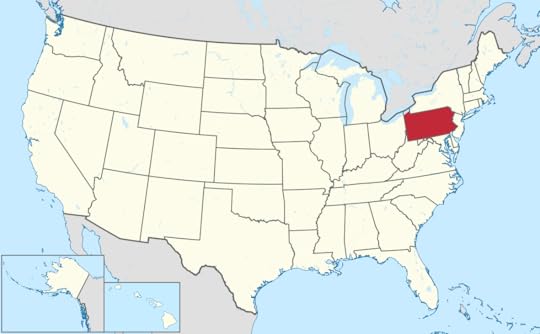
"Pennsylvania Listeni/ˌpɛnsɨlˈveɪnjə/ (Pennsylvania German: Pennsilfaani), officially the Commonwealth of Pennsylvania, is a U.S. state that is located in the Northeastern and Mid-Atlantic regions of the United States, and the Great Lakes region. The state borders Delaware to the southeast, Maryland to the south, West Virginia to the southwest, Ohio to the west, Lake Erie and Ontario, Canada to the northwest, New York to the north and New Jersey to the east. The Appalachian Mountains run through the middle of the state."
"Pennsylvania is the 33rd largest, the 6th most populous, and the 9th most densely populated of the 50 United States. The state's five most populous cities are Philadelphia, Pittsburgh, Allentown, Erie, and Reading. The state capital is Harrisburg. Pennsylvania has 51 miles (82 km) of coastline along Lake Erie and 57 miles (92 km)[6] of shoreline along the Delaware Estuary. The state is one of the 13 original founding states of the United States."
Source: Wikipedia
http://en.wikipedia.org/wiki/Pennsylv...