Early American Literature discussion
General discussions
>
Book reviews
date
newest »
newest »
message 1:
by
Werner
(new)
Aug 16, 2021 03:56AM
Mod
reply
|
flag
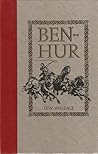
Ben-Hur: A Tale of the Christ by Lew WallaceMy rating: 5 of 5 stars
This is the second time I have read this, and it's one of my favorites. It did go a little slow at some points, especially in the wordy descriptions. But the story is wonderful, and definitely feels more authentic than The Robe, though I did enjoy that one as well.
"To the heart divinely original, yet so human in all the better elements of humanity, going with sure prevision to a death of all the inventions of men the foulest and most cruel, breathing even then in the forecast shadow of the awful event, and still as hungry and thirsty for love and faith as in the beginning, how precious and ineffably soothing the farewell exclamation of the grateful woman:
'To God in the highest, glory! Blessed, thrice blessed, the Son whom he hath given us!'"
View all my reviews
I'm not reading any early American literature at the present moment. But here are links to my reviews of some works by two of my favorite early American authors:
The Unabridged Edgar Allan Poe. https://www.goodreads.com/review/show...
The Scarlet Letter by Nathaniel Hawthorne. https://www.goodreads.com/review/show...
The House of the Seven Gables by Hawthorne. https://www.goodreads.com/review/show...
The Blithedale Romance by Hawthorne. https://www.goodreads.com/review/show...
The Marble Faun by Hawthorne. https://www.goodreads.com/review/show...
Mosses from an Old Manse https://www.goodreads.com/review/show...
The Unabridged Edgar Allan Poe. https://www.goodreads.com/review/show...
The Scarlet Letter by Nathaniel Hawthorne. https://www.goodreads.com/review/show...
The House of the Seven Gables by Hawthorne. https://www.goodreads.com/review/show...
The Blithedale Romance by Hawthorne. https://www.goodreads.com/review/show...
The Marble Faun by Hawthorne. https://www.goodreads.com/review/show...
Mosses from an Old Manse https://www.goodreads.com/review/show...
James Fenimore Cooper is another early American writer I count as a favorite; I've read all five of his Leatherstocking Tales books, and reviewed four of them so far. Those reviews (in the order of the internal chronology of the series, though not the order in which the books were written or read) are here:
The Deerslayer. https://www.goodreads.com/review/show...
The Last of the Mohicans. https://www.goodreads.com/review/show...
The Pathfinder. https://www.goodreads.com/review/show...
The Prairie. https://www.goodreads.com/review/show...
The Deerslayer. https://www.goodreads.com/review/show...
The Last of the Mohicans. https://www.goodreads.com/review/show...
The Pathfinder. https://www.goodreads.com/review/show...
The Prairie. https://www.goodreads.com/review/show...
Besides the Leatherstocking Tales (as mentioned in the above post), I've also read Cooper's stand-alone novel The Spy. My review of that one is here: https://www.goodreads.com/review/show... .
William Dean Howells isn't really an author I can count as a favorite, since I've only read a couple of his novels (and one excellent short story, "Editha"). So far, I've only reviewed one of the novels, The Rise of Silas Lapham; but that one got five stars from me, and I consider it a major American classic that deserves to be much better known. That review is here: https://www.goodreads.com/review/show... .
Since Dorothy linked above to her review of Lew Wallace's novel Ben-Hur: A Tale of the Christ, I'll link to mine as well: https://www.goodreads.com/review/show... .
Another early American novel that earned high marks from me is Rebecca of Sunnybrook Farm by Kate Douglas Wiggin. Here's that review: https://www.goodreads.com/review/show... . I also appreciated Wiggin's much shorter The Birds' Christmas Carol (the title characters aren't feathered avians; their family name happens to be Bird), which I read much more recently, though I didn't rate it as in the same league with Wiggin's masterpiece, above. This is my review of the novella: https://www.goodreads.com/review/show... .
William Dean Howells isn't really an author I can count as a favorite, since I've only read a couple of his novels (and one excellent short story, "Editha"). So far, I've only reviewed one of the novels, The Rise of Silas Lapham; but that one got five stars from me, and I consider it a major American classic that deserves to be much better known. That review is here: https://www.goodreads.com/review/show... .
Since Dorothy linked above to her review of Lew Wallace's novel Ben-Hur: A Tale of the Christ, I'll link to mine as well: https://www.goodreads.com/review/show... .
Another early American novel that earned high marks from me is Rebecca of Sunnybrook Farm by Kate Douglas Wiggin. Here's that review: https://www.goodreads.com/review/show... . I also appreciated Wiggin's much shorter The Birds' Christmas Carol (the title characters aren't feathered avians; their family name happens to be Bird), which I read much more recently, though I didn't rate it as in the same league with Wiggin's masterpiece, above. This is my review of the novella: https://www.goodreads.com/review/show... .
Except for Wiggin, the authors whose work I've reviewed and linked to above are all male. But I've read and appreciated (and reviewed) a good deal of early American literature from the distaff side as well! Some of those authors/books are listed below, with links to my reviews:
Little Men and Little Women, both by Louisa May Alcott. https://www.goodreads.com/review/show... and https://www.goodreads.com/review/show... .
Uncle Tom's Cabin by Harriet Beecher Stowe. https://www.goodreads.com/review/show... .
The Tory Lover and The Country of the Pointed Firs and Other Stories, both by Sarah Orne Jewett. https://www.goodreads.com/review/show... and https://www.goodreads.com/review/show... .
A New England Nun and Other Stories by Mary E. Wilkins Freeman. https://www.goodreads.com/review/show... .
Hope Leslie: or, Early Times in the Massachusetts by Catharine Maria Sedgwick. https://www.goodreads.com/review/show... .
Little Men and Little Women, both by Louisa May Alcott. https://www.goodreads.com/review/show... and https://www.goodreads.com/review/show... .
Uncle Tom's Cabin by Harriet Beecher Stowe. https://www.goodreads.com/review/show... .
The Tory Lover and The Country of the Pointed Firs and Other Stories, both by Sarah Orne Jewett. https://www.goodreads.com/review/show... and https://www.goodreads.com/review/show... .
A New England Nun and Other Stories by Mary E. Wilkins Freeman. https://www.goodreads.com/review/show... .
Hope Leslie: or, Early Times in the Massachusetts by Catharine Maria Sedgwick. https://www.goodreads.com/review/show... .
Published in 1900 (and written around 1888) Sister Carrie by Theodore Dreiser falls within our group's chronological scope, and is the only novel by Dreiser that I've read so far. My three-star (which, on Goodreads' scale, means that I liked it) review is here: https://www.goodreads.com/review/show... . My take on the book differed from that of both its critical-establishment cheering section and its detractors.
Mark Twain is on my official list of favorite authors; but my reading of his work was mostly in my childhood and youth, and I haven't read any whole books by him since the 90s. And so far, the only Twain book I've done a retrospective review of was the one I didn't like, A Connecticut Yankee in King Arthur's Court. My one-star review is here: https://www.goodreads.com/review/show... . Of course, that's only one person's take on it! :-)
By anybody's estimation, Henry James ranks as a major early American author (despite his long residence in England). Along with Twain and William Dean Howells, he's reckoned as one of the Realist giants of the later 19th century.
Like most U.S. students, I was introduced to him in high school through his short stories. Personally, I'm not a great fan of most of his short fiction; and I haven't read as much of his work as I have of some other classic writers. However, the two novels of his that I have written both got four stars from me! Those reviews are here:
The American. https://www.goodreads.com/review/show...
The Turn of the Screw. https://www.goodreads.com/review/show...
Like most U.S. students, I was introduced to him in high school through his short stories. Personally, I'm not a great fan of most of his short fiction; and I haven't read as much of his work as I have of some other classic writers. However, the two novels of his that I have written both got four stars from me! Those reviews are here:
The American. https://www.goodreads.com/review/show...
The Turn of the Screw. https://www.goodreads.com/review/show...
In this group, we've been using World War I as a sort of convenient dividing line between "early" and later American literature, with our focus on the writings produced before that conflict. As his dates suggest, another favorite writer of mine, Edgar Rice Burroughs (1875-1950), wrote both before and after that demarcation. and I've read books by him from both periods. But of the half dozen that I've actually reviewed, four come from the years 1912-1913, when he started his two most popular and best known series.
One of those, of course, is the Tarzan series. My review of the novel that started it all, Tarzan of the Apes, is here: https://www.goodreads.com/review/show... . The first of many sequels is The Return of Tarzan; that review is here: https://www.goodreads.com/review/show... . Both of those books got four stars from me!
Burroughs was a significant contributor to the "soft" strand of American science fiction; and the first novel he ever wrote was A Princess of Mars, the kick-off of his still popular Barsoom series. Its first sequel (again, of many!) was The Gods of Mars . I reviewed both books, here: https://www.goodreads.com/review/show... and here: https://www.goodreads.com/review/show... . (My ratings for these weren't as high, but i still liked them.)
One of those, of course, is the Tarzan series. My review of the novel that started it all, Tarzan of the Apes, is here: https://www.goodreads.com/review/show... . The first of many sequels is The Return of Tarzan; that review is here: https://www.goodreads.com/review/show... . Both of those books got four stars from me!
Burroughs was a significant contributor to the "soft" strand of American science fiction; and the first novel he ever wrote was A Princess of Mars, the kick-off of his still popular Barsoom series. Its first sequel (again, of many!) was The Gods of Mars . I reviewed both books, here: https://www.goodreads.com/review/show... and here: https://www.goodreads.com/review/show... . (My ratings for these weren't as high, but i still liked them.)
Another early American novel I've read and liked is In His Steps (originally published serially, as many novels in those days were, in 1896, and in book form in 1897) by Congregationalist minister Charles M. Sheldon. This was a best seller in its day, and continues to be influential and widely read in some Christian circles today (even though modern secular academics dealing with American literature ignore it because of its Christian message). My three-star review is here: https://www.goodreads.com/review/show... .
Herman Melville is a major early American author whose work I've read relatively little of --none of his poetry, and only two of his novels and a couple of short stories. But I've reviewed both of the novels that I did read: Moby-Dick or, the Whale (https://www.goodreads.com/review/show... ) and Billy Budd, Sailor. Though it's not a majority position among critics, I rated the latter the more highly of the two (https://www.goodreads.com/review/show... ). I do definitely want to read more of this writer's work!
All of the stories collected in the anthology Haunted Women: The Best Supernatural Tales by American Women Writers were written in the 19th century or early in the 20th century, within the time period our group focuses on. The title is a misnomer, since nearly half of the selections of not supernatural fiction at all. They are, however, consistently good stories, and includes work by some authors who aren't well-known today. My review is here: https://www.goodreads.com/review/show... .
Jack London is another writer who falls within our chronological focus that I count as a favorite. I've read most of his novels and a number of his stories, and while I usually just like (rather than love) his work, I've found it consistently enjoyable over the years. So far, though, I've only reviewed three of his books. Two of them, his best-known novels The Call of the Wild and White Fang, I combined in one review, here: https://www.goodreads.com/review/show... .
However, the book by London that I read the most recently (in 2017), while less known to most readers, is the one I think may well be his masterpiece, and it got four stars from me. That's Martin Eden, and my review of that one is here: https://www.goodreads.com/review/show... . (In that review, I note that my read in that book made me rethink one statement in my combined review of the other two London novels, linked to above.)
One little known (I first heard of her here on Goodreads!) early American female writer who hasn't ben mentioned here before is Jean Webster. I stumbled on her 1912 novel Daddy-Long-Legs several years ago when it was picked as a group read in one of my other groups (my four-star review, here: https://www.goodreads.com/review/show... , explains the odd title :-) ). On the evidence of this book, she deserves to be better known today than she is.
Thomas Dixon, Jr. (1864-1946) is a writer who falls chronologically into our purview for the most part; most of his novels were written before the U.S. entered World War I, though he wrote his last one in 1939. He's never been mentioned here, and it's debatable if he ought to be (he's been described as a "professional racist"). But in the interests of comprehensive completeness, my one-star review of his 1905 best-seller The Clansman is here: https://www.goodreads.com/review/show... .
Well you certainly have several good choices Werner. I’m going to have to get my reading in gear.
Doreen wrote: "Well you certainly have several good choices Werner. I’m going to have to get my reading in gear."
Well, Doreen, I'm older than you are (I'll turn 70 this year), and I've been reading independently at least since I was six, so I've had quite a while to read what early American books I have over the years. But I still have a lot more to look forward to, and that's always good to know! ;-)
Only by a little bit Werner. I’ll be 62 this year and have been reading since I was thanks to my beloved parents and my middle sister. It instilled a lifelong love of reading in me. I think we were both very lucky to enjoy reading at a young age.
Doreen wrote: "I think we were both very lucky to enjoy reading at a young age."
That's so very true, Doreen!
Where the short story is concerned, most serious students of American literature feel that the foremost American master of that format, in the years between the death of Edgar Allan Poe in 1849 and the emergence of Bret Harte after the Civil War, was Irish-born author Fitz-James O'Brien. My review of the posthumous O'Brien collection The Diamond Lens and Other Strange Tales is here: https://www.goodreads.com/review/show... .
Though I mentioned several female early American writers whose work I've read and reviewed above in message 6, another one whom I overlooked was Mary Mapes Dodge (1831-1905). Here's the link to my review of her best-known novel, Hans Brinker, or the Silver Skates: https://www.goodreads.com/review/show... . Dodge was also the first and long-serving editor of St. Nicholas Magazine, America's leading children's magazine in that era.
Another author I overlooked so far (although a male one this time) is Henry Van Dyke, a Presbyterian clergyman, a Princeton Univ. professor of English literature, and in later life, American minister to Holland during World War I. He was also a popular author of fiction and poetry, best known for his The Story of the Other Wise Man (1896). My review of that work is here: https://www.goodreads.com/review/show... .
Doreen wrote: "I must confess Nathaniel Hawthorne is my favorite but I am open to adding others to the list."
Hawthorne has been one of my all-time top favorite authors ever since I was a kid! But there are quite a few other early American writers whose work is well worth reading.
Another early American female author whose work (at least, a bit of it!) that I've read and reviewed, and whom I can't believe I neglected to mention here earlier, is Rebecca Harding Davis, best known as the author of the landmark Realist trail-blazer, "Life in the Iron Mills." Here's my review of a (very) partial modern collection of some of her short fiction, Life in the Iron Mills and Other Stories: https://www.goodreads.com/review/show... .
I've just noticed that I've never, until now, linked to my review (https://www.goodreads.com/review/show... ) of Main Traveled Roads (1891), the short story collection which launched Hamlin Garland's fame. (Short fiction was arguably the form of writing that Garland most excelled at.) Born in 1860, much of his literary career falls into our group's chronological scope, though he lived until 1940.
Probably because I've always been more into fiction than poetry, up to now I've completely overlooked posting any of my reviews of early books of American poetry! But I have reviewed a few of those, so that omission needs to be remedied. :-)
Sidney Lanier, in my estimation, was one of the most gifted American poets to come onto the literary scene in the era following the Civil War. Much of his poetry wasn't collected in book form during his short lifetime (he died at 39); but I've read and reviewed the posthumous partial collection by his son Henry, Selections from Sidney Lanier: Prose and Verse: https://www.goodreads.com/review/show... .
Henry Wadsworth Longfellow is generally reckoned as a giant of 19th-century American poetry. The only full book of poetry from his pen that I've read is The Song of Hiawatha, which I read with this group as a common read back in 2021. Personally, as I explain in my review (https://www.goodreads.com/review/show... ) I was underwhelmed by that one; but I still regard Longfellow as a very accomplished poet, and hope to read more of his work sometime.
Though much of Robert Frost's poetic output was written after the time period we focus on as a group, he began his career as a poet before World War I, and his earliest collections were in our chronological range. We did a group read of one of them, North of Boston (1914) in August of 2020. I'd read the same one some years earlier, and had reviewed it, here: https://www.goodreads.com/review/show... .
Sidney Lanier, in my estimation, was one of the most gifted American poets to come onto the literary scene in the era following the Civil War. Much of his poetry wasn't collected in book form during his short lifetime (he died at 39); but I've read and reviewed the posthumous partial collection by his son Henry, Selections from Sidney Lanier: Prose and Verse: https://www.goodreads.com/review/show... .
Henry Wadsworth Longfellow is generally reckoned as a giant of 19th-century American poetry. The only full book of poetry from his pen that I've read is The Song of Hiawatha, which I read with this group as a common read back in 2021. Personally, as I explain in my review (https://www.goodreads.com/review/show... ) I was underwhelmed by that one; but I still regard Longfellow as a very accomplished poet, and hope to read more of his work sometime.
Though much of Robert Frost's poetic output was written after the time period we focus on as a group, he began his career as a poet before World War I, and his earliest collections were in our chronological range. We did a group read of one of them, North of Boston (1914) in August of 2020. I'd read the same one some years earlier, and had reviewed it, here: https://www.goodreads.com/review/show... .
Published in 1918, Representative Plays By American Dramatists, edited by Montrose J. Moses, is a three- volume collection of plays by American authors, covering the period 1765-1917. I've never read the entire collection, but I have read several of the individual plays in the first volume, which goes up to 1819 (and even one or two of those in the second volume). My note explaining why I didn't read all three volumes, here: https://www.goodreads.com/review/show... , comments on several of the plays that I did read.
As I explain in my review (https://www.goodreads.com/review/show... ), my read of Kate Douglas Wiggin's 1893 novel
Polly Oliver's Problem: A Story For Girls was to tie up a sort of literary "loose end;" I didn't really know what to expect, and wasn't sure how well I'd like it. I wouldn't have needed to worry about that; my three-star rating definitely means that I did like it!
Here's the link to my review of a perennial classic of American literature, Stephen Crane's historical novella
The Red Badge of Courage: https://www.goodreads.com/review/show... . This is the third time I've read this, and the closest reading I've done of the three; not surprisingly, it was the most rewarding in terms of understanding where Crane was coming from, and what he wanted to convey.
Back in 1989, I'd read the pioneering partial collection of Louisa May Alcott's short fiction,
Behind a Mask: The Unknown Thrillers of Louisa May Alcott and liked it; but I'd forgotten just how good these character-driven page turners really are! Following a reread, my five-star review is here: https://www.goodreads.com/review/show... . Alcott was a much more gifted and versatile writer than most people realize.
Short fiction is a literary format I've greatly appreciated ever since I was a kid, and Bret Harte was, IMO, one of the greatest practitioners of the art that the United States has ever produced.
The Best Short Stories of Bret Harte collects 25 of his tales, and my recently completed read of it was my third (both of the others were pre-Goodreads). Here's my five-star review: https://www.goodreads.com/review/show... .
I am unfamiliar with this author. I will have to look for some of his works. Unfortunately, I have fallen slightly behind in my reading this month due to my husband's open heart surgery. However, he is doing very well, and I am going to be catching up on my reading. My current reading, however, is not early American literature. With my reading interests that could change at the next book selection.
Jasamine wrote: "I have fallen slightly behind in my reading this month due to my husband's open heart surgery. However, he is doing very well...."
That's great news, Jasmine; so glad to hear that!
The King in Yellow and Other Horror Stories by Robert W. Chambers had been on my radar for a long time, mostly because of the hype surrounding the few King in Yellow stories. But when I finally read the collection recently, those proved to be disappointing. Overall, my rating for the book was three stars, and here's the link to my review: https://www.goodreads.com/review/show... .
While I don't generally think of sermon texts as "literature" in the strict sense, Sinners in the Hands of an Angry God by Jonathan Edwards is often included as a selection in American Literature textbooks, which was where I originally read it decades ago, as a freshman college student. My interest in recently re-engaging with it was prompted by an ongoing discussion in another group; and I think my greater spiritual maturity at 72 and the additional knowledge I've acquired in the years since allowed me to understand it better this second time. My three-star review is here: https://www.goodreads.com/review/show... .
Being without an Internet connection at home for over a week now has greatly hampered my reviewing activity. :-( But over the weekend, using my office computer, I did manage to post my three-star review, here: https://www.goodreads.com/review/show... , of
Iola Leroy, or, Shadows Uplifted (1892), by American mixed-race writer Frances Ellen Watkins Harper.
Books mentioned in this topic
Iola Leroy, or, Shadows Uplifted (other topics)Sinners in the Hands of an Angry God (other topics)
The King in Yellow and Other Horror Stories (other topics)
The Best Short Stories of Bret Harte (other topics)
Behind a Mask: The Unknown Thrillers of Louisa May Alcott (other topics)
More...
Authors mentioned in this topic
Frances Ellen Watkins Harper (other topics)Jonathan Edwards (other topics)
Robert W. Chambers (other topics)
Bret Harte (other topics)