
Jane Austen's Books & Adaptations discussion
Non-fiction & Documentaries
>
Regency Non-Fiction
date newest »
newest »
message 1:
by
Zuzana
(new)
Aug 16, 2021 10:45AM
 Mod
Mod
reply
|
flag
Mod

Got an ARC from NetGalley. Was a great read for the Jane Austen July.
It's not limited to the Regency era Country Houses, but everything that came before is relevant for Regency homes as well - some of the Regency houses were newly built, the majority were remodelled or slightly adjusted older houses.
Interesting tidbits - part 1:
- "Abbey" in the name of the house signifies that it was owned by the Catholic church before Henry VIII's dissolution of the monasteries. New owners usually didn't bother changing the name. (I knew this one, the rest was kinda new to me.)
JA: Northanger Abbey & Donwell Abbey in Emma
- Regional traditions (different architecture in Englands, Wales, Scotland and Ireland) merged with the architectural mainstream during the Georgian period; by the late 18th century, the same architects were being used throughout Britain and their clients travelled, visiting other country houses (visits to country houses ala Gardiners visiting Pemberley were quite common).
- Georgian country houses were expensive to acquire and maintain - they were usually financed by questionable (by today's standards) means. "Only the very rich could afford the luxury of a country house, but modern historians increasingly recognise that behind them and their architects stood dozens if not hundreds of others - labouring on the land, in counting houses, down mines, on men o'war, in cotton mills, sweating in cantonments of India or enslaved on sugar plantations of the West Indies. Without these usually anonymous toilers there would not have been the money to make the country house possible." (insert Sir Thomas Bertram of Mansfield Park and his Antigua sugar plantations)
- first porticos on country houses appeared in the 17th century. Portico = a temple front: it consists of a row of columns with a pediment (like a triangular gable) on top of it. Sash windows appeared at about the same time.
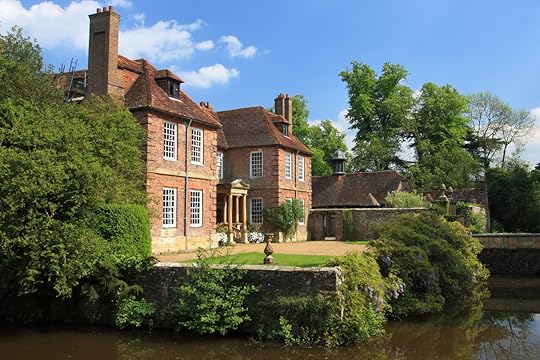
Groombridge Place, Kent (aka the Bennet family house in 2005 P&P movie) - has a small portico.
- "In the course of the 18th century, the landscape park would become a subject of intense interest, argument and expense to country-house owners. The aim was to create a seemingly natural effect, composed as though in a landscape painting. "All nature is a garden."
The leap was made by means of a concealed ditch with a vertical wall on the side nearest the house and sometimes a fence at the bottom, known, from the exclamation of surprise people were supposed to have made on first seeing it, as a ha-ha. For the ha-ha was invisible except close to: looking from the house, there appeared to be no division between the parkland beyond it and the grounds within. Sheep and cattle were kept at a respectful distance."
A ha-ha is mentioned in Mansfield Park as a feature of the Sotherton surroundings.
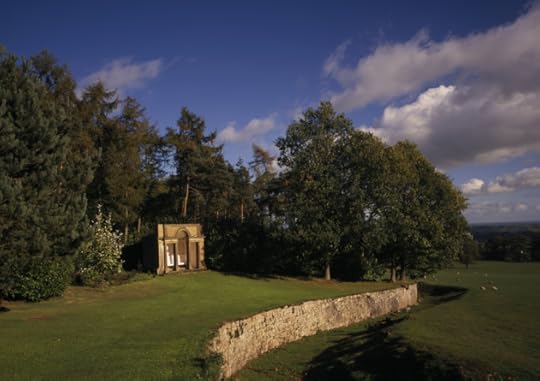
example of a ha-ha
Mod
part 2:
- "The Georgian period was characterized by improvement and politeness. Improvement meant the application of science to agriculture and manufacturers, both of which became more efficient and profitable. The Agricultural Revolution had a particular relevance to the country house, since many gentlemen drew an income from the land; animals grew fatter, common land - on which peasants had previously grazed animals and kept beehives - was enclosed by private owners, and new landscapes were created."
Reminds me mostly of Emma. Mr Knightley concerns himself with managing his property (unlike Mr Bennet who is all day closed in his library with his books hiding from his wife and the three more annoying daughters). Enclosure of the common land is mentioned in Emma, too.
- (the mid-Georgian period) "Grand country houses were also viewed by the increasing numbers of well-bred tourists, who could expect to be shown around by the housekeeper even if the family was not there."
As shown in Pride and Prejudice where the housekeeper shows the Gardiners and Lizzie around Pemberley.
- (the mid-Georgian period) "A new word had come into the language (or an old one with a new meaning): taste. Taste was a gentlemanly attribute, it spoke of shared values and common assumptions. It was what every genteel householder aspired to display, during the new social ritual of visiting."
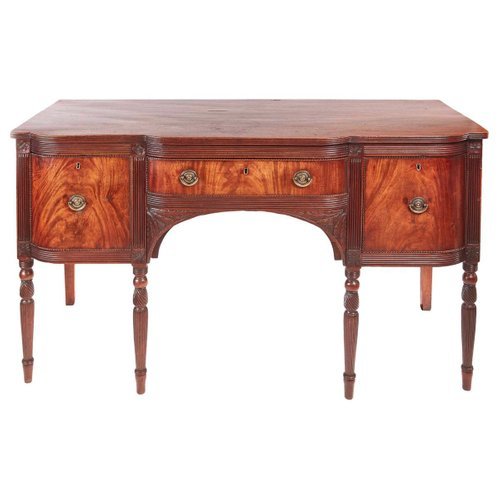
- (the mid-Georgian period) "In furniture, this was the Age of Mahogany... Native to the islands of the Caribbean and Central America. Mahogany was one of the goods imported into Britain as part of the triangular trade." (That means slave trade.) "Mahogany was an environmental disaster. Huge trees were felled until, by the mid 18th century, there were none left in Jamaica and merchants tuned to other forests around the Caribbean, which were similarly pilaged... The labour was provided by slaves." All British country houses "would have contained some piece of mahogany furniture by 1800, just as every country house kitchen had its cone of sugar. Sugar was refined from sugar cane grown by slaves on plantations in the West Indies."
Yeah, sugar plantations means we're back to Mansfield Park.
- "Legally the position of slavery in Britain was ambiguous: towards the end of the 18th century it was established that slaves could not be transported from Britain against their will but the trade around the Empire continued until 1807 and previously it had been possible to buy slaves at Waping and elsewhere."
This is super interesting as Sir Bertram's Antigua journey might correspond with the year 1807 (Act for the Abolition of the Slave Trade, banned trading in enslaved people in the British Empire). It means that his financial dificulties mentioned in the book stemmed from the slave trade ban.
- (the mid-Georgian period) - Gardening and landscaping became a craze - grottoes and follies were built en masse. The villages that usually surrounded (older) country houses were demolished and people rehoused elsewhere. It wasn't considered estetic to have village houses in the vicinity of (i.e. seen from) the country house.
- The profession of architect (for country houses) emerged during the Georgian period. Young men went on "the Grand Tour" to the Continent (it had to include Italy) to study the art and architecture of Ancient Rome - inspiration for their projects back in Britain.
- Regency in architecture means 1790 to 1837. "Regency country house was extravagant, glamorous, exotic and dramatic. It aimed to delight but also thrill." Creative use of light (coloured glass, and overhead windows). Gigantism (gigantic halls, door, windows).
- Service a la russe (dishes offered separately) exchanged the traditional service a la francaise (large number of dishes all at once).
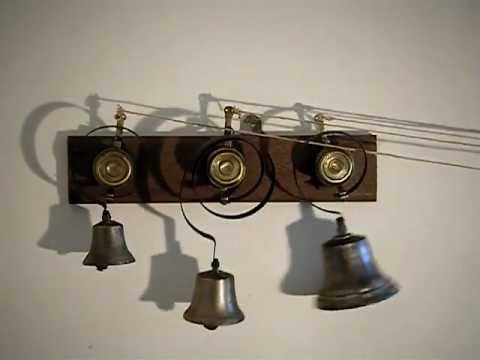
- The service bells were "invented". Through the system of tubes (tunels) in the walls the ropes led to the place where servants waited to be summoned. Before they had to be nearby all the time - the masters had no privacy. Servants started to be required to stay out of sight. Separate wings for servants started to be built.
- Collecting became a new wide spread hobby. Country houses were full of display cabinets. Gentry wanted to display their collections.
In Emma Mr Knightley in order to make Mr Woodhouse comfortable while the rest of the party was picking strawberries had prepared parts of his collection for Mr Woodhouse's inspection.
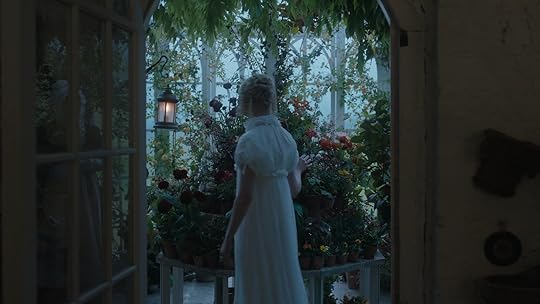
- A new room appeared - the conservatory. A place where plants could be cared for. At the end of the 18th century conservatories became attached to the house itself.
The 2020 Emma movie opened with Emma dragging her servants out in the wee hours to the conservatory to pick the perfect bouquet of flowers for her ex-governess who was about to be married.
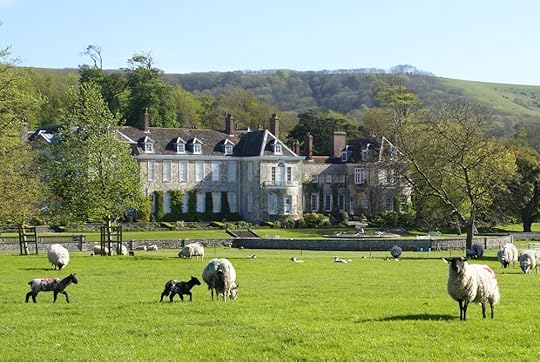
- Firle Place, near Lewes, stands in for Hartfield, Emma’s home in the Autumn De Wilde 2020 film. It's a Tudor stately home and garden remodelled in the 18th century.
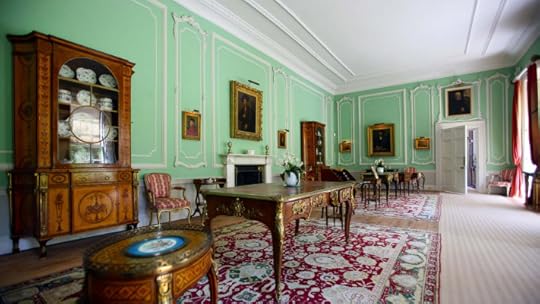
- Humphry Repton was mentioned a couple of times in the book. Mr Repton (1752 – 1818) was the last great English landscape designer of the eighteenth century.
He's mentioned by Mr Rushworth in Mansfield Park as the person he wants to consult regarding his renovation of Sotherton.

Jane Austen's Books & Adaptations
Books mentioned in this topic
The Story of the Country House: A History of Places and People (other topics)The Story of the Country House: A History of Places and People (other topics)
