
The History Book Club discussion
EUROPE - EUROPEAN HISTORY
>
WALES
date newest »
newest »
 Mod
Mod
Flag:

And of course - the UK Union Jack:

Motto:
Motto: "Cymru am byth" (Welsh)
"Wales for ever"
Mod
Here is it on Youtube:
https://www.youtube.com/watch?v=3kUnC...
Katherine Jenkins - Land Of My Fathers
https://www.youtube.com/watch?v=yEOxE...
Mod
Cardiff (Caerdydd)
51°29′N 3°11′W
Official languages:
Welsh English
Demonym:
Welsh (Cymry)
Sovereign state:
United Kingdom
Government:
Devolved government within parliamentary constitutional monarchy
- Monarch - Elizabeth II
- First Minister - Carwyn Jones AM
British Government:
- Prime Minister - David Cameron MP
- Secretary of State - Stephen Crabb MP
Legislature:
National Assembly - UK Parliament
Formation:
- Unification by Gruffydd - ap Llywelyn - 1057[2]
- Statute of Rhuddlan - 3 March 1284
- Laws in Wales Act - 1535
- Devolution - 31 July 1998
Area:
- Total 20,779 km2
8,022 sq mi
Population:
- 2011 census - 3,063,456
- Density - 148/km2
381/sq mi
GDP
(PPP) 2006 estimate
- Total USD85.4 billion
- Per capita USD30,546
Currency:
Pound sterling (GBP)
Time zone:
GMT (UTC)
- Summer (DST) BST (UTC+1)
Date format:
dd/mm/yyyy (AD)
Drives on the:
left
Calling code:
+44
Patron saint:
Saint David (Dewi Sant)
Internet:
TLD
.wales .cymru[5][nb 1]
Website:
www.wales.com
Mod
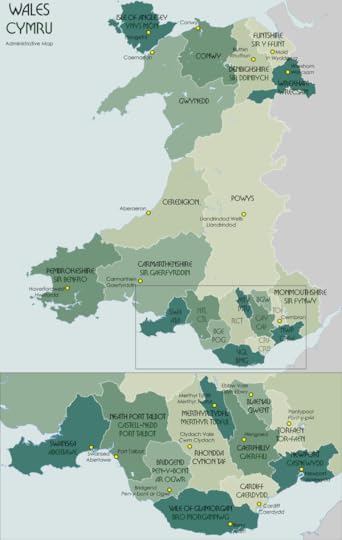
Blaenau Gwent †
Bridgend (Pen-y-bont ar Ogwr) †
Caerphilly (Caerffili) †
Cardiff (Caerdydd) *
Carmarthenshire (Sir Gaerfyrddin)
Ceredigion
Conwy †
Denbighshire (Sir Ddinbych)
Flintshire (Sir y Fflint)
Gwynedd
Isle of Anglesey (Ynys Môn)
Merthyr Tydfil (Merthyr Tudful) †
Monmouthshire (Sir Fynwy)
Neath Port Talbot (Castell-nedd Port Talbot) †
Newport (Casnewydd) *
Pembrokeshire (Sir Benfro)
Powys
Rhondda Cynon Taf †
Swansea (Abertawe) *
Torfaen (Tor-faen) †
Vale of Glamorgan (Bro Morgannwg) †
Wrexham (Wrecsam) †
Mod
Areas are Counties, unless marked * (for Cities) or † (for County Boroughs). Welsh-language forms are given in parentheses, where they differ from the English.
Note: Wales has six cities. In addition to Cardiff, Newport and Swansea, the communities of Bangor, St Asaph and St Davids also have city status in the United Kingdom.
Mod
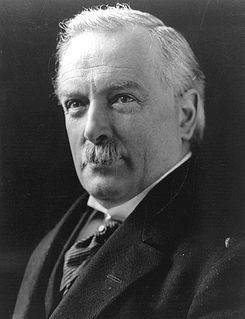
 The only Welsh born British Prime Minister whose first language was not English, David Lloyd George is one of the most well known of the PMs due to his negotiating skills at Versailles at the end of WWI. And for his rather public private life!!
David Lloyd George
 by Emyr Price (no photo)
Synopsis:
The majority of historians have viewed Lloyd George's early career to 1896 as superficial and merely the precursor to his successes at Westminster. Emyr Price provides an altogether different view. Based on original research, he asserts that Lloyd George had a very strong commitment to Home Rule (and was the leader of the first modern Welsh nationalist movement, Young Wales), official status for the Welsh language and strong labour legislation, and that he campaigned fearlessly against the tide (especially within his own party) to bring these measures about. His decision to become a careerist politician after 1896 was the only way he could further the cause of the Welsh 'national movement'." Price also investigates Lloyd George's 'Welsh' perception of the major issues that dominated his period of power at Westminster (1908-1922), including Ireland and the way in which Welsh and Celtic values determined his actions.
 Mod
Mod
 Mod
Mod
 by John Davies (no photo)
Synopsis:
Stretching from the Ice Ages to the present day, this masterful account traces the political, social and cultural history of the land that has come to be called Wales. Spanning prehistoric hill forts and Roman ruins to the Reformation, the Industrial Revolution and the series of strikes by Welsh miners in the late twentieth century, this is the definitive history of an enduring people: a unique and compelling exploration of the origins of the Welsh nation, its development and its role in the modern world. This new edition brings this remarkable history into the new era of the Welsh Assembly.
Mod
The Welsh probably sing more than any country on the planet....their music festivals are world famous. This is an all encompassing look at that tradition.Welsh Traditional Music
 by Phyllis Kinney (no photo)
Synopsis:
Welsh traditional music has, until now, been the 'Cinderella' of world music studies. Over the years, few English-language writers have paid it any attention, largely because the majority of the songs of Wales are in the Welsh language. Now, at last, that gap has been filled by an American. Phyllis Kinney's book, Welsh Traditional Music, will both delight and inform anyone with an interest in the subject, be they a general reader, an academic, or a performer. It covers the traditional music of Wales from its beginnings through to the present day and contains an extensive selection of more than 200 musical examples. The book not only includes musical analysis of many of the examples, but also places the songs firmly in their social and historical context. Among the many different forms of Welsh traditional music discussed are seasonal music (including wassail songs, Christmas and May carols and Plygain carols), folk drama, ballad-singing, the relevance of the eisteddfod and the musical journals of the nineteenth century, . In addition, it includes a history of collecting from the eighteenth century to the establishment and on-going activities of the Welsh Folk-Song Society in the twentieth. Both the the instrumental and the vocal traditions are examined and there is a section dealing with the uniquely Welsh tradition of 'cerdd dant'. Overall, the value of the book lies not only in its ground-breaking nature and the quality of its scholarship, but in its discussion of Welsh traditional music in the context of the Welsh musical tradition generally.
Mod
And here is the one that is always heard, all over Wales.Men of Harlech
https://www.youtube.com/watch?v=EbBGW...
Mod
Some info on Men of Harlech - Fron Male Voice Choir
"Men of Harlech" or "The March of the Men of Harlech" (in Welsh: Rhyfelgyrch Gwŷr Harlech) is a song and military march which is traditionally said to describe events during the seven year long siege of Harlech Castle between 1461 and 1468. Commanded by Constable Dafydd ap Ieuan, the garrison held out in what is the longest known siege in the history of the British Isles. "Through Seven Years" is an alternative name for the song. Now some associate the song with the earlier shorter siege of Harlech Castle around 1408, which pitted the forces of Owain Glyndŵr against the future Henry V of England.
Men of Harlech is widely used as a regimental march, especially by British and Commonwealth regiments historically associated with Wales.
Adapted versions are sung by fans of several Welsh football clubs and as school or college songs around the world.
Another performance by Charlotte Church:
Men of Harlech by Charlotte Church
https://youtu.be/hz9_ELpil9w
Hark, I hear the foe advancing
Barbed steeds are proudly prancing
Helmets in the sunbeams glancing
Glitter through the trees.
Men of Harlech, lie ye dreaming
See ye not their falchions gleaming
While their pennons gaily streaming
Flutter in the breeze.
From the rocks resounding
Let the war cry sounding
Summon all at Cambreais call
The haughty foe surrounding
Men of Harlech, on to glory
See your banner famed in story
Waves these burning words before ye,
"Britain scorns to yield!"
Mid the fray see dead and dying
Friend and foe together lying
All around the arrows flying
Scatter sudden death.
Frightened steeds are wildly neighing
Brazen trumpets loudly braying
Wounded men for mercy praying
With their parting breath.
See they're in disorder,
Comrades, keep close order
Ever they shall rue the day,
They ventured o'er the border.
Now the Saxon flees before us,
Victr'ry's banner floateth oe'er us,
Raise the loud exulting chorus,
"Britain wins the field!"
Source(s): Wikipedia and You Tube
 a short but interesting article about recent discoveries in the Black Book of Carmarthen, kept in the National Library of Wales in Aberystwyth: "Doodles and poems found in Black Book of Carmarthen" http://www.bbc.com/news/uk-wales-3213...
 Source: BBC Wales
And I was a bit nervous about this because the article was published April 1st, but the National Library of Wales has the information posted as well: http://www.llgc.org.uk/blog/?p=9358
Mod
If you can't make a visit to Cardiff, this book will allow the reader to see this vibrant city through a myriad of photographs.A Cardiff Century: A Capital City for Wales
 by Brian Lee(no photo)
Synopsis:
A fascinating collection of black-and-white photographs with relevant captions portraying various aspects of life, work and leisure in the city of Cardiff; celebrating the 50th anniversary of its establishment as the capital of Wales.
 I wish there was a way to like this thread, as in the way you can on Facebook. Obviously, by my name, you can tell my heritage. Any recommendations for reading on the topic, which you believe is a must read?
@K.....I would probably recommend the book mentioned by Jerome in message #11. It is a history of Wales from the beginning.
I wish there was a way to like this thread, as in the way you can on Facebook. Obviously, by my name, you can tell my heritage. Any recommendations for reading on the topic, which you believe is a must read?
@K.....I would probably recommend the book mentioned by Jerome in message #11. It is a history of Wales from the beginning. by John Davies (no photo)
If you have seen the film or read the book, How Green Was My Valley, you have an idea of what life in the mining towns in southern Wales was like.
by John Davies (no photo)
If you have seen the film or read the book, How Green Was My Valley, you have an idea of what life in the mining towns in southern Wales was like.The Black Mystery: Coal-Mining in South-West Wales
 by Ronald Rees(no photo)
Synopsis:
This is the first book to be published on the western section of the South Wales coalfield where coal has been mined since the Middle Ages. Ronald Rees examines how coal was formed, how it was found and how, under conditions that often were unimaginably dangerous, it was wrested from the deep earth. He explores the growth of mining villages that were spared the crowding and the tightly packed rows of terrace houses of the towns and villages in the eastern valleys. The western villages were smaller and the colliers clung to their rural roots. A miner in the western districts, so the saying went, carried a pick in one hand and a garden spade in the other.
 by
by
 Richard Llewellyn
One of the great travel books on Wales.
Richard Llewellyn
One of the great travel books on Wales.In Search of Wales
 by
by
 H.V. Morton
Synopsis:
H. V. Morton's famous and much-loved travelogue of Wales. Singularly susceptible to Celtic romance and history, H. V. Morton goes in search of Wales, and finds equal delight in climbing Snowdon (inclement weather aside) and going down a coal mine. Bustling with intriguing local stories and characters, Morton's fascinating account reaches from the scenic grandeur of the north to the domestic beauty of the industrial south. In the Vale of Clwyd it rains "with grim enthusiasm," while at the Eisteddfod in Bangor, he is "slightly worried by the trousers of bard and druid, which are visible for a few inches below their gowns. Father Christmas has this same trouble with his trousers." Anecdotal, leisurely, full of character and event, insight, and opinion, this is travel writing of the very highest order.
Little tid-bits of history.....an amusing book.Welsh History: Strange but True
 by Geoff Brookes(no photo)
Synopsis:
This book contains hundreds of "strange but true" facts and anecdotes about Welsh history. Arranged into a miniature history of Wales, and with bizarre and hilarious true tales for every era, it will interest and delight readers everywhere. It includes information on the earliest prehistoric burial in Europe, which was found in Wales—the skeleton was known as the "Red Lady of Paviland" until scientists discovered that it had, in fact, belonged to a man. Welsh royalty is also discussed, including "Rhodri the Great," Wales' first king, who was killed by a Saxon army, and the second King of Wales—killed by his own men. It also discusses why English armies usually contained Welsh bowmen: a Welsh-fired arrow could—and did—go all the way through armor, leg, saddle, and horse. Welsh bowmen often used English longbows against them, firing them at point-blank range during ambushes.
Mod
How Wales Is Coping With Loss of Mining IndustryTYLORSTOWN, Wales — It's been 28 years since the last of the town's four coal mines closed, yet powerful memories linger of a life where young boys joined their fathers "down the pits" and the community shared its hardships as one.
"There was a love-hate relationship with the mines," recalled Ted Griffiths, a burly miner's son, as he sipped his beer at the Tylorstown Workingman's Club. "Men didn't want their kids going down, but the camaraderie was so strong, they wouldn't give it up themselves."
In their heyday, a Klondike atmosphere gripped the valleys of South Wales, offering work and hope to a struggling underclass and turning the stark hillsides into one of the world's richest sources of coal.
The human drama of the struggle to survive and the unbending spirit of the tough Welsh mining communities were the stuff of powerful tales captured in such novels and film classics as "How Green Was My Valley," "The Corn Is Green" and "The Proud Valley."
Native sons like actor Richard Burton, pop singer Tom Jones and 1930s' heavyweight contender Tommy Farr escaped the mines for more glamorous surroundings, but always voiced pride in their roots.
But in many of the Welsh valley towns spawned by the coal boom of the mid-19th Century, life has gradually ebbed.
Britain's coal now comes mainly from more modern, profitable fields in Nottinghamshire and South Yorkshire, and the number of mining jobs in the valleys has slumped from a peak of nearly 300,000 before World War I to 9,000 today. Those too will eventually go.
"Deep coal mining is going to disappear altogether," said David Waterstone, chief executive of the Welsh Development Agency in Cardiff. "The valleys really have to start again from scratch."
As long ago as 1936, a government report suggested that evacuation of the valleys might be the only alternative to their inexorable decay. Residents angrily rejected that idea and in recent years, momentum has gathered to reverse decades of decline and breathe new life into the communities. Programs to revive the battered environment and attract new jobs to the area are under way, but their success is far from guaranteed.
"The valleys' future is quite finely balanced between success and failure," Waterstone said. "The strength of community is still there and the desire to survive and have a future is strong, but success will depend on the local leadership."
At his offices in the Rhondda valley, Mayor Gwynfryn Rees, himself a former miner, is convinced that the valley communities will make it.
With the ceremonial chain of office draped around his neck and samples from the last load of Rhondda coal encased in glass nearby, Rees spoke with the enthusiasm of the converted.
"We're seeing signs of recovery," he said. "There's a pride here."
About 200 smokeless businesses, producing a range of goods from artificial Christmas trees to automobile seat belts and fire extinguishers, have located in the Rhondda valley in recent years, while more than $90 million of land reclamation work has removed ugly slag heaps, replanted trees and dismantled derelict buildings.
In Tylorstown, small businesses making furniture, metal components and injection molding have moved in. Another valley company exports game machine covers to Las Vegas.
Fish have returned to the Rhondda River, which once ran black with coal dust, and residents in the market center of Pontypridd now talk of turning the town around so that new buildings can look out on the valley floor that a previous generation tried to shut out as an eyesore. (Source: LA Times)
Well researched book on the history of wild and wonderful Wales.The Story of Wales
 by Jon Gower(no photo)
Synopsis:
Covering from earliest settlements to the present day, The Story of Wales explores a country constantly on the move and connected with the wider world, and a people who have reacted with energy and invention to changing times and opportunities. Revisiting the major turning points in Welsh history—from the fledgling Welsh state under Llywelyn the Last and the ravages of the Black Death, through to its transformation into an economic power with the Industrial Revolution and its participation in the creation of a modern British Welfare State and the economic boom of the 1940s and 50s—Jon Gower reexamines many of the myths and misconceptions about Wales and the Welsh, uncovering rich evidence of its outward-looking dynamism and its important role on the world stage. Accompanying a landmark BBC series, and with an introduction by series presenter Huw Edwards, The Story of Wales is an epic account of Welsh history for a new generation.
A good book to read when visiting Wales, where the language seems to have no vowels!!The Welsh Language
 by Janet Davies(no photo)
Synopsis:
This accessible and comprehensive introduction traces the development of the Welsh language from its origins, which extend back at least 2,500 years within Britain, to the present day, when about half a million people speak Welsh. Janet Davies offers a broad historical survey, looking at Welsh-language culture from sixth-century heroic poetry to television and pop music in the late twentieth century. She considers the public status of the language from the Act of Union with England of 1536 to the enactment of the Welsh Language Act in 1993, compares the status of Welsh with that of other minority languages throughout Europe and provides a brief guide to pronunciation, dialect and grammar.
Tudor Wales by
by
 Nathen Amin
Synopsis:
Tudor England in itself has become a well-known phrase that covers many aspects of the era, particularly architecture, arts and the lifestyle. What is often overlooked however is that the Tudors, whilst coming to encompass all that is considered great about England, were a Welsh dynasty with their roots firmly entrenched in the hills across Offa's Dyke. This title guides you on a journey throughout the beautiful country of Wales and exposes the reader to the hidden gems of the Tudor era.
I seldom put up fiction books on these threads but this book, one of my favorites, gives us a look into the lives of the miners who toil underground in Wales.How Green Was My Valley
Note: Historical Fiction
 by
Richard Llewellyn
by
Richard LlewellynSynopsis:
Growing up in a mining community in rural South Wales, Huw Morgan is taught many harsh lessons. Looking back, where difficult days are faced with courage and the valleys swell with the sound of Welsh voices, it becomes clear that there is nowhere so green as the landscape of his own memory.
There is no GR blurb for this book but I just have a feeling that it is quite whimsical with a little darkness for flavor.Welsh Fairy Tales
 by William Elliot Griffis (no photo)
On March 1st, Wales celebrated one of its biggest holidays.
by William Elliot Griffis (no photo)
On March 1st, Wales celebrated one of its biggest holidays.St. David's Day
Saint David's Day (Welsh: Dydd Gŵyl Dewi, Welsh pronunciation: [dɨːð ɡʊɨl ˈdɛui]) is the feast day of Saint David, the patron saint of Wales, and falls on the first day of March, chosen in remembrance of the death of Saint David. Tradition holds that he died on that day in 601.[The date was declared a national day of celebration within Wales in the 18th century.
Cross-party support resulted in the National Assembly for Wales voting unanimously to make Saint David's Day a public holiday in 2000. A poll conducted for Saint David's Day in 2006 found that 87% of people in Wales wanted it to be a bank holiday, with 65% prepared to sacrifice a different bank holiday to ensure this. A petition in 2007 to make Saint David's Day a bank holiday was rejected by the office of the British Prime Minister Tony Blair.
Saint David (Welsh: Dewi Sant) was born towards the end of the 5th century. He was a scion of the royal house of Ceredigion, and founded a Celtic monastic community at Glyn Rhosyn (The Vale of Roses) on the western headland of Pembrokeshire (Welsh: Sir Benfro) at the spot where St David's Cathedral stands today.
David's fame as a teacher and his asceticism spread among Celtic Christians. His foundation at Glyn Rhosin became an important Christian shrine, and the most important centre in Wales. The date of Saint David's death is recorded as 1 March, but the year is uncertain – possibly 601. As his tearful monks prepared for his death Saint David uttered these words: "Brothers be ye constant. The yoke which with single mind ye have taken, bear ye to the end; and whatsoever ye have seen with me and heard, keep and fulfil."
For centuries, 1 March has been a national festival. Saint David was recognised as a national patron saint at the height of Welsh resistance to the Normans. Saint David's Day was celebrated by Welsh diaspora from the late Middle Ages. Indeed, the 17th-century diarist Samuel Pepys noted how Welsh celebrations in London for Saint David's Day would spark wider countercelebrations amongst their English neighbours: life-sized effigies of Welshmen were symbolically lynched,[4] and by the 18th century the custom had arisen of confectioners producing "taffies"—gingerbread figures baked in the shape of a Welshman riding a goat—on Saint David's Day.
Saint David's Day is not a national holiday in the United Kingdom. Similarly in the United States, it has regularly been celebrated, although it is not an official holiday. It is invariably celebrated by Welsh societies throughout the world with dinners, parties, and eisteddfodau (recitals and concerts).
In the poem Armes Prydein (The Prophesy of Britain), composed in the early to mid-tenth century, the anonymous author prophesies that the Cymry (the Welsh people) will unite and join an alliance of fellow-Celts to repel the Anglo-Saxons, under the banner of Saint David: A lluman glân Dewi a ddyrchafant (And they will raise the pure banner of Dewi). Although there were periodic Welsh uprisings in the Middle Ages, the country was briefly united by various Welsh princes before its conquest at different times and it arguably had a very short period of independence during the rising of Owain Glyndwr,[ but Wales as a whole never experienced a long period as an independent kingdom. Henry Tudor, 2nd Earl of Richmond, who was born in Pembroke Castle and a patrilineal descendant of the Tudor Dynasty of North Wales, became King Henry VII of England after his victory over Richard III at the Battle of Bosworth Field in 1485 to end the Wars of the Roses. Henry's green and white banner with a red dragon, became a rallying cause of Welsh patriotism behind the memory of Saint David on his Feast Day. Henry was the first monarch of the House of Tudor, and during the reign of that dynasty, the royal coat of arms included the Welsh Dragon, a reference to the monarch's origin. The banner from Henry's victory was not adapted to become the official Flag of Wales until 1959. However, the flag of Saint David is a golden cross on a black background and was not part of the symbolism of House of Tudor.
(Source: Wikipedia)
Mod
One of my favorite historians writes a charming book about her country of heritage.A Matter of Wales: Epic Views of a Small Country
 by
by
 Jan Morris
Synopsis:
This passionate evocation of Wales by the author Jan Morris has hailed as "perhaps the best descriptive writer of our times" encapsulates that country in all its aspects, past, present, and even future. Jan Morris shows clearly the manners of thought of the Welsh people, as well as their art, their landscapes and their folklore, their ways of earning a living, their character, their meaning and their historical destiny. Half Welsh, half English herself, Morris is a historian, a travel writer, and an essayist. All three disciplines she brings to this work--a vivid tribute to a country not just on the map or in the mind but also in the heart. "All of us," Morris writes, "have some small country there."
Mod
All existing Bardic poetry of ancient Wales is contained in this anthology.The Four Ancient Books of Wales
 by William Forbes Skene (no photo)
Synopsis:
This is William Skene's anthology of dark-age Welsh Bardic poetry. Often cited, but difficult to obtain, this book contains every remaining piece of Bardic poetry known. The poems are translated from four manuscripts: the Black Book of Caermarthen, the Red Book of Hergest (which is also the source of the Mabinogion), the Book of Taliessin and the Book of Aneurin, all of which date from the twelfth to the fifteenth centuries C.E. The poems themselves date from much earlier, probably from the sixth century by internal evidence.
This corpus is one of the treasures of world literature. It is also the only true source material for the study of Bardic lore, which reputedly preserved the esoteric (and long-lost) beliefs of the Druids. Largely written to satisfy wealthy patrons, much of the subject matter is related to mead-inspired battles, particularly the renowned Gododin cycle. However, the poetry rises above the gory combat and toadying to achieve an artistic height that would not be reached for many centuries. Some of the later works, which use Christian themes as a jumping-off point, have an almost haiku-like quality. The poems are infused throughout with mystic clarity, strange flashes of wisdom, and insight into humanity and nature.
Wales is noted for its beautiful love spoons and this book instructs the beginner. I have a friend who carves these spoons and says it is not that hard. I'm not sure about that!!!!Carving Spoons: Welsh Love Spoons, Celtic Knowts and Contemporary Favorites.
 by Shirley Adler (no photo)
Synopsis
This manual provides an introduction to the fascinating world of carved spoons. Carving basics are covered, including selecting tools and materials, transferring patterns, sanding, and finishing. Two progressive projects introduce basic and intermediate carving techniques. An additional 45 patterns provide dozens of mix-and-match designs. Introductions to the history of Welsh and Scandinavian spoon carving provide a rich context for this historical craft.
If you ride, this book will be a must-have when visiting Wales.The Dragon's Trail: Wales on Horseback
 by
by
 Paula Brackston
Synopsis:
This day-by-day journal is a record of the alternative perspective gained from travelling through Wales on horseback. It includes a route map, ideas on how to plan a similar or shorter ride and information on little-known parts of Wales.
Yummy!!!!The Best of Traditional Welsh Cooking
 by Annette Yates (no photo)
Synopsis:
A classic guide to this unexplored but excellent cuisine, with 60 traditional recipes featuring the very best of Welsh cooking.
Joan of Kent: The First Princess of Wales by Penny Lawne (no photo)
Synopsis:
Immortalised by the chronicler Froissart as the most beautiful woman in England and the most loved, Joan was the wife of the Black Prince and the mother of Richard II, the first Princess of Wales and the only woman ever to be Princess of Aquitaine. The contemporary consensus was that she admirably fulfilled their expectations for a royal consort and king's mother. Who was this 'perfect princess'? In this first major biography, Joan's background and career are examined to reveal a remarkable story. Brought up at court following her father's shocking execution, Joan defied convention by marrying secretly aged just twelve, and refused to deny her first love despite coercion, imprisonment and a forced bigamous marriage. Wooed by the Black Prince when she was widowed, theirs was a love match, yet the questionable legality of their marriage threatened their son's succession to the throne. Intelligent and independent, Joan constructed her role as Princess of Wales. Deliberately self-effacing, she created and managed her reputation, using her considerable intercessory skills to protect and support Richard. A loyal wife and devoted mother, Joan was much more than just a famous beauty
Mod

The Instrument of Accession signed by His Majesty King George VI in London on 17 May 1949
Presentation of the history and contribution of the United Kingdom to Western defense and the Atlantic Community.
"Introducing the United Kingdom" is part of a series originally designed as "Know your Allies", and finally titled "the Atlantic Community Series".
Its objectives were to familiarize public opinion in each of the member country with the other Alliance members and to emphasize the national contributions to Western culture and political traditions, economic reconstruction and allied defense in the framework of NATO.
The series was produced between 1954 and 1956 and financed by the US government in the context of the Marshall Plan with the cooperation of the Information Service of NATO, and distributed by NATO. The films in the Atlantic Community Series received large non-theatrical distribution and, in some cases, were shown in cinemas and on TV. Language versions were made and distributed with the help of the national governments.
“My country and NATO” tells the story of each one of NATO’s members, using a selection of unique archival materials to take you back in time.
Link to film: https://youtu.be/ODrja3SmIL4
Note: This is an excellent little film produced between 1954 - 1956 so there is a lot of history in the making here. And it shows a lot of pride in the country.
The United Kingdom and Nato
Link: https://www.nato.int/cps/en/natohq/de...
Nato Declassified:
Link: https://www.nato.int/cps/en/natohq/de...

The History Book Club
Books mentioned in this topic
Joan of Kent: The First Princess of Wales (other topics)The Best of Traditional Welsh Cooking (other topics)
The Dragon's Trail: Wales on Horseback (other topics)
Carving Spoons (other topics)
The Four Ancient Books of Wales (other topics)
More...
Authors mentioned in this topic
Penny Lawne (other topics)Annette Yates (other topics)
Paula Brackston (other topics)
Shirley Adler (other topics)
William Forbes Skene (other topics)
More...
Wales is a country that is part of the United Kingdom and the island of Great Britain, bordered by England to its east, the Irish Sea to its north and west, and the Bristol Channel to its south. It had a population in 2011 of 3,063,456 and has a total area of 20,779 km2 (8,023 sq mi). Wales has over 1,680 miles (2,700 km) of coastline and is largely mountainous, with its highest peaks in the north and central areas, including Snowdon (Yr Wyddfa), its highest summit. The country lies within the north temperate zone and has a changeable, maritime climate.
Welsh national identity emerged among the Celtic Britons after the Roman withdrawal from Britain in the 5th century, and Wales is regarded as one of the modern Celtic nations. Llywelyn ap Gruffudd's death in 1282 marked the completion of Edward I of England's conquest of Wales, though Owain Glyndŵr briefly restored independence to what was to become modern Wales, in the early 15th century. The whole of Wales was annexed by England and incorporated within the English legal system under the Laws in Wales Acts 1535–1542. Distinctive Welsh politics developed in the 19th century. Welsh Liberalism, exemplified in the early 20th century by Lloyd George, was displaced by the growth of socialism and the Labour Party. Welsh national feeling grew over the century; Plaid Cymru was formed in 1925 and the Welsh Language Society in 1962. Established under the Government of Wales Act 1998, the National Assembly for Wales holds responsibility for a range of devolved policy matters.
At the dawn of the Industrial Revolution, development of the mining and metallurgical industries transformed the country from an agricultural society into an industrial nation; the South Wales Coalfield's exploitation caused a rapid expansion of Wales' population. Two-thirds of the population live in south Wales, mainly in and around Cardiff (the capital), Swansea and Newport, and in the nearby valleys. Now that the country's traditional extractive and heavy industries have gone or are in decline, Wales' economy depends on the public sector, light and service industries and tourism. Wales' 2010 gross value added (GVA) was £45.5 billion (£15,145 per head, 74.0% of the average for the UK, and the lowest GVA per head in Britain).
Although Wales closely shares its political and social history with the rest of Great Britain, and the vast majority of the population speaks English, the country has retained a distinct cultural identity and is officially bilingual. Over 560,000 Welsh language speakers live in Wales, and the language is spoken by a majority of the population in parts of the north and west. From the late 19th century onwards, Wales acquired its popular image as the "land of song", in part due to the eisteddfod tradition. At many international sporting events, such as the FIFA World Cup, Rugby World Cup and the Commonwealth Games, Wales has its own national teams, though at the Olympic Games, Welsh athletes compete as part of a Great Britain team. Rugby Union is seen as a symbol of Welsh identity and an expression of national consciousness.
Remainder of Article: http://en.wikipedia.org/wiki/Wales
Source: Wikipedia
Location: