
The History Book Club discussion
EUROPE - EUROPEAN HISTORY
>
SCOTLAND

 Mod
Mod
Alba
Flags of Scotland
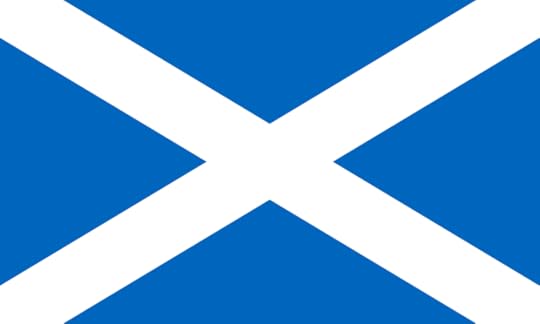
Royal Banner

Motto: "In My Defens God Me Defend" (Scots)
"In my defence God me defend"
Mod
Proposed national anthems of Scotland
Auld Lang Syne
Flower of Scotland
Scotland the Brave
The Thistle o' Scotland
along with others
There is no official national anthem of Scotland. However, a number of songs are used as unofficial Scottish anthems, most notably "Scotland the Brave", "Flower of Scotland" and "Scots Wha Hae".
In 2004, lawyers for the devolved Scottish Parliament advised that it was within the legal competence of the Scottish Parliament to choose a national anthem for Scotland, countering the suggestion that it would be a matter reserved to the Parliament of the United Kingdom. This ruling prompted some interest in the idea, and a petition to the Scottish Parliament's petitions committee supported by the Scottish Green Party was referred without recommendation to the Scottish Executive who chose to take no action, considering the issue not to be a political priority. There have been subsequent attempts to re-open the debate on a national anthem for Scotland.
For most international sporting events Scotland uses "Flower of Scotland" as its national anthem. These events include matches of the Scottish national football team and the Scottish rugby union team. The song has also been used as the victory anthem of Scotland at the Commonwealth Games since 2010, replacing Scotland the Brave.
In June 2006 the Royal Scottish National Orchestra conducted an online opinion poll on their website, asking visitors to choose a favourite to be Scotland's national anthem. With over 10,000 votes cast, "Flower of Scotland" came first with 41% of the votes, followed by "Scotland the Brave" with 29%.
"Flower of Scotland" 41%
"Scotland the Brave" 29%
"Highland Cathedral" 16%
"A Man's A Man for A' That" 7%
"Scots Wha Hae" 6%
Mod
Written by Roy Williamson
Lyrics:
O flower of Scotland
When will we see
Your like again
That fought and died for
Your wee bit hill and glen
And stood against him
Proud Edward's army
And sent him homeward
Tae think again
The hills are bare now
And autumn leaves lie thick and still
O'er land that is lost now
Which those so dearly held
That stood against him
Proud Edward's army
And sent him homeward
Tae think again
Those days are past now
And in the past they must remain
But we can still rise now
And be the nation again
That stood against him
Proud Edward's army
And sent him homeward
Tae think again
(Reprise first verse)
Here it is being performed:
http://youtu.be/i0MklIdTiaU
By bagpipes:
The Lone Piper album by David Methven & The Munros
https://www.youtube.com/watch?v=TwNTW...
Mod
Lyrics:
Hark, when the night is falling
Hear, hear the pipes are calling
Loudly and proudly calling down through the glen
There where the hills are sleeping
now feel the blood a leaping
high as the spirits of the old highland men
(Chorus)
Towering in gallant fame
Scotland my mountain hame
High may your proud standards gloriously wave
Land o' the high endeavour
Land o' the shining river
land o' my heart forever
Scotland the brave
High in the Misty highlands,
out by the purple islands
brave are the hearts that beat beneath Scottish skies
wild are the winds to meet you
staunch are the friends that greet you
kind as the love that shines from fair maidens eyes.
(REPEAT CHORUS)
Here it is being performed:
Bagpipes - very familiar - The music is by The Pipes and Drums of The Royal Tank Regiment from the CD The Complete Scottish Bagpipe Collection.
https://www.youtube.com/watch?v=ycy0K...
John McDermott- Scotland Forever "Scotland The Brave" (LIVE)
http://youtu.be/L_OHaipe9KU
Mod
Lyrics:
Land of the thistle and the rowan tree
Scotland a nation, proud and free.
Under the Saltire, flying high for me,
Leading us onward to victory.
Aiming high for all to see,
Together we stand, with faith in our land.
In times of trial and in victory,
Scotland we will be there.
High in the mountains the die was cast,
By our forefathers in the past.
Vows of unity and peace were made,
In a Highland cathedral, where the pipers played.
Here it is being performed:
The Band Of The Royal Irish Regiment-Highland Cathedral - Highland Cathedral Ulster Hall 2007
http://youtu.be/V8FnzSSQGrI
Highland Cathedral performed by Jim Foster
http://youtu.be/b4-SmVk-1PQ?list=RDb4...
Mod
Lyrics:
Is there for honest Poverty
That hings his head, an' a' that;
The coward slave-we pass him by,
We dare be poor for a' that!
For a' that, an' a' that.
Our toils obscure an' a' that,
The rank is but the guinea's stamp,
The Man's the gowd for a' that.
What though on hamely fare we dine,
Wear hoddin grey, an' a that;
Gie fools their silks, and knaves their wine;
A Man's a Man for a' that:
For a' that, and a' that,
Their tinsel show, an' a' that;
The honest man, tho' e'er sae poor,
Is king o' men for a' that.
Ye see yon birkie, ca'd a lord,
Wha struts, an' stares, an' a' that;
Tho' hundreds worship at his word,
He's but a coof for a' that:
For a' that, an' a' that,
His ribband, star, an' a' that:
The man o' independent mind
He looks an' laughs at a' that.
A prince can mak a belted knight,
A marquis, duke, an' a' that;
But an honest man's abon his might,
Gude faith, he maunna fa' that!
For a' that, an' a' that,
Their dignities an' a' that;
The pith o' sense, an' pride o' worth,
Are higher rank than a' that.
Then let us pray that come it may,
(As come it will for a' that,)
That Sense and Worth, o'er a' the earth,
Shall bear the gree, an' a' that.
For a' that, an' a' that,
It's coming yet for a' that,
That Man to Man, the world o'er,
Shall brothers be for a' that.
Here it is being performed:
A Man's A Man For A' That (Opening of Scottish Parliament) - Sheena Wellington
http://youtu.be/hudNoXsUj0o
Mod
Scots Wha Hae is a patriotic song of Scotland which served for centuries as an unofficial national anthem of the country, but has lately been largely supplanted by Scotland the Brave and Flower of Scotland.
The lyrics were written by Robert Burns in 1793, in the form of a speech given by Robert the Bruce before the Battle of Bannockburn in 1314, where Scotland maintained its sovereignty from the Kingdom of England. Although the lyrics are by Burns, he wrote them to the traditional Scottish tune 'Hey Tuttie Tatie'
Lyrics:
Robert Burns (1793)
"Independently of my enthusiasm as a Scotsman, I have rarely met with anything in history which interests my feelings as a man, equal with the story of Bannockburn. . . . Liberty! Thou art a prize truly and indeed invaluable, for never canst thou be too dearly bought!" (Burns to Lord Buchan, 12th Jan 1794). Burns originally wrote the words to this song to the air "Lewie Gordon". He later drafted a new version of the words to fit the tune "Hey, Tuttie Taitie". Burns first draft is considered much superior to the second, and has since been fitted to the tune "Hey, Tuttie Taitie".
Scots wha ha'e wi' Wallace bled
Scots wham Bruce has often led
Welcome to your gory bed
Or to victory
Now's the day and now's the hour
See the front o' battle lour
See approach proud Edward's pow'r
Chains and slavery
Wha will be a traitor knave?
Wha can fill a coward's grave?
Wha sae base as be a slave?
Let him turn and flee!
Wha, for Scotland's king and law,
Freedom's sword will strongly draw,
Freeman stand or Freeman fa',
Let them follow me!
By oppression's woes and pains,
By your sons in servile chains,
We will drain our dearest veins,
But they shall be free.
Lay the proud usurpers low!
Tyrants fall in ev'ry foe!
Liberty's in ev'ry blow!
Let us do or die!
Glossary
fa': fall
ha'e: have
lour: lurk, approach stealthily
sae: so
wha: who
wham: whom
Here it is being performed:
http://youtu.be/u6pS6Cxf4mw
Mod
Lyrics:
The Thistle o’ Scotland
(As translated by Malcolm MacFarlane)
Chorus
O, the Thistle o’ Scotland was famous of auld,
Wi’ its toorie[3] sae snod[4] and its bristles sae bauld;[5]
’Tis the badge o’ my country – it’s aye dear to me;
And the thocht o’ them baith brings the licht to my e’e.
Suaicheantas na h-Alba
(The original Gaelic version by Evan MacColl)
Seisd
’S e Foghnan na h-Alba lus ainmeil nam buadh;
Lus grinn nan dos calgach thug dearbh air bhi cruaidh;
Sean-suaicheantas mòrail tir bhòidhich mo luaidh:
’S tric dh’fhadaich a dheagh-chliù tein’-éibhinn’nam ghruaidh.
Its strength and its beauty the storm never harms;
It stan’s on its guard like a warrior in arms;
Yet its down is saft as the gull’s on the sea,
And its tassle[6] as bricht as my Jeanie’s blue e’e.
O, The Thistle, etc.
Lus deas nam meur cròcach nach leònar le stoirm;
Ged ’s ionann teachd geàrr air ’s laoch dàna fo airm,
’S leis clòimh tha cho maoth-gheal ri faoileig na tràigh,
’S bàrr-ghucan cho ciùin-ghorm ri sùilean mo ghràidh.
‘S e Foghnan, etc.
O, my country, what wonder yer fame’s gane afar;
For yer sons ha’e been great baith in peace and in war:
While the sang and the tale live they’ll aye win respect,
The lads neath the bonnets wi’ thistles bedeckt.
O, The Thistle, etc.
Mo dhùthaich, cha ’n ioghnadh mòr chliù air thigh’nn uait,
’S a liuthad duaidh-làraich ’s deagh ghnàth tha ris fuaight’;
An cian is le Albainn luchd seanachais no bard,
Bidh meas air an dealbh anns gach gorm-bhonaid àird.
‘S e Foghnan, etc.
Langsyne[7] the invaders cam owre[8] to our shore,
And fiercely our thistle they scotched and they tore;
When they maist thocht it deid, ‘twas then it up bore,
And it bloomed on their graves quite as strong as before.
O, The Thistle, etc.
Sluagh borb, le droch rùn da, ’s tric bhrùchd air a nuas;
’S tric bhrùchd, ach, gun taing dhoibh, a cheann chum e suas;
’Nuair shaoil iad bhi buadhach, ’s ann fhuair iad fath bròin:
Feuch! a’ cinn thar an uaighean an cluaran gun leòn.
‘S e Foghnan, etc.
My blessings be yours! Is there Scotsman ava
Wad stan’ by and see ony harm on ye fa’?
Is there gentle or semple wha lives in our land
Wad refuse to drink health to the thistle so grand?
O, The Thistle, etc.
Here it is being performed:
https://www.youtube.com/watch?v=3NJ7D...
Mod
Lyrics:
The History and Words of Auld Lang Syne
In sentimental American movies, Robert Burns' Auld Lang Syne is sung by crowds at the big New Year finale. In Bangkok and Beijing it is so ubiquitous as a song of togetherness and sad farewells, they presume it must be an old Thai or Chinese folk song; while in France it is the song which eases the pain of parting with the hope that we will all see each other again - Oui, nous nous reverrons, mes frères, ce n'est qu'un au revoir. Auld Lang Syne is one of Scotland's gifts to the world, recalling the love and kindness of days gone by, but in the communion of taking our neighbours' hands, it also gives us a sense of belonging and fellowship to take into the future.
It is one of the many folk songs from the great Lowland Scots tradition collected and fashioned by the pen of one of the world's greatest songwriters. Burns devoted the last years of his life to the song tradition, and often a mere fragment from some old ballad was transformed by his alchemy into a memorable love song or Scots poem. With Auld Lang Syne, though, the brilliance was already there; this is the Bard's first mention of it in a letter to Mrs Dunlop in 1788:
"... Light be the turf on the breast of the heaven inspired Poet who composed this glorious fragment."
One of the most interesting facts is that the Auld Lang Syne tune which is sung from Times Square to Tokyo, and has conquered the world, is not the one Robert Burns put the original words to. The older tune though is still sung by traditional singers. It has a more douce, gentle, nostalgic feel to it than the popular tune a mood evoked by the subtle use of the traditional air sung by Mairi Campbell in the first Sex and the City movie. However, whichever tune it is sung to, and wherever in the world it is sung, Auld Lang Syne retains the great emotional resonance of the original traditional song of the Scottish people of those days in the distant past. Lets leave the last word to Burns himself:
"... is not the Scots phrase, 'Auld Lang Syne', exceedingly expressive - there is an old song and tune which has often thrilled thro' my soul".
The words to Auld Lang Syne
Fancy singing along yourself? Here are the verses of the words to Auld Lang Syne:
Should auld acquaintance be forgot,
And never brought to mind?
Should auld acquaintance be forgot,
And auld lang syne.
Chorus:
For auld lang syne, my jo,
For auld lang syne,
We'll tak a cup o' kindness yet,
For auld lang syne,
And surely ye'll be your pint-stowp!
And surely I'll be mine!
And we'll tak a cup o' kindness yet,
For auld lang syne.
Chorus
We twa hae run about the braes
And pu'd the gowans fine;
But we've wander'd mony a weary foot
Sin auld lang syne.
Chorus
We twa hae paidl'd i' the burn,
Frae mornin' sun till dine;
But seas between us braid hae roar'd
Sin auld lang syne.
Chorus
And there's a hand, my trusty fiere!
And gie's a hand o' thine!
And we'll tak a right guid willy waught,
For auld lang syne.
Chorus
Should old acquaintance be forgot,
And never brought to mind?
Should old acquaintance be forgot,
And long, long ago.
Chorus
And for long, long ago, my dear
For long, long ago,
We'll take a cup of kindness yet,
For long, long ago
And surely youll buy your pint-jug!
And surely I'll buy mine!
And we'll take a cup of kindness yet,
For long, long ago.
Chorus
We two have run about the hills
And pulled the daisies fine;
But we've wandered manys the weary foot
Since long, long ago.
Chorus
We two have paddled in the stream,
From morning sun till dine;
But seas between us broad have roared
Since long, long ago.
Chorus
And there's a hand, my trusty friend!
And give us a hand of yours!
And we'll take a deep draught of good-will
For long, long ago.
Chorus
Here it is being performed by Susan Boyle:
Auld Lang Syne- Susan Boyle (lyrics)
https://www.youtube.com/watch?v=ztjhH...
Mod
Edinburgh
55°57′N 3°11′W
Largest city:
Glasgow
55°51′N 4°16′W
Languages:
English
Recognised regional languages:
Scottish Gaelic
Scots
Ethnic groups (2011):
96.0% White
2.7% Asian
0.7% Black
0.4% Mixed
0.2% Arab
0.1% other
Demonym:
Scottish
Scots
Sovereign state:
United Kingdom
Government:
Devolved government within constitutional monarchy
- Monarch - Elizabeth II
- First Minister - Nicola Sturgeon
British Government:
- Prime Minister - David Cameron
- Secretary of State - Alistair Carmichael
Legislature:
Scottish Parliament
Formation:
- Established - 9th century (traditionally 843)
- Union with England - 1 May 1707
- Devolution - 19 November 1998
Area:
- Total - 78,387 km2
30,414 sq mi
- Water (%) 1.9
Population
- 2013 estimate 5,327,700[4]
- 2011 census 5,313,600[5]
- Density 67.5/km2
174.1/sq mi
GDP:
(nominal) 2013 estimate
- Total $245.267 billion[6]
(including revenues from
North Sea oil and gas)
- Per capita $45,904
Currency:
Pound sterling (GBP)
Time zone:
GMT (UTC)
- Summer (DST)
BST (UTC+1)
Date format:
dd/mm/yyyy (AD)
Drives on the:
- left
Calling code:
+44
Patron saint:
Saint Andrew
Saint Margaret
Saint Columba
Internet TLD
.scotf
Website:
www.scotland.org
 One of the legendary heroes of Scotland.
Robert the Bruce: King of Scots
 by Ronald McNair Scott(no photo)
Synopsis:
Robert the Bruce is one of the great heroic figures of history. When after years of struggle Scotland was reduced to a vassal state by Edward I of England it was Bruce who, supported by the Scottish Church and a group of devoted followers, had himself crowned at Scone as King of Scots and renewed the fight for freedom. Ronald McNair Scott has used the accounts of contemporary chronicles, particularly those of John Barbour, to reconstruct the story of one of the most remarkable of medieval kings. It is a story with episodes quite as romantic as those of King Arthur, but one which belongs to the authentic history of the Scottish nation.
Mod
 Mod
Mod
 by
by
 Magnus Magnusson
Synopsis:
Drawing on a great deal of modern scholarship that has redefined the nation's story, Magnus Magnusson vividly re-creates the fascinating history of Scotland, offering the most up-to-date and comprehensive history available today. Magnusson, who received an honorary knighthood for his contributions to the preservation of Scotland's heritage, casts the nation's historical trajectory as a long struggle toward nationhood. He explains the roots of the original Scots and examines the extent to which Scotland was shaped by the Romans, the Picts, the Vikings, and the English.
He casts a sober eye on the many deep-seated myths that have developed over the years, assessing their sometimes-questionable credibility while still fully appreciating their importance to the people of Scotland. In addition to this cultural history, Magnusson offers a detailed account of the political and economic forces that shaped the nation's fate. Packed with colorful stories, bloody battles, vicious political intrigues, and a rich pageant of historical characters, it is essential reading for anyone interested in the history of this fascinating land.
Edinburgh CastleEdinburgh Castle is a historic fortress which dominates the skyline of the city of Edinburgh, Scotland from its position on the Castle Rock. Archaeologists have established human occupation of the rock since at least the Iron Age (2nd century AD), although the nature of the early settlement is unclear. There has been a royal castle on the rock since at least the reign of David I in the 12th century, and the site continued to be a royal residence until the Union of the Crowns in 1603. From the 15th century the castle's residential role declined, and by the 17th century it was principally used as military barracks with a large garrison. Its importance as a part of Scotland's national heritage was recognised increasingly from the early 19th century onwards, and various restoration programmes have been carried out over the past century and a half. As one of the most important strongholds in the Kingdom of Scotland, Edinburgh Castle was involved in many historical conflicts from the Wars of Scottish Independence in the 14th century to the Jacobite Rising of 1745. It has been besieged, both successfully and unsuccessfully, on several occasions.
Few of the present buildings pre-date the Lang Siege of the 16th century, when the medieval defences were largely destroyed by artillery bombardment. The most notable exceptions are St Margaret's Chapel from the early 12th century, which is regarded as the oldest building in Edinburgh, the Royal Palace and the early-16th-century Great Hall, although the interiors have been much altered from the mid-Victorian period onwards. The castle also houses the Scottish regalia, known as the Honours of Scotland and is the site of the Scottish National War Memorial and the National War Museum of Scotland. The British Army is still responsible for some parts of the castle, although its presence is now largely ceremonial and administrative. Some of the castle buildings house regimental museums which contribute to its presentation as a tourist attraction.
The castle is in the care of Historic Scotland and is Scotland's most-visited paid tourist attraction, with over 1.4 million visitors in 2013. As the backdrop to the Edinburgh Military Tattoo during the annual Edinburgh International Festival the castle has become a recognisable symbol of Edinburgh and of Scotland and indeed, it is Edinburgh's most frequently visited visitor attraction - according to the Edinburgh Visitor Survey, more than 70% of leisure visitors to Edinburgh visited the castle.
Read More of the article at: http://en.wikipedia.org/wiki/Edinburg...
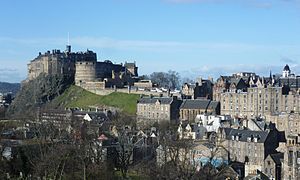
Source: Wikipedia
Mod
 I almost went there! Just ran out of time, but I did spend a few days in Glasgow plus a day in Stirling and a day at Doune. Toured Doune Castle (my primary purpose in Scotland), where they filmed many castle scenes in Monty Python's Holy Grail (Swamp, Camelot, Anthrax), and that showtime series Outlander, and some exterior shots of Game of Thrones winterfell (House of Stark).
It was my 'quest for the holy grail' trip, saw the last (maybe last?) reunion of Monty Python (1 down, 5 to go) at the O2 in London, then Doune Castle. A great trip!
Mod
glasgow was nice weather until our last day, rained all day... we walked from our hotel to glasgow cathedral and the necropolis in the rain, cold, wet, miserable, or as Mel Gibson said in Braveheart, "Oh, it's good Scottish weather"
It has rained every time I have been to Edinburgh...never fails!!!
Mod
 I'll be visiting Scotland in May :) Spending most of my time in the Highlands: Aberdeen, Cairngorms National Park, Inverness, Loch Lomond and Edinburgh. What's the one book I should read to get a good overall picture of Scotland or the Scottish people? Would it be the book suggested by Jerome, above?
by
Magnus Magnusson
Jerome's book is about Scotland from the beginning and is quite good. If you want something more contemporary, you might try:
I'll be visiting Scotland in May :) Spending most of my time in the Highlands: Aberdeen, Cairngorms National Park, Inverness, Loch Lomond and Edinburgh. What's the one book I should read to get a good overall picture of Scotland or the Scottish people? Would it be the book suggested by Jerome, above?
by
Magnus Magnusson
Jerome's book is about Scotland from the beginning and is quite good. If you want something more contemporary, you might try: by Richard J. Finlay (no photo)
Mod
by Richard J. Finlay (no photo)
Mod
Radish books will be good - but believe me if you are going to the East Coast and you have Aberdeen in the mix - make sure you have rain gear - rain gear jacket with hood and rain gear pants, plenty of socks that are the drimax type and rain shoes (waterproof) - there is nothing worse that walking around wet and cold and not being able to dry out your coat and gear. I can't say this enough - I never saw a sea quite as turbulent as the North Sea ever. You are going in May so things might be better then.
I have had good weather on the West Coast often and in Inverness and in the interior - but anyplace along the East Coast from South to North - not so much - in fact not at all.
I think though the fog and mist and/or overcast days add to the mysteriousness of the castles and there are many. Make sure to get some good travel guides on Scotland (Framers and Foders) - so you know where to go, what to see, and how best to get there. The main roads (the A roads) are not ones that I have ever been used too in the US. Some are one lane for the road with cars coming in both directions and you have to pull over and/or back up to the pull off area to let the car or whatever go by. And the roads are winding especially through the Highlands. When traversing the top of Scotland on what they called an A road - I had to get out of the vehicle and clap my hands - the Highland cows were sitting in the middle of the road constantly - so clapping and physically getting out of the vehicle was the only way to move them so we could go by. Needless to say it was not a quick traverse but a rather interesting and comical one. I saw the most beautiful stag right alongside the car looking at us with antlers you would never believe. He had been in those parts for a long time. Beautiful animal.
But the people, the scenery, the history and the beauty are all there in Scotland and will take your breath away. Just make sure you can stay dry. Another good choice for a jacket is the oiled kind that is more impervious to getting soaked.
http://www.tripadvisor.com/ShowTopic-...
Goretex is probably best and don't bother with the umbrella - too much wind - you will end up looking like this guy
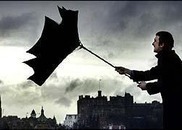
http://www.virtualtourist.com/travel/...
Check out LLBean - they have a fair amount of lightweight and waterproof rain gear, socks, pants, shoes - also Eastern Mountain Sports and REI - can't stress how important to keep yourself waterproof - head to toe.
If you are near Bathgate, be sure and watch for the colored sheep. The farmers dye their sheep with non-toxic dye for the amusement of the tourists. The fields of sheep look like rainbows.
Mod
Thank you for the advice! I have heard about Highland rain, but I didn't think it was that bad. I'll be sure to get kitted out properly.
Mod
Mod
An informative and whimsical journey by a 21st century author, following the steps of James Boswell and Samuel Johnson through Scotland.Whiskey, Kilts, and the Loch Ness Monster: Traveling through Scotland with Boswell and Johnson
 by William W. Starr(no photo)
Synopsis:
Whisky, Kilts, and the Loch Ness Monster is a memoir of a twenty-first-century literary pilgrimage to retrace the famous eighteenth-century Scottish journey of James Boswell and Samuel Johnson, two of the most celebrated writers of their day. An accomplished journalist and aficionado of fine literature, William W. Starr enlivens this crisply written travelogue with a playful wit, an enthusiasm for all things Scottish, the boon and burden of American sensibility, and an ardent appreciation for Boswell and Johnson--who make frequent cameos throughout these ramblings.
In 1773 the sixty-three-year-old Johnson was England's preeminent man of letters, and Boswell, some thirty years Johnson's junior, was on the cusp of achieving his own literary celebrity. For more than one hundred days, the distinguished duo toured what was then largely unknown Scottish terrain, later publishing their impressions of the trip in a pair of classic journals. In 2007 Starr embarked on a three-thousand-mile trek through the Scottish Lowlands and Highlands, following the path--though in reverse--of Boswell and Johnson. Starr tracked their route as closely as the threat of storms, distractions of pubs, and limitations of time would allow. Like his literary forebears, he recorded a wealth of keen observations on his encounters with places and people, lochs and lore, castles and clans, fables and foibles. The tour begins and ends in Edinburgh and includes along the way visits to Glasgow, Inverness, Loch Ness, Culloden, Auchinleck, the Isles of Iona and Skye, and many more destinations. In addition Starr expands his course to include two of the farthest reaches of Scotland where eighteenth-century travelers dared not tread: the Outer Hebrides and the Orkney Islands, remarkable regions shaped by distinctive weather, history, and isolation.
Blending biography, intellectual and cultural history, and comic asides into his travelogue, Starr has crafts an inviting vantage point from which to view aspects of Scotland's storied past and complex present through an illuminating literary lens.
This is the only book you need if you want to know all the trivia and non-trivia of Scotland!Scottish Miscellany: Everything You Always Wanted to Know About Scotland
 by Jonathan Green(no photo)
Synopsis:
With Scottish Miscellany, author Jonathan Green lets you revel in the fun and fascinating explanations behind Scottish traditions and folklore, giving you the answers to questions you’ve always had—or never knew you had—and more as he covers all aspects of Scotland. From Scottish culture to the ancient history of the country to modern pastimes, this book has all that and more. Learn why the thistle is the floral emblem of Scotland, how Scotch whisky is made, why the Scots celebrate Hogmanay, how to play the bagpipes, and much more. This delightful book is the perfect gift for anyone planning a visit to Scotland, with an interest in Scottish history, or a drop of Scottish blood.
Thank you Bentley for your advice on the rain, it rained on me 7 out of the 8 days I was in the highlands, but I loved every minute of it. There was just something in the highlands I was not able to describe - a fierceness- a raw beauty that was evocative and dramatic and inspiring all at once. The Scottish people as well, were perfectly lovely and wonderful. I'm already planning a trip back to Scotland!I picked up a book at Urquhart Castle's gift shop which I'm just about to finish. Written by popular Scottish archaeologist Neil Oliver:
 by Neil Oliver(no photo).
Synopsis:
Scotland's history gets a rewrite by archaeologist and historian Neil Oliver. How accurate are the accounts of Mary Queen of Scots's tragic demise or Bonnie Prince Charlie's forlorn cause? Oliver reveals a Scotland that forged its own identity with success, despite its union with England in 1707.
Mod
It is the fierceness and that beauty that captured my heart too. I understand the tug - I love to go back and just breathe in the air - exhilarating place.
Very good choice - those gift shops are another thing (lol)
PS - also glad that you took my advice and packed the rain gear
The skirl of the pipes has led men into battle or announced the arrival of the Queen...they are ubiquitous in Scottish life and you either love them or hate them.....I love them and this book gives the history of the pipes with illustrations from the National Museum of Scotland.Bagpipes: A National Collection of a National Treasure
 by Hugh Cheape(no photo)
Synopsis:
The Scottish bagpipe has a romance all its own. Here is the story behind the magnificent collection of bagpipes in National Museums of Scotland.
Robert Burns is considered the national poet of Scotland.The Bard: Robert Burns, a Biography
 by Robert Crawford(no photo)
Synopsis:
No writer is more charismatic than Robert Burns. Wonderfully readable, "The Bard" catches Burns's energy, brilliance, and radicalism as never before. To his international admirers he was a genius, a hero, a warm-hearted friend; yet to the mother of one of his lovers he was a wastrel, to a fellow poet he was "sprung . . . from raking of dung," and to his political enemies a "traitor." Drawing on a surprising number of untapped sources--from rediscovered poetry by Burns to manuscript journals, correspondence, and oratory by his contemporaries--this new biography presents the remarkable life, loves, and struggles of the great poet.
Inspired by the American and French Revolutions and molded by the Scottish Enlightenment, Burns was in several senses the first of the major Romantics. With a poet's insight and a shrewd sense of human drama, Robert Crawford outlines how Burns combined a childhood steeped in the peasant song-culture of rural Scotland with a consummate linguistic artistry to become not only the world's most popular love poet but also the controversial master poet of modern democracy.
Written with accessible elan and nuanced attention to Burns's poems and letters, "The Bard" is the story of an extraordinary man fighting to maintain a sly sense of integrity in the face of overwhelming pressures. This incisive biography startlingly demonstrates why the life and work of Scotland's greatest poet still compel the attention of the world a quarter of a millennium after his birth.
An amusing look at the national dish of Scotland, the haggis, written by a popular television cook. All I have to say is that I tried to like haggis, I really tried!!Haggis: A Little History
 by
by
 Clarissa Dickson Wright
Synopsis:
The author, one of the "Two Fat Ladies" of television cookbook fame, handles the history of the haggis with aplomb in this little cookbook. Haggis, for the unititated, is a dish commonly made in a sheep's maw, of minced lungs, hearts, and liver of the same animal.
However, the haggis is much more than a mere meal.
The haggis, or some version of it, may be found in the histories of countries as varied as ancient Greece, Sweden, and the United States. Yet the haggis is most closely associated with Scotland and has come to represent that country just as pasta represents Italy.
Scotland may thank its beloved bard, Robert Burns, for this. Burns immortalized the dish in perhaps his best-known poem, "Address to the Haggis." In it, he refers to the haggis as the "Great Chieftan o' the Puddin'-race!"
How far the haggis had come! Originally a meal of the lower classes who could not afford to waste any edible portion of their livestock, the haggis mysteriously transformed into a delicacy deemed worthy of royalty. Queen Victoria, an enthusiast for most all things Scottish, said of the haggis, "I find I like it very well."
Mod
 by Alistair Moffat (no photo)
Synopsis:
This story of early Scotland begins 10,000 years ago at the end of the Ice Age when the familiar Scottish geography of mountains, glens, and rugged coasts evolved. It follows the movement of hunter-gatherers north, the growth of fishing, the establishment of farming. The author also covers cultural evolution in Scotland – the roles played by megalith builders, Celts, Picts, and others.
Mod
 by Alistair Moffat (no photo)
Synopsis:
From the Ice Age to the recent Scottish Referendum, historian and author Alistair Moffat explores the history of the Scottish nation. As well as focusing on key moments in the nation's history such as the Battle of Bannockburn and the Jacobite Risings, Moffat also features other episodes in history that are perhaps less well documented. From prehistoric timber halls to inventions and literature, Moffat's tale explores the drama of battle, change, loss and invention interspersed with the lives of ordinary Scottish folk, the men and women who defined a nation.
Thanks, Jerome, for the excellent additions.
You tell me how anyone can look this good at age 85!! Sir Sean Connery, a proud Scot, just had his birthday and he still looks fantastic.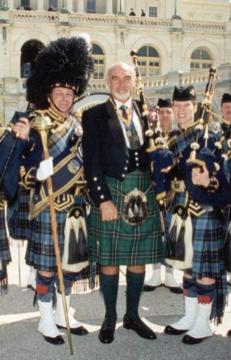
(Photo source: Yourkilt)
A fascinating book which covers all the history of Scotland's most famous tourist attraction. Even if you don't like "tourist traps", you must walk the Royal Mile!A Walk Down Edinburgh's Royal Mile
 by Eric Melvin(no photo)
Synopsis:
Writing in 1824, the author and future publisher Robert Chambers described Edinburgh as "a truly romantic place" and that for visitors it offered " a perfectly unique scene, and one which, once contemplated, was not easily to be forgotten."
What the young Robert Chambers wrote some 200 years ago still holds true today for the thousands of local folk and visitors who walk down Edinburgh's historic Royal Mile.
There can be few streets anywhere in the world that are so steeped in history. Stretching from the Castlehill lying in the shadow of the majestic Edinburgh Castle, then running down the quaintly named Lawnmarket, the Royal Mile then enters the ancient High Street itself before descending down the Canongate past the Scottish Parliament building and finally ending at the Royal Palace of Holyrood. For well over a 1000 years, the Royal Mile has been at the heart of Scotland's capital city.
'A Walk Down Edinburgh's Royal Mile' is intended both as a guide book for our many visitors and as an informative reference book for those, perhaps living far away as expatriate Scots, who have an interest in Edinburgh's unique story.
'A Walk Down Edinburgh's Royal Mile' will also take you off the historic street into some of the ancient closes and wynds which run north to the present-day New Town and south to the Grassmarket and the Cowgate. Many visitors on the Royal Mile pass these by unaware of their treasure trove of tales. Here you will find some of the best stories such as the marital problems of Lady Stair, the ill-luck of Deacon Brodie, the unsolved murder of Thomas Begbie the bank messenger and the murderous activities of the villainous Burke and Hare.
The book will introduce you to some of the remarkable characters who have made this journey. Here you will meet such Scottish monarchs as Robert Bruce, James IV and Mary, Queen of Scots. They are joined by other iconic Scots such as Bonnie Prince Charlie, Sir Walter Scott, John Knox, Elsie Inglis and Robert Burns. Here too you will find an assortment of characters including a notorious warlock, assassins, murderers, thieves, a servant boy roasted on a spit and a town councillor shot dead by a 10 years' old schoolboy.
Your journey will introduce you to some colourful eccentrics including Lord Monboddo who first suggested our descent from apes and Hugo Arnot, the asthmatic lawyer, whose 'History of Edinburgh', published in 1779, gives us an invaluable account of the dramatic changes taking place in the city in the second half of the 18th century.
Sharing your journey are some true Edinburgh 'local heroes' - George Drummond, six times elected as Lord Provost who was the driving inspiration behind the planned New Town; John Kay, the caricaturist who during a career that spanned more than 30 years from 1785 to 1807, has left us images and pen portraits of several hundred of his contemporaries who he observed from his little premises nestling behind St Giles Kirk, Sir William Chambers, another reforming Lord Provost and Sir Patrick Geddes the late 19th century conservationist who fought to preserve what little was left of the historic Old Town from civic destruction.
Nor must we forget the celebrated 'Golden Age' of the late 18th century when Edinburgh rejoiced in the reputation of such intellectual giants as David Hume, Adam Smith, William Robertson, Adam Ferguson and James Hutton. What a cast of characters!
'A Walk Down Edinburgh's Royal Mile' draws from several contemporary sources in describing such events as the Great Fire of 1824 and the murder of David Rizzio, secretary to Mary, Queen of Scots. The book is generously illustrated with pictures of the Royal Mile as we can enjoy it today as well as contemporary prints and drawings.
Jill wrote: "A fascinating book which covers all the history of Scotland's most famous tourist attraction. Even if you don't like "tourist traps", you must walk the Royal Mile!A Walk Down Edinburgh's Royal Mi..."
This sounds like a lovely book! It's bringing back memories! I had a wonderful day spent walking down the Royal Mile, and I bought some handmade fudge which was incredibly delicious - at a store called The Fudge Kitchen. I also had ice cream from Mackie's while strolling the cobblestoned street, all with the sounds of bagpipe buskers playing on the street. Such a vibrant place :)
It is truly a great experience and there are great little shops there and the history is wonderful. I love Scotland!!
The Handbook of Clans and Tartans of Scotland by Maria Costantino (no photo)
Synopsis
The Handbook of Clans & Tartans of Scotland looks at the development of Scottish tartans and their clan affiliations, which have their origins in the tribal traditions of the ancient Celts.
Traditionally, tartans have been a way of identifying kindred and loyalties among clans, yet even today, people in countries throughout the world enjoy claiming clan ancestry, and wearing their tartan with pride. And clan tartans are not just of historical interest - new tartans are still being designed and produced.
With detailed information on over 150 Scottish clans and tartans, including historical importance, geographical origins and links to other clans, this handbook is an essential guide for anyone with an interest in this fascinating subject.
Mod
A book from the Men at Arms series.The Black Watch
 by Charles Grant (no photo)
Synopsis:
n the wake of the Jacobite Rebellions, companies of trustworthy Highlanders were raised from royal clans to protect the populace, deter cattle stealing and guard against any possible Jacobite incursion. Soon after its formation, the companies organized into a regiment of foot known famously as the "Black Watch," the name thought to derive from their dark-coloured tartans and their role to "watch" the Highlands. This book explores the uniforms, equipment and history of the Black Watch, from their involvement in the battles of Fontenoy and Ticonderoga in the mid-18th century, through to the Korean War of the 1950s.
Now you will find out where the kilt came from or why Scots like haggis and lots of other things that you often wondered about.Scottish Miscellany: Everything You Always Wanted to Know About Scotland the Brave
Synopsis:
With Scottish Miscellany, author Jonathan Green lets you revel in the fun and fascinating explanations behind Scottish traditions and folklore, giving you the answers to questions you’ve always had—or never knew you had—and more as he covers all aspects of Scotland. From Scottish culture to the ancient history of the country to modern pastimes, this book has all that and more. Learn why the thistle is the floral emblem of Scotland, how Scotch whisky is made, why the Scots celebrate Hogmanay, how to play the bagpipes, and much more. This delightful book is the perfect gift for anyone planning a visit to Scotland, with an interest in Scottish history, or a drop of Scottish blood.
Bonnie Prince Charlie and the last Jacobite uprising.....exciting, tragic and historically important.Culloden
 by
by
 John Prebble
Synopsis:
This is the story of ordinary men and women involved in the Rebellion, who were described on the gaol registers and regimental rosters of the time as 'Common Men'. There is little in this book about Bonnie Prince Charlie and other principals of the last Jacobite Rising of 1745. Culloden recalls them by name and action, presenting the battle as it was for them, describing their life as fugitives in the glens or as prisoners in the gaols and hulks, their transportation to the Virginias or their deaths on the gallows at Kennington Common. The book begins in the rain at five o'clock on the morning of Wednesday, 16 April 1746, when the Royal Army marched out of Nairn to fight the clans on Culloden Moor. It is not a partisan book, its feeling is for the 'Common Men' on both sides - John Grant charging with Clan Chatten and seeing the white gaiters of the British infantry suddenly as the east wind lifted the cannon smoke, and Private Andrew Taylor in a red coat waiting for Clan Chatten to reach him, likening them to 'a troop of hungry wolves'. Culloden reminds us, too, that many of the men who harried the glens as ruthlessly as the Nazis in Occupied Europe were in fact Scots themselves. It recalls the fact that many men in Prince Charles' army had been forced to join him. It shows that a British foot-soldier's wish for a sup of brandy on a cold morning before battle is as much a reality as a Prince's pretensions to a throne. The detail for the story told in Culloden has come from regimental Order Books and manuals, from contemporary newspapers and magazines, from the letters and memoirs of soldiers and officers, eye-witness accounts of atrocity and persecution, and the personal stories of the victims themselves. Culloden is the story not of a Prince, but of a people.

The History Book Club
Books mentioned in this topic
A Traveller's History of Scotland (other topics)How the Scots Invented the Modern World: The True Story of How Western Europe’s Poorest Nation Created our World & Everything in It (other topics)
The Sisters of Henry VIII: The Tumultuous Lives of Margaret of Scotland and Mary of France (other topics)
The Flight of Bonnie Prince Charlie (other topics)
Mary Queen of Scots (other topics)
More...
Authors mentioned in this topic
Andrew Fisher (other topics)Arthur Herman (other topics)
Maria Perry (other topics)
Hugh Douglas (other topics)
Antonia Fraser (other topics)
More...
Scotland is a country that is part of the United Kingdom and covers the northern third of the island of Great Britain.[13][14][15] It shares a border with England to the south, and is otherwise surrounded by the Atlantic Ocean, with the North Sea to the east and the North Channel and Irish Sea to the south-west. In addition to the mainland, the country is made up of more than 790 islands,[16] including the Northern Isles and the Hebrides.
Edinburgh, the country's capital and second-largest city, was the hub of the Scottish Enlightenment of the 18th century, which transformed Scotland into one of the commercial, intellectual, and industrial powerhouses of Europe. Glasgow, Scotland's largest city, was once one of the world's leading industrial cities and now lies at the centre of the Greater Glasgow conurbation. Scottish waters consist of a large sector of the North Atlantic and the North Sea, containing the largest oil reserves in the European Union. This has given Aberdeen, the third-largest city in Scotland, the title of Europe's oil capital.
The Kingdom of Scotland emerged as an independent sovereign state in the Early Middle Ages and continued to exist until 1707. By inheritance in 1603, King James VI of Scotland became King of England and King of Ireland, thus forming a personal union of the three kingdoms. Scotland subsequently entered into a political union with England on 1 May 1707 to create the new Kingdom of Great Britain. The union also created a new Parliament of Great Britain, which succeeded both the Parliament of Scotland and the Parliament of England. The Treaty of Union was agreed in 1706 and enacted by the twin Acts of Union 1707 passed by the Parliaments of both countries, despite some popular opposition and anti-union riots in Edinburgh, Glasgow, and elsewhere.[22][23] Great Britain itself subsequently entered into a political union with Ireland on 1 January 1801 to create the United Kingdom of Great Britain and Ireland.
Scotland's legal system has remained separate from those of England and Wales and Northern Ireland, and Scotland constitutes a distinct jurisdiction in public and private law. The continued existence of legal, educational and religious institutions distinct from those in the remainder of the UK have all contributed to the continuation of Scottish culture and national identity since the 1707 union. In 1999, a devolved legislature, the Scottish Parliament, was reconvened with authority over many areas of home affairs following a referendum in 1997. The Scottish National Party, which supports Scottish independence, won an overall majority in the 2011 general election. An independence referendum was held on 18 September 2014, with independence being rejected by a majority of 55% to 45% on an 85% voter turnout.
Scotland is a member nation of the British–Irish Council, and the British–Irish Parliamentary Assembly. Scotland is represented in the European Union and the European Parliament with six MEPs.
Remainder of article: http://en.wikipedia.org/wiki/Scotland
Source: Wikipedia
Location: