
The History Book Club discussion
EUROPE - EUROPEAN HISTORY
>
PORTUGAL

 Mod
Mod
Source: Wikipedia
Mod
Lisbon
38°46′N 9°9′W
Official languages:
Portuguese
Recognised regional languages:
Mirandesea
Ethnic groups (2011):
96.3% - Portuguese
3.7% - others
Demonym:
Portuguese
Government:
Unitary semi-presidential constitutional republic
- President - Aníbal Cavaco Silva
- Prime Minister - Pedro Passos Coelho
- Assembly President - Maria da Assunção Esteves
Legislature:
Assembly of the Republic
Formation:
- Foundation - 868
- Re-founding - 1095
- Sovereignty - 24 June 1128
- Kingdom - 26 July 1139
- Recognized - 5 October 1143
- Papal recognition - 23 May 1179
- Restored - 1 December 1640
- Republic - 5 October 1910
- Redemocratization - 25 April 1974
- Actual constitution - 25 April 1976
- Joined the EEC - (now the EU - 1 January 1986
Area:
- Total - 92,212 km (111th)
35,603 sq mi
- Water (%) - 0.5
Population:
- 2014 estimate - 10,427,301 (83rd)
- 2011 census - 10,562,178
- Density 115/km (97th)
298/sq mi
GDP (PPP):
2015 estimate
- Total - $285.439 billion (53rd)
- Per capita - $27,180 (42nd)
GDP (nominal):
2015 estimate
- Total - $231.970 billion (48th)
- Per capita - $22,089 (37th)
Gini (2011):
34.2
medium
HDI (2013):
Steady 0.822
very high · 41st
Currency:
Euro - (€)b (EUR)
Time zone:
WET (UTC+0)
- Summer (DST)
WEST (UTC+1)
Note that the Azores are in a different time zone.
Date format:
dd/mm/yyyy
dd-mm-yyyy
Drives on the:
right
Calling code:
+351
Patron saint:
St Anthony of Padua
Saint George
Immaculate Conception
ISO 3166 code:
PT
Internet TLD:
.pt
Source: Wikipedia
Mod
The 18 districts of mainland Portugal are: Aveiro, Beja, Braga, Bragança, Castelo Branco, Coimbra, Évora, Faro, Guarda, Leiria, Lisbon, Portalegre, Porto, Santarém, Setúbal, Viana do Castelo, Vila Real and Viseu – each district takes the name of the district capita.
Background:
The district system dates back to 25 April 1835, a creation of the Liberal government, and inspired by the French départements, with the objective to facilitate the action of government and permit access to the authorities.
The district, although currently in a process of being phased out, is the most relevant and historically significant subdivision of the nation's territory; it serves as the basis for a series of administrative divisions, such as electoral constituencies or district football associations, as well as being a socially recognizable territorial division of the country.
In 1976, Portugal was divided into 18 districts and two autonomous regions (the Azores and Madeira), consisting of 308 municipalities (concelhos), which in turn were divided into 4257 local government authorities (freguesias).
Article 291 of the 1976 Constitution defined the districts as a transitional level of administration, awaiting the formation of the administrative regions. In the period between 1991 and 2013 the whole continental territory of Portugal was subdivided into metropolitan areas and intermunicipal communities, which rendered the districts obsolete.
As a consequence of these constitutional revisions the "district" has been removed from the legal framework, but remains an important and relevant division for other entities. Similarly, it is still recognized by the general public.
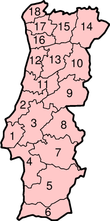
1. Lisbon
2. Leiria
3. Santarém
4. Setúbal
5. Beja
6. Faro
7. Évora
8. Portalegre
9. Castelo Branco
10. Guarda
11. Coimbra
12. Aveiro
13. Viseu
14. Bragança
15. Vila Real
16. Porto
17. Braga
18. Viana do Castelo
Source: Wikipedia
Mod
The Azores and Madeira
Source: Wikipedia
Mod
Administratively, Portugal is a unitary and decentralized State.
Nonetheless, operationally, it is highly centralized system with administrative divisions organized into three tiers.
The State is organized under the principles of subsidiarity, local government autonomy, and democratic decentralization of the public service.
The current government structure is based on the 1976 Constitution, adopted after the 1975 Carnation Revolution. In addition to defining the status of the autonomous regions (Portuguese: regiões autónomas) Azores and Madeira (Articles 225-234), the Constitution specifically identifies the three tiers of government (Article 235-262): civil parishes (freguesias), municipalities (municípios) and administrative regions (regiões administrativas).
In law 75/2013 of September 2013 the two types of administrative regions were defined: metropolitan areas (áreas metropolitanas) and intermunicipal communities (comunidades intermunicipais). Also, the powers and duties of the civil parishes, municipalities, metropolitan areas and inter municipal communities were specified.
In addition, the Portuguese territory was redefined during European integration, under a system of statistical regions and subregions known as Nomenclature of Territorial Units for Statistics. These NUTS definitions, used for collecting statistical information, follow many of the countries border definitions. Although utilized by the Portuguese government, they do not have a legal status in law.
A plan to divide mainland Portugal in eight regions was defeated in a referendum in 1998. The metropolitan areas of Lisbon and Porto were created in 1991. A law passed in 2003 supported the creation of more metropolitan areas, urban communities and other associations of municipalities, but a law passed in 2008 abolished these, converting them into inter municipal communities. Finally in law 75/2013 of September 2013 the current two types of administrative regions were defined:
metropolitan areas (áreas metropolitanas) and
intermunicipal communities (comunidades intermunicipais)
Source: Wikipedia
Mod
The division of the Portuguese territory is established in title eight (Título VIII) of the Portuguese constitution: granting local authority to territorial collectivities with representative organs to affect the interests of the local populations.
These collectivities are defined as autonomous regions, administrative regions, municipalities and civil parishes, but reserves the right of urban areas and islands to establish other forms of local authority.
In defining the rights and privileges of these entities, the constitution also defines sources of income, that includes local heritage, budgets and equalization transfers from the State, in addition to defining the basic role of local government at each level.
Source: Wikipedia
Mod
The two Autonomous Regions of Portugal (Portuguese: Regiões Autónomas de Portugal) are the Azores (Região Autónoma dos Açores) and Madeira (Região Autónoma da Madeira). Together with Continental Portugal (Portugal Continental), they form the whole of the Portuguese Republic.
As defined by the Constitution of Portugal and other laws, an Autonomous region possesses its own Political and Administrative Statute and has its own Government. The branches of Government are the Regional Executive (Governo Regional), and the Legislative Parliament (Assembleia Legislativa). The Parliament is elected by universal suffrage, using the D'Hondt method of proportional representation.
Originally, the sovereignty of the Portuguese Republic was represented in each Autonomous Region by the Minister of the Republic (Ministro da República), proposed by the Government of the Republic and appointed by the President of the Republic. After the sixth amendment to the Portuguese Constitution was passed in 2006, the Minister of the Republic was replaced by a less-powerful Representative of the Republic (Representante da República) who is exclusively appointed by the President.
The President of the Regional Executive (Presidente do Governo Regional) is appointed by the Representative of the Republic according to the results of the parliament election.
Current Presidents of the Regional Executive:
Azores - Vasco Cordeiro (Socialist Party)
Madeira - Alberto João Jardim (Social Democratic Party)
Since 1978, Portugal conceded political autonomy to its North Atlantic archipelagos (Madeira and Azores) due to their distance, isolation, geographical context and socio-economic circumstances. The regional autonomies have their own organic laws, regional governments and administration, overseen by a Regional Government (Governo Regional), constituted by a Regional Presidency (Presidente do Governo Regional) and Cabinet comprising several Regional Secretaries (Secretários Regionais).
The Azores (Açores) is an archipelago of nine islands and several islets that were discovered and settled by the Portuguese in the late 15th century. The Azores lies a third of the distance between Europe and North America, along the Mid-Atlantic Ridge. The government and administration of the archipelago is distributed between the three capitals of the former districts of the Azores: the regional parliament is located in the city of Horta (on Faial Island); Ponta Delgada (on São Miguel Island) is the most populous city and home to the Regional Presidency and administration; while Angra do Heroísmo (on Terceira Island), the historical and cultural capital, is the home of the Azorean judiciary and seat of the Diocese of the Azores.
Madeira is an archipelago that includes two principal islands, Madeira and Porto Santo, plus two uninhabited natural group of islands, the Desertas and Savage Islands (Ilhas Selvagens). The archipelago is located closer to Africa than Europe, is highly commercial and urbanized; its regional capital (Funchal) is developmentally comparable to urban centers in the Canary or Balearic Islands.
Source: Wikipedia
Mod
The metropolitan area (Portuguese: área metropolitana) is a type of administrative division in Portugal. Since the 2013 local government reform, there are two metropolitan areas: Lisbon and Porto.
The metropolitan areas of Lisbon and Porto were created in 1991. A law passed in 2003 supported the creation of more metropolitan areas, under the conditions that they consisted of at least nine municipalities (concelhos) and had at least 350,000 inhabitants.
Several metropolitan areas were created under this law (Algarve, Aveiro, Coimbra, Minho and Viseu), but a law passed in 2008 abolished these, converting them into inter municipal communities, whose territories are (roughly) based on the NUTS III statistical regions.
The branches of administration of the metropolitan area are the metropolitan council, the metropolitan executive committee and the strategic board for metropolitan development. The metropolitan council is composed of the presidents of the municipal chambers of the municipalities. The Metropolitan Areas are territorial units formed by grouping municipalities, in order to economize on municipal investments and services. As of 2014, there are two metropolitan areas:
The current metropolitan areas are:
The Lisbon Metropolitan Area (Área Metropolitana de Lisboa), consisting of 18 municipalities with a total population (2011 census) of 2,821,876
Link to list: http://en.wikipedia.org/wiki/Lisbon_M...
The Metropolitan Area of Porto (Área Metropolitana do Porto), consisting of 17 municipalities with a total population (2011 census) of 1,759,524
Link to list: http://en.wikipedia.org/wiki/Metropol...
Mod
The inter municipal communities replaced the urban communities, the intermunicipal communities for general purposes and some metropolitan areas that were created in 2003,and abolished in 2008.
The territories of the intermunicipal communities are (roughly) based on the NUTS III statistical regions.
As of 2014, there are 21 inter municipal communities:
1. Alentejo Central
2. Alentejo Litoral
3. Algarve
4. Alto Alentejo
5. Alto Minho
6. Alto Tâmega
7. Ave
8. Baixo Alentejo
9. Beira Baixa
10. Beiras e Serra da Estrela
11. Cávado
12. Douro
13. Lezíria do Tejo
14. Médio Tejo
15. Oeste
16. Região de Aveiro
17. Região de Coimbra
18. Região de Leiria
19. Tâmega e Sousa
20. Terras de Trás-os-Montes
21. Viseu Dão Lafões
Source: Wikipedia
Mod
This is a list of the municipalities of Portugal. Portugal is divided into 18 districts (Portuguese: distritos) and 2 autonomous regions (regiões autónomas), Azores and Madeira. The districts and autonomous regions are further sub-divided into 308 municipalities of Portugal (municípios or concelhos). Usually, a municipality has the name of its biggest town or city, or at least, of its historically most important town or city, however, the municipality is, usually, much larger than the city or town after which it is named.
Link to List: http://en.wikipedia.org/wiki/List_of_...
Apart from the national territory, that includes mainland Portugal and the two archipelagos, the municipalities (municípios, colloquially known as concelhos) have been the most constant territorial subdivision in the past 900 years.
While a term for municipality (concelho) appeared in the 13th century, to "express a community constituted in a territory of varying extensions, whose residents – the neighbors of the municipality – are granted major or minor administrative autonomy", the territorial division predates its use.
Preceding the nation's independence, the oldest of the larger municipalities still in existence Coimbra and Santarém were founded in 1085 e 1095, respectively.
São João da Pesqueira (in the district of Viseu) is the oldest Portuguese municipality, founded in 1055.
Since the creation of a democratic local administration, in 1976, the Portuguese municipalities have been ruled by a system composed by an executive body (the municipal chamber) and a deliberative body (the municipal assembly). The municipal chamber (câmara municipal) is the executive body, and is composed of a president of the municipality and a number of councillors whose number depends on the municipality's population. The municipal assembly (assembleia municipal) is composed of the presidents of all the civil parishes plus a number of directly elected representatives that has to be at least equal to the number of civil parish presidents plus one, and which otherwise depends on the municipal population.
There are 308 municipalities in Portugal. They are usually named for their biggest city, or at least, their historically most important city or town. However, the municipality is usually much larger than the city or town after which it is named.
The largest in area is Odemira with 1720.60 km², the smallest is São João da Madeira with an area of 7.94 km².
Nearly all municipalities are subdivided into civil parishes. Barcelos is the municipality with the largest number of civil parishes There are six municipalities that have only one civil parish: São João da Madeira, Alpiarça, Barrancos, Castanheira de Pera, Porto Santo (Madeira) and São Brás de Alportel. The municipality of Corvo (in the Azores) is the only Portuguese municipality without a civil parish.
Source: Wikipedia
Mod
The parish, in contrast with the municipalities, had their base in the ecclesiastical divisions that "had its origin in the fact that neighbours professed the same religion and professed their faith and divinity in the same temple".
Between 1216 and 1223, Afonso II of Portugal began a process of legitimizing the Portuguese territory by conferring charters to nobles, clergy and municipal chambers (which would not be completed until after 1249 (under Afonso III of Portugal), making the parish the smallest division. From the 19th century freguesia began to refer to the civil/administrative entity, while the paróquia (Latin: parochia) became affiliated with the religious entity.
Since the creation of a democratic local administration, in 1976, the Portuguese parishes have been ruled by a system composed by an executive body (the junta de freguesia, "parish board") and a deliberative body (the assembleia de freguesia, "parish assembly"). The members of the assembleia de freguesia are publicly elected every four years. The presidents of the parish assemblies are also members of the municipal assembly.
Before the 2013 local government reforms, the 308 municipalities were subdivided into 4,259 civil parishes. As part of the national government's attempt to control spending, in light of the sovereign debt crisis, in 2012 the government of Pedro Passos Coelho introduced a plan to reform the administrative divisions, in order to create efficiencies and save money. The plan envisioned the reform of the management, territorial geography and political form of how Portugal functioned at the local level, including specifically at the freguesia and município levels.
In addition to the reduction of the number of representatives in the local boards, the plan also established criteria for the reduction, amalgamation or extinction of various civil parishes. The reform was implemented according to law 11-A/2013 of January 2013, which defined the reorganization of the civil parishes.
Since the 2013 reform, there are 3,091 parishes in Portugal. The largest in area is Alcácer do Sal (Santa Maria do Castelo e Santiago) e Santa Susana with 888.35 km², the smallest is Borba (São Bartolomeu) with an area of 0.20 km².
List of the Parishes:
http://en.wikipedia.org/wiki/Category...
Source: Wikipedia
Mod
In Portugal, a city (Portuguese: cidade) is an honorific term given to locations that meet several criteria, such as having a minimum number of inhabitants, good infrastructure (schools, medical care, cultural and sports facilities), or have a major historical importance. The country's demographic expansion of the 1980s prompted the elevation of several towns to city status and, as of 2006, 151 locations in Portugal are considered a city.
n Portugal, the city is not an administrative division, therefore a city generally does not necessarily correspond to a municipality, with the exception of the entirely urban municipalities, such as Lisbon, Porto, Funchal, Amadora, Entroncamento, and São João da Madeira.
The municipality with the most cities is Paredes Municipality, which contains four cities.
Until 1910, a location was proclaimed city by royal charter, which happened 25 times to current Portuguese cities (royal charters were also granted to cities of the Portuguese Empire; for example, São Paulo in 1711). During the Portuguese First Republic, the process was transferred to the parliament, which elevated three towns to the category of city. The dictatorial Estado Novo regime proclaimed seven cities on the Portuguese mainland (as well as some more in the colonies), this time by government decree. After the 1974 Carnation Revolution, proclamation of cities returned to parliament and now, Portugal has 156 cities, one of the consequences being that the title no longer holds the prestige it once had.
Eight locations have been always considered cities since Portugal became an independent kingdom (de facto 1128): Braga, Coimbra, Lamego, Porto and Viseu, as well as Évora, Lisbon and Silves, which were annexed at a later date. Guarda was the first city proclaimed as part of the independent kingdom, in 1199.
The most recent cities were proclaimed on 12 June 2009: Valença, Senhora da Hora, São Pedro do Sul, Samora Correia, and Borba.
The most populous cities are: Lisbon (Lisboa), Oporto (Porto), Braga, Amadora, Gaia, Queluz, Funchal, Coimbra, Setubal, Agualva-Cacem and Almada.
List of Cities in Portugal:
http://en.wikipedia.org/wiki/List_of_...
Source: Wikipedia
Mod
A
A dos Cunhados
A dos Francos
Abragão
Abraveses
Aguada de Cima
Águas Santas (in Maia Municipality)
Aguiar da Beira
Alandroal
Albergaria-a-Velha
Alcains
Alcanena
Alcanhões
Alcantarilha, in Silves Municipality
Alcobertas
Alcochete
Alcoutim
Aldeia do Carvalho
Alenquer
Alfândega da Fé
Alfarelos (Soure Municipality)
Alfeizerão
Algés, Oeiras Municipality
Algoz
Algueirão-Mem Martins, Sintra Municipality
Alhadas
Alhandra
Alhos Vedros
Alijó
Aljezur
Aljubarrota
Aljustrel
Almancil
Almeida
Almendra
Almodôvar
Almofala, Castro Daire Municipality
Alpendurada
Alpiarça
Alter do Chão
Alvaiázere
Alvalade
Alvite
Alvito
Alvor, Portimão
Amareleja
Amares
Amiais de Baixo
Ançã
Angeja
Anha
Ansião
Anta
Apúlia
Arazede
Arco de Baúlhe
Arcos de Valdevez
Arcozelo
Arganil
Argoncilhe
Argozelo
Armação de Pêra
Armamar
Arouca
Arraiolos
Arranhó
Arrifana
Arronches
Arruda dos Vinhos
Avanca
Aveiras de Cima
Avelar
Avintes
Avis
Avô
Azambuja
Azeitão
Azueira
B
Baião
Baixa da Banheira
Barrancos
Barrosas
Barroselas
Batalha
Belas, Sintra
Belmonte
Benavente
Benedita
Benfica do Ribatejo
Beringel
Bobadela
Boidobra
Bombarral
Borba
Boticas
Branca
Brejos de Azeitão
Britiande
Brito
Bucelas
C
Cabanas de Tavira
Cabanas de Viriato
Cabeceiras de Basto
Cacia, Aveiro
Cadaval
Caldas das Taipas
Caldas de S Jorge
Caldelas
Calheta, Madeira
Camacha, Madeira
Camarate
Cambres
Caminha
Campelos
Campo
Campo de Besteiros
Campo Maior
Canas de Santa Maria
Canas de Senhorim
Caneças
Canedo
Canelas
Caniçal
Capelas
Caramulo
Caranguejeira
Carapinheira
Caria
Carnaxide
Carrazeda de Ansiães
Carregado
Carregal do Sal
Carregosa
Carrezedo de Montenegro
Carvalhos
Carvoeiro
Cascais
Castanheira de Pêra
Castanheira do Ribatejo
Castelo da Maia, Maia
Castelo de Paiva
Castelo de Vide
Castro Daire
Castro Marim
Castro Verde
Cavês
Caxarias, Ourem
Caxias, Oeiras
Cedovim
Ceira, Coimbra
Cela
Celorico da Beira
Celorico de Basto
Cercal do Alentejo
Cernache do Bonjardim
Cesar
Chamusca
Charneca da Caparica
Cinfães
Colares
Condeixa-a-Nova
Constância
Corroios
Cortegaça, Ovar
Coruche
Corvo, Azores
Couço
Crato
Crestuma
Cuba, Alentejo
Cumieira
D
Darque
E
Eixo
Ermidas do Sado
Ervedosa do Douro
Escoural
Espinhal
Estômbar
Estreito de Câmara de Lobos, Madeira
F
Fajões
Famões
Fânzeres
Fão
Favaios
Fazendas de Almeirim
Febres
Fermentelos
Fermil de Basto
Ferragudo
Ferreira do Alentejo
Ferreira do Zêzere
Ferro
Figueira de Castelo Rodrigo
Figueiró dos Vinhos
Fontelo
Fontes
Forjães
Fornos de Algodres
Forte da Casa
Foz do Arelho
Frazão
Freixianda
Freixo de Espada à Cinta
Freixo de Numão
Fronteira
Fuseta
G
Gaeiras
Gandarela de Basto
Gavião
Glória do Ribatejo
Góis
Golegã
Gonçalo, Amarante
Grândola
Grijó
I
Idanha-a-Nova
Izeda
J
Joane
Juncal
L
Lagares da Beira
Lagoa, Azores (São Miguel Island)
Lajeosa do Dão
Lajes, Praia da Vitoria, Terceira island, Azores
Lajes das Flores
Lajes do Pico, Pico, Azores
Lalim
Lamas, Feira
Lavradio
Lazarim
Leça da Palmeira
Leça do Balio
Leomil
Lever, Gaia
Linda-a-Velha, (Oeiras)
Lobão, (Feira)
Lordelo (Guimarães)
Lordelo (Vila Real)
Loriga, Seia
Lorvão, Penacova
Loureiro
Louriçal
Lourinhã
Lousã
Lousada
Luso, Mealhada
Luz (or Luz de Lagos), Algarve
Luz de Tavira, Tavira, Algarve
M
Mação
Maceda
Maceira
Macieira de Cambra
Madalena (Madeira)
Mafra
Maiorca
Malveira
Manschestertown Green
Manteigas
Marialva
Marinhais
Marmeleira
Marvão
Melgaço
Mértola
Mesão Frio
Mexilhoeira Grande
Minde
Mira
Mira de Aire
Miranda do Corvo
Mões
Mogadouro
Moimenta da Beira
Moita
Moita dos Ferreiros
Monção
Moncarapacho
Monchique
Mondim da Beira
Mondim de Basto
Monforte
Monsanto
Montalegre
Monte da Caparica
Monte Gordo
Monte Real
Montemor-o-Velho
Mora
Moreira, Maia
Moreira de Cónegos
Mortágua
Moscavide
Mourão
Mourisca
Mozelos
Murça
Murtosa
N
Nazaré
Nelas
Nespereira
Nisa
Nogueira da Regedoura
Nogueira do Cravo
Nordeste, Azores
O
Óbidos
Odeceixe
Odemira
Oeiras
Oiã
Oleiros
Olival
Olival Basto
Oliveira de Frades
Oliveirinha
Ourique
P
Paço de Arcos, Oeiras
Paço de Sousa
Paços de Brandão
Paião
Palmela
Pampilhosa
Pampilhosa da Serra
Paranhos da Beira
Parchal
Parede, Cascais
Paredes de Coura
Pataias
Pedrario
Pedras Salgadas
Pedrógão Grande
Pedroso
Penacova
Penalva do Castelo
Penamacor
Penedono
Penela
Pêra
Pereira (formerly Pereira do Campo), Montemor-o-Velho
Pêro Pinheiro, Sintra
Perosinho
Pevidém
Pias
Pinhal Novo
Pinhão
Pinheiro da Bemposta
Ponta do Sol
Ponte
Ponte da Barca
Ponte de Lima
Pontével
Pontinha
Porches
Portel
Porto da Cruz
Porto de Mós
Porto Moniz (Madeira)
Porto Salvo
Póvoa de Lanhoso
Póvoa de Santo Adrião
Povoação (Azores)
Prados
Praia de Mira (Mira)
Praia do Carvoeiro (Algarve)
Proença-a-Nova
Q
Queijas
Quinta do Conde
Quinta Do Lago
R
Ramada
Rebordões
Redondo
Resende
Riachos
Riba de Ave
Ribamar
Ribeira Brava
Ribeira de Pena
Ribeirão
Rio de Moinhos
Rio de Mouro
Rio Meão
Ronfe
Rossas
S
Sabrosa
Sagres
Salir
Salto
Salvaterra de Magos
Salzedas
Sandim
Sanfins do Douro
Sangalhos, Anadia
Santa Catarina
Santa Catarina da Serra
Santa Cruz da Graciosa [Azores]
Santa Cruz da Trapa
Santa Cruz das Flores [Azores]
Santa Iria de Azóia
Santa Luzia
Santa Marinha, (Seia)
Santa Marinha do Zêzere
Santa Marta de Penaguião
Santar
Santo André (Barreiro)
Santo António dos Cavaleiros
São Bartolomeu de Messines, Silves
São Brás de Alportel
São Cosmado
São Félix da Marinha, Gaia
São João da Pesqueira
São João de Areias
São João de Ovar, Ovar
São João de Tarouca, Tarouca
São João de Ver
São João do Campo
São João do Monte
São Manços
São Martinho de Anta, Alijo
São Martinho de Mouros
São Martinho do Campo (Campo),[Valongo]
São Martinho do Porto
São Miguel de Machede
São Paio de Oleiros
São Pedro da Cova
São Pedro de Alva
São Pedro de Castelões
São Pedro de Rates
São Pedro do Sul
São Romão (Seia municipality)
São Roque, Pico islanda, Azores
São Teotónio
São Tomé de Negrelos
São Torcato
São Vicente, Madeira island
São Vicente de Alfena or Alfena(Valongo)
Sardoal
Sátão
Seixo da Beira
Sendim
Sendim
Senhora da Hora
Sernancelhe
Serra d'El-Rei
Sertã
Serzedelo
Serzedo
Sesimbra
Sever do Vouga
Silgueiros
Silvares[disambiguation needed]
Sintra
Soalheira
Sobrado
Sobral de Monte Agraço
Sobralinho
Sobreda
Soure
Sousel
Souselas
Souselo
Souto, Abrantes
Souto, Sabugal
T
Tábua
Tabuaço
Teixoso
Tentúgal
Termas do Gerês
Terras do Bouro
Tocha
Torrão
Torre de Dona Chama
Torre de Moncorvo
Torredeita
Torreira
Tortosendo
Trafaria, Almada
Tramagal
Treixedo
Trevões
Turcifal
Turquel
U
Unhais da Serra
V
Vagos
Valadares
Valado dos Frades
Vale de Santarém
Válega
Vale Do Lobo
Valença
Velas [Azores]
Verride
Vialonga
Viana do Alentejo
Vidago
Vidigueira
Vieira de Leiria
Vieira do Minho
Vila Chã de Ourique
Vila Chã de São Roque
Vila Cova à Coelheira
Vila da Calheta
Vila das Aves
Vila de Cucujães
Vila de Prado
Vila de Rei
Vila do Bispo
Vila do Coronado
Vila do Porto, Santa Maria Island, Azores
Vila Flor
Vila Franca das Naves, Trancoso (Beiras
Vila Franca do Campo
Vila Meã, Amarante
Vila Nova da Barquinha
Vila Nova da Rainha
Vila Nova de Cacela
Vila Nova de Cerveira
Vila Nova de Milfontes
Vila Nova de Oliveirinha
Vila Nova de Paiva
Vila Nova de Poiares
Vila Nova de São Bento
Vila Nova de Tazem (Gouveia)
Vila Pouca de Aguiar
Vila Praia de Âncora or Ancora, Caminha
Vila Velha de Ródão
Vila Verde
Vila Viçosa
Vilar de Maçada
Vilar Formoso
Vilarandelo
Vimioso
Vinhais
Vouzela
Z
Zebreira
Source: Wikipedia
Mod
MARCH 10, 2015 4:17 AM ET
by Lauren Frayer
NPR Reports - http://www.npr.org/blogs/parallels/20...

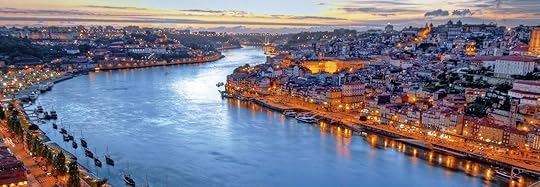
Portuguese architect Margarida Castro (right) provides a tour of Porto in 2014. She is one of three unemployed architects who set up Worst Tours to show visitors the poverty in the city, which has been hard hit by the country's weak economy in recent years. Miguel Riopa/AFP/Getty Images
=========
This article and audio were in the news today. Your thoughts?
Source: NPR
Mod
A Portuguesa
Words by: Henrique Lopes de Mendonça
Music by: Alfredo Keil
Adopted: 1910
At the end of the 19th century, "A Portuguesa," was written by the Republicans, upset over the British ultimatum to Portugal regarding Africa.
There were protests everywhere against the monarchy, and, as a result, "A Portuguesa" could be heard anywhere and became extremely popular. The song still echoes the original intent.
The verses and especially the chorus speak of a call to arms, the third verse speaks of "insults" and "embarrassment" (which is how the Portuguese saw the British ultimatum) and the original last line of the chorus read "Contra os bretões marchar, marchar" (Against the British we march, we march!).
With the success of the Republicans in ousting the monarchy and replacing them with a democratic government, "A Portuguesa" was approved as a national anthem shortly after 1911.
In 1956, there were a number of variations of the anthem, not just in its melodic line but also in the instrumentation. Recognizing this, the government named a commission charged with determining the official version of "A Portuguesa."
This commission prepared a proposal which, approved by the Council of Ministers on 16 July 1957, remains in effect to this day. The one glaring change was the word "bretões" which was replaced by "canhões" (cannons).
Lyrics in English
English Portuguese
Heroes of the sea, noble race,
Valiant and immortal nation,
Rise up once again
The splendor of Portugal.
Out of the mists of memory,
Oh Homeland, we hear the voices
Of your great forefathers
That shall lead you on to victory!
CHORUS:
To arms, to arms
On land and sea!
To arms, to arms
To fight for our Homeland!
To march against the enemy guns!
Unfurl the unconquerable flag
In the bright light of your sky!
Cry out all Europe and the world
That Portugal has not perished.
Your happy land is kissed
By the Ocean that murmurs with love.
And your conquering arm
Has given new worlds to the world!
CHORUS
Salute the Sun that rises
On a smiling future:
Let the echo of an insult be
The signal for our revival.
The rays of that powerful dawn
Are like a mother's kisses
That protect us and support us
Against the insults of fate.
CHORUS
Lyrics in Portuguese
Heróis do mar, nobre povo,
Naçao valente, imortal,
Levantai hoje de novo
Os esplendor de Portugal
Entre as brumas da memória.
Ó Pátria sente-se a voz
Dos teus egrégios avós
Que há-de guiar-te à vitória.
CHORUS:
Às armas! Às armas!
Sobre a terra, sobre o mar!
Às armas! Às armas!
Pela Pátria lutar!
Contra os canhões marchar, marchar!
Desfralda a invicta bandeira
À luz viva do teu céu
Brade à Europa à terra inteira
Portugal não pereceu!
Beija o solo teu jucundo
O oceano a rujir d'amor;
E o teu braço vencedor
Deu mundos novos ao mundo!
CHORUS
Saudai o sol que desponta
Sobre um ridente porvir;
Seja o eco d'uma afronta
O sinal de ressurgir.
Ráios d'essa aurora forte
São como beijos de mãe
Que nos guardam, nos sustêm,
Contra as injúrias da sorte
CHORUS
Here it is being performed with lyrics:
Link: http://youtu.be/MkSQ6_XhvjQ
A Piano Version:
Link: https://www.youtube.com/watch?v=ix3B8...
One showing some beautiful images of Portugal:
Link: https://www.youtube.com/watch?v=twcWH...
More:
http://en.wikipedia.org/wiki/A_Portug...
Source: Wikipedia
Mod
The Hymno da Carta (English: Hymn of the Charter), was officially proclaimed the national anthem of the Kingdom of Portugal in May 1834.It was composed by D. Pedro IV, King Peter IV of Portugal (also Emperor Peter I of Brazil). "Carta" stands for the Constitutional Charter which Peter IV granted to Portugal.
The anthem remained officially in place until 19 July 1911, one year after Portugal became a republic, and was replaced by A Portuguesa.
For those who are curious:
https://www.youtube.com/watch?v=1pmfP...
Mod
http://youtu.be/13JzhYcS0mw
World Heritage Portugal - National Geographic Channel | 2008 English
http://youtu.be/qt-T6Zbry98
Source; You Tube
 Mod
Mod
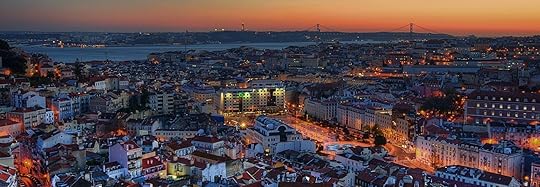
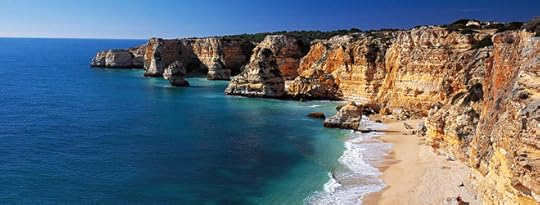
We start in Lisbon, where salty sailors' quarters and wistful Fado singers mix with ornate architecture to recall the glory days when Vasco da Gama and Magellan made Portugal a world power. Then on to the Algarve where we explore the Land's End of Europe — windy and historic Cape Sagres — before savoring pristine beaches and arm-wrestling octopuses in the sleepy fishing village of Salema.
Here is the link: http://youtu.be/5mjEAakFj_A
Source: You Tube
 Mod
Mod
 by Barry Hatton (no photo)
Synopsis:
Portugal is an established member of the European Union, one of the founders of the euro currency and a founding member of NATO. Yet it is an inconspicuous and largely overlooked country on the continent's south-west rim. Barry Hatton shines a light on this enigmatic corner of Europe by blending historical analysis with entertaining personal anecdotes. He describes the idiosyncrasies that make the Portuguese unique and surveys the eventful path that brought them to where they are today.
In the fifteenth-and sixteenth-century Age of Discovery the Portuguese led Europe out of the Mediterranean into the Atlantic and they brought Asia and Europe together. Evidence of their one-time four-continent empire can still be felt, not least in the Portuguese language which is spoken by more than 220 million people from Brazil, across parts of Africa to Asia.Analyzing present-day society and culture, The Portuguese also considers the nation's often tumultuous past. The 1755 Lisbon earthquake was one of Europe's greatest natural disasters, strongly influencing continental thought and heralding Portugal's extended decline. The Portuguese also weathered Europe's longest dictatorship under twentieth-century ruler António Salazar. A 1974 military coup, called the Carnation Revolution, placed the Portuguese at the center of Cold War attentions. Portugal's quirky relationship with Spain, and with its oldest ally England, is also scrutinized.
Portugal, which claims Europe's oldest fixed borders, measures just 561 by 218 kilometers. Within that space, however, it offers a patchwork of widely differing and beautiful landscapes. With an easygoing and seductive lifestyle expressed most fully in their love of food, the Portuguese also have an anarchical streak evident in many facets of contemporary life. A veteran journalist and commentator on Portugal, the author gives a thorough overview of his adopted country.
Mod
 The Lusiads
 by
by
 Luís Vaz de Camões
Synopsis:
First published in 1572, The Lusiads is one of the greatest epic poems of the Renaissance, immortalizing Portugal's voyages of discovery with an unrivalled freshness of observation. At the centre of The Lusiads is Vasco da Gama's pioneer voyage via southern Africa to India in 1497-98. The first European artist to cross the equator, Camoes's narrative reflects the novelty and fascination of that original encounter with Africa, India and the Far East. The poem's twin symbols are the Cross and the Astrolabe, and its celebration of a turning point in mankind's knowledge of the world unites the old map of the heavens with the newly discovered terrain on earth. Yet it speaks powerfully, too, of the precariousness of power, and of the rise and decline of nationhood, threatened not only from without by enemies, but from within by loss of integrity and vision.
Message by
by
 Fernando Pessoa
Synopsis:
Message ("Mensagem") was the only book of verse in his own language that Pessoa saw through the press in his lifetime. On the face of it, a patriotic sequence steeped in 'Sebastianismo', the poems offer much more than this, the Kings and navigators of the Portugal's history standing as avatars of the poet's self, their explorations and heroic deeds projections of the poet's inner creative life. Although Pessoa is famous for the many heteronyms under which he composed verse in wildly different styles, this volume was published under his own name - the 'orthonym', as he defined it - and it remains one of his great masterpieces. This edition brings Jonathn Griffin's fine translation (originally published by the Menard Press in 1992) back into print, as part of Shearsman's Pessoa edition.
Baltasar and BlimundaNote: Historical fiction
 by
by
 José Saramago
Synopsis:
When King and Church exercise absolute power what happens to the dreams of ordinary people? In early eighteenth century Lisbon, Baltasar, a soldier who has lost a hand in battle, falls in love with Blimunda, a young girl with visionary powers. From the day that he follows her home from the auto-da-fe where her mother is condemned and sent into exile, the two are bound body and soul by a love of unassailable strength. A third party shares their supper that evening: Padre Bartolemeu Lourenço, whose fantasy is to invent a flying machine. As the inquisition rages and royalty and religion clash, they pursue his impossible, not to mention heretical, dream of flight.
The Maias by
by
 Eça de Queirós
Synopsis:
Eça de Queirós was Portugal's greatest nineteenth-century novelist, whose works brilliantly evoke -- and condemn -- the rapidly changing society of his times. The Maias (1888) depicts the declining fortunes of a landowning family over three generations as they are gradually undermined by hypocrisy, complacency, and sexual license. With a vivid, comprehensive portrayal of nineteenth-century Portuguese politics and social history, Eça creates a kind of "comédie humaine" that, despite the force of its social satire and its damning critique of the Portugal from which he had exiled himself, is a supreme work of humor and irony.The author was a diplomat who traveled widely, and although he claimed to be an apostle of naturalist realism, he reveals with detached irony the lethargy and decadence of his native land. The book initially attracted attention through its account of an incestuous romance, yet today we can see this as just one element in a novel whose compelling story, depth of thought, and compassion make it one of Europe's great literary masterpieces.
Frei Luís de Sousa by
by
 Almeida Garrett
Synopsis:
A history rendered as tragedy, Frei Luís de Sousa is a classic drama of Portuguese Romanticism. Drawing on the nostalgia for the time of Portugal's 16th King, D. Sebastian (1544-1578), current in his time, Garrett tells the story of Manuel de Sousa Coutinho, a highly-regarded noble who is married to the widow of a noble thought to have died with D. Sebastian in battle. But then, after more than twenty years, the husband returns, rendering the couple's marriage, and daughter, illegitimate.
The Reconquest Kings of Portugal: The Creation of a Medieval Frontier Monarchy by Stephen Lay (no photo)
Synopsis:
This book examines the development of Portugal between the eleventh and thirteenth centuries. During this period Portugal grew from an embattled county under the control of Leon-Castile into an independent kingdom with borders that have remained largely unchanged until the present day.
A History of Portugal and the Portuguese Empire, 2-Volume Set by A.R. Disney (no photo)
Synopsis:
The Kingdom of Portugal was created as a by-product of the Christian reconquest of Hispania. With no geographical raison d'etre and no obvious political roots in its Roman, Germanic, or Islamic pasts, it for long remained a small, struggling realm on Europe's outer fringe. Then, in the early fifteenth century, this unlikely springboard for Western expansion suddenly began to accumulate an empire of its own, eventually extending more than halfway around the globe. A History of Portugal and the Portuguese Empire, drawing particularly on historical scholarship postdating the 1974 Portuguese Revolution, offers readers a comprehensive overview and reinterpretation of how all this happened - the first such account to appear in English for more than a generation. Volume I concerns the history of Portugal itself from pre-Roman times to the climactic French invasion of 1807, and Volume II traces the history of the Portuguese overseas empire.
 Jose always has lots of good book recommendations up his sleeve!!!
I hope you have liked my adds, Jill! Thank you, Bentley!
Mod
Prince Henry "the Navigator": A Life
Jose always has lots of good book recommendations up his sleeve!!!
I hope you have liked my adds, Jill! Thank you, Bentley!
Mod
Prince Henry "the Navigator": A Life by Peter Russell (no photo)
Synopsis:
This enthralling bio of the legendary 15th century Portuguese prince examines the full range of his activities as an imperialist and as a maritime, cartographical, and navigational pioneer. Russell shows his innovations set in motion changes that altered the history of Europe and regions far beyond. Illustrations.
A History of Portuguese Overseas Expansion, 1400-1668 by Malyn D. Newitt (no photo)
Synopsis:
Between the 15th & 17th centuries Portugal built an economic & colonial empire that circled the globe. Malyn Newitt looks at how a late medieval society deployed itself as an economic superpower & successfuly resisted all challenges until well into the 1600s.
Mod
Portugal in European and World History by Malyn D. Newitt (no photo)
Synopsis:
Despite its modest size, Portugal has played a major part in the development of Europe and the modern world. In Portugal in European and World History Malyn Newitt offers a fresh appraisal of Portuguese history and its role in the world—from early Moorish times to the English Alliance of 1650–1900 and through the country’s liberal revolution in 1974.
Newitt specifically examines episodes where Portugal was a key player or innovator in history. Chapters focus on such topics as Moorish Portugal, describing the cultural impact of contact with the Moors—one of the oldest points of contact between Western Europe and Islam; the opening up of trade with western Africa; and the explorations of Vasco de Gama and the evolution of Portugal as the first commercial empire of modern times. Newitt also examines Portugal’s role in the Counter-reformation, in Spain’s wars in Europe, and in the Anglo-Portuguese alliance. Finally, Newitt analyzes the fall of fascism and the Portuguese decolonization within the context of larger global empires and movements.
This new account of a country with a rich history shows how Portugal has moved from being the last colonial power to one of the most enthusiastic proponents of the modern European ideal.
The Portuguese in West Africa, 1415-1670: A Documentary History by Malyn D. Newitt (no photo)
Synopsis:
The Portuguese in West Africa, 1415-1670 brings together a collection of documents all in new English translation that illustrate aspects of the encounters between the Portuguese and the peoples of North and West Africa in the period from 1400 to 1650. This period witnessed the diaspora of the Sephardic Jews, the emigration of Portuguese to West Africa and the islands, and the beginnings of the black diaspora associated with the slave trade. The documents show how the Portuguese tried to understand the societies with which they came into contact and to reconcile their experience with the myths and legends inherited from classical and medieval learning. They also show how Africans reacted to the coming of Europeans, adapting Christian ideas to local beliefs and making use of exotic imports and European technologies. The documents also describe the evolution of the black Portuguese communities in Guinea and the islands, as well as the slave trade and the way that it was organized, understood, and justified.
Convicts and Orphans: Forced and State-Sponsored Colonizers in the Portuguese Empire, 1550-1755 by Timothy J. Coates (no photo)
Synopsis:
This book examines how the early modern Portuguese state used convicts and orphans to populate its global empire over a period of two hundred years. In a country with as small a population base and the global labor requirements of Portugal, no one was expendable, not even such marginal figures as criminals, gypsies, orphans, and prostitutes. The author examines how the Portuguese judicial system, Overseas Council, Courts of the Inquisition, and charities coordinated their efforts to populate border cities in Portugal during the Middle Ages, and then turned to various sites in the empire as places of exile for these elements of society. In addition, he addresses the issue of gender in the state’s use of two distinct groups of single women as colonizers, orphan girls and reformed prostitutes, each given state-awarded dowries if they agreed to relocate overseas.
We are well acquainted with this system as it was used by the British in Australia in the nineteenth century, and much work has been done on similar efforts by other imperial powers, such as France, Spain, Russia, and China, to populate remote regions of their empires. However, this is the first study of the much earlier Portuguese case, and it provides a significant link between the medieval and modern applications of penal exile.
The Portuguese state, with a population in 1600 one-sixth that of Great Britain and one-tenth that of France, exiled around 50,000 people, the same number as each of these larger powers. The punishment of exile was thus far more pervasive in Portuguese society. This work represents a new chapter in the study of exile as a punishment and the use of criminals as colonizers. It helps to explain the longevity of the Portuguese global empire as well as the growth of informal Portuguese-related communities around the world.
Jill wrote: "Jerome always has lots of good book recommendations up his sleeve!!!"I just noticed that I said "Jerome" when I meant "Jose", although Jerome also comes up with some fine recommendations. Thanks guys.
Portugal owned Macau for hundreds of years, until it was turned over to China in 1999. This book looks at the cultural variety that emerged.Macau: A Cultural Janus
 by Christina Miu Bing Cheng (no photo)
Synopsis:
By concentrating on the ambivalent history of Macau, the author reveals the historical reality of cultural vacillation between two political entities and the emergence of a creole minority - the Macanese.
Jill wrote: "Portugal owned Macau for hundreds of years, until it was turned over to China in 1999. This book looks at the cultural variety that emerged.Macau: A Cultural Janus
[bookcover:Macau: A Cultural J..."
Thank you, Jill! The History of the Portuguese colonial empire and of its cultural exchanges is very interesting.
1808: The Flight of the Emperor: How a Weak Prince, a Mad Queen, and the British Navy Tricked Napoleon and Changed the New World by
by
 Laurentino Gomes
Synopsis:
In a time of terror for Europe’s monarchs--imprisoned, exiled, executed--Napoleon’s army marched toward Lisbon. Cornered, Prince Regent João had to make the most fraught decision of his life. Protected by the British Navy, he fled to Brazil with his entire family, including his mentally ill mother, most of the nobility, and the entire state apparatus. Thousands made the voyage, but it was no luxury cruise. It took two months in cramped, decrepit ships. Sickness ran rampant. Lice infested some of the vessels, and noble women had to shave their hair and grease their bald heads with antiseptic sulfur. Vermin infested the food, and bacteria contaminated the drinking water. No European monarch had ever set foot in the Americas, let alone relocating an entire court there. A week after landing, Prince João opened Brazil’s ports, liberating the colony from a trade monopoly with Portugal. While explorers mapped the burgeoning nation’s distant regions, the prince authorized the construction of roads, the founding of schools, and the creation of factories, raising Brazil to kingdom status in 1815. Meanwhile, under French control, Portugal was suffering the dire effects of famine and war. Never had the country lost so many people in so little time. But after Napoleon’s fall and over a decade of misery, the Portuguese demanded the return of their king. João sailed back in tears, but because of him Brazil remained whole and powerful. As he left, the last chapter of colonial Brazil drew to a close, setting the stage for the strong, independent nation that we know today, changing the history of the New World forever.
The amazing story of Alves dos Reis, who was so successful with his counterfeiting that the bank notes of 500 "escudos" (former Portuguese coin) stopped being issued due to lack of trust in them.The Man Who Stole Portugal
 by Murray Teigh Bloom (no photo)
Synopsis:
In November of 1924 a Portuguese businessman on the verge of bankruptcy came up with a plan for counterfeiting unequaled in history in its audacity. With no resources except boldness he set about acquiring the power to print his country's currency. Amazingly, he succeeded and except for a fluke of fortune he would have gotten away with it.
Empire Adrift: The Portuguese Court in Rio de Janeiro, 1808-1821 by Patrick Wilcken (no photo)
Synopsis:
In 1807, the Portuguese prince regent Dom João made an extraordinary decision. Napoleon's troops were closing in on Lisbon, so he chose to transplant his entire court and government to Portugal's largest colony, Brazil. About 10,000 aristocrats, ministers, priests and servants clambered aboard a rickety fleet and, after a rough passage, they spilled off their ships bedraggled and lice-ridden – much to the astonishment of their New World subjects.
Thus began thirteen years of imperial rule from Rio de Janeiro. But the “tropical Versailles” that grew up against the city's jungle-clad mountains only partly obscured the brutal workings of what was then the largest slaving port in the Americas. And while the court grappled with the dark side of its own empire, Brazil was coming of age.
Patrick Wilcken brings this remarkable period to life, blending vivid contemporary testaments with a rich evocation of a time when European royalty went native.
Lisbon: War in the Shadows of the City of Light, 1939-45 by
by
 Neill Lochery
Synopsis:
Lisbon had a pivotal role in the history of World War II, though not a gun was fired there. The only European city in which both the Allies and the Axis power operated openly, it was temporary home to much of Europe’s exiled royalty, over one million refugees seeking passage to the U.S., and a host of spies, secret police, captains of industry, bankers, prominent Jews, writers and artists, escaped POWs, and black marketeers. An operations officer writing in 1944 described the daily scene at Lisbon’s airport as being like the movie Casablanca, times twenty. In this riveting narrative, renowned historian Neill Lochery draws on his relationships with high-level Portuguese contacts, access to records recently uncovered from Portuguese secret police and banking archives, and other unpublished documents to offer a revelatory portrait of the War’s back stage. And he tells the story of how Portugal, a relatively poor European country trying frantically to remain neutral amidst extraordinary pressures, survived the war not only physically intact but significantly wealthier. The country’s emergence as a prosperous European Union nation would be financed in part, it turns out, by a cache of Nazi gold.
I think we tend to forget that Portugal was quite a world power at one time. The Brazil history is particularly interesting and Portuguese has remained the official language of the country because of it.
Mod
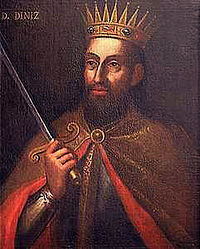
A nice lyric poem of the "trovadorismo" stage of Portuguese literature. O que vos nunca cuidei a dizer (Portuguese medieval poem)
By King Denis of Portugal
"O que vos nunca cuidei a dizer
com gram coita, senhor, vo-lo direi,
porque me vejo já por vós morrer,
ca sabedes que nunca vos falei
de como me matava voss'amor;
ca sabedes bem que d'outra senhor
que eu nom havia pavor nem hei.
E tod'aquesto mi fez fazer
o mui gram medo que eu de vós hei,
e desi por vos dar a entender
que por outra morria de que hei,
bem sabedes, mui pequeno pavor;
e des oimais, fremosa mia senhor,
se me matardes, bem vo-lo busquei.
E creede que haverei prazer
de me matardes, pois eu certo sei
que esso pouco que hei-de viver,
que nenhum prazer nunca veerei;
e porque sõo desto sabedor,
se mi quiserdes dar morte, senhor,
por gram mercee vo-lo terrei."
Video with a musical representation of this poem based on the Sharrer Parchment
Sharrer Parchment
More information
You have found some great additions to this topic, Jose.

The History Book Club
Books mentioned in this topic
Salazar's Dictatorship and European Fascism. Problems and Perspectives of Interpretation (other topics)Salazar: A Political Biography (other topics)
Out of the Shadows: Portugal from Revolution to the Present Day (other topics)
Empire Adrift: The Portuguese Court in Rio de Janeiro, 1808-1821 (other topics)
Trade and Shipping in the Medieval West: Portugal, Castile and England (other topics)
More...
Authors mentioned in this topic
António Costa Pinto (other topics)Filipe Ribeiro de Meneses (other topics)
Neill Lochery (other topics)
Patrick Wilcken (other topics)
Wendy Rosemary Childs (other topics)
More...
We have World Hosts that are folks who are helping out with the country threads. There can be multiple group members who are World Hosts for any country. In the case of Portugal - José Luís Pinto Fernandes is one of the World Hosts for the country of Portugal. Jose is from Portugal and has volunteered to help out.
Portugal officially the Portuguese Republic is a country in southwest Europe. It is located on the Iberian Peninsula, and it is the westernmost country of mainland Europe, being bordered by the Atlantic Ocean to the west and south and by Spain to the north and east. Aside from continental Portugal, the Portuguese Republic holds sovereignty over the Atlantic archipelagos of Azores and Madeira, which are autonomous regions of Portugal. The country is named after its second largest city, Porto, whose name derives from a combination of Latin "Portus", and the Celtic place-name "Cale".
The land within the borders of the current Portuguese Republic has been continually fought over and settled since prehistoric times. The Celts and the Romans were followed by the Visigothic and the Suebi Germanic peoples, who were themselves later invaded by the Moors. These Muslim peoples were eventually expelled during the Christian Reconquista of the peninsula. By 1139, Portugal established itself as a kingdom independent from León. In the 15th and 16th centuries, as the result of pioneering the Age of Discovery, Portugal expanded western influence and established the first global empire, becoming one of the world's major economic, political and military powers, and ultimately dividing the world with Spain.
The Portuguese Empire was the longest-lived of the modern European colonial empires, spanning almost 600 years, from the capture of Ceuta in 1415 to the handover of Macau to the People's Republic of China in 1999 (de facto) or the granting of sovereignty to East Timor in 2002 (de jure) after occupation by Indonesia since 1975. The empire spread throughout a vast number of territories that are now part of 53 different sovereign states, leaving a profound cultural and architectural influence across the globe with a legacy of over 250 million Portuguese speakers today (making it the sixth most spoken first language) and a number of Portuguese-based creoles. Portugal's international status was greatly reduced during the 19th century, especially following the Independence of Brazil. After the 1910 revolution deposed the monarchy, the democratic but unstable Portuguese First Republic was established, itself being superseded by the "Estado Novo" right-wing authoritarian regime. Democracy was restored after the Portuguese Colonial War and the Carnation Revolution in 1974. Shortly after, independence was granted to Angola, Mozambique, São Tomé and Príncipe, East Timor, Cape Verde and Guinea-Bissau.
Portugal is a developed country with an advanced economy, high living standards and high-quality infrastructures, ranking 2nd in the quality of the road network and 11th overall, according to the Global Competitiveness Report.
It is one of the world's most globalized, peaceful and responsive nations. It is a member of the United Nations, European Union, Eurozone, OECD, NATO, WTO, OSCE, Schengen Area, Council of Europe, Community of Portuguese Language Countries and many other international institutions.
Remainder of article: http://en.wikipedia.org/wiki/Portugal
Source: Wikipedia
Location:
Flag:
Source: Wikipedia