
Jane Austen's Books & Adaptations discussion

This topic is about
A Charming Place
Books/Adaptations of the Month
>
July 2023 Group Read: A Charming Place: Bath in the Life and Novels of Jane Austen by Maggie Lane
date newest »
newest »
 Mod
Mod
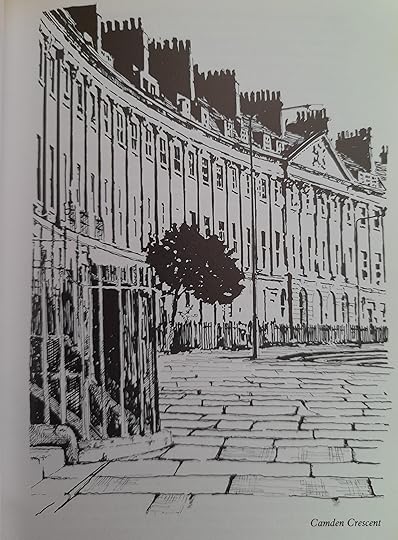
This is one of the illustrations:
The first home the Austens lived in after their relocation to Bath in 1801: 4 Sidney Place
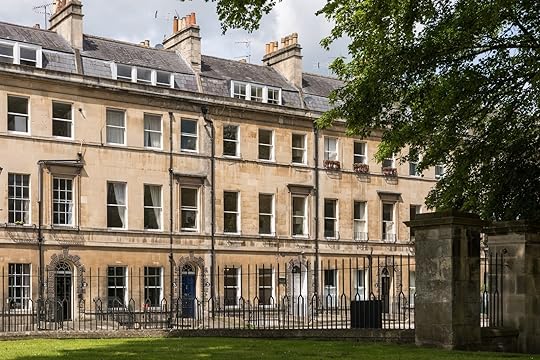
In the books I have read so far on Jane Austen there is usually mentioned that 4 Sidney Place is a private home and tourists should not bother the family living there. Well, when googling how the place looks like today I found out that the house was bought by enterpreneurs who rent it out to tourists.
Here is a lovely blog post with pictures recounting the experience of staying at the place in 2015: http://laughingwithlizzie.blogspot.co...
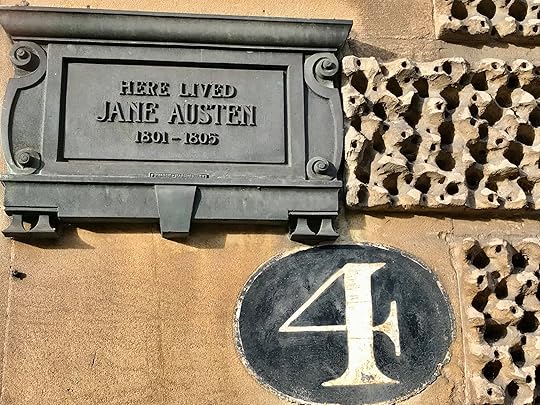
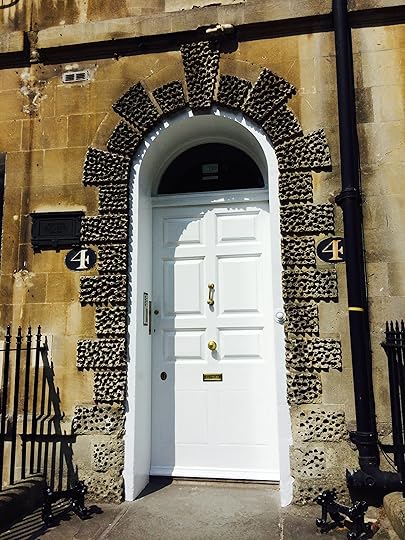
Seems like in the meantime the house changed hands (several times).
These websites no longer let you book your stay, but you can check out the pictures:
https://www.letsbookhotel.com/en/uk/b...
https://www.letsbookhotel.com/en/uk/b...
This one seems to work just fine:
https://www.airbnb.co.uk/rooms/plus/2... I'm not crazy about how the new owner redecorated the apartments. I would have guessed that he's a foreigner & even the general area of Europe he comes from before reading it on the site. What a pity!
Mod
- the three famous creators of Georgian Bath: John Wood (an architect), Ralph Allen (his patron) and Beau Nash (the Master of Ceremonies in Bath and a renown dandy)
- the Bath season lasted from October to May, but was at its height from January to March
- Jane Austen's two Bath novels - Northanger Abbey and Persuasion - reflect the social, moral and cultural changes which had taken place in the 17 or 18 years between writing of these two novels. NA was written in 1798-99 and revised in 1803 when it was sold to a bookseller. Persuasion was begun in 1815 and finished in in July 1817. Both novels were published posthumously together in December 1817.
Shapard commented on these changes in his annotated edition of Persuasion where he explained why Sir Walter Elliot limited his family's social life to dull visits to the boring Lady Dalrymple and her set and an occasional concert: (very minor spoilers for Persuasion)
"The Elliots’ disdain for public amusements reflects a change in Bath at this time, one noted by various observers. Throughout the 1700s public events had dominated social life, and visitors were strongly encouraged to attend. But the city’s growing popularity, along with increasing affluence and improvements in the ease and speed of transportation, swelled the ranks of middle-class visitors, and this made those in the top echelons of society recoil. The high aristocracy gradually ceased coming at all, while those a little lower, like the Elliots, turned to select gatherings among themselves, however dull such gatherings might be. In contrast, Captain Wentworth does not allow his choice of entertainment to be dictated by such considerations.
In her preface to Northanger Abbey, published at the same time as Persuasion but written thirteen years earlier, Jane Austen notes that many things, including manners, have changed in the interval. This change in Bath is probably part of what she had in mind, for in the earlier novel, unlike here, much of the action in Bath centers around public gatherings."
- There's a rudimentary map of Georgian Bath very inconveniently divided into 4 pages. I made copies and tried to compose a one whole A4 map. Wasn't easy, there were strange overlaps and in one case a minuscule difference in measuring scale.
scaled down version:

link to the full-sized map on my imgur (hope it works): https://i.imgur.com/JJGpTQX.jpg
(I highlighted places where Austens stayed/lived when in Bath)
Mod
Chapter 2 - Househunting:
- Jane (25) and Cassandra (28) had no option but to accompany their parents to Bath. Jane fainted when her parents sprung the news on her. The cost of moving out to a new place was so high that Austen decided to sell almost all of their furniture and other things and buy "new" furniture in Bath. Those "other things" included Jane's books and her pianoforte. Again not something she had any say in. Her pianoforte was not replaced (probably too expensive) until her Chawton years.
- The Austens left Steventon in 1801. They stayed at Leigh-Perrots (Mrs Austen's rich brother and his wife resided in Bath for several months every year) while hunting for the right place to rent.
- Mr and Mrs Austen had problems with mobility in their old age, so they considered only streets fairly level with the city centre (south and west - cheaper, and east - more fashionable. but more expensive)
- The Austen's annual income when they moved to Bath was 600 GBP. They planned to keep a cook, a housemaid, and a manservant.
- The place they chose was 4 Sidney Place, to the east of the centre, fashionable, overlooking the Sidney Gardens. We don't know the exact rent, but a similar property (at Laura Place) rented for 120 GBP in 1792.
- The Austens probably underestimated how costly life at Bath would be for their family. They were used to supplying almost all the food from their own production in Steventon. When their 3 year lease ended they moved to a cheaper place at Green Park Buildings.
- Mr Austen died in 1805 (at 73). Mrs Austen's income shrunk to 140 GBP (!) a year. Cassandra had a very small income set on her by her late fiance. Jane had about 20 GBP a year. It was up to their brothers to support them financially. Among themselves, they were able to increase their mother and sisters' income to 450 GBP.
- Mrs Austen had to let go of the servants - only one remained. And the family had to move once again to a cheaper place in Gay street. It also proved to be too expensive for their reduced budget and they moved once again, this time to Trim Street. In the end they were rescued by Frank who invited them to stay with him and his young bride in Southampton.
Mod
- The thermal water rises in three locations in Bath: the Hot Bath, the King's Bath and the Cross Bath, all rebuilt in the 18th century and each having an associating pump.
- Mrs Austen was violently ill for 3 weeks when residing at 4 Sidney Place. She was under the care of a local apothecary William Bowen. When she recovered, she wrote this short humorous poem:
"Says Death, "I've been trying these three weeks and more
To seize an old Madam here at number Four.
Yet I still try in vain, tho' she's turned of three score;
To what is my ill success owin?"
"I'll tell you, old Fellow, if you cannot guess,
To what you're indebted for your ill success -
To th eprayers of my husband, whose love I possess,
To the care of my daughters, whom Heaven will bless,
To th skill and attention of Bowen."
Mod
- In the country, almost every item the Austen family consumed had been grown, reared, baked, brewed or churned at home. Supervising the farm and the dairy, gardening and cooking had taken up a great deal of both parents' time, Mrs Austen's especially. The move to Bath eased that burden, but the effect on the family budget, in any case reduced, and diminished too by house-rent, must have been something of an unknown quantity. Jane was to be insecure from this date until the end of her life about money matters.
Chapter 5 - Walks and Drives:
Chapter 6 - Public Entertainments:
- There were nine flourishing private lending libraries in the city. The Austens too were surely subscribers, having sold all their books on leaving Steventon.
-Theater-going:
-- The old theatre, at Orchard Street near the Abbey, was granted a royal patent in 1768, and was the first provintial theatre entitled to call itself "Theatre Royal". Plays were presented in Bath only on Tuesdays, Thursdays and Saturdays, for on alternate weekdays, the same company, with the same props, were playing in the neighbouring city. A different pair of plays was performed on each night of the week.
-- The old building wasn't sufficient for the city, and in 1804, the new theatre began its construction near Chandos buildings. The new house opened in 1805.
-- Jane had no fewer than six separate opportunities between 1801 and 1806 to see a performance of Lovers Vows (the play featured in Mansfield Park). We don't know for sure whether she saw one of those or not, but it's a distinct possibility.
Mod
It's short and packed with interesting information.


A charming place: Bath in the life and times of Jane Austen by Maggie Lane
"This beautifully illustrated pocket-sized book takes the reader on a tour of Georgian Bath, from the moment of arrival through all the pursuits Jane Austen, her social circle and her characters engaged in during their stay.
The historical framework of the text is filled with references to Jane Austen’s life and correspondence, and of course to her descriptions of the city in her novels.
This book is a very useful companion for visitors with an historical interest in their Jane Austen-inspired visit to the city."
First published: 1988
I took a photo of the back cover so you can read the blurb: