
Play Book Tag discussion
Footnotes
>
Conversation Topic 7/12
date newest »
newest »
 I'm just going to chime in briefly here - great question, Jason - as I'm traveling on business and it's been and will continue to be busy. I'll dip back in with more detail.
 I can read quite shallowly - easily suspend disbelief and revel in light romances, cozy mysteries, amusing SFF. But I also bring a lot of education, learning and books read, and a good memory, to everything I read. That means I pick up influences, inspirations on the author. I pick up on a lot and it definitely enriches my reading.
My favorite example: The Invisible Life of Addie LaRue. I rank it as one of the top 5 books I've ever read and truly could come up with a college level course syllabus with it at the center. Or write a dissertation. It's not just Goethe's Faust, but also Greek/Roman myth and more. I even created a list of what came to my mind as I read it. As I recall, it was the first fully adult, non-YA novel by V.E. Schwab, and it is a stunning read IMO.
Just ask my Feminerdy Book Club - I'm also pointing out literary and theoretical references in the SFF we read, pull up deeper themes, etc.
One more thing that heavily influences what I bring and get out of the books I read: being a lawyer. Law school teaches you to think, read, analyze, understand in a very different way. As a result, you never ever read or write anything the same way - you just analyze and think differently, pick up on subtleties. Understand why a argument would have been made or a scene described in some manner that to most won't feel correct.
 I have a two step approach, and in general it works for me regardless if I'm considering a novel, a painting, a piece of classical music, a fine art photograph or an old city center for architecture..
I try to enter the first time with a clean slate, an open mind and try to find out why I am attracted to the art. If it clicks, I like then to go in depth, to get context about the artist, the time frame, the school of aesthetics and so on and I find that, more often than not, this enhances the initial experience.
In a novel, I like to avoid in-depth reviews or author biographies if it is a new name, and only check them after I finish the story. In photography, I loved Ansel Adams, Robert Doisneau, Sebastiao Salgado or Yann-Arthus Bertrand before I knew who they were, but their lives are as interesting as their art. In paintings, I was caught by the light of Renoir or Monet before I started to read about Impressionism. Same with the Romantic classical concertos, Brahms or Rachmaninoff. I saw only one painting by Edward Hopper, but I knew instantly that we are kin...
I had similar experiences in cinema: first it was just entertainment, spectacle, fun then as a student I went for a couple of years to the Bucharest cinematheque where once a week a film critic came and talked to us before the viewing about what we were going to watch and afterwards moderated a discussion with the public about what we saw. It turned me towards arthouse cinema from Ingmar Bergman, Francois Truffaut, Michelangelo Antonioni, Sidney Lumet and a host of other original creators.
Now that I think about it, about once a week I also went to a music club where two fans of jazz and progressive music that later became TV hosts were doing auditions and free discussions on modern music.
Good times!
 It all depends on what branch of art it is, and, in part, on how much I know about it. I know a great deal more about photography (primarily slide photography from when we used film, but also print) so look at art photography from back then with a more educated eye than I do paintings.
I'd say emotions and how I perceive the art (music and visual arts, for example) matters more to me than the technique and ability. This isn't to say I don't appreciate those, because I do, but if I don't like it, I don't like it--and sometimes I loathe art. In addition, there are some art techniques I don't like at all (in music and in visual art.)
As you can tell, no one calls me for advice on paintings or sculpture :)
However, I can honestly say I don't care how brilliant it is, if I dislike it, I can't appreciate the skill nearly as much. Also, I disagreed with my mother on whether or not the National Gallery in Ottawa wasted $1.5 million on a controversial piece (she thought it was art, I thought it not because anyone could do it) and that had it been painted by someone unknown it might not have been called art. I can't remember if I showed it to my daughter who has a BFA in Sculpture who obviously knows a great deal more about art appreciation than I do to see what she thought.
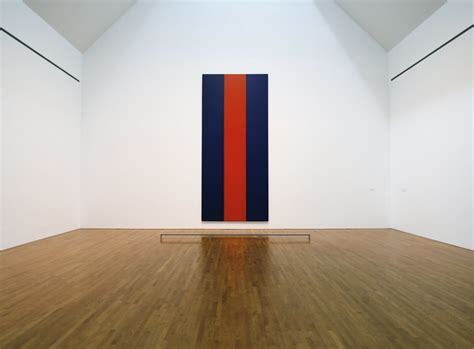
 Karin, I'd have to agree. The art in the photo you shared doesn't speak to me at all. $1.5 million?? Hard to believe! I think that this type of art is the hardest of all to understand and judge.
I'm more drawn to Impressionist art. I find that Jason's questions are hard to answer. Creativity, originality, skill, subject matter, design, and beauty all matter. I can't be more precise than that. Visual art doesn't always have to be beautiful, but it should be arresting in some way.
I've gone to art galleries with my artist friend for years, who is much more knowledgeable than me about art. Recently, she said to me, "By now, you know more than you think. Trust your own judgement!"
Ironically, I just finished reading Dave Egger's book, Contrapposto
 which discusses how to decide what art is.
Holly R W wrote: "Karin, I'd have to agree. The art in the photo you shared doesn't speak to me at all. $1.5 million?? Hard to believe! I think that this type of art is the hardest of all to understand and judge.
which discusses how to decide what art is.
Holly R W wrote: "Karin, I'd have to agree. The art in the photo you shared doesn't speak to me at all. $1.5 million?? Hard to believe! I think that this type of art is the hardest of all to understand and judge.I..."
I agree--my answer isn't at all complete, but I don't think those three lines my husband could paint just as well are worth that much money--he paints houses that are more difficult to paint than that (he's a forester by profession but, long story short, we weren't in a position for him to start at the bottom with the state and there is no call for consulting foresters anywhere around here when something else we were doing fell through.)
 I just finished reading Mysteries of the Rectangle: Essays on Painting, a collection of essays on art pieces. She talks some about the influences and style and skill, but the majority of her focus is how a piece makes people feel. How a piece through ages gives many people the same feelings. She touches on this and then postulates at what about the painting, the lighting, the view, the facial expression and such, that might make us feel that way. My question came from this book.
 I don't know art. This is prose, painting, music, poetry. I can tell you what I like, I sometimes and express how it makes me feel, but many times I struggle to tell you why. I liked the exploration in the book into the possible whys. (some forms of art I'm better at expressing the why than others but overall, I feel inadequate at the why)
I love classical solo piano, but I don't know the names to hardly any of the compositions. I just enjoy listening to it and how it makes me feel. Sometimes I will imagine stories or scenarios that go along with the music's feeling. However, I do feel like I can tell an objective difference between good and music from a technical and skillful level.
With poetry, I'm lost. Again, and I can tell you what speaks to me, but I can't hold any sort of argument why this poem is a "good" poem.
Books I just love and writing and development is more important to me than the story itself, though I do appreciate some books just for their stories. I do feel like I am always looking for meaning or a deeper message or trying to analyze the why and forget sometimes people write just for fun...or a living. But then the argument of the subconscious the authors world view.....
And paintings, drawings, watercolors....I love them. They speak to me emotionally but again, I'm lost as to why technically or back story wise. I enjoyed reading the book that put a different perspective into looking at the art and appreciating the "greats" even if they are not for me.
Jason, I understand what you are saying. That's why it was so hard for me to answer your questions. I know when something calls out to me and I think it is special (painting, music, film, etc.), but it's hard to express why. Maybe it's easier to talk about books, since we've gotten so much practice here.Your discussion of music and how it's so important for a musician to play with felling, rather than just skill alone, made me think of the following excerpt from a book I read, (Margreete's Harbor).
In the book, Liddie, a professional cellist, is talking to her young daughter Eva about music. Eva is a beginning pianist.
She said that Eva probably wouldn't understand until she was older but she would say it anyway. "Some people think that playing is all about themselves. They roar through a piece thinking, 'Look at me! Look how fast my fingers are going, listen to how much noise I'm making!' If you're thinking like that, you're not making music. You have to make yourself small enough to disappear inside it. Then you can make music that makes other people feel something."
Eva thought about this at night in bed. Outside the window, the moon shone and the stars shone. She could feel the bigness of the night and she was very small but also inside that bigness. She thought that might be what her mother was talking about. She wasn't the one who was important. She was inside everything that's important.

Play Book Tag
Books mentioned in this topic
Mysteries of the Rectangle: Essays on Painting (other topics)Contrapposto (other topics)
The Invisible Life of Addie LaRue (other topics)
Do you tend to look for meaning, symbolism, or a message? Do you focus more on how it makes you feel emotionally? Or do you prefer to just experience it without overthinking it?
Have you ever had a strong reaction to a piece of art (positive or negative) that surprised you, or changed how you see something afterward? Has your way of looking at art changed over time?
Feel free to share examples from books you’ve read lately, or from any other form of art that comes to mind.