
Bright Young Things discussion
Favourite Authors
>
Nancy Mitford
date newest »
newest »
 I'm embarking on a Mitford binge and couldn't resist posting something here as she was one the brightest of all the bright young things.
I've read Love in a Cold Climate and am half way through The Pursuit of Love.
I have Pigeon Pie and Nancy Mitford: A Memoir on there way to me.
 Have you read The Sisters: The Saga of the Mitford Family by Mary S. Lovell?
Although I think my copy is called The Mitford Girls. I haven't read it yet.
Jan wrote: "Have you read The Sisters: The Saga of the Mitford Family by Mary S. Lovell?Although I think my copy is called The Mitford Girls. I haven't read it yet."
No. Place it on the pile.
 Mod
Mod
Although I think my copy is called The Mitford Girls. I haven't read it yet."
I've read this at least three times - my copy is jade green and called The Mitford Girls too - it certainly fired my interest in that fabulous family!
My first foray into Mitfordland was with 'Hons and rebels' by Jessica Mitford - also a great book.
I don't know that much about Nancy - she comes across in the other works on the family as a little angry - like she would have preferred to have been an only child! - happily she wasn't! - history and we readers are grateful!
Ally
Ally
Sometimes, and I admit it's silly, I feel that I've already read the best of what is out there; that there are no new lieterary discoveries to make, and Ifeel melancholy. Then I stumble upon a writer like Mitford, and realize how foolish my thinking has been. I love how in literature the one steadfast rule remains that one good book invariably begets another.I finished "The Pusuit of Love" - thoroughly engrossing. I've ordered "Hons and Rebels" and am thinking of "The Mitford Girls."
 which book is the best??I am going to get one of them
Mod
which book is the best??I am going to get one of them
Mod
Ally
I have not read the biographical books yet (they're on their way from Amazon). Having just read her two most famous works The Pursuit of Love & Love in a Cold Climate I recommend both (they are often published together in a single volume). My favorite of the two is "Love in a Cold Climate" because of the unique relationship of Lady Mondore and Cedric - unforgettable. I know from experience that what Ally says is true; when a writers fictions are so thoroughly drenched in autobiography, it adds immeasurably to the reading experience to know something of that history. I did this in reverse with Mad World: Evelyn Waugh and the Secrets of Brideshead - spotting characters from Waugh's real life in his fictions. I eagerly await Hons and Rebels so that I may recreate the joy of that experience.
Sawyer wrote: "This discussion has made me want to know more about the Mitford family, especially Nancy Mitford. I've learned that one of her books, "Wigs on the Green", will be re-published later this year (ori..."A large number of her books are being re-issued by Vintage (Random House) later this year. "Wigs on the Green" caused quite a little discord in the Mitford house as Nancy modeled a character on her Nazi loving sister Unity. I haven't read it, but I'm reading Jessica's memoir Hons and Rebels and she talks about it.
A number of years ago I picked up a biography of Oswald Mosley by his and Diana's son, Nicholas Mosley, Rules of the Game/Beyond the Pale: Memoirs of Sir Oswald Mosley and Family/2 Volumes in 1. I am still wading my way through it.
Thoroughly enjoyed "Hons and Rebels." Thanks.
 I bought The Sisters after reading Mad World because I want to know more about everyone else now. I haven't read it yet though. I think I will shortly; I need to get back to some non-fiction. I think I'll look for Hons and Rebels too.
I haven't read any of Nancy Mitford's books, but I have her bio of Madame du Pompadore from my grandmother's waiting in my (huge) to-read pile.
I started The Sisters yesterday and am about 4 chapters in so far. It's already made me want to read Love in a Cold Climate and anything else I can find. :)
I have thousands of books and nothing to read. It's a terrible state of affairs. I want to be reading The Devil Rides Out. Why? I don't know; I never know why I want to read what I want to read. Scoop has not arrived yet, and what I'm reading for my other book group - Fried Green Tomatoes at the Whistle Stop Cafe - just isn't speaking to my present condition. Now I wish I'd picked up The Sisters: The Saga of the Mitford Family.
I wasn't sure where to ask this, but since it's a question that's come up while reading The Sisters, I thought I'd ask here.So, how do you say Betjeman? I'm not sure if you say the j or if it's more like a y like in German or something...
I'm about halfway through the book. The war's just broken out. It's absolutely fascinating.
Mod
Ally
Okay, that's about how I was saying it. Thanks. :)I tried looking on wikipedia, but I don't get how to read phonetics so it was lost on me...
So I just loved The Sisters. Such a good book! :)At Borders yesterday I picked up Wigs on the Green and Love in a Cold Climate. The Pursuit of Love's reissue comes out tomorrow so I'm going back then. They didn't have the double book with them both in one or I might've bought that (plus it has the gorgeous Beaton photo on the cover). But I couldn't not buy Love in a Cold Climate when I saw it. I can't wait to dig in. :)
Mod
Ally
 Ally wrote: "'Hons and rebels' by Jessica Mitford - also a great book"
It certainly is. My one and only first hand exposure to the Mitfords. I must read some of Nancy's work.
Oh I never commented back! Thanks for pulling this up, lol. I read Pursuit of Love and Love in a Cold Climate, as well as Wigs on the Green and Don't Tell Alfred. I still have The blessing to read. They're all such fun and such good stories. :)
Nigeyb wrote: "Ally wrote: "'Hons and rebels' by Jessica Mitford - also a great book"It certainly is. My one and only first hand exposure to the Mitfords. I must read some of Nancy's work."
The Pursuit of Love and Love in a Cold Climate are gems; you'll love them Nigeyb.
Thans Ivan and Bronwyn - I've added both to my ever expanding "to read" list and look forward to reading them.
 I have read
 . And really enjoyed it. I have been saving

 for a rainy day!! :)
I think probably need to read The Mitford Girls: The Biography of an Extraordinary Family.
for a rainy day!! :)
I think probably need to read The Mitford Girls: The Biography of an Extraordinary Family. I am enjoying Decca: The Letters of Jessica Mitford and feel I would benefit from, and really enjoy, a broader biography of the family.
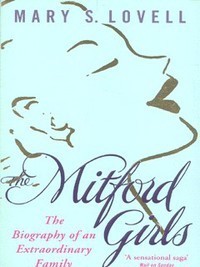
Is The Mitford Girls: The Biography of an Extraordinary Family by Mary S. Lovell the best would you say?
Would you be up for reading it as a non-fiction read?
I really enjoyed that one (titled The Sisters here). I read it a few years ago now but would be interested in possibly reading it again now that I've read some of both Nancy's and Jessica's works. I do remember I enjoyed the earlier parts of the book more than the later just due to my being more interested in the 20-40s than later periods.
I can't edit on my phone...I have the collected letters of the sisters edited by (I believe) Charlotte Mosley that I keep meaning to read, too.
Great stuff. Thanks Bronwyn. I saw The Mitfords: Letters between Six Sisters too when I was browsing for biographies. Decca: The Letters of Jessica Mitford contains quite a few letters between her and her sisters, so I guess there would be some overlap. I'm quite keen to read a proper biography after 750 pages of Jessica's letters!
Ivan wrote: "Miss Mitford's first novel, "Highland Fling," in 1931, was--like many that followed--a "comedy of manners" based on her own experiences. It was followed by "Christmas Pudding," "Wigs on the Green" and "Pigeon Pie"--all exhibiting what some critics felt was a style more akin to "schoolgirl burble" than acutely tuned observation. Better received were "Pursuit of Love," 1945; "Love in a Cold Climate," 1949, and "The Blessing," 1951. These were sometimes frankly sentimental but possessed of a wit that Phyllis McGinley, the poet, found "quite funny and rather frightening." Among the victims of her humor were Americans of any kind. "
I've posted this elsewhere on BYT but what the heck, it might stimulate some more Nancy M debate here, on her dedicated thread....
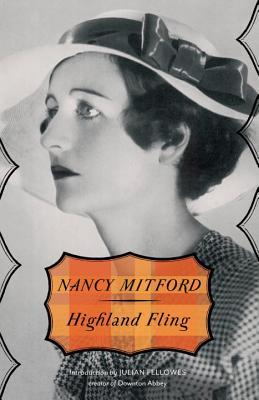
Highland Fling was Nancy Mitford's first novel. It was published in 1931. I have recently bought all of Nancy Mitford's novels, and intend to read all eight.
It was interesting and informative for me, as someone who is working through each of Nancy Mitford's novels chronologically, to note that Jane Smiley, here in The Los Angeles Review of Books differentiates between Nancy Mitford's four pre-war novels, and her four post-war novels
But there is no real sense, in the pre-war works, of the grandeur and sophistication Mitford would achieve in the last four. There is, in fact, considerable evidence, especially in Wigs on the Green and Pigeon Pie, that Mitford's world view — compounded of knowing frivolity and evenhanded acceptance of the various political forces that are about to clash so tragically — is overwhelmed by her material. She can organise her story, more or less, and she can give her characters vivid life, but she can't acknowledge the meaning of their opinions or their actions. Her characters are imprisoned in a world where consequences are muffled by privilege and where all eccentricities are merely amusing. The clue to the narrowness of this world is Mitford's failure to introduce it systematically or to depict it with much detail. She writes from the centre of that world, for an audience who knows what she is talking about, for whom more explanation would retard the pace of the jokes.
The whole article is well worth a read, and it has whet my appetite for all of Nancy Mitford's work. I am encouraged to learn that her books should get progressively better and better.
Good comedic writing is notoriously difficult to do well. The sublime P.G. Wodehouse and early Evelyn Waugh, can reduce me to tears of laughter. Highland Fling, which provided the odd chuckle, suggests that Nancy Mitford might also have this talent.
Highland Fling is undeniably a pleasant read. The slight story has some great characters. Like P.G. Wodehouse, albeit on this occasion without the guaranteed hearty guffaws, what Nancy Mitford achieves in her first novel, is a window into the English aristocracy in the first half of the twentieth century. Nancy Mitford's nuanced descriptions of the personalities that populate Highland Fling highlight the acute intergenerational conflicts between the Bright Young Things and "the grown ups", many of whom are traditional, austere, stereotypically aristocratic Victorian characters. These figures are brought to life with clarity and wit. Nancy Mitford also manages to incorporate universal themes: relationships, family, love etc.
Highland Fling is a bit uneven, but I enjoyed it, and I look forward to reading more of her work. I am going to try to resist the temptation to read her second novel, Christmas Pudding (1932), before December 2013, so to better appreciate the novel's Christmas setting, but I may have to give in to the temptation to start reading it sooner. 3/5
I am really looking forward to reading the rest of Nancy Mitford's novels. I'll report back with my progress and thoughts as and when.
Ivan wrote: "I have thousands of books and nothing to read. It's a terrible state of affairs. I want to be reading The Devil Rides Out. Why? I don't know; I never know why I want to read what I want to read."Funnily enough the film version was on again recently. I was tempted to record it having been a big Dennis Wheatley fan - both books and film adaptations - as a teenager. Sex, satanism etc. - it's a teenage boy's dream come true.
Dennis Wheatley came up in Haw-Haw: The Tragedy of William and Margaret Joyce by Nigel Farndale and that got me thinking about him again.
Has anyone read...
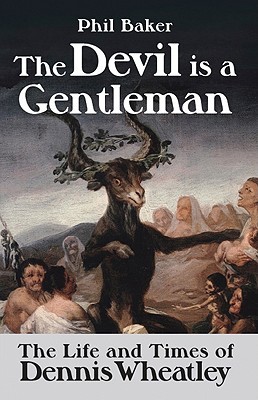
The Devil Is a Gentleman: The Life and Times of Dennis Wheatley by Phil Baker
It sounds great...
"It is not only the Hammer films based on Dennis Wheatley's novels that are full-blooded, sensational entertainment, so was Wheatley's life, brilliantly evoked by Phil Baker. This gripping biography draws out all the comedy from Wheatley's history, from his childhood in a family of wine merchants who were dedicated to social climbing (the scrambling for status never left Wheatley either, even in his 70's he was proudly joining gentlemen's clubs such as White's) to his experiences in World War One. Wheatley's main ambition as a soldier was to join a socially acceptable regiment, but the Westminster Dragoons wouldn't have him because he couldn't ride (he claimed that he could but his first time on a horse rather exposed this lie), he was too short for the Artist's Rifles and so he ended up in the Artillery. He spent most of the War attending training camps and hunting for casual sex (and writing his first, unpublished, novel), before being sent to the Western Front in 1917. A business disaster, along with the Depression, led him to turn his attention to writing novels as a means of escaping penury (an unconventional idea for becoming rich) and after selling 50 million books he succeeded.
Wheatley lived on a grand scale, rather like a real-life bon vivant James Bond, of fine dining, expensive wines and even more expensive cigars.
Few people are aware that Dennis Wheatley, in his day one of the biggest selling novelists in the world, spent the Second World War as a member of Winston Churchill's Joint Planning Staff. Wheatley's job was to confuse the enemy by writing 'plausible, official documents' and to feed them to the Nazis. Here is that little known and intriguing story, drawn on previously unpublished restricted papers - and with a foreword by one of today's best-selling authors.
Phil Baker captures Wheatley's personality, as well as the lurid extremes of his novels (their occult settings, the constant promise of orgies and threats to virgins). For such a detailed book The Devil is a Gentleman is astonishingly readable, as page-turning as Wheatley's own novels.
James Doyle in Book Munch
 This is one for fans of Nancy and letters: Nancy Mitford: The Biography Edited from Nancy Mitford's Letters by Harold Acton.
I was thinking of nominating it for a BYT read, but most of it concerns her life after the war. It starts with some introductory history, then most of it is from Nancy's letters with commentary by Harold.
 Nice little blog post from Ireland, highlighting the fact there is (yet another) new set of Mitford re-issues (from Penguin.)
http://www.drb.ie/blog/writers-and-ar...


Bright Young Things
Books mentioned in this topic
The Pursuit of Love (other topics)Nancy Mitford: The Biography Edited from Nancy Mitford's Letters (other topics)
The Devil is a Gentleman: The Life and Times of Dennis Wheatley (other topics)
Haw-Haw (other topics)
The Devil Rides Out (other topics)
More...
Authors mentioned in this topic
Harold Acton (other topics)Phil Baker (other topics)
Dennis Wheatley (other topics)
Nigel Farndale (other topics)
Evelyn Waugh (other topics)
More...
OBITUARY
Nancy Mitford, Author, Dead; Satiric Novelist and Essayist
By STEVEN R. WEISMAN
Special to THE NEW YORK TIMES
LONDON, July 1--Nancy Mitford, the prolific essayist, novelist and historian whose writing was enlivened by satire and a firm British aristocratic perspective, died yesterday at her home in Versailles, France. She was 68 years old.
Unabashedly snobbish and devastatingly witty, Miss Mitford achieved enormous success and popularity as one of Britain's most piercing observers of social manners.
Beginning with fiction that V. S. Pritchett once hailed as helping to begin "an aristocratic revival in English literatures," Miss Mitford moved on to finely observed histories, particularly of court life in France and Russia, and to widely enjoyed essays and translations.
But through all her writing, she never let her readers lapse into unawareness of her own aristocratic, sheltered upbringing--the object of much of Miss Mitford's scalding satire but a background, nonetheless, which she took very seriously and continued to defend.
In one of her most recent books, "The Sun King," which is a portrait of Louis XIV's life at Versailles, Miss Mitford unhesitatingly compared the plumbing at Versailles with what she had known on her own visits to Buckingham Palace in 1923.
Indeed, one of Miss Mitford's pet concerns entered the history of obscure literary debates when, in 1955, she published perhaps her most famous essay on upper-class and non-upper- class forms of speech.
The essay sparked such a controversy in Britain, with responses from many major literary figures, that Miss Mitford was compelled a year later to bring out a thin book, "Noblesse Oblige," with her disquisition on the subject as its centerpiece.
Her argument, a set-piece even today among literary parlor games, was that the more elegant euphemism used for any word is usually the non-upperclass thing to say--or, in Miss Mitford's words, simply non-U.
Thus: It is very non-U to say "dentures"; "false teeth" will do. Ill is non-U; sick is U. The non-U person resides at his home. The U person lives in his house. And so forth.
Perhaps Miss Mitford and only a few others would have had the credentials to engage in this kind of argument. She was the oldest of six daughters of Bertram Ogilvy Freeman-Mitford, the second Baron Redesdale, who lived with Lady Redesdale at Swinbrook, the family estate in Oxfordshire.
The girls called their father "Old Subhuman." "My father and mother, illiterate themselves, were against education, and we girls had none though we were taught to ride and to speak French," Miss Mitford wrote in "Twentieth Century Authors." "I grew up as ignorant as an owl, came out in London and went to a great many balls."
"Here I met various people who were not ignorant at all--I made friends with the sort of people which included Messrs. Evelyn Waugh, John Betjeman, Sir Maurice Bowra and the brilliant Lord Berners. Very soon I became an intellectual snob. I tried to educate myself, read enormously and wrote a few indifferent novels."
Miss Mitford was not the only family member to win fame. In America, her most well- known sibling is her younger sister, Jessica, the author, who wrote of the girls' childhood in her own memoirs, "Daughters and Rebels."
Miss Mitford's first novel, "Highland Fling," in 1931, was--like many that followed--a "comedy of manners" based on her own experiences. It was followed by "Christmas Pudding," "Wigs on the Green" and "Pigeon Pie"--all exhibiting what some critics felt was a style more akin to "schoolgirl burble" than acutely tuned observation.
Better received were "Pursuit of Love," 1945; "Love in a Cold Climate," 1949, and "The Blessing," 1951. These were sometimes frankly sentimental but possessed of a wit that Phyllis McGinley, the poet, found "quite funny and rather frightening." Among the victims of her humor were Americans of any kind.
Eventually Miss Mitford moved to history--"by way of fiction," as Louis Auchincloss put it. In 1954 she wrote a biography of Madame de Pompadour and in 1966 her study of Louis XIV. Her most recent book, "Frederick the Great," was published three years ago.
"She seems to have brought a new talent to the study of history," Mr. Auchincloss wrote in 1969, "that of the sophisticated, worldly wise observer, who is able to penetrate old archives with a fresh eye for qualities in the dead that she is specially qualified to recognize."
"In general," another observer wrote, "the women. . .are judged more leniently than the men."
Throughout her life, Miss Mitford did little traveling beyond the boundaries of her own country and France. Although one of her sisters, Unity, who died in 1948, became an enthusiastic admirer of Adolf Hitler, Nancy Mitford hated dictatorships and worked for the Republicans in the Spanish civil war. After World War II, she decided to settle in France.
Miss Mitford was married to Peter Rodd in 1933 but the marriage ended in divorce in 1958. Her only brother, Tom, was killed during the war. She is survived by four of her five sisters, Pamela, Diana, Jessica and Deborah.
She was a frequent visitor to London in recent years, visiting with friends who were among Britain's leading literary figures. "Today," The Times of London said yesterday, "they find their world colder and less merry: like Beatrice in 'Much Ado,' she was born under a star that danced."