
Art Lovers discussion
Photography Forum
>
Photography as an Art
date newest »
newest »
 Heather wrote: "There are quite a few photographers in the group. I would like to open a discussion for those who would like to share their talent, knowledge and expertise.
 Photograph: a picture painted by th..."
Some of the happiest hours of my life were spent in the darkroom when I was in college in 1975, getting my degree in Art. It was improvised in a supply closet. Before we could work we had to climb the ladder to the access hatch to the roof and tape all the cracks. But disappearing into that room like Alice down the rabbit hole was a trip away from all the trouble in my life at that time.
 I love photography. I was a photo major for a year, had great teachers. But I worked full-time and went to school full-time so I realized that after graduation that I would probably have to spend my beginning years working weekends doing weddings, etc. So I changed my major. I was sick of working fulltime in a job that was just a paycheck.
 I loved working in the darkroom, only problem was that the time just went by so fast. Before you know it, 4-5 hours have past. I liked threading the film on the reel in the dark. Of course the best part was making prints. But the city where I went to school was dangerous -- leaving the darkroom at night was really scary. One night going to the cafe with a bunch of friends, we got caught in the way of a shooting. One guy lost the top of his ear to a bullet.
 I love photography as art. Growing up, my stepdad had a darkroom in the basement, so I'd sit and watch prints appear on paper - pretty awesome.
I loved working in the darkroom, only problem was that the time just went by so fast. Before you know it, 4-5 hours have pa
I always tease my stepdad about going digital.. I'll grab his camera and say, "how'd that last shot turn out? Oh! you won't know until you get in the darkroom!"
:)
He's very disgusted with the digital photography explosion... now everyone is an "artist" and wedding photographer...
I see the merit in both analog and digital photography. Sure, there are plenty of people out there tweaking things in photoshop, but, some of it IS good - creative and thoughtful.
I loved working in the darkroom, only problem was that the time just went by so fast. Before you know it, 4-5 hours have pastAmazing, isn't it, how an entire day can go by in 3 minute increments and it feels like nothing. I was often amazed to find it had gotten dark whilst I was gone.
Working in the darkroom was like painting with light. I don't get the same thrill out of working with digital images.
Speaking of digital images--far too many people are subjecting photos to the special effects gizmos in most image programs and calling it art.
far too many people are subjecting photos to the special effects gizmos in most image programs and calling it art. we have a guy at our local farmers market that sells his digital "art" - mostly oversaturated foolishness.
Anyone into analog photograhy:
apug.org
for those devoted to traditional photography.
http://www.apug.org/gallery1/index.php
I think that real art can be made digitally, but just subjecting an image to a ready-made filter ain't gonna do it.
 We had a pretty good darkroom (b&w) in my junior high school, back in the early 1980s. That was probably my first experience thinking about how to make an artwork, long before I began painting. I loved it--completely magical.
 I still take photos, but I now use a digital camera for reasons of convenience and cost. I don't think advanced technology like Photoshop necessarily helps or hinders the pursuit of a personal vision in photography. It just provides a different experience.
There were plenty of ways to manipulate an image in the darkroom too, of course. There's a reason why so many Photoshop functions have names like "dodge-and-burn," "texture screen," "soft-edge," "solarize," etc. You could do all of those things back in the pre-digital era; it just took more effort.
Jonathan wrote: "We had a pretty good darkroom (b&w) in my junior high school, back in the early 1980s. That was probably my first experience thinking about how to make an artwork, long before I began painting. I l..."I loved manipulating photos in the dark room. It does take more effort, but it also takes more thought. And the result is less likely to be cookies cut from the same cutter.
It's also great fun, even if not as magical, to play around with digital photos. And real art can be made. My objection is those people who think mashing a image mindlessly through a Photoshop filter is all they need to do.
Some of those effects are pretty wild, but after awhile---YAWN.
 I love photography, but not all photographs are art. I view photography through the same lens as I do with people that think 'anyone' can create abstract art. Putting different colors on a canvas isn't abstract art, especially good abstract art.
 The artist has to have 'an understanding' of color, know how to use color, and the (conceptual) message they want to evoke or present to their audience (as with photography as art). Whether it is about beauty, history, some socio-political event or issue, capturing a (current) moment, or whatever.
Just because a person can take a camera, point and shot an image does not make it art. I think I should add that this goes beyond if a person is academically trained or is autodidact, or if they are using an analog or digital camera!
But, saying all that I have to think about the conceptual artist Joseph Beuys and his 'Theory of Social Sculpture' where he says "Everyone is an Artist," and the artist Christian Boltanski.
Boltanski goes around to flea markets, archives and the likes to collect images taken by everyday people, and turn these everyday images into art. So, are the photographs he collects art? Or is it because he arranges them in a certain way and attaches a message to them that makes them art?
 I think photography can be art, for instance Margaret Bourke-White, it doesn't have to be art like on a canvas, but their canvas is the photograph. Anything that evokes feeling is artwork, be it a painting, a sculpture, and photographs. In cinematography in film, they use color to convey feelings, meanings, etc.
 Is photographic film fading right out?
BEN DOBBIN
Rochester, N.Y.— The Associated Press
At Image City Photography Gallery, Gary Thompson delights in pointing out qualities of light, contrast and clarity in one of his bestselling prints – a winter-sunset view of Yosemite National Park’s El Capitan peak shot with a hefty Pentax film camera he bought in 1999 for $1,700 (U.S.).
His wife, Phyllis, a latecomer to fine-art photography after they retired from teaching in the 1990s, favours a Hasselblad X-Pan for panoramic landscapes, such as a time-lapse shot of a harbour in Nova Scotia.
Of 11 partners and resident artists at the private gallery in Rochester – the western New York city where George Eastman transformed photography from an arcane hobby into a mass commodity with his $1 Brownie in 1900 – the Thompsons are the only ones left who haven’t switched to filmless digital cameras.
But that time may be near.
“I like the colour we get in film, the natural light,” says Phyllis Thompson, 70, who married her high-school sweetheart 50 years ago. “But digital cameras are getting much better all the time, and there will come a time when we probably won’t be able to get film any more. And then we’ll have to change.”
At the turn of the 21st century, American shutterbugs were buying close to a billion rolls of film a year. This year, they might buy a mere 20 million, plus 31 million single-use cameras – the beach-resort staple vacationers turn to in a pinch, according to the Photo Marketing Association.
Eastman Kodak Co. marketed the world’s first flexible roll film in 1888. By 1999, more than 800 million rolls were sold in the United States alone. The next year marked the apex for combined U.S. sales of rolls of film (upward of 786 million) and single-use cameras (162 million).
Equally startling has been the plunge in film camera sales over the last decade. Domestic purchases have tumbled from 19.7 million cameras in 2000 to 280,000 in 2009 and might dip below 100,000 this year, says Yukihiko Matsumoto, the Jackson, Mich.-based association’s chief researcher.
For InfoTrends imaging analyst Ed Lee, film’s fade-out is moving sharply into focus: “If I extrapolate the trend for film sales and retirements of film cameras, it looks like film will be mostly gone in the U.S. by the end of the decade.”
Just who are the diehards, holdouts and hangers-on?
Among those who still rely on film – at least part of the time – are advanced amateurs and a smattering of professionals who specialize in nature, travel, scientific, documentary, museum, fine art and forensic photography, market surveys show.
Regular point-and-shoot adherents who haven’t made the switch tend be poorer or older – 55 and up.
But there’s also a swelling band of new devotees who grew up in the digital age and may have gotten hooked from spending a magical hour in the darkroom during a high school or college class.
Others are simply drawn to its strengths over digital and are even venturing into retro-photo careers.
“In everything from wedding to portrait to commercial photography, young professionals are finding digital so prevalent that they’re looking for a sense of differentiation,” says Kayce Baker, a marketing director at Fujifilm North America. “That artistic look is something their high-end clients want to see.”
Kodak remains the world’s biggest film manufacturer, with Japan’s Fuji right on its tail. But the consumer and professional films they make have dwindled to a precious few dozen film stocks in a handful of formats, becoming one more factor in the mammoth drop-off in film processing.
Scott’s Photo in Rochester finally switched this year stopped daily processing of colour print film because fewer than one in 20 customers are dropping off film. A decade ago, “we could process 300 rolls on a good day, and now we see maybe eight or 10 rolls on the few days we actually process,” owner Scott Sims says.
For the hustling masses, there’s no turning back the clock.
“There’s so many digital images taken every day, especially with mobile media, that never will hit a piece of paper,” says Therese Mulligan, administrative chair of the School of Photographic Arts and Sciences at Rochester Institute of Technology.
Even at major photography schools, film is an elective specialty.
“Our entire first two years’ curriculum is digital in orientation,” Mulligan says. “Those that follow a fine-art option are the first to gravitate toward film. Other genres we teach – photojournalism or advertising or biomedical – have a stronger digital emphasis because of the industry itself.”
In a rich irony, film’s newest fans – not unlike music aficionados who swear by vinyl records – are being drawn together via the rise of the Internet.
“The technology that enabled the demise of film is actually helping to keep it relevant with specific types of users,” says IDC analyst Chris Chute.
But with the film market shrinking by more than 20 per cent annually, most other signs point downhill. Analysts foresee Kodak offloading its still-profitable film division some time in the next half-dozen years as it battles to complete a long and painful digital transformation.
Kodak will churn out a variety of films as long as there’s sufficient demand for each of them, says Scott DiSabato, its marketing manager for professional film. It has even launched four new types since 2007.
While digital has largely closed the image-quality gap, DiSabato says a top-line film camera using large-format film “is still unsurpassed” in recording high-resolution images.
“The beauty with film is a lot of wonderful properties are inherent and don’t require work afterward” whereas digital can involve heavy computer manipulation to get the same effect, DiSabato says.
“In the extreme, they call it `stomped on,’” he said. “But a lot of photographers want to be photographers, not computer technicians. And some prized film capabilities – grain, colour hues, skin-tone reproduction – can’t quite be duplicated no matter how much stomping goes on.”
I guess I am in good company, do not have a digital camera as of yet. I am still holding onto my Canon. I have seen the shrinking of the photo labs as of late. I am no great photographer, but I just like to point and shoot.
 I love having some quality photographs hanging in my home. I'm lucky that I have a relative that is a professional landscape photographer. Sometimes he'll get up day after day to shot the same scene to get the perfect shot in a certain light, when the sun is lighting up a mountain or shadows are either present or absent. He has to plan out a shot to get the composition he wants. Occasionally, he'll fall upon a perfect compositon in nature, but he still needs to know how to frame the scene. He says that the West Coast in the United States tends to buy more photography as art, but the trend is moving eastward.
That's great. I know photography can be difficult. It definitely is a talent. Thanks for sharing, Connie.
I love having some quality photographs hanging in my home. I'm lucky that I have a relative that is a professional landscape photographer. Sometimes he'll get up day after day to shot the same scene to get the perfect shot in a certain light, when the sun is lighting up a mountain or shadows are either present or absent. He has to plan out a shot to get the composition he wants. Occasionally, he'll fall upon a perfect compositon in nature, but he still needs to know how to frame the scene. He says that the West Coast in the United States tends to buy more photography as art, but the trend is moving eastward.
That's great. I know photography can be difficult. It definitely is a talent. Thanks for sharing, Connie.I agree with you, Robin. I do have a digital camera but don't even know how to use all of the buttons! I just "point and shoot"!
I saw the above post about the Kodak film company and thought come on as long as people are willing to buy film, give the consumers what they want. We went to the Big Island for summer last year and went into a store and all they had was the disposable cameras, and they didn't even have rolls of film anymore. I guess they were catering to the tourist who they think just want to buy disposable. Ugh!
In Hours, Online Readers Identify Nazi PhotographerBy JAMES BARRON and DAVID W. DUNLAP
The New York Times
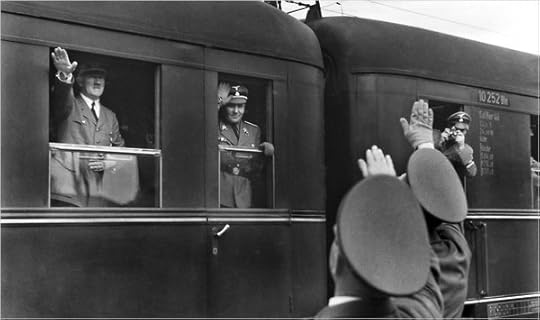
An album of photos from World War II by a mystery photographer includes pictures of Hitler at a train station.
It appeared to be something of a mystery: a little photo album that had fallen into the hands of a New York garment industry executive with debts to pay off. In one snapshot was a bus with German lettering on the side. In another, a kitten on a soldier’s lap.
Then came black-and-white images of prisoners of war, some in rags, some in jackets with Star of David patches, staring blankly into the camera.
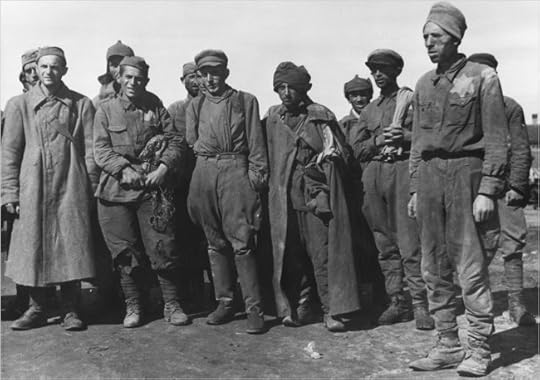
Shots from the album of prisoners of war.
A few pages later were photographs of Hitler in a train station. As he framed the shot, the photographer was almost as close to the Führer as he had been to the Führer’s captives.
The photographs were obviously taken during World War II. But who was the photographer?
That was only one of the secrets the album had kept.
This week the photographer was identified in less than three hours, thanks to the collective expertise of online readers. He was Franz Krieger, who joined — and then quit — a Wehrmacht propaganda unit known as the Propagandakompanie. Seventy years ago this August, when he was in his mid-20s, the unit sent him on a tour of the Eastern Front.
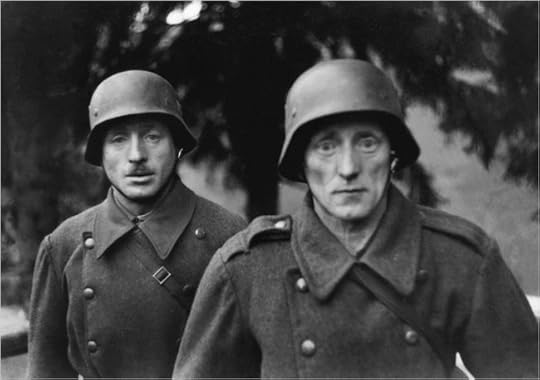
Nazi soldiers on the Eastern Front.
Krieger’s identity emerged on Tuesday morning after the Lens blog of The New York Times and EinesTages, a site run by the German magazine Der Spiegel and loosely translated as “Once Upon a Time,” published posts with some of the photos. Lens and EinesTages asked readers for information about who had created the chilling little album.
Only one of the 214 photographs bore a caption, faintly penciled in: “Bregenz 1.1.1942.” A town in Austria. The first day of the year, 69 years ago.
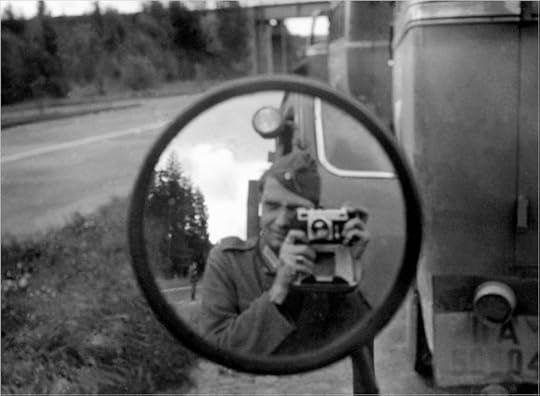
The self-portrait that led to crediting the snapshots to Franz Krieger, a military photographer and driver.
The posts generated immediate interest. Marc Pitzke, a New York-based correspondent for Der Spiegel, said EinesTages recorded more than seven million page views on Tuesday. That figure was second only to that for its live blogging of the Fukushima nuclear accident in Japan. Traffic was also unusually heavy on the Lens blog.
There was little to go on in the album itself. No name was scribbled inside the front cover.
The first clue came from Harriet Scharnberg of Hamburg, Germany, who spotted the photographs online, identified them as Krieger’s and said they were taken during his trip to Minsk, in what is now Belarus, in 1941. On the way back to Berlin, she said, he took the pictures of Hitler meeting with Adm. Miklos Horthy, the regent of Hungary, in Marienburg (now Malbork, Poland).
Ms. Scharnberg said that in her research for a Ph.D. dissertation on German propaganda photographs depicting Jews, she had come across Peter F. Kramml’s 2008 book, “The Salzburg Press Photographer Franz Krieger (1914-1993): Photojournalism in the Shadow of Nazi Propaganda and War.”
Dr. Kramml all but confirmed that the photographs were Krieger’s when he sent The Times a copy of a Krieger self-portrait taken in a rear-view mirror. It was identical to one in the album.
The album had been in the hands of a 72-year-old garment-district executive who brought it to The Times, hoping coverage would establish its worth. He wants to sell it to pay his bills. He has undergone quadruple-bypass surgery and has other health problems, and he has filed for bankruptcy — an unpleasant element of personal history he does not want widely known. So he had asked not to be named if any articles were written about the album.
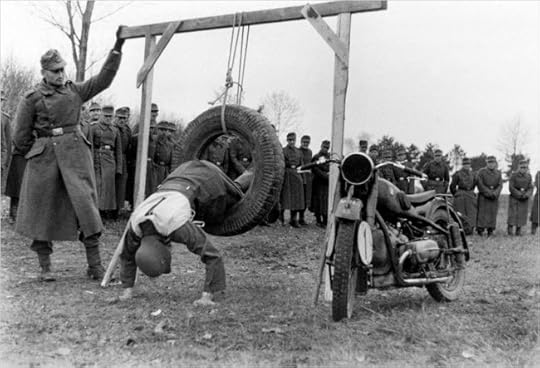
Krieger, both professionally and privately, took a range of photos, including motorcycle demonstrations.
He said he got the album and 50,000 baseball trading cards from a man he knows in northern New Jersey who was having trouble making ends meet. He said he had lent the man some money, and the album and the baseball cards amounted to repayment.
The executive said the man told him the album had come from an older German man whose lawn he used to mow regularly.
The Lens blog reached out to a number of experts before publishing a post, but Krieger’s work was apparently not well enough known to be recognized.
“It doesn’t surprise me the photos were identified,” said Marvin J. Taylor, the director of the Fales Library and Special Collections at New York University, to whom The Times had shown some of the photos before the first post. “It was just a matter of time, given the number of people who were looking at this. The Germans have taken good care of the history of their photographers.”
Krieger, according to Dr. Kramml, had photographed the Salzburg Festival in the mid-1930s and had become a photographer for the Nazis in that city, taking “most of the important pictures in Salzburg from 1938 until 1941.”
Krieger later joined the Schutzstaffel, the Nazi special police, but he left the SS in 1941 for the Propagandakompanie, which sent him to the Eastern Front in August 1941.
A couple of months later Krieger left the Propagandakompanie and “became a simple soldier, a driver,” Dr. Kramml said. In November 1941 he started training in Bregenz, the Austrian town mentioned in the album’s one caption.
By August 1942, Krieger was back in Russia, this time as a supply driver. That put him near Stalingrad. In what might be considered a lucky break, he developed jaundice and was evacuated by train before the Battle of Stalingrad. His illness may explain the pictures of what appear to be convalescing soldiers toward the end of the album.
Dr. Kramml said that Krieger, who had been a store owner before he took up photography, went into business — but not the photography business — after the war. Krieger told people that his mother had given away some of his wartime photographs. “Perhaps he wanted to hide them,” Dr. Kramml said.
Some of those pictures — perhaps the mystery album itself — were presumed to have ended up in Bavaria, he said. Krieger died in 1993.
David G. Marwell, the director of the Museum of Jewish Heritage in Lower Manhattan, said that photo albums like the one the garment-district executive brought to The Times turn up from time to time at flea markets. “What made this one interesting,” he said, “was the range, the way this guy traveled, that gave him access to these different places and the close proximity.”
He mentioned a scrapbook from 1944 that had arrived at the United States Holocaust Memorial Museum in Washington in 2007. It was the personal album of an SS officer. Judith Cohen, the director of the photo archives at that museum, said that what stood out in the album were the photographs of the Jewish prisoners.
“There are very few photographs of Jewish P.O.W.’s with stars,” she said. “These photos are very few and far between and have historic significance.”
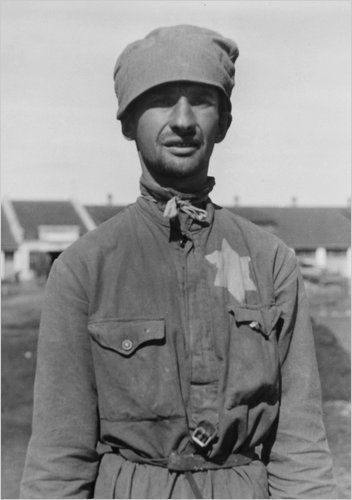
Also included in the album: rare shots of Jewish prisoners wearing Star of David patches.
Interesting article, Heather. It's such a sad period in history.
This is incredible!Around the world in 6,237 pictures
After quitting his job, photographer and artist Kien Lam took a trip around the world. Over the course of a year, he visited 17 countries and took 6,237 photographs. Wanting to share his epic journey with others, Lam put his photos together to create a kind of time-lapse video that has enthralled the Web
In a little less than five minutes, viewers are treated to beautiful shots of the U.S., England, France, Portugal, Spain, Morocco, Egypt, Turkey, Jordan, Thailand, Indonesia, Japan, Argentina, Uruguay, Chile, Bolivia, and Peru.
"had a direction I wanted to head and a goal of following the sun to get as many warm days as possible. 2010 was a particularly cold year in San Francisco and I just wanted to wear shorts and flip-flops as many days as possible to make up for that. I would usually figure out my next destination when I was ready to leave my current one. Sometimes it was a particular dish, sight or story that brought to the next city and sometimes it was the company I kept and our desire to travel together for just a bit longer." Kien Lam
It may have been one man's off-the-cuff trip, but viewers would be excused if they thought this was something produced by National Geographic. All told, Lam took 19 planes, 58 buses, and 18 boats to see what he wanted to see. And, according to his site, he did it on the cheap, staying in hostels for about $3 to $15 per night.
http://news.yahoo.com/blogs/upshot/ar...
For me, Beaches are synonymous with summer fun. Photographer Gray Malin travels the world snapping the most luxurious beaches and pools from a bird's eye view.
Here are a few...
À la Plage, À la Piscine
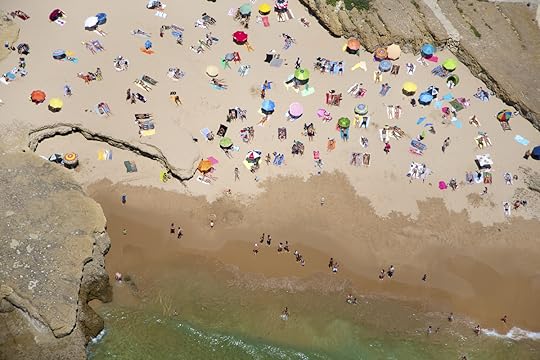
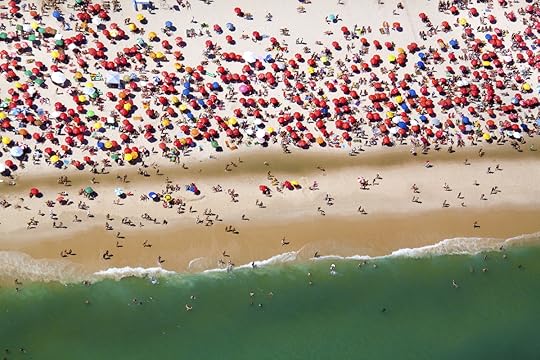
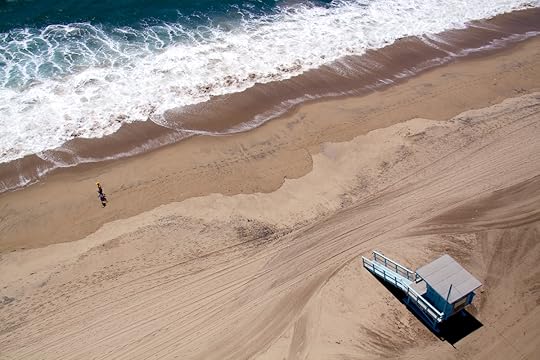



http://www.huffingtonpost.com/2012/07...
 Thanks Heather, there are some very nice shots there. I love photography and birds-eye-views can be wonderful. My favorite aerial photographer is William Garnett. If someone (more clever and adept than me) can find some of his images on the internet, the group might enjoy them.
Thank you for the suggestion of William Garnett. I wasn't familiar with him but looking up some of his photos, I can see why you enjoy them. These are a few that I found while browsing:
Thanks Heather, there are some very nice shots there. I love photography and birds-eye-views can be wonderful. My favorite aerial photographer is William Garnett. If someone (more clever and adept than me) can find some of his images on the internet, the group might enjoy them.
Thank you for the suggestion of William Garnett. I wasn't familiar with him but looking up some of his photos, I can see why you enjoy them. These are a few that I found while browsing:William A. Garnett
b. 1916 Chicago, Illinois, d. 2006 Napa, California
photographer
American
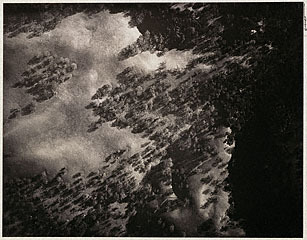
Trees on Hills, Gorman, California
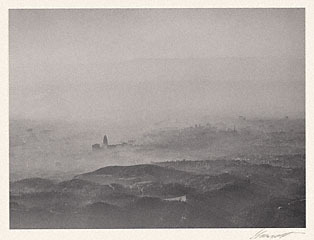
Smog, Los Angeles
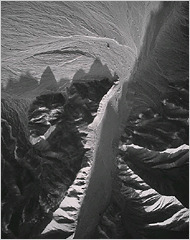
"Dry Wash With Alluvium, Death Valley, California. 1957,” by William A. Garnett, a specialist in enchanting overhead views of landscapes.
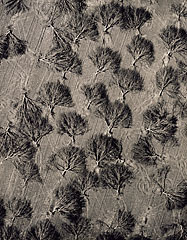
Walnut Grove Uprooted by Bulldozers
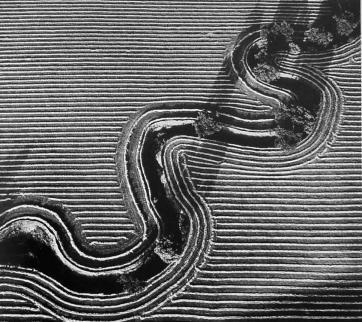
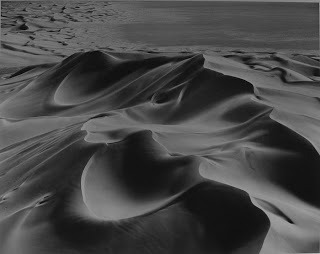
William Garnett took his first cross-country flight after serving as a United States Army Signal Corps cameraman during World War II. What he saw below inspired him to learn how to pilot a plane so he could photograph the American landscape. Garnett's aerial photographs resemble abstract expressionist paintings or views through a microscope. As landscapes, they do not have the conventional grounding of a horizon line. All reveal astonishing patterns that are not seen from the ground.
More http://www.getty.edu/art/gettyguide/a...
Thank you Heather. I don't know if Garnett did any photos in color. All that I remember are in black and white. I have a small one (a proof) that he gave me as a gift once for Christmas. He taught at UC Berkeley where I was a stafff member. The ones I like the best are the ones that are the most abstract. Thanks again, Heather, for going to the trouble to find these examples.
2012’s Most Spine Tingling Photos, So Far (49 pics)Just a sample:
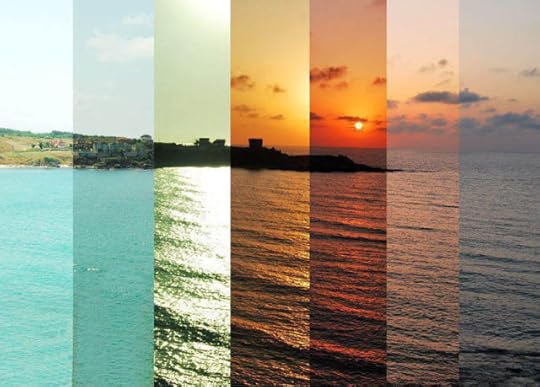
7 hours in one image
http://izismile.com/2012/06/29/2012s_...
These are incredible! Enjoy!

 The World of Proust: As Seen by Paul Nader by Anne-Marie Bernard. Amazing photos- some side by side comparisons with one photo retouched (1891). Photos of Proust & his family, Prince Constantin Radziwill and Princess Louise (his wife), most amazingly beautiful woman was Clara Ward who married Prince Joseph de Caraman, also Prince Edward VII, Emile Zola and Sarah Bernhardt. I love the poses, clothing, and furniture.
 Here's a little experiment I did with making use of limitations.
 I'm not a photographer, but it was accepted into a juried photography show:
https://picasaweb.google.com/10885649...
Ed, click on link but got "sorry, that page was not found"
Me too.Carol wrote: "Ed, click on link but got "sorry, that page was not found""
Ah, I didn't turn on public sharing....Try it now. :)
 Heather wrote: "There are quite a few photographers in the group. I would like to open a discussion for those who would like to share their talent, knowledge and expertise.
 Wonderful quotes! They almost make me want to pick up a camera again after far too many years!
 http://petapixel.com/2013/04/05/eye-p...
"With a population of over 7 million people packed into an area of 426 square miles, Hong Kong is one of the most densely populated places in the world. As with other places where development cannot expand horizontally, apartment buildings tend to get taller and taller in order to provide living space for all the inhabitants.
German photographer Michael Wolf decided to capture this population density through a series of photographs studying the architecture of these high rises. The project is titled “Architecture of Density."
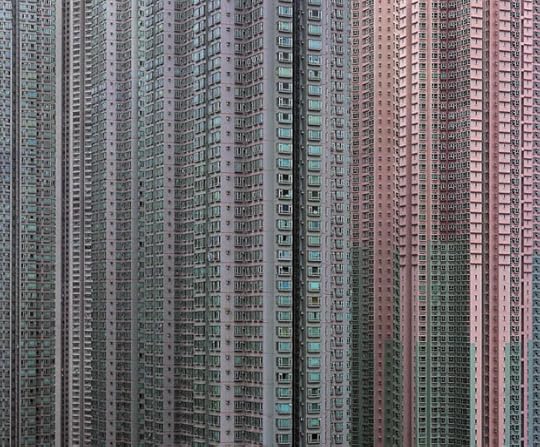
Check out the other photos....incredible. Mindboggling.
Lobstergirl wrote: "http://petapixel.com/2013/04/05/eye-p..."With a population of over 7 million people packed into an area of 426 square miles, Hong Kong i..."
Amazing.
 Books Ring Mah Bell wrote: "far too many people are subjecting photos to the special effects gizmos in most image programs and calling it art.
 we have a guy at our local farmers market that sells his digital "art" - mostly ..."
I agree! While I appreciate the knowledge it takes to create and fix in photoshop, there's always the whole "Kid in the candy store" aspect where it's too much. As a student, I was taught that a true photograph happens in front of the camera. If you have to "fix" it in photoshop afterwards, then you're not shooting it correctly and are a poor photographer.
Funny, I've never referred to film as "analog". Figures it'd get a computer name some how. I still shoot film and am actually getting my wet darkroom back because the digital prints still don't compare in depth and dimension.
Good for you, Kat. I did some darkroom work when I lived in California, but now I don't really have the resources where I live, so I haven't used my analog camera since about 2007. But I don't have any fancy photo programs and don't like to view the photos of people who do a lot of manipulation. If it looks brushed or photoshopped, I don't consider it worth anything. The only thing I do with my own photos is crop.Kat wrote: "Books Ring Mah Bell wrote: "far too many people are subjecting photos to the special effects gizmos in most image programs and calling it art.
we have a guy at our local farmers market that sells..."
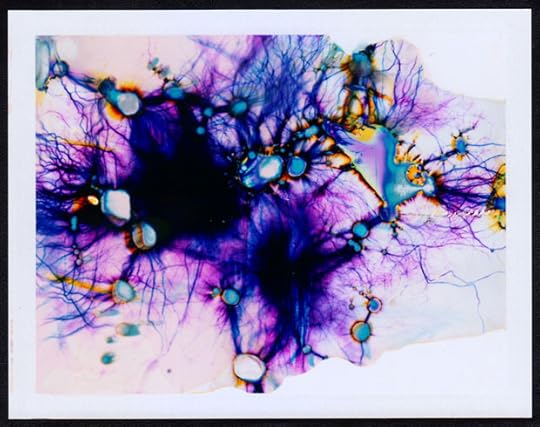
Photograph created by exposing instant film to 15,000 volts of electricity and chemicals
More... :
http://petapixel.com/2013/05/10/abstr...
 Books Ring Mah Bell wrote: "I love photography as art. Growing up, my stepdad had a darkroom in the basement, so I'd sit and watch prints appear on paper - pretty awesome.
I loved working in the darkroom, only problem was th..."
I shoot both digital and analog. I don´t particularly like digital but it´s nigh impossible for me to stay in analog. Today, for instance, I shot with both and had a Nikon D3200 and a Mamiyaflex film camera slung over my head. I shot the last two frames on the medium format of an urban construction site I had been meaning to shoot and used the 35 for grab shots.
Geoffrey,As a great photographer yourself, to me, one who knows nothing about a camera, (and maybe I'm not alone) would you mind explaining exactly what is analog? Maybe we talked about it but I don't think it was ever explained what exactly it is. Isn't it the older form of photography? But how is it different? (I do know that it is different, at least)
Analog is film. So any camera before the digital age is analog.
Geoffrey wrote: "Analog is film. So any camera before the digital age is analog."Thank you, Geoffrey.
Ed wrote: "Photograph created by exposing instant film to 15,000 volts of electricity and chemicals
More... :
http://petapixel.com/2013/05/10/abstr..."
If you have an unexposed sheet of black and white film and pour dektol on it, three colors will result.
 I love photography very much, it can do miracles. But there must be something special, exciting, leaving an impression in the photo. Unfortunately, most of the photos are not art.


Photograph: a picture painted by the sun without instruction in art. ~Ambrose Bierce
You don't take a photograph. You ask, quietly, to borrow it. ~Author Unknown
Sometimes I do get to places just when God's ready to have somebody click the shutter. ~Ansel Adams
No place is boring, if you've had a good night's sleep and have a pocket full of unexposed film. ~Robert Adams, Darkroom & Creative Camera Techniques, May 1995
It's weird that photographers spend years or even a whole lifetime, trying to capture moments that added together, don't even amount to a couple of hours. ~James Lalropui Keivom
When you photograph people in colour you photograph their clothes. But when you photograph people in B&W, you photograph their souls! ~Ted Grant
While there is perhaps a province in which the photograph can tell us nothing more than what we see with our own eyes, there is another in which it proves to us how little our eyes permit us to see. ~Dorothea Lange
Often while traveling with a camera we arrive just as the sun slips over the horizon of a moment, too late to expose film, only time enough to expose our hearts. ~Minor White