
The History Book Club discussion
MUSIC
>
VOCALS - VOCALISTS - SINGERS

 Mod
Mod
At Long Last Love by Cole Porter
http://music.msn.com/video/music/?vid...
Mod
Born: Dec 12, 1915 in Hoboken, NJ
Died: May 14, 1998 in Los Angeles, CA
Frank Sinatra was the most important popular music figure of the 20th century, his only real rivals for the title being Bing Crosby, Elvis Presley, and the Beatles. In a professional career that lasted 60 years, he demonstrated a remarkable ability to maintain his appeal and pursue his goals despite trends. He came to the fore during the swing era of the 1930s and '40s, helped to define the "sing era" of the '40s and '50s, and continued to attract listeners during the rock era that began in the mid-'50s. He scored his first number one hit in 1940 and was still making million-selling recordings in 1994. This popularity was a mark of his success at singing and promoting the American popular song as it was written, particularly in the 1920s, '30s, and '40s. He was able to take the work of great theater composers of that period, such as Jerome Kern, Irving Berlin, George Gershwin, Cole Porter, and Richard Rodgers, and reinterpret their songs for later audiences in a way that led to their rediscovery and their permanent enshrinement as classics. On records and in live performances, on film, radio, and television, he consistently sang standards in a way that demonstrated their perennial appeal.
The son of a fireman, Sinatra dropped out of high school in his senior year to pursue a career in music. In September 1935, he appeared as part of the vocal group the Hoboken Four on Major Bowes' Original Amateur Hour. The group won the radio show contest and toured with Bowes. Sinatra then took a job as a singing waiter and MC at the Rustic Cabin in Englewood, NJ. He was still singing there in the spring of 1939, when he was heard over the radio by trumpeter Harry James, who had recently organized his own big band after leaving Benny Goodman. James hired Sinatra, and the new singer made his first recordings on July 13, 1939. At the end of the year, Sinatra accepted an offer from the far more successful bandleader Tommy Dorsey, jumping to his new berth in January 1940. Over the next two and a half years, he was featured on 16 Top Ten hits recorded by Dorsey, among them the chart-topper "I'll Never Smile Again," later inducted into the Grammy Hall of Fame. During this period, he also performed on various radio shows with Dorsey and appeared with the band in the films Las Vegas Nights (1941) and Ship Ahoy (1942).
In January 1942, he tested the waters for a solo career by recording a four-song session arranged and conducted by Axel Stordahl that included Cole Porter's "Night and Day," which became his first chart entry under his own name in March 1942. Soon after, he gave Dorsey notice. Sinatra left the Dorsey band in September 1942. The recording ban called by the American Federation of Musicians, which had begun the previous month, initially prevented him from making records, but he appeared on a 15-minute radio series, Songs By Sinatra, from October through the end of the year and also did a few live dates. His big breakthrough came due to his engagement as a support act to Benny Goodman at the Paramount Theatre in New York, which began on New Year's Eve. It made him a popular phenomenon, the first real teen idol, with school girls swooning in the aisles. RCA Victor, which had been doling out stockpiled Dorsey recordings during the strike, scored with "There Are Such Things," which had a Sinatra vocal; it hit number one in January 1943, as did "In the Blue of the Evening," another Dorsey record featuring Sinatra, in August, while a third Dorsey/Sinatra release, "It's Always You," hit the Top Five later in the year, and a fourth, "I'll Be Seeing You," reached the Top Ten in 1944. Columbia, which controlled the Harry James recordings, reissued the four-year-old "All or Nothing at All," re-billed as being by Frank Sinatra with Harry James & His Orchestra, and it hit number one in September. Meanwhile, the label had signed Sinatra as a solo artist, and in a temporary loophole to the recording ban, put him in the studio to record a cappella, backed only by a vocal chorus. This resulted in four Top Ten hits in 1943, among them "People Will Say We're in Love" from Richard Rodgers and Oscar Hammerstein II's musical Oklahoma!, and a fifth in early 1944 ("I Couldn't Sleep a Wink Last Night") before protests from the musicians union ended a cappella recording.
In February 1943, Sinatra was hired by the popular radio series Your Hit Parade, on which he performed through the end of 1944. Adding to his radio duties, he appeared from June through October on Broadway Bandbox and in the fall again took up the Songs by Sinatra show, which ran through December. In January, it was expanded to a half-hour as The Frank Sinatra Show, which ran for a year and a half. In April 1943, he made his first credited appearance in a motion picture, singing "Night and Day" in Reveille With Beverly. This was followed by Higher and Higher, released in December, in which he had a small acting role, playing himself, and by Step Lively, released in July 1944, which gave him a larger part. MGM was sufficiently impressed by these performances to put him under contract. The recording ban was lifted in November 1944, and Sinatra returned to making records, beginning with a cover of Irving Berlin's "White Christmas" that was in the Top Ten before the end of the year. Among his eight recordings to peak in the Top Ten in 1945 were Jule Styne and Sammy Cahn's "Saturday Night (Is the Loneliest Night of the Week)," Johnny Mercer's "Dream," Styne and Cahn's "I Should Care," and "If I Loved You" and "You'll Never Walk Alone" from the Rodgers & Hammerstein musical Carousel. Sinatra insisted that Styne and Cahn be hired to write the songs for his first MGM musical, Anchors Aweigh, and over the course of his career, the singer recorded more songs by Cahn (a lyricist who worked with several composers) than by any other songwriter. Anchors Aweigh, in which Sinatra was paired with Gene Kelly, was released in July 1945 and went on to become the most successful film of the year.
Sinatra returned to radio in September with a new show bearing an old name, Songs by Sinatra. It ran weekly for the next two seasons, concluding in June 1947. Among his eight Top Ten hits in 1946 were two that hit number one ("Oh! What It Seemed to Be" and Styne and Cahn's "Five Minutes More"), as well as "They Say It's Wonderful" and "The Girl That I Marry" from Irving Berlin's musical Annie Get Your Gun, Jerome Kern's "All Through the Day," and Kurt Weill's "September Song." He also topped the album charts with the collection The Voice of Frank Sinatra. His only film appearance for the year came in Till the Clouds Roll By, a biography of the recently deceased Kern, in which he sang "Ol' Man River."
By 1947, Sinatra's early success had crested, though he continued to work steadily in several media. On radio, he returned to the cast of Your Hit Parade in September 1947, appearing on the series for the next two seasons, then had his own 15-minute show, Light-Up Time, during 1949-1950. On film, he appeared in five more movies through the end of the decade, including both big-budget MGM musicals like On the Town and minor efforts such as The Kissing Bandit. He scored eight Top Ten hits in 1947-1949, including "Mam'selle," which hit number one in May 1947, and "Some Enchanted Evening," from the Rodgers & Hammerstein musical South Pacific. He also hit the Top Ten of the album charts with 1947's Songs by Sinatra and 1948's Christmas Songs by Sinatra. Sinatra's career was in decline by the start of the '50s, but he was far from inactive. He entered the fall of 1950 with both a new radio show and his first venture into television. On radio, there was Meet Frank Sinatra, which found the singer acting as a disc jockey; it ran through the end of the season. On TV, there was The Frank Sinatra Show, a musical-variety series; it lasted until April 1952. His film work had nearly subsided, though in March 1952 came the drama Meet Danny Wilson, which tested his acting abilities and gave him the opportunity to sing such songs as Harold Arlen and Johnny Mercer's "That Old Black Magic," "I've Got a Crush on You" by George and Ira Gershwin, and "How Deep Is the Ocean?" by Irving Berlin.
At Columbia Records, Sinatra came into increasing conflict with musical director Mitch Miller, who was finding success for his singers by using novelty material and gimmicky arrangements. Sinatra resisted this approach, and though he managed to score four more Top Ten hits during 1950-1951 -- among them an unlikely reading of the folk standard "Goodnight Irene" -- he and Columbia parted ways. Thus, ten years after launching his solo career, he ended 1952 without a record, film, radio, or television contract. Then he turned it all around. The first step was recording. Sinatra agreed to a long-term, boilerplate contract with Capitol Records, which had been co-founded by Johnny Mercer a decade earlier and had a roster full of faded '40s performers. In June 1953, he scored his first Top Ten hit in a year and a half with "I'm Walking Behind You." Then in August, he returned to film, playing a non-singing, featured role in the World War II drama From Here to Eternity, a performance that earned respect for his acting abilities, to the extent that he won the Academy Award for Best Supporting Actor for the part on March 25, 1954. In the fall of 1953, Sinatra began two new radio series: Rocky Fortune, a drama on which he played a detective, ran from October to March 1954; and The Frank Sinatra Show was a 15-minute, twice-a-week music series that ran for two seasons, concluding in July 1955. Meanwhile, Sinatra had begun working with arranger/conductor Nelson Riddle, a pairing that produced notable chart entries in February 1954 on both the singles and albums charts. "Young-at-Heart," which just missed hitting number one, was the singer's biggest single since 1947, and the song went on to become a standard. (The title was used for a 1955 movie in which Sinatra starred.) Then there was the 10" LP Songs for Young Lovers, the first of Sinatra's "concept" albums, on which he and Riddle revisited classic songs by Cole Porter, the Gershwins, and Rodgers and Hart in contemporary arrangements with vocal interpretations that conveyed the wit and grace of the lyrics. The album lodged in the Top Five. In July, Sinatra had another Top Ten single with Styne and Cahn's "Three Coins in the Fountain," and in September Swing Easy! matched the success of its predecessor on the LP chart. By the middle of the '50s, Sinatra had reclaimed his place as a star singer and actor; in fact, he had taken a more prominent place than he had had in the heady days of the mid-'40s. In 1955, he hit number one with the single "Learnin' the Blues" and the 12" LP In the Wee Small Hours, a ballad collection later inducted into the Grammy Hall of Fame.
On September 15, 1955, he appeared in a television production of Our Town and sang "Love and Marriage" (specially written by Sammy Cahn and his new partner James Van Heusen), which became a Top Five hit. Early in 1956, he was back in the Top Ten with Cahn and Van Heusen's "(Love Is) The Tender Trap," the theme song from his new film, The Tender Trap. As part of his thematic concepts for his albums of the '50s, Sinatra alternated between records devoted to slow arrangements (In the Wee Small Hours) and those given over to dance charts (Swing Easy). By the late winter of 1956, the schedule called for another dance album, and Songs for Swingin' Lovers!, released in March, filled the bill, stopping just short of number one and going gold. The rise of rock & roll and Elvis Presley began to make the singles charts the almost-exclusive province of teen idols, but Sinatra's "Hey! Jealous Lover" (by Sammy Cahn, Kay Twomey, and Bee Walker), released in October, gave him another Top Five hit in 1957.
Mod
Sinatra finally retired from performing in his 80th year in 1995. He later died of a heart attack at 82. Anyone will be astonished at the sheer extent of Sinatra's success as a recording artist over 50 years, due to the changes in popular taste during that period. His popularity as a singer and his productivity has resulted in an overwhelming discography. Its major portions break down into the Columbia years (1943-1952), the Capitol years (1953-1962), and the Reprise years (1960-1981), but airchecks, film and television soundtracks, and other miscellaneous recordings swell it massively. As a movie star and as a celebrity of mixed reputation, Sinatra is so much of a 20th century icon that it is easy to overlook his real musical talents, which are the actual source of his renown. As an artist, he worked to interpret America's greatest songs and to preserve them for later generations. On his recordings, his success is apparent. ~ William Ruhlmann, All Music Guide
Source: MSN
Entire Biography:
http://music.msn.com/music/artist-bio...
Mod

 Nancy Sinatra
 John Frayn Turner
 Leonard Mustazza
 Bill Zehme
 Charles L. Granata
 Donald Clarke
 Terry O'Neill
 [image error]
 by Gene, Lees
Bently,
This book has a fabulous essay on Sinatra. Gene Lees spends some time discussing Sinatra's fabulous technique. Don't worry these essays are anything but dry.
[image error] What is your favorite Sinatra period?
His voice sure changed over the years. He clearly has early, mid and late periods.
I am partial to the work he did in the 50s where he was paired with great arrangers and some jazz artists -- the work on Capitol records.
His voice was certainly beautiful in his early years too and there are some great recordings from his Big Band years and his years with Columbia.
Later when his voice deepened and began to show signs of wear and tear, it was more hit or miss for me. These were the Reprise years, but their are certainly great moments, when he was not trying to score hits with commercial music from that era that he was not suited to.
Charles L. Granata and the Sinatra chapter from
 by Will Friedwald do great jobs of describing his work. I especially love the Granata book and highly recommend it to anyone wanting to know more about Sinatra the artist.
 I like Sinatra's Capitol years the best, that sort of classic cocktail lounge stuff is great. He had amazing range, and his lifestyle probably didn't help him maintain the sharpness in his voice as he aged. But it gave it a kind of rugged quality that was still uniquely and positively Frank.
 What I like most about the classic vocalists is how they respect and cover each other and pay homage to each other over time and still very much maintain their individualism. I am thinking of Frank Sinatra, Tony Bennett, Ella Fitzgerald, and to some extent Dean Martin and Sammy Davis Jr.
Mod
by Gene, LeesBently,
This book has a fabulous essay on Sinatra. Gene Lees spends some time discussing Sinatra's fabulous technique. D..."
Thank you Garret.
Mod
His voice sure changed over the years. He clearly has early, mid and late periods.
I am partial to the work he did in the 50s where he was paired with gre..."
This is the way you would like to remember Sinatra:
http://www.youtube.com/watch?v=w2Tef3...
All The Way - 1957
[image error] Joe Williams was a great big band, jazz, blues and pop baritone vocalist.
Here's to life
[image error] Here is Regina singing Waters of March with the Composer and a nice write up about the song.
http://vimeo.com/6112209
 Here's a good and amusing sample of using vocals as Insruments to make a song, it's from Flight of the Conchords season 2.
Frineds http://www.youtube.com/watch?v=EgCLAc...
 Garret wrote: "
 Bobby McFerrin Demonstrates the Power of the Pentatonic Scale"
An absolutely brilliant video. It also demonstrates the power of capability to learn a musical language in a short amount of time.
A biography about Old Blue Eyes ~  by James Kaplan
Bestselling author James Kaplan redefines Frank Sinatra in a triumphant new biography that includes many rarely seen photographs.
Frank Sinatra was the best-known entertainer of the twentieth century—infinitely charismatic, lionized and notorious in equal measure. But despite his mammoth fame, Sinatra the man has remained an enigma. As Bob Spitz did with the Beatles, Tina Brown for Diana, and Peter Guralnick for Elvis, James Kaplan goes behind the legend and hype to bring alive a force that changed popular culture in fundamental ways.
Sinatra endowed the songs he sang with the explosive conflict of his own personality. He also made the very act of listening to pop music a more personal experience than it had ever been. In Frank: The Voice, Kaplan reveals how he did it, bringing deeper insight than ever before to the complex psyche and turbulent life behind that incomparable vocal instrument. We relive the years 1915 to 1954 in glistening detail, experiencing as if for the first time Sinatra’s journey from the streets of Hoboken, his fall from the apex of celebrity, and his Oscar-winning return in From Here to Eternity. Here at last is the biographer who makes the reader feel what it was really like to be Frank Sinatra—as man, as musician, as tortured genius.
The singing of the great Luther Vandross easily crosses several genres but you can certainly say he was an outstanding vocalist. Here is a live performance of him singing This House is Not a Home, originally sung by Dionne Warwick who was in the audience. Check out her reaction. This performance was at the 1988 NAACP image awards. Today is Luther's birthday so this seems like a nice way to remember his incredible talent.http://youtu.be/gQ9ZVGM7smE
Mod
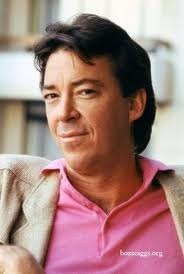
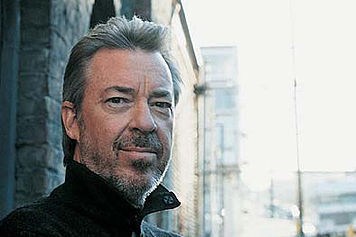
 As we speak, I am listening to Boz Scaggs and had forgotten how much I like him. He is a good vocalist and I particularly like Miss Sun and We're All Alone
Here he is in 2003, live in San Francisco
http://www.youtube.com/watch?v=arU4hj...
And in the mid-70s.
http://www.youtube.com/watch?v=Y39Nn-...
He has lowered his vocal range, as most singers do when they get older.......but he still sounds great to me. Still looks good too!!
 Mod
Mod
Boz Scaggs
Here he is singing about a certain
Miss Riddle - and others from the 2001 album Dig (his best if you ask me):
http://www.youtube.com/watch?v=QxckS-...
King of El Paso:
http://www.youtube.com/watch?v=KfW9EU...
Thanks to You:
http://www.youtube.com/watch?v=apRbHr...
Thanks for those links, Andre. Boz has continued to make good music for a lot of years.........I'm starting to feel old!!!!
Lee Wiley was one of the great vocalists of the 30s/40s and she could probably be called a "torch singer".....wherever you categorize her sound, it resonates with me.Ghost of a Chance - Lee Wiley
http://www.youtube.com/watch?v=OEFF_9...
Mod
Good link Jill. Thx.
I love the female singers of the 30s/40s.......so here is probably one of the greatest torch songs of all time. Fanny Brice introduced it in the 1921 Ziegfeld Follies. This recording is from 1938.My Man - Fanny Brice
http://www.youtube.com/watch?v=RKivfz...
message 29:
by
André, Honorary Contributor - EMERITUS - Music
(last edited Sep 24, 2012 11:52AM)
(new)
Mod
 by Lauren Redniss
 by Nils Hanson
There are many more but these two came to mind first.
Mod
Please Send Me Someone To Love:
http://www.youtube.com/watch?v=Rqcy_n...
My One And Only Love:
http://www.youtube.com/watch?v=MrZKEH...
Save That Time:
http://www.youtube.com/watch?v=4FVJdL...
Mod
Love Kevin Mahogany, Andre!!!Who does it better than Lady Day?. She was so talented and so tragic.....I particularly like this song:
I'm A Fool to Want You
http://www.youtube.com/watch?v=Xs9P-p...
message 33:
by
André, Honorary Contributor - EMERITUS - Music
(last edited Oct 07, 2012 01:58AM)
(new)
Mod
Billie Holiday
The Blues Are Brewin':
http://www.youtube.com/watch?v=bWtUzd...
Farewell to Storyville (sadly slightly mismatched visuals/audio), featuring Louis Armstrong, from the 1947 movie New Orleans:
http://www.youtube.com/watch?v=gLHCR0...
Lady Sings The Blues (once again audio/visual mismatch...):
http://www.youtube.com/watch?v=YtqjW2...
(watch those sax giants!!!)
God Bless the Child:
http://www.youtube.com/watch?v=pp9yj5...
P.S. I Love You:
http://www.youtube.com/watch?v=VjLQ34...
My Man Don't Love Me (again with a band - Ben Webster, Pres, Coleman Hawkins, a young Gerry Mulligan, wow!):
http://www.youtube.com/watch?v=Jf0ldE...
The Billie Holiday Story - BBC documentary:
http://www.youtube.com/watch?v=dHDJZA...
A choir is all about the vocals, right? Wasn't quite sure where to put this but seems like this would be a reasonable thread. The Brooklyn Tabernacle Choir delivered a wonderful performance of The Battle Hymn of The Republic at President Obama's inauguration today. This recording needs a little volume so turn it up!http://youtu.be/qaYtgiQJIj0
Mod
For some reason that video has been "removed by user", Alisa. So I will add this version of the Battle Hymn by the Mormon Tabernacle Choir which is magnificent.http://www.youtube.com/watch?v=wpZ3jP...
Too bad, there was a solo as part of it. The other version is good too.
Two greats for the price of one......Mel Torme and Della Reese. So smoooooooth!!!!http://www.youtube.com/watch?v=rpMfVr...
Mod
http://www.youtube.com/watch?v=-c7IA6...
Mod
Lady Day would have been 95 years old today. We are so lucky to be able to listen to her fantastic voice and unusual style. There will never be another. God Bless The Child - Billie Holiday
http://www.youtube.com/watch?v=Z_1LfT...
Jill wrote: "Lady Day would have been 95 years old today. We are so lucky to be able to listen to her fantastic voice and unusual style. There will never be another. God Bless The Child - Billie Holiday
http..."
One of my all time favorites . . .
Mod
Jill, check out the BBC documentary linked in post 33 - that is if you haven't already.
 Did you say Trad. Pop? Oh, do not get me started.
Okay, just a little...
I love Andy Williams, for example: http://www.youtube.com/watch?v=Oxahtn...
Bad video, though.
Diana Ross, Bette Midler, Judy Garland, Elle and Julie Andrews - I was so sad when I first heard about her surgery and how she couldn't sing anymore...
Mod
I love this guy. He sounds like he belongs in the Big Band days.Don't Get Around Much Anymore by Harry Connick Jr.
http://www.youtube.com/watch?v=FYlsPK...
I think that the voice and stylings of k.d. Lang are about as good as it gets. And she seems to be able to sing duets with everyone from Tony Bennett to Elton John. One talented singer indeed.Trail of Broken Hearts
http://www.youtube.com/watch?v=AQG2ta...
message 48:
by
André, Honorary Contributor - EMERITUS - Music
(last edited Jul 30, 2013 02:47AM)
(new)
Mod
Jill, what's wrong with you? Elton doesn't have any hair left (underneath the wig)...
That said - and with all those lists you post - where's the promised hairdo-list...
Neither does Tony Bennett!!!!I can't find a hair-do list but here is one that will make your stomach turn.
The Best Hair Bands
http://www.liketotally80s.com/list-80...
message 50:
by
André, Honorary Contributor - EMERITUS - Music
(last edited Jul 31, 2013 10:21AM)
(new)
Mod
Don't get me wrong - I lOOOve Billy Preston - both his piano/keyboard playing but also his singing. But that early haircut... Need I say more?
Billy Preston
'Round in Circles:
http://www.youtube.com/watch?v=LDehYX...
How about... Patti Labelle (sadly didn't find it in a better resolution) :
http://www.youtube.com/watch?v=7h2Qa7...
and then Jamie Foxx as Patti's (former) Hairdresser - he means Hair-creationist - and yes, he sings too:
http://www.youtube.com/watch?v=6YQ0L4...

The History Book Club
Books mentioned in this topic
The Queen: Aretha Franklin (other topics)Rage To Survive: The Etta James Story (other topics)
Rhapsody in Black: The Life and Music of Roy Orbison (other topics)
Miss Shirley Bassey (other topics)
Sassy: The Life Of Sarah Vaughan (other topics)
More...
Authors mentioned in this topic
Mikal Gilmore (other topics)Etta James (other topics)
John Kruth (other topics)
John Williams (other topics)
Leslie Gourse (other topics)
More...

There are a number of different styles and standards related to Vocals, Vocalists and Singers.
Cast Recordings
Musical Theater
Musicals
Show Tunes
Vocal/Standards
Acappella
American Popular Song
Ballads
Barbershop Quartet
Cabaret
Harmony Vocal Group
Music Hall
Nostalgia
Show Tunes
Standards
Tin Pan Alley Pop
Torch Songs
Traditional Pop
Vaudeville
Vocal Jazz
Vocal Pop
Just to name a few - where there is singing - we have vocals, vocalists and singers.