
The History Book Club discussion
AMERICAN HISTORY
>
AMERICAN ICONS
date newest »
newest »
 Mod
Mod
 by
by
 Gary B. Nash
Brief Synopsis:
Stephen Conway on an engaging short discussion of one of America’s potent symbols of liberty
Histories of objects are interesting new ways in which we can understand the past. Gary Nash’s short study of the Liberty Bell and its contested symbolism is a good example of what is fast becoming an established genre.
While written with an American readership in mind, the book should appeal to anyone interested in cultural history.
The Liberty Bell was originally installed in Philadelphia’s State House in the middle of the 18th century. The bell bore the biblical legend: “Proclaim Liberty throughout all the Land unto all the Inhabitants thereof”. Intended to inspire Pennsylvanians, the bell became associated with American freedom after the creation of the United States later in the century.
By the middle of the 19th century, the need to manufacture national unity in a country of immigrants meant that the Liberty Bell had been elevated to the status of a revered symbol of American liberty – and it was promoted as much as the Stars and Stripes and the Declaration of Independence itself.
Nash charts the history of the bell and what it has meant to various sections of American society. No sooner did it become an emblem of liberty secured for many Americans than it acted as a potent reminder of liberty denied for others.
The bell was used by abolitionists in their fight against slavery, by women’s rights groups, by campaigners against child labour, and, most recently, by black Americans seeking true equality. Only now, the author concludes, is it everyone’s bell.
Stephen Conway is professor of history at University College London
Source of synopsis: BBC History
Mod
BUNKER HILL
[image error]
 Do American's consider Davy Crockett and icon? If so here is a new biography on the man and his times; "David Crockett: The Lion of the West" by Michael Wallis.
 by Michael Wallis
Description:
His name was David Crockett. He never signed his name any other way, but popular culture transformed his memory into "Davy Crockett," and Hollywood gave him a raccoon hat he hardly ever wore. Best-selling historian Michael Wallis casts a fresh look at the frontiersman, storyteller, and politician behind these legendary stories. Born into a humble Tennessee family in 1786, Crockett never "killed him a b'ar" when he was only three. But he did cut a huge swath across early-nineteenth-century America—as a bear hunter, a frontier explorer, a soldier serving under Andrew Jackson, an unlikely congressman, and, finally, a martyr in his now-controversial death at the Alamo. Wallis's David Crockett is more than a riveting story. It is a revelatory, authoritative biography that separates fact from fiction, providing us with an extraordinary evocation of a true American hero and the rough-and-tumble times in which he lived.
Reviews:
"Wallis’ examination of the man behind the myth is both well written and engrossing." - Booklist
"Michael Wallis is the master frontier story teller, having chronicled everything from Billy the Kid to Highway 66. Now he’s told the tale of the real David Crockett as distinguished from the mostly mythical one. Davy (with a show biz “y”) Crockett did, in fact, die at The Alamo but he did not kill a bear when he was only three or wear a coonskin cap except in publicity photographs. That’s just for starters. But the truth has a way of being more interesting than the made-up, most particularly when in the talented writing mind and hands of Michael Wallis." - Jim Lehrer
"Like Crockett himself [Wallis] is a storyteller. The man who emerges from these pages is vivid, comprehensible, and, in the main, historically reliable. On a subject that has come to be dominated by acrimonious debate and posturing, such serenity has a lot to recommend it." - Texas Monthly
 I have recently finished an interesting book on Buffalo Bill.
 by Louis S. Warren
The Old West is a unique time and Buffalo Bill an intriguing and unusual character. That he created and managed the immensely sucessful Wild West Show should have made him enormously wealthy, and yet he ended his days with practically nothing. His show was very popular with the audiences of the day, people were fascinated by the Wild West - for them recent history, but a time passed and gone.
Buffalo Bill told so many tall stories about his life that it has been difficult to seperate fact from fantasy, this is something the author has managed to untangle to best present the real William Cody.
The book also covers the history of his show and looks at just about every significant character and infleunce associated with it. The level of detail is very thorough and the author provides some insightful perspectives of society in 19th Century USA. I did not find the interpretations of the symbolism of the Wild West show so interesting, like reading a literature review but this was the only downside of an excellent, detailed, thorough and fascinating biography.
Actually I am not sure I even understand what the author was going on about regarding the inverse parallels between Bram Stokers' "Dracula" and the Wild West Show.
Has anyone else here read this book and did you also flounder somewhat in the middle?
 From the other side of the Atlantic I'd like to add a mix of people/subjects:
 by Conrad Black - an interesting man who did much to support Britain in WWII.
 by
by
 Nathaniel Philbrick - two of the country's largest icons?
  by Gene Kranz - deserves wider fame and to me is as much an icon of the Apollo programme as the astonauts.
 by Edward Dolnick - the river and the man who charted it.
 by John Tauvanac - more than any other building, with the exception of the Statue of Liberty, this is the US icon for me.
  by James Edward Peters - military, explorers, statesmen/women, filmstars and many others including the humbling tomb of the unknowns. The history and the icons of America literally at one's feet.
Mod
by James Edward Peters - military, explorers, statesmen/women, filmstars and many others including the humbling tomb of the unknowns. The history and the icons of America literally at one's feet.
Mod
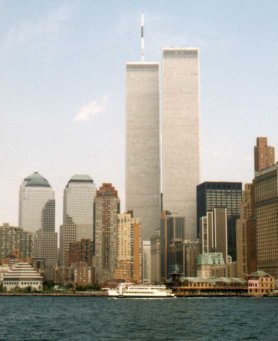
 It has become an icon albeit a tragic one. It towered above the NY skyline and, like the Empire State Building, represented the energy of the city. They may rebuild it but it will never be quite the same.
 by Bill Harris
This says it all.....one of the most impressive memorials in the USA and the world.
by Bill Harris
This says it all.....one of the most impressive memorials in the USA and the world.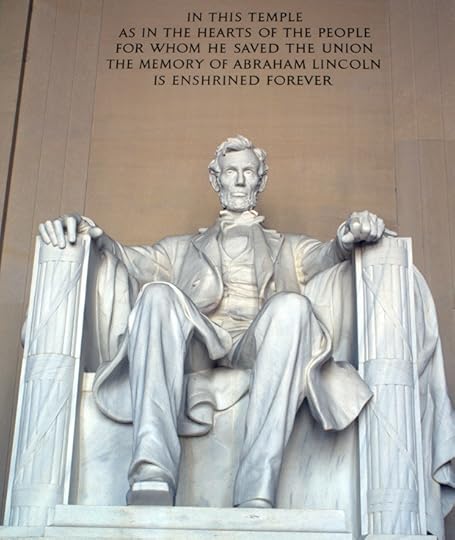
 I saw this last year for the first time...stunning...I just stood there for 20 minutes...then a visit to the bookstore :-)
Mod
I saw this last year for the first time...stunning...I just stood there for 20 minutes...then a visit to the bookstore :-)
Mod
I have to admit that the sculpture looks incredibly life like. Exceptional and very real. The other that I like is the one at the FDR memorial garden.
Always a visit to the bookstore which by the way is fairly good. (smile)
I think the symbolism of the closed and open hands and the position of the feet is lost on some people as it represents the sundering of the Union and his challenge to bring the country back together. My brother took his son to see the memorial when my nephew was about seven years old....he turned to my brother and said "Oh daddy". He still talks about that first visit and as an adult is a student of all that is Lincoln.
Mod
I promise no more family stories!!!!!.... but that one is so dear to my heart and illustrates the effect that the memorial has, even on small children.Another icon......Mount Rushmore
 Here is a new book covering one of America's great icons and by an author that has published some excellent history books:
 by James Donovan
 Mod
The number 11 also is symbolic of the end of WWI.....11:00 on the 11th day of the 11th month. Odd coincidence.
Mod
The men and women who work in the coal mines of our country often don't get much recognition until a tragedy occurs. But they are icons to us in coal country. Here is the memorial wall (to be completed in April of this year) to the 29 men who lost their lives in the Upper Big Branch mine explosion. It is located in Whitesville, a small mining town in southern West Virginia.
Mod
The number 11 also is symbolic of the end of WWI.....11:00 on the 11th day of the 11th month. Odd coincidence.
Mod
The men and women who work in the coal mines of our country often don't get much recognition until a tragedy occurs. But they are icons to us in coal country. Here is the memorial wall (to be completed in April of this year) to the 29 men who lost their lives in the Upper Big Branch mine explosion. It is located in Whitesville, a small mining town in southern West Virginia.
And the statue that stands on the State capitol lawn in Charleston, WV.

 About five years ago I had a wonderful telephone conversation with Joseph E. Persico the author of “11th Month 11th Day 11th Hour: Armistice Day 1918 World War I and it’s Violent Climax” In the books very first introductory sentence Mr. Persico mentioned Army Captain George K. Livermore and the letter he sent to his representative that started congressional hearings related to deaths on the final day of the Great War. I mentioned to Mr. Persico that my grandfather lived only about a mile from Capt. Livermore and that Livermore’s close friend was W. Averill Harriman. He found both to be very interesting. In the 1950’s Persico was a speech writer for then New York Governor Harriman.

 Joseph E. Persico
Regarding Message 10 and the Lincoln Memorial, Daniel Chester French performed the sculpture of Lincoln. French’s first famous sculpture was the famous Concord Monument statue of the Minute Man at the Old North Bridge. Once completed it was unveiled for the Revolutionary War centennial event on April 19, 1875. French was good friends with local Concord literary residents Ralph Waldo Emerson and the Alcott family.
Mod
Joseph E. Persico
Regarding Message 10 and the Lincoln Memorial, Daniel Chester French performed the sculpture of Lincoln. French’s first famous sculpture was the famous Concord Monument statue of the Minute Man at the Old North Bridge. Once completed it was unveiled for the Revolutionary War centennial event on April 19, 1875. French was good friends with local Concord literary residents Ralph Waldo Emerson and the Alcott family.
Mod
What a very interesting story Mark; thank you for sharing that with us.
Mod
Having seen the Concord Monument so many times, I had never made that connection. Looking further into French after your wonderful post, I discovered that he also designed the Pulitzer Prize medals and is responsible for so many other wonderful sculptures, etc.
http://en.wikipedia.org/wiki/Daniel_C...
http://www.yeodoug.com/resources/dc_f...
Regarding Chesterwood, his former home:
http://chesterwood.org/
The National Park Service has a wonderful primer on French:
http://www.nps.gov/history/NR/twhp/ww...
 by Margaret French Cresson
Interesting posts, Bentley and Mark. Mr. French was a very talented man.
Thanks, and speaking of W. Averill Harriman in an earlier post I may have to read “Reflected Glory: The life of Pamela Churchill Harriman” by guest Q&A author Sally Bedell Smith.
by Margaret French Cresson
Interesting posts, Bentley and Mark. Mr. French was a very talented man.
Thanks, and speaking of W. Averill Harriman in an earlier post I may have to read “Reflected Glory: The life of Pamela Churchill Harriman” by guest Q&A author Sally Bedell Smith.

 Sally Bedell Smith
 An aviation pioneer, Amelia Earhart captured the imagination of the public in the 1920-30s. She represented the spirit of the country; therefore I place her in the "icon" category.
The Sound of Wings
 by Mary S. Lovell
Synopsis
When Amelia Earhart disappeared in 1937 during her flight around the world, she was already America's most famous female aviator. The author captures the drama and mystery behind this influential flier and feminist, from her tomboy days at the turn of the century to her early fascination with flying. The author also focuses on the unique relationship Earhart shared with George Putnam, the flamboyant publisher and public relations agent who became both her husband and her business manager.
Did you know that the scale and magnificence of the Capitol building was the idea of Jefferson Davis? He supported the building until the day he left to become President of the CSA. Lots of other interesting facts are included in this book about the building of the seat of American government.Freedom's Cap
 by Guy Gugliotta
Synopsis
The modern United States Capitol is a triumph of both engineering and design. From its 9-million-pound cast-iron dome to the dazzling opulence of the President’s Room and the Senate corridors, the Capitol is one of the most renowned buildings in the world. But the history of the U.S. Capitol is also the history of America’s most tumultuous years. As the new Capitol rose above Washington’s skyline, battles over slavery and secession ripped the country apart. Ground was broken just months after Congress adopted the compromise of 1850, which was supposed to settle the “slavery question” for all time. The statue Freedom was placed atop the Capitol’s new dome in 1863, five months after the Battle of Gettysburg.
Mod
I think this is a magnificent photo. Thank you, Jeff Hughes, for capturing it so well.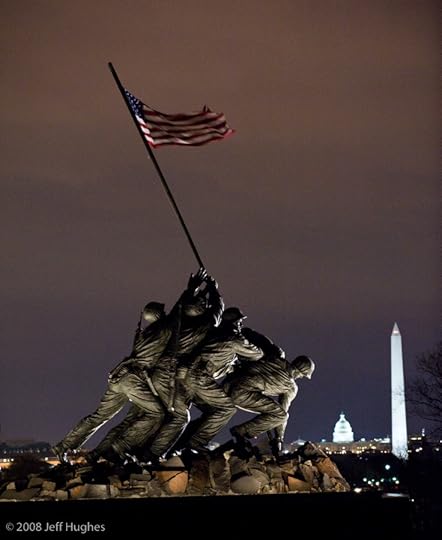 Mod
Mod

The Tomb of the Unknown Soldier in Arlington which is inscribed thus:
HERE RESTS IN
HONORED GLORY
AN AMERICAN
SOLDIER
KNOWN BUT TO GOD
The Tomb of the Unknowns is a monument dedicated to American service members who have died without their remains being identified. It is also known as the Tomb of the Unknown Soldier; it has never been officially named. It is located in Arlington National Cemetery in Virginia, United States of America. The World War I "Unknown" is a recipient of the Medal of Honor, the Victoria Cross, and several other foreign nations' highest service awards. The U.S. Unknowns who were interred are also recipients of the Medal of Honor, presented by the U.S. presidents who presided over their funerals
 How about Kit Carrson

 Hampton Sides or Daniel Boone

 Robert Morgan or Lewis and Clark

 Stephen E. Ambrose all American Icons in my book. Not to mention great books with great stories about taming the west
Terrific, Frank.....indeed they are iconic figures who helped shape our country. BTW, please put your citations together at the bottom of the post for easier reading unless you are using the format that I used below when discussing one book. Thanks.
Stephen E. Ambrose all American Icons in my book. Not to mention great books with great stories about taming the west
Terrific, Frank.....indeed they are iconic figures who helped shape our country. BTW, please put your citations together at the bottom of the post for easier reading unless you are using the format that I used below when discussing one book. Thanks.Another man who played a huge part during troubled times in the United States was General Robert E. Lee, a great gentleman and military leader. He was held in high esteem by Union leaders although he was leading the forces of the CSA.
Robert E. Lee: A Biography
 by Emory M. Thomas
Synopsis
The life of Robert E. Lee is a story not of defeat but of triumph—triumph in clearing his family name, triumph in marrying properly, triumph over the mighty Mississippi in his work as an engineer, and triumph over all other military men to become the towering figure who commanded the Confederate army in the American Civil War. But late in life Lee confessed that he "was always wanting something."
In this probing and personal biography, Emory Thomas reveals more than the man himself did. Robert E. Lee has been, and continues to be, a symbol and hero in the American story. But in life, Thomas writes, Lee was both more and less than his legend. Here is the man behind the legend.
President John F. Kennedy has become an American icon for so many reasons; his youth, his family, his dealing with Krushchev in the Cuban Missile crisis, and unfortunately his assassination. He never had the chance to prove how effective he would have been as a President. Below is his grave, at Arlington National Cemetery with the eternal flame.
 The Great Bridge: The Epic Story of the Building of the Brooklyn Bridge
 by
by
 David McCullough
Synopsis:
This monumental book tells the enthralling story of one of the greatest accomplishments in our nation’s history, the building of what was then the longest suspension bridge in the world. The Brooklyn Bridge rose out of the expansive era following the Civil War, when Americans believed all things were possible. So daring a concept as spanning the East River to join two great cities required vision and dedication of the kind that went into building Europe’s great cathedrals. During fourteen years of construction, the odds against success seemed overwhelming. Thousands of people were put to work. Bodies were crushed and broken, lives lost, notorious political empires fell, and surges of public doubt constantly threatened the project. But the story of the building of the Brooklyn Bridge is not just the saga of an engineering miracle; it is a sweeping narrative of the social climate of the time, replete with heroes and rascals who helped either to construct or to exploit the great enterprise.
The Great Bridge is also the story of a remarkable family, the Roeblings, who conceived and executed the audacious engineering plan at great personal cost. Without John Roebling’s vision, his son Washington’s skill and courage, and Washington’s wife Emily’s dedication, the bridge we know and cherish would never have been built.
Like the engineering marvel it describes, The Great Bridge, republished on the fortieth anniversary of its initial publication, has stood the test of time.
I am reading that book right now, Alisa and it is quite good. You wouldn't think that the building of a bridge would be an interesting topic but you can't lose with David McCullough
by
David McCullough
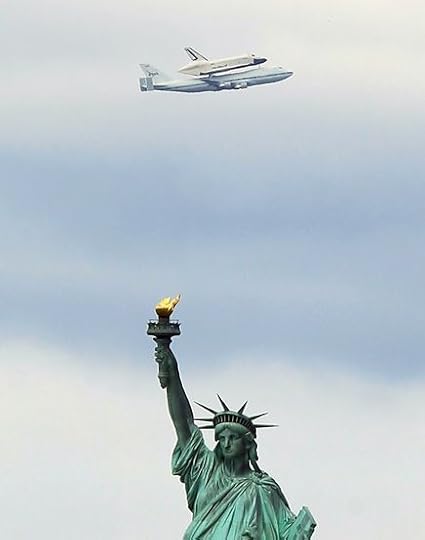
Here she stands in all her glory!!!!!!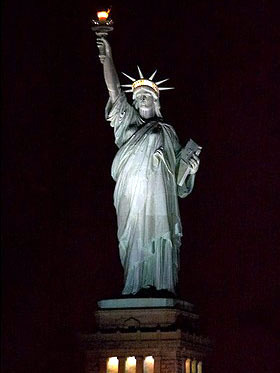
 Do any of you folks listen to the American Icons series on NPR? They're awesome: http://www.studio360.org/series/ameri...
Mod
Do any of you folks listen to the American Icons series on NPR? They're awesome: http://www.studio360.org/series/ameri...
Mod
 Mod
Mod
Release date: July 2, 2014
Liberty's Torch: The Great Adventure to Build the Statue of Liberty
 by Elizabeth Mitchell (no photo)
Synopsis:
The Statue of Liberty has become one of the most recognizable monuments in the world: a symbol of freedom and the American Dream. But the story of the creation of the statue has been obscured by myth. In reality, she was the inspiration of one quixotic French sculptor hungry for fame and adoration: Frédéric Auguste Bartholdi.
Bartholdi showed himself to be a talented sculptor at the tender age of twenty-one when a statue he created won third prize at the 1855 Paris Exhibition. His equally prodigious talent for entrepreneurship came to light soon afterwards. Following a trip to Egypt where he was inspired by the pyramids and the Sphinx, and with France in turmoil following the Franco-Prussian war, Bartholdi made for America, carrying with him the idea of a colossal statue of a woman in his mind. With no help coming from the French and American governments, he enlisted the help of a number of notable men and women of the age, including Joseph Pulitzer, Victor Hugo, Gustave Eiffel, and Emma Lazarus, and through a variety of money-making schemes and some very modern-seeming fundraising campaigns, collected almost all of the money required to build the statue himself.
 The Alamo Story and Battleground Tour
 by Dean Kirkpatrick (no photo)
Synopsis:
Are you going to the Alamo? Read this book first, then take it with you to see and remember it all. Most visitors just see the Alamo compound, where it ended, but the 1836 siege and battle took place all over the city.
The Alamo Story and Battleground Tour is the first Alamo history book that tells the story at the places throughout San Antonio where Alamo events actually happened. This book combines an Alamo history from 1685 to 1836 with a self-guided tour. The places on the tour may be experienced through the pictures in the book or by following the maps and directions the book provides and actually walking the ground where the Alamo heroes walked.
Covering a distance of about two miles, much of it along the San Antonio River Walk, the written history and self-guided tour take you to the locations of: Davy Crockett’s ashes, Jim Bowie’s river palace, General Santa Anna’s death flag, the Cos surrender house, La Villita, the forbidden footbridge, the Old Mill Ford, Jim Bowie’s wedding in 1831, and many others.
A beautiful place worth visiting:The General in the Garden: George Washington's Landscape at Mount Vernon
 by Adam T. Erby (no photo)
Synopsis:
"The General in the Garden" provides an engaging, informative, and richly illustrated introduction to George Washington's landscape at Mount Vernon arguably the best-documented, best-preserved complex of gardens and grounds to survive from eighteenth-century America.
The book's three essays, by Adam T. Erby, J. Dean Norton, and Esther C. White, chronicle Washington's transformation of the estate in the years between the American Revolution and the Constitutional Convention of 1787, the stewardship of its gardens by the Mount Vernon Ladies' Association since 1860, and the archaeology that led to the recent restoration of Washington's showplace upper garden. Mount Vernon assistant curator Adam Erby examines Washington's critical role in developing Mount Vernon's landscape, arguing that the general drew on British design sources and gardening manuals but adapted them to his own circumstances, creating a truly American garden. J. Dean Norton, Mount Vernon's director of horticulture, traces the evolution of the estate's landscape and recreated gardens across the two centuries since Washington's death. And Esther White, Mount Vernon's director of historic preservation and research, shows how groundbreaking archaeological methods facilitated the discovery of Washington-era garden beds and borders of flowers, shrubs, and vegetables in his upper garden a remarkable find that yielded one of the most significant eighteenth-century garden recreations of our time.
Also included is a lavishly illustrated guide to Mount Vernon's landscape features, introducing Washington's beloved estate to a modern audience.
This book will appeal to many readers from students of American history and culture to gardening enthusiasts to Mount Vernon visitors curious to know more about the estate to which George Washington devoted intense and sophisticated care.
The Gateway Arch by
by
 Tracy Campbell
Synopsis:
Rising to a triumphant height of 630 feet, the Gateway Arch in St. Louis is a revered monument to America’s western expansion. Envisioned in 1947 but not completed until the mid-1960s, the arch today attracts millions of tourists annually and is one of the world’s most widely recognized structures. By weaving together social, political, and cultural history, historian Tracy Campbell uncovers the complicated and troubling history of the beloved structure. This compelling book explores how a medley of players with widely divergent motivations (civic pride, ambition, greed, among others) brought the Gateway Arch to fruition, but at a price the city continues to pay.
Campbell dispels long-held myths and casts a provocative new light on the true origins and meaning of the Gateway Arch. He shows that the monument was the scheme of shrewd city leaders who sought to renew downtown St. Louis and were willing to steal an election, destroy historic buildings, and drive out local people and businesses to achieve their goal. Campbell also tells the human story of the architect Eero Saarinen, whose prize-winning design brought him acclaim but also charges of plagiarism, and who never lived to see the completion of his vision. As a national symbol, the Gateway Arch has a singular place in American culture, Campbell concludes, yet it also stands as an instructive example of failed urban planning.
 Another Icon, new biography
Mark Twain
 by
by
 Ron Chernow
Synopsis:
Ron Chernow, the highly lauded biographer of Alexander Hamilton, George Washington, and Ulysses S. Grant, brings his considerable powers to bear on America’s first, and most influential, literary celebrity, Mark Twain. Born Samuel Langhorne Clemens in 1835, under Halley’s Comet, the rambunctious Twain was an early teller of tall tales. He left his home in Missouri at an early age, piloted steamboats on the Mississippi, and arrived in the Nevada Territory during the silver-mining boom. Before long, he had accepted a job at the local newspaper, where he barged into vigorous discourse and debate, hoaxes and hijinks. After moving to San Francisco, he published stories that attracted national attention for their brashness and humor, writing under a pen name soon to be immortalized.
Chernow draws a richly nuanced portrait of the man who shamelessly sought fame and fortune and crafted his celebrity persona with meticulous care. Twain eventually settled with his wife and three daughters in Hartford, where he wrote some of his most well-known works, The Adventures of Tom Sawyer, Life on the Mississippi, and Adventures of Huckleberry Finn, earning him further acclaim. He threw himself into American politics, emerging as the nation’s most notable pundit. While his talents as a writer and speaker flourished, his madcap business ventures eventually forced him into bankruptcy; to economize, Twain and his family spent nine eventful years in exile in Europe. He suffered the death of his wife and two daughters, and the last stage of his life was marked by heartache, political crusades, and eccentric behavior that sometimes obscured darker forces at play.
Drawing on Twain’s bountiful archives, including his fifty notebooks, thousands of letters, and hundreds of unpublished manuscripts, Chernow masterfully captures a man whose career reflected the country’s westward expansion, industrialization, and foreign wars. No other white author of his generation grappled so fully with the legacy of slavery after the Civil War or showed such keen interest in African American culture. Today, more than one hundred years after his death, Twain’s writing continues to be read, debated, and quoted. In this brilliant work of scholarship, a moving tribute to the writer’s talent and humanity, Chernow reveals the magnificent and often maddening life of one of the most original characters in American history.
 Michele wrote: "Another Icon, new biography
Mark Twain
by Ron ChernowSynopsis:
Ron Chernow, the highly lauded biographer of Alexan..."
What a wonderful write-up, Michele. Thank you!
 Thank you, Michele! for a most enticing review. My TBR List grudgingly thanks you as well.
Regards,
Andrea

The History Book Club
Books mentioned in this topic
Mark Twain (other topics)Mark Twain (other topics)
The Gateway Arch: A Biography (other topics)
The General in the Garden: George Washington's Landscape at Mount Vernon (other topics)
The Alamo Story and Battleground Tour (other topics)
More...
Authors mentioned in this topic
Ron Chernow (other topics)Ron Chernow (other topics)
Tracy Campbell (other topics)
Dean Kirkpatrick (other topics)
Elizabeth Mitchell (other topics)
More...

Please feel free to add your favorites with an image and why you like them.