
The History Book Club discussion
MUSIC
>
BIG BAND
date newest »
newest »
message 1:
by
Bentley, Group Founder, Leader, Chief
(last edited Jan 25, 2019 05:03PM)
(new)
Sep 30, 2010 04:49PM
 Mod
Mod

reply
|
flag
Mod
Duke Ellington - It don't mean a thing (1943)
This one has Bubber Miley playing.
Here is the youtube write-up:
Duke Ellington and his orchestra playing this awesome tune in 1943.
"It Don't Mean a Thing (If It Ain't Got That Swing)" is a 1931 composition by Duke Ellington with lyrics by Irving Mills, now accepted as a jazz standard. The music was written and arranged by Ellington in August 1931 during intermissions at Chicago's Lincoln Tavern and was first recorded by Ellington and his orchestra for Brunswick Records (Br 6265) on February 2, 1932. Ivie Anderson sang the vocal and trombonist Joe Nanton and alto saxophonist Johnny Hodges played the instrumental solos. The title was based on the oft stated credo of Ellington's former trumpeter Bubber Miley, who was dying of tuberculosis. The song became famous, Ellington wrote, "as the expression of a sentiment which prevailed among jazz musicians at the time." Probably the first song to use the phrase "swing" in the title, it introduced the term into everyday language and presaged the Swing Era by three years. The Ellington band played the song continuously over the years and recorded it numerous times, most often with trumpeter Ray Nance as vocalist.
Possibly I should set up a thread for SWING
http://www.youtube.com/watch?v=qDQpZT...
Mod
Black and Tan fantasy; Creole Love call
http://www.dailymotion.com/video/x156...
Black and Tan Fantasy Ellington Duke 1958
Duke Ellington on tour. From a 1958 concert in Amsterdam (I think it was the Concertgebouw) we see a performance of a famous medley of tunes from the Duke's early repertoire.
Black and Tan Fantasy, Creole Love Call and the Mooche.
Through the years Duke would frequently change the featured solo players, the arrangements and the assortment of instrumentation, all to keep it interesting for himself, challinging for the musicians and surprising for his audiences.
Duke Ellington - Black And Tan Fantasy 1929 Arthur Whetsol plays the jungle style trumpet solos!
This write-up was from youtube:
Duke Ellington and his Orchestra 1929.
Black And Tan Fantasy.
Black Beauty
Cotton Club Stomp
These are excerpts of the early jazz art movie : Black And Tan Fantasy
It shows the band in a setting very close to what the band did in the famous cotton club, backing dancers, singers and other acts.
Black and Tan Fantasy is one of the first pieces Ellington recorded in what is now called jungle style.
Originally in 1927 it was a kind of solo piece for trumpetter Bubber Miley. There also exist a lovely version (Even 2 takes) where Jabbo Smith substitutes for Miley, also 1927.
When the time was ready in 1929 to make a movie recording, Miley had allready left the Ellington band.
What makes this movie very interesting is that not Miley's follow up, Cootie Williams plays the solos, but instead it is Arthur Whetsol. Cootie was allready in the band, but self declared in an interview that at first he did laugh about the growl/plunger solos and only after a while started studying it seriously.
Arthur Whetsol was more known for his lyrical solo work, a famous example is the haunting beautyfull tone on Creole Rhapsody. Another striking lyrical solo by Whetsol can be heard on Black Beauty, also in this movie. Also note that Whetsol plays the muted solo on Black and Tan with a harmon mute, usually it is done with a plunger by others.
Also an interesting note is that the alto saxophone solo, that used to be played by Otto Hardwicke, is not played by his follow up Johnny Hodges, but instead by Harry Carney, more famous for his baritone sax contributions.
Tricky Sam Nanton plays his usual plunger solo, which is pure magic!
Duke Ellington - piano, composer
Fred Guy - banjo
Wellman Braud - double bass
Sonny Greer - drums
Arthur Whetsol, Cootie Williams, Freddy Jenkins - trumpets
Joe "Tricky Sam" Nanton - trombone, Juan Tizol - valve trombone
Johnny Hodges, Harry Carney, Barney Bigard - reeds
Freddie Washington - dancer
http://www.youtube.com/watch?v=oy4CL2...

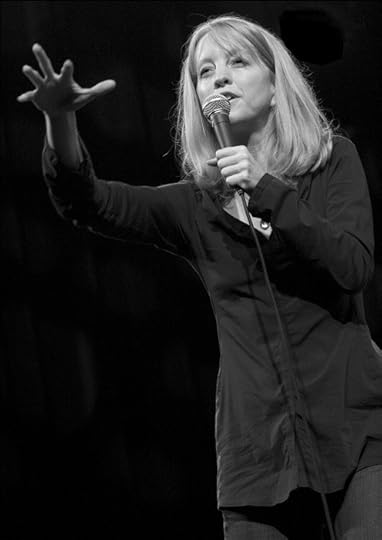
Maria Schneider is a contemporary composer/big band/orchestral leader. Check out her music if you are not familiar with it.
This 26 minute video concert clip of her Coming About is beautiful.
 Mod
Mod
He recently performed it for the very first time together with Nils Landgren and the NDR Big Band.
As soon as I can find some video material I will post it here (there are some interviews and cuts on the NDR site but they all have German dubs put over Joe's words...)
Until then here's the link to the NDR stite:
http://www.ndr.de/orchester_chor/bigb...
 One of the great big bands of the 40s was fronted by Artie Shaw on clarinet. Here is one for the ages.
Moonglow :Artie Shaw and his Orchestra
http://www.youtube.com/watch?v=AKQ7v3...
For the lover of the sweet sounds of the big bands from the 30s, 40s, and early 50s.The Big Band Era: When Music Was Music
 by Aubrey J. Sher (no photo)
Synopsis:
The Big Band Era: When Music was Music is a book that introduces the reader in PART 1 to the "History of the Big Band Era." It continues into PART 2, covering the private lives and professional careers of more than 150 bandleaders, complete with photos of each of them. These bandleaders include the most famous among the hundreds of them who made our lives enjoyable as we danced to their music at ballrooms or night clubs or listened to them on radio, watched them later on TV, or attended their performances at theaters like the Paramount in New York City.Among the early standard bearers was Paul Whiteman, who set the stage for the greats who followed, with whom we, today, are more familiar. They include such legendary bandleaders as Benny Goodman, the Dorsey brothers, Glenn Miller, Harry James, Duke Ellington, and a host of others about whom I'm sure you want to learn more, and they are all in this book for you to digest and enjoy.PART 3 is titled the "Showcase of the Pioneers in the History of Music." It is here where a few of the greatest composers, arrangers, and lyricists of the Era, led by Irving Berlin, are given much deserved space. PART 3 also gives credit to the pioneer disk jockeys of the Big Band Era.Finally, also in PART 3, we pay tribute with Special Recognition to personalities who warrant honorable mention for their achievements and for the influence they wielded during the Big Band Era.
One of the most famous band leaders of the Second World War era.Glenn Miller and His Orchestra
 by George Thomas Simon (no photo)
Synopsis:
Moonlight Serenade, Sunrise Serenade, Little Brown Jug, In the Mood... These and other memorable tunes endeared Glenn Miller to millions in the Swing Era and all who recall those times. After playing trombone and arranging for leading orchestras of the Dorsey brothers, Ray Noble, Ben Pollack, and Red Nichols, Glenn Miller formed his own "sweet" band, which from 1938 to 1942 achieved widespread popularity second only to Benny Goodman's. Miller learned all he could from these and other bands like Jimmie Lunceford's and Artie Shaw's, going on to create a uniquely rich sound with clarinet over four saxes and four trombones ("three-part harmony sounds too thin," he once exclaimed). Simon tells of both the successes and hard times of Miller's illustrious career, up to his celebrated Army Air Force band and his untimely death.
One of the giants of the big band era.Tommy Dorsey
 by
by
 Peter Levinson
Synopsis:
Swing has never gone out of style. It was the music the Greatest Generation danced to--and went to war to. And no musician evokes the Big Band era more strikingly than Tommy Dorsey, whose soaring trombone play and hit tunes influenced popular music for a generation. Tommy Dorsey (1905-1956) led a rich and complex life. Beginning with his childhood in the coal mining towns of Pennsylvania, we follow the young trombonist's journey to fame and fortune during the Jazz Age. Tommy, with his brother Jimmy, created one of the most popular bands of the era and played with such giants as Bing Crosby and Glenn Miller. They also launched the career of a skinny young singer named Frank Sinatra. But Tommy's volcanic personality eventually split the band and Tommy went off on his own. Drawing on exhaustive new research and scores of interviews with the musicians who knew him best, Levinson delves into Dorsey's famously eccentric lifestyle and his oversize appetite for drink, women, and perfection. The first biography on Dorsey in more than thirty years, Tommy Dorsey is a dazzling portrait of the Big Band's brightest star--his tumultuous life, his turbulent times, and the unforgettable music that made him a legend
If you are a fan of the big band sound of the 30s and 40s, this is the book for you. It is a reference to every band that ever claimed the big band title and information about each.American Big Bands
 by William F. Lee (no photo)
Synopsis:
This ultimate guide to big bands includes hundreds of entries spanning the history of this American musical style. Each entry contains the band name, its leader, essential personnel, the years it existed, tops hits, and a brief description of the band.
Mod
Thanks, Big Band music has great appeal, doesn't it.
Mod
Glen Gray and his Casa Loma OrchestraTheir mid-1930s appearances on the long-run radio comedy-variety program, the Camel Caravan (introduced with their theme, "Smoke Rings") increased their popularity. Interestingly enough, Gray chose not to conduct the band in the early years, playing in the saxophone section while violinist Mel Jenssen acted as conductor. In 1937, the band overwhelmingly voted in favor of Glen leading the orchestra, and Gray finally accepted the job.
Hits included "Casa Loma Stomp," "No Name Jive" and "Maniac's Ball". Part of the reason for the band's decline is that other big bands included in their books hard-swinging numbers emulating the hot Casa Loma style. In the late 1930s Gray took top billing, and by the mid-1940s (as the other original players left) Gray would come to own the band and the Casa Loma name. For a time, during this period, the band featured guitarist Herb Ellis, trumpeter Bobby Hackett, pianist Nick Denucci and cornetist Red Nichols. By 1950, the Casa Loma band had ceased touring, Gray retired to Massachusetts, and the later recordings on Capitol (beginning with Casa Loma in Hi-Fi in 1956 and continuing through the Sounds of the Great Bands series) were done by studio musicians in Hollywood (with several of Gray's "alumni" occasionally featured).
Here is their signature song "Smoke Rings", although the picture in the video is the Benny Goodman Band but that picture was used in several of the big band videos.....but the sound is Glen Gray and it is very mellow.
http://www.youtube.com/watch?v=8-I5dK...
And here is an updated version by kd Lang.
http://www.youtube.com/watch?v=p2FqtB...
Love this man!!Good Morning Blues
 by Count Basie (no photo)
Synopsis:
Count Basie (1904–1984), pianist, composer, and icon of big-band jazz, known for such classics as "Jumpin' at the Woodside," "Cherokee," and "One O'Clock Jump," recounts his life story to Albert Murray with all the charm and dry humor of two friends sitting at the kitchen table. Good Morning Blues is both testimony and tribute to a remarkable, rich life.
Maybe one of the greatest drummers ever, Krupa made the drums a focal point of music. He was the bad boy of the big band era but very talented.World of Gene Krupa: That Legendary Drummin' Man
 by Bruce H. Klauber (no photo)
Synopsis:
Describes the career, music and life of the man who made the drums a solo instrument, the man who symbolised the swing era and the man who is still internationally recognised by millions as 'the world's greatest drummer'. In this unique work, Gene Krupa tells of the beginnings of his style, of the scandalous 1943 drug bust, of the feuds and battles with the likes of Benny Goodman and Buddy Rich, his thoughts on his own works and the works of those in jazz and classical music, and much more. Commentary by Leonard Feather, George Simon and others add another dimension.(
Not much of a GR blurb on this book but it appears to be an encyclopedia of all the big bands of the 1930s/40s.The Big Bands
 by George Thomas Simon (no photo)
Synopsis:
The "definitive volume" on the sounds of swing is back, with the complete story of hundreds of bands, bandleaders, vocalists and instrumentalists.
One of the most popular bands of the 1940s which has now practically been forgotten.Thinking of You - The Story of Kay Kyser
 by Raymond D. Hair(no photo)
Synopsis:
Kay Kyser was one of the giants of the American music business of the Twentieth Century. He was a bandleader for some twenty years, roughly the 1930s and 1940s. During the 1940s he was the most popular bandleader of his time-ore celebrated than Glenn Miller and the Dorseys and even Guy Lombardo. But today, for some reason, nobody seems to remember him! This book tries to correct this oversight. Born in 1905 in Rocky Mount, N.C, Kay Kyser studied law at the University of North Carolina but - influenced by bandleader Hal Kemp - decided to become a bandleader himself. Though not a musician, Kyser developed into a good frontman and, with George Duning as musical director and arranger, after some time his band developed into one of the better "Sweet" - or "Mickey-Mouse" -bands. This was the Depression era and the band struggled for some years for success. When they finally hit the big time, it was through the medium of radio. Kyser's Kollege of Musical Knowledge was the most popular radio show at that time. During World War II Kyser devoted most of his time to performing for the men and women serving in the military. In the early Forties he changed his style from sweet to a moderate swing style that proved popular with the younger crowd. Kyser and his band appeared in several Hollywood films where he-unlike his contemporaries-was also featured as an actor. He disbanded his group in 1948, working in televison for some time and then was active in the Christian Science movement. He died in 1985. Thinking of You contains the life story of Kay Kyser plus short biographies of the musicians and vocalists who worked for him. Also included is a list of his films, his LPs and CDs including his million sellers.
Woody Herman and the Herd were as big as they got during the big band era.Leader of the Band: The Life of Woody Herman
 by Graham Lees (no photo)
Synopsis:
Now comes the book that jazz lovers (and Lees's fans) have been waiting for - Leader of the Band, a vivid, full-scale biography of Woody Herman. Asked by Herman in 1986 to write his biography, Gene Lees has spent close to a decade working on it, interviewing many of Herman's childhood friends and lifelong acquaintances as well as numerous musicians.
We don't hear enough about this important and influential big band leader.The Uncrowned King of Swing: Fletcher Henderson and Big Band Jazz
 by Jeffrey Magee (no photo)
Synopsis:
If Benny Goodman was the King of Swing, then Fletcher Henderson was the power behind the throne. Not only did Henderson arrange the music that powered Goodman's meteoric rise, he also helped launch the careers of Louis Armstrong and Coleman Hawkins, among others. Now Jeffrey Magee offers a fascinating account of this pivotal bandleader, throwing new light on the emergence of modern jazz and the world that created it. Drawing on an unprecedented combination of sources, including sound recordings, obscure stock arrangements, and hundreds of scores that have been available only since Goodman's death, Magee illuminates Henderson's musical output, from his early work as a New York bandleader, to his pivotal role in building the Kingdom of Swing. He shows how Henderson, standing at the forefront of the New York jazz scene during the 1920s and '30s, assembled the era's best musicians, simultaneously preserving jazz's distinctiveness and performing popular dance music that reached a wide audience. Magee reveals how, in Henderson's largely segregated musical world, black and white musicians worked together to establish jazz and how Henderson's style rose out of collaborations with many key players of the day.
Once seen, never forgotten. He was one of a kind. I added a little extra treat at the bottom of this post.Hi-de-Ho: The Life of Cab Calloway
 by Alyn Shipton (no photo)
Synopsis:
Clad in white tie and tails, dancing and scatting his way through the "Hi-de-ho" chorus of "Minnie the Moocher," Cab Calloway exuded a sly charm and sophistication that endeared him to legions of fans.
In Hi-de-ho, author Alyn Shipton offers the first full-length biography of Cab Calloway, whose vocal theatrics and flamboyant stage presence made him one of the highest-earning African American bandleaders. Shipton sheds new light on Calloway's life and career, explaining how he traversed racial and social boundaries to become one of the country's most beloved entertainers. Drawing on first-hand accounts from Calloway's family, friends, and fellow musicians, the book traces the roots of this music icon, from his childhood in Rochester, New York, to his life of hustling on the streets of Baltimore. Shipton highlights how Calloway's desire to earn money to support his infant daughter prompted his first break into show business, when he joined his sister Blanche in a traveling revue. Beginning in obscure Baltimore nightclubs and culminating in his replacement of Duke Ellington at New York's famed Cotton Club, Calloway honed his gifts of scat singing and call-and-response routines. His career as a bandleader was matched by his genius as a talent-spotter, evidenced by his hiring of such jazz luminaries as Ben Webster, Dizzy Gillespie, and Jonah Jones. As the swing era waned, Calloway reinvented himself as a musical theatre star, appearing as Sportin' Life in "Porgy and Bess" in the early 1950s; in later years, Calloway cemented his status as a living legend through cameos on "Sesame Street" and his show-stopping appearance in the wildly popular "The Blues Brothers" movie, bringing his trademark "hi-de-ho" refrain to a new generation of audiences.
More than any other source, Hi-de-ho stands as an entertaining, not-to-be-missed portrait of Cab Calloway--one that expertly frames his enduring significance as a pioneering artist and entertainer.
Minnie the Moocher by Cab Calloway
https://www.youtube.com/watch?v=8mq4U...
A delightful step back in time to the days of the big bands.When Swing Was the Thing: Personality Profiles of the Big Band Era
 by John R. Tumpak (no photo)
Synopsis:
Over the years John Tumpak developed personal associations with many bandleaders, musicians, vocalists, arrangers, and contributors who participated in the Big Band Era. The unique stories of these and other Era personalities are told in his book, When Swing Was the Thing: Personality Profiles of the Big Band Era, which provides detailed insight into their personal and professional lives and the cultural history of the time. Forty of the publications forty-seven chapters are based on interviews Tumpak conducted with the key players or their immediate family members. Major historic events in the careers of Benny Goodman and Glenn Miller are also included. There are 114 vintage photos, many of which were provided by individuals featured in the book and appear in print for the first time. When Swing Was the Thing provides a descriptive and visual return to the days of that unique period from the mid 1930s to the mid 1940s when fifteen piece swing bands dominated American entertainment, filling ballrooms to capacity, broadcasting on the radio, appearing in the movies, and bringing international fame to the high profile bandleaders.
A revealing look at one of the most popular trumpet players and big band leaders of the era.Trumpet Blues: The Life of Harry James
 by Peter J. Levinson(no photo)
Synopsis:
Swing is back in style, and with it a renewed interest in the Big Band Era. And few players dominated that era more than Harry James, whose soaring trumpet solos and romantic hit tunes influenced popular music for a generation. Now, Peter J. Levinson, who knew Harry James personally, has written a revealing biography of this jazz icon, based on nearly 200 interviews with musicians and friends.
Harry James led a truly colorful life, and in Trumpet Blues Levinson captures it all. Beginning with James's childhood in a traveling circus, we follow the young trumpeter's meteoric rise in the 1930s and witness his electrifying performances with the Benny Goodman Orchestra. We see how James formed his own band in 1939, an incubator for many pop music stars of the 1940s and '50s, including Frank Sinatra, Connie Haines, Dick Haymes, Helen Forrest, and Kitty Kallen. Combined with James's superb musicianship, peerless trumpet technique and talented sidemen, this stellar group dominated the war years and the immediate post-war period. And James himself, especially after his marriage to film goddess Betty Grable, became one of America's most famous personalities and lived like true Hollywood royalty. Levinson describes their twenty-two-year marriage with insight and sympathy. But he shows how James's marriage--and his triumphant late-1950s comeback in Nevada's casinos--were slowly undermined by his penchant for compulsive gambling, womanizing, and alcoholism. He gives us the inside story of James's sybaritic life style, and probes the profound psychological reasons for James's destructive behavior.
The first biography ever written on Harry James, Trumpet Blues is a scintillating portrait of Swing's brightest star--his life, his loves, and the music that defined an era.
Charlie Barnet, who is not a familiar name these days, was one of the great band leaders of the 1940s. But most people will recognize his signature song.Cherokee
https://www.youtube.com/watch?v=YnNUd...
Source: Youtube
One of the greatest of the composers of big band music, Billy Strayhorn is sadly overlooked sometimes. He was a great talent.Lush Life: A Biography of Billy Strayhorn
 by
by
 David Hajdu
Synopsis:
Billy Strayhorn (1915-67) was one of the greatest composers in the history of American music, the creator of a body of work that includes such standards as "Take the 'A' Train." Yet all his life Strayhorn was overshadowed by his friend and collaborator Duke Ellington, with whom he worked for three decades as the Ellington Orchestra's ace songwriter and arranger. A "definitive" corrective (USA Today) to decades of patchwork scholarship and journalism about this giant of jazz, Lush Life is a vibrant and absorbing account of the "lush life" Strayhorn and other jazz musicians led in Harlem and Paris. While composing some of the most gorgeous American music of this century, Strayhorn labored under a complex agreement whereby Ellington took the bows for his work; until his life was tragically cut short by cancer and alcohol abuse, the small, shy black composer carried himself with singular style and grace as one of the few jazzmen to be openly homosexual. Lush Life has sparked an enthusiastic revival of interest in Billy Strayhorn's work. It is already acknowledged as a jazz classic.
For the student of the big band era....it is all here in this book.Stardust: The Bible of the Big Bands
 by Richard Grudens(no photo)
Synopsis:
Covers the bands, the band leaders, the musicians, the vocalists, interviews with various Big Band Leaders and their vocalists. This book presents bands of England and Europe, the list of various known bands 1920-1980's, Big Band organizations, clubs, and publications.
Swing fans unite!!!World of Swing: An Oral History of Big Band Jazz
 by Stanley Dance (no photo)
Synopsis:
Now available for a new generation of swing enthusiasts, reissued to coincide with the release of "The World of Swing" CD from Columbia/Legacy, this monumental history of big band jazz, documented through interviews with forty leading musicians, has been updated with a new introduction and discography by Dan Morgenstern.
If you know your big/swing bands of the 30s and 40s, then you know Jimmie Lunceford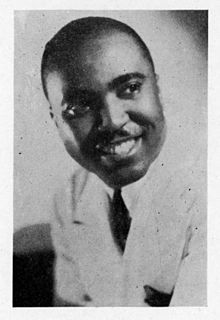
Jimmie Lunceford will long be remembered as the leader of a swinging big band that rivaled on record, and exceeded in person, the orchestras of Duke Ellington, Benny Goodman and Count Basie. His band differed from many of the other big bands of the 1930s and 1940s in that Lunceford's group was noted less for its soloists than for its ensemble work. Furthermore, most bands of the period used a four-beat rhythm while the Lunceford Ork developed a distinctive two-beat swing often played at medium tempo. The unique sound became known during the Swing era as the Lunceford two-beat.
Jimmie Lunceford’s music education included studying under Wilberforce J. Whiteman, the father of Paul Whiteman. His scholastic education included receiving a BA from Fisk University and later attending New York City College. Although Lunceford became proficient on all reed instruments he preferred the alto saxophone.
Jimmie Lunceford recruited the nucleus of his band while an athletic instructor at Manassas High School in Memphis, Tennessee. It was here, in 1927, that he organized a student jazz band called the Chicksaw Syncopators. The personnel of this band included Moses Allen (bass) and Jimmy Crawford (drums). Later, Willie Smith (alto) and Eddie Wilcox (piano) were added. The group turned professional in 1929, waxing its first recordings for RCA in 1930. After playing for several years in Cleveland and Buffalo, in 1934, the band began a high profile engagement at the famed Cotton Club in Harlem. At first the band played flashy, stiff instrumentals in the early Casa Loma orchestra manner such as two hot recordings made the same year, Jazznocracy and White Heat, with arrangements by Will Hudson.
While Wilcox and Smith both contributed early arrangements, it was the addition of ace arranger and trumpet man Sy Oliver that gave the Lunceford band its distinguished two-beat sound. Paul Webster on trumpet, Eddie Durham and later Trummy Young on trombone, and vocalist Dan Grissom were also important mid 1930s additions to the Lunceford band. By 1935 the group, then called Jimmie Lunceford's Orchestra, had achieved a national reputation as one of the top black swing bands.
The Jimmie Lunceford big band during the Swing era was widely known and other bands often imitated its showmanship and appearance. Lunceford rehearsed his outfit endlessly. The polish of the band is evident on record by its flawless ensemble work. Further adding to the appeal of the band were the vocals by several of Lunceford's men. Jimmie's boys whispered, wheedled, cozened, rather than sang. Oliver and Smith, Joe Thomas and later Trummy Young all sang with the band often in trio unison. Unseen, is the choreography of the group's musicians in performance. Of particular delight to fans who saw the band in person was the spectacle of members of the trumpet section tossing their horns high into the air and catching them on the beat. In 1935 a long list of superb Decca two-beat recordings associated with Lunceford's name but written by Sy Oliver began; For Dancers Only, Margie, ‘Posin, Slumming On Park Avenue, My Blue Heaven, Organ Grinders Swing etc. are still great listens today. Unfortunately, based on the merits of his band's recordings, Lunceford may never receive his just due as a leader simply because his group's superb showmanship is lost on record.
Although his orchestra-leading career nowhere near paralleled in longevity that of Basie or Ellington, for a time from 1935 until Sy Oliver left his band to work for Tommy Dorsey in 1939, the Lunceford band was one of the most popular in the land. The distinctive Lunceford style, generally identified with Sy Oliver although many other arrangers contributed to the bands vast book, influenced many bandleaders and arrangers right up to the 1950’s. Glenn Miller was influenced by the Lunceford unit's showmanship and Tommy Dorsey, after Sy Oliver joined his band, borrowed much from the Lunceford tradition. Many albums described as tributes to Lunceford have been recorded including those by Sy Oliver, George Williams, Billy May and others.
When Sy Oliver left the band in 1939, Bill Moore Jr. showed up and left a vital impression on the band's books with his Belgium Stomp, Monotony In Four Flats, and I Got It. In 1941 the addition of trumpet man Snooky Young and some fine arrangements by Gerald Wilson further heightened the band's recorded output.
In 1942 Tadd Dameron arranged for the orchestra but the band began to have internal problems. The issues of the band were mainly monetary, precipitated by Lunceford's refusal to pay his players a wage on par with that of other successful bands. Lunceford himself wanted for nothing and was reputed to have a lavish lifestyle which was readily apparent to all of his sidemen. In May of 1942 Lunceford fired many of his key musicians and alto man Willie Smith soon left as well, leaving a huge void in the band.
By the time the recording ban ended a mass exodus from the group had occurred. Nevertheless, Jimmie Lunceford was still a popular bandleader in 1947 when he suddenly collapsed and died while signing autographs after an engagement in Oregon. Rumors soon surfaced (including those printed in DownBeat magazine) that a racist restaurant owner, who had a strong aversion about feeding the Lunceford band, actually poisoned the bandleader.
After Lunceford's death, pianist/arranger Ed Wilcox and Joe Thomas tried to keep the orchestra together but in 1949 the band permanently broke up.
(Source: Swingmusic.net)
What exactly is a "big band". Here is a short but sweet definition:A big band is a type of musical ensemble associated with playing jazz music and which became popular during the Swing Era from the early 1930s until the late 1940s. Big Bands evolved with the times and continue to today. A big band typically consists of approximately 12 to 25 musicians and contains saxophones, trumpets, trombones, and a rhythm section. The terms jazz band, jazz ensemble, stage band, jazz orchestra, and dance band are also used to refer to this type of ensemble. This does not, however, mean that each one of these names is technically correct for naming a 'big band" specifically.
In contrast to smaller jazz combos, in which most of the music is improvised, or created spontaneously, music played by big bands is highly "arranged", or prepared in advance and notated on sheet music. The music is traditionally called 'charts'. Improvised solos may be played only when called for by the arranger.
(Source: Wikipedia)
Here is a bit of an oddity. Shep Fields and His Rippling Rhythms was a popular swing band in the 1940s.....a band that contained no brass section which was unheard of. This little pseudo-documentary about the creation of the band is certainly different.https://www.youtube.com/watch?v=I2AdI...
You have got to be a real student of the big bands of the 30s and 40s to remember Leo Reisman and his Orchestra. They were quite popular but seem to be pretty much forgotten today.
Mr. Reisman's first recording was on a 10" in. 78rpm record for Columbia Records, recorded on January 10, 1921 - the two titles being "Love Bird", with a catalog issue of Columbia A-3366, mx.79634 and the other title being "Bright Eyes", with a catalog issue of Columbia A-3366, mx.79635.
Reisman recorded for Columbia exclusively from July 1923 through March 11, 1929, when he signed with Victor and stayed until October 1933. He then signed with Brunswick and stayed until 1937 when he re-signed with Victor. During his 1929-1933 Victor period, Reisman recorded many lesser-known period Broadway songs, some of which were recorded by no other band. Due to his popularity, he was always one of the prominent bands during his time at Columbia, Victor and Brunswick, and he recorded prolifically.
Reisman also had the habit of featuring composers and Broadway performers as band vocalists, including Harold Arlen, Fred Astaire, Clifton Webb, and Arthur Schwartz. He also featured Lee Wiley in 1931-32 for her first 3 recordings. More often than not, his vocalists were Frank Luther, Dick Robertson and later Sally Singer and George Beuler. A notable recording from this era was "Happy Days Are Here Again" in November 1929, with vocals by Lou Levin.
Among his more popular hits were his #1 recordings of Cole Porter's "Night and Day" (1932) and Con Conrad's "The Continental" (1934), and Astaire's recording of Irving Berlin's "Cheek to Cheek" (1935).
Reisman's was primarily a dance orchestra; he was not a fan of jazz music, but some of his early 1930s 78 RPM recordings were a bit "hot". (However, Reisman employed the legendary trumpet player Bubber Miley in 1930-31, who had been a featured member of Duke Ellington's orchestra.)
Eddy Duchin was a member of Leo Reisman's orchestra; it was Reisman who gave Duchin his big break.1 The band leader and TV personality, Mitch Miller, also was a member of Reisman's orchestra.2
Leo Reisman died in New York City on December 18, 1961 at the age of 64.
(Source: Wikipedia)
When Swing Was the Thing: Personality Profiles of the Big Band Era
by John R. Tumpak (no photo)Synopsis:
Over the years John Tumpak developed personal associations with many bandleaders, musicians, vocalists, arrangers, and contributors who participated in the Big Band Era. The unique stories of these and other Era personalities are told in his book, When Swing Was the Thing: Personality Profiles of the Big Band Era, which provides detailed insight into their personal and professional lives and the cultural history of the time. Forty of the publications forty-seven chapters are based on interviews Tumpak conducted with the key players or their immediate family members. Major historic events in the careers of Benny Goodman and Glenn Miller are also included. There are 114 vintage photos, many of which were provided by individuals featured in the book and appear in print for the first time. When Swing Was the Thing provides a descriptive and visual return to the days of that unique period from the mid 1930s to the mid 1940s when fifteen piece swing bands dominated American entertainment, filling ballrooms to capacity, broadcasting on the radio, appearing in the movies, and bringing international fame to the high profile bandleaders.
Mod
January 19, 2019
The disappearance of bandleader Glenn Miller during World War II has remained one of aviation's greatest mysteries. But intriguing clues from beneath the waves could finally be providing some answers.
In the late 1930s and early 40s there was no bigger musical act than Miller and his orchestra. The big band leader wrote and performed dozens of top ten hits and sold millions of records but in the midst of World War II, Miller gave up his lucrative career and enlisted in the military, where he led the U.S. Army Air Force band. It was in his service to his country that Miller lost his life.
Anxious to bring his band to troops on the European front, Miller took off from England on December 15, 1944, bound for Paris. His plane disappeared over the English Channel, and the fate of Miller's lost flight has been a mystery ever since.
Ric Gillespie from the International Group for Historic Aircraft Recovery, or TIGHAR, said an English fisherman has provided the most solid lead in decades on where to find the wreckage of Miller's plane.
"In 1987 trawling in the English Channel, he pulled up an airplane wreck that he later realized looked like the kind of airplane that Glenn Miller disappeared in. He called the Coast Guard and described it. They said, 'Well, if it's a World War II plane it might be a war grave, just get rid of it,'" Gillespie said.
The fisherman made a note of where he dropped the wreckage but it wasn't until years later when he saw a picture of what Miller's Norseman aircraft looked like that he realized what he might have discovered.
Gillespie, who has extensively researched Amelia Earhart's disappearance, said if the wreckage can be found, tracing it back to Miller should be an easy task since it was the only aircraft of its body and engine type to go missing during the war.
"You find the steel tube fuselage, you find the engine, you found the Miller airplane," Gillespie said.
It would put an end to one of America's greatest unsolved mysteries.
Link to video: https://www.cbsnews.com/news/glenn-mi...
Glenn Miller Music on Spotify - the basic membership is free:
https://open.spotify.com/artist/2aAHd...
Glenn Miller's reign as the most popular bandleader in the U.S. came relatively late in his career and was relatively brief, lasting only about three and a half years, from the spring of 1939 to the fall of 1942.
But during that period he utterly dominated popular music, and over time he has proven the most enduring figure of the swing era, with reissues of his recordings achieving gold record status 40 years after his death.
Miller developed a distinctive sound in which a high-pitched clarinet carried the melody, doubled by a saxophone section playing an octave lower, and he used that sound to produce a series of hits that remain definitive examples of swing music.
Miller's approach is not much appreciated by jazz fans, who prefer bands that allow for greater improvisation than was found in his highly disciplined, rigorously rehearsed unit. But he brought the swing style of popular music to a level of sophistication and commercial acceptance it had not previously achieved and would not see again after his untimely passing.
Miller was the son of Lewis Elmer and Mattie Lou Cavender Miller. He lived in various locations in the Midwest while he was growing up. He first took up the mandolin, then switched to a horn. In Grant City, MO, where his family moved in 1915, he joined the town band and began playing trombone. By 1918, the family had moved to Fort Morgan, CO, where he played in the high school band and graduated in May 1921. He immediately joined the Boyd Senter band, but quit to start college at the University of Colorado in January 1923. After a year, however, he left college and moved to Los Angeles, where he joined Ben Pollack's band. In the summer of 1928, he left Pollack and settled in New York, where he worked as a session musician and arranger. When in the spring of 1934 Tommy and Jimmy Dorsey formed the Dorsey Brothers Orchestra, he signed on as trombonist and arranger, remaining with the band almost a year. He left to organize an American band for British bandleader Ray Noble that made its debut at the Rainbow Room in New York's Rockefeller Center. Meanwhile, he was studying theory and composition with Joseph Schillinger.
Miller began recording under his own name for Columbia Records on April 25, 1935, using a pickup band containing members of the Noble orchestra. His instrumental "Solo Hop" reached the Top Ten in the summer of 1935. But he did not organize a permanent touring band of his own until 1937, when he signed to Brunswick Records. The group was not a success, and he disbanded it in early 1938, then reorganized a couple of months later and signed to the discount-priced Bluebird subsidiary of RCA Victor Records. Still without any great success, he managed to maintain this orchestra for the next year until he got his big break with an engagement at the Glen Island Casino in New Rochelle, NY, in the summer of 1939. Glen Island was a major swing venue with a radio wire, giving the band extensive exposure. Already, Miller had hit the charts with the Top Ten hit "Sunrise Serenade"; soon, its flipside, "Moonlight Serenade," would become an even bigger hit. "Wishing (Will Make It So)" (vocal by Ray Eberle) hit number one in June. Ultimately, Miller scored 17 Top Ten hits in 1939, including the subsequent chart-toppers "Stairway to the Stars," "Moon Love," "Over the Rainbow," and "Blue Orchids" (all vocals by Ray Eberle), as well as "The Man With the Mandolin" (vocal by Marion Hutton).
Miller's recording success led to other opportunities. He became the star of the three-times-a-week radio series Chesterfield Supper Club in December 1939 and began the first of several extended engagements at the Café Rouge in the Hotel Pennsylvania in New York in January 1940, also appearing occasionally at the Paramount Theatre. He scored 31 Top Ten hits in 1940, more than three times as many as the second most successful recording artist of the year, Tommy Dorsey, hitting number one with "Careless," "When You Wish Upon a Star," "Imagination," "Fools Rush In (Where Angels Fear to Tread)," and "Blueberry Hill" (all vocals by Ray Eberle); "The Woodpecker Song" (vocal by Marion Hutton); and the instrumentals "In the Mood" and "Tuxedo Junction" (both of which were later inducted into the Grammy Hall of Fame).
Miller scored another 11 Top Ten hits in 1941, which was enough to make him the top recording artist for the second year in a row. His number one hits included "Song of the Volga Boatmen," "You and I" (vocal by Ray Eberle), "Chattanooga Choo Choo," from his first film, Sun Valley Serenade (vocals by Tex Beneke and the Modernaires with Paula Kelly), and "Elmer's Tune" (vocals by Ray Eberle and the Modernaires). The story was much the same on the recording front in 1942, 11 Top Ten hits and a third straight ranking as the year's top recording artist, the chart-toppers including "A String of Pearls," "Moonlight Cocktail" (vocals by Ray Eberle and the Modernaires), "Don't Sit Under the Apple Tree (With Anyone Else but Me)," and "(I've Got a Gal In) Kalamazoo" (vocals on the last two by Tex Beneke, Marion Hutton, and the Modernaires). "Kalamazoo" came from Miller's second film, Orchestra Wives.
Yet 1942, the first full year of American participation in World War II, marked the end of Miller's dominance of popular music, since, after months of negotiations, he arranged to receive an officer's commission in the army air force on September 10 and, 17 days later, played his final date with his band, which he then broke up. He organized a service band and began performing at military camps and war-bond rallies while hosting a weekly radio series, Sustain the Wings.
Nevertheless, he scored two more Top Ten hits in 1943, including the number one "That Old Black Magic" (vocals by Skip Nelson and the Modernaires). He took his band to Great Britain in June 1944 and continued to perform for the troops and do radio broadcasts. He was preparing to go on to Paris when the plane on which he was traveling disappeared over the English Channel and he died at age 40.
Glenn Miller, an album of 78 rpm records, topped the newly instituted album charts in May 1945 and became the most successful album of the year. The Glenn Miller Orchestra was reconstituted as a ghost band after the war under the direction of Tex Beneke. In October 1947, Glenn Miller Masterpieces, Vol. 2 topped the album charts. Miller was the subject of a partly fictionalized film biography, The Glenn Miller Story, starring James Stewart, in February 1954; a soundtrack album of re-recordings not featuring Miller, released by Decca Records, hit number one in March. RCA Victor countered with the 10" LP Selections from the Glenn Miller Story, which hit number one in May. (The album was reissued as a 12" LP with a modified track selection in 1956 and was certified gold in 1961. In 1962, RCA Victor released Glenn Miller Plays Selections from the Glenn Miller Story and Other Hits, which had an identical track listing to the 1956 Selections from the Glenn Miller Story LP. It went gold in 1968.)
The Miller estate, having parted ways with Tex Beneke, hired Ray McKinley, a former member of the Miller band, to organize a new ghost band in 1956, and this Glenn Miller Orchestra continued to record and perform under various leaders from then on.
In 1959, RCA Victor released a triple LP of previously unissued performances, For the First Time ..., which earned a Grammy nomination for Best Performance by a Dance Band. Reissues of Miller's original recordings sold well perennially. The double-LP A Memorial 1944-1969, released in October 1969, went gold in 1986; Pure Gold, released in March 1975, went gold in 1984. In 1989, Jive Bunny and the Mastermixers sampled Miller's recording of "In the Mood" on their gold single "Swing the Mood."
While RCA Victor remains the primary repository of Miller recordings and continues to reissue them in various configurations, other labels have also come up with airchecks and other stray recordings, making for a large and constantly growing catalog. ~ William Ruhlmann, Rovi

The History Book Club
Books mentioned in this topic
When Swing Was the Thing: Personality Profiles of the Big Band Era (other topics)The World of Swing: An Oral History of Big Band Jazz (other topics)
Stardust: The Bible of the Big Bands (other topics)
Lush Life: A Biography of Billy Strayhorn (other topics)
Trumpet Blues: The Life of Harry James (other topics)
More...
Authors mentioned in this topic
John R. Tumpak (other topics)Stanley Dance (other topics)
Richard Grudens (other topics)
David Hajdu (other topics)
Peter J. Levinson (other topics)
More...