
Art Lovers discussion
Art History
>
Influential Artists
date newest »
newest »
 I just thought of a fairly obvious one...what about Vincent van Gogh? He lived a life in poverty and wasn't famous or well known until after his death. I think most of us are familiar with this one because we've touched on the subject quite a bit.
 1. Giotto making realistic settings and people in his paintings instead of flat forms. Did he influence all painters? He also put in a real event (Halleys Comet) in his Adoration of the Magi, c. 1304.
 2. Jan van Eyck did the first self portrait in 1433. Did he influence Rembrandt, who is known for his 90+ self portraits?
3. Caravaggio use of dramatic dark and light and realism, influenced many.
4. Velazquez was the first to paint "movement" in 1657 in The Spinners,
Prado. Did this influence Muybridge?
5. One of my favorite artists -- Honore Daumier-- made the first (political) cartoon (lithography) for La Caricature. His most famous one was Gargantua, 1832. Later in the 19th century, did his work influence Toulouse Lautrec's beautiful "poster art"?
6. Cezanne's landscape paintings influenced Cubism.
 Thanks so much for this topic Heather- I think this Wiki-piece on Bazille pretty much says it all!
Frédéric Bazille was born in Montpellier, Hérault, Languedoc-Roussillon, France, into a wealthy Protestant family. He became interested in painting after seeing some works of Eugène Delacroix. His family agreed to let him study painting, but only if he also studied medicine.[1]
Bazille began studying medicine in 1859, and moved to Paris in 1862 to continue his studies. There he met Pierre-Auguste Renoir and Alfred Sisley, was drawn to Impressionist painting, and began taking classes in Charles Gleyre's studio. After failing his medical exam in 1864, he began painting full-time. His close friends included Claude Monet, Alfred Sisley, and Édouard Manet. Bazille was generous with his wealth, and helped support his less fortunate associates by giving them space in his studio and materials to use.[1]
Bazille was just twenty-three years old when he painted several of his best known works, including The Pink Dress (ca. 1864, Musée d'Orsay, Paris). This painting combines a portrait-like depiction of Bazille's cousin, Thérèse des Hours, who is seen from behind—and the sunlit landscape at which she gazes.[2] His best known painting is Family Reunion of 1867–1868 (Musée d'Orsay, Paris).
Frédéric Bazille joined a Zouave regiment in August 1870, a month after the outbreak of the Franco-Prussian War. On November 28 of that year he was with his unit at the Battle of Beaune-la-Rolande when, his officer having been injured, he took command and led an assault on the German position. He was hit twice in the failed attack and died on the battlefield at the age of twenty eight. His father travelled to the battlefield a few days later to take his body back for burial at Montpellier over a week later
......................
another great article
Born Jean-Frédéric Bazille on December 6, 1841, in Montpellier, France. Frédéric Bazille was raised in a wealthy family in the South of France and left home in the early 1860s to study medicine in Paris. But his passion for painting overcame the obligation he felt to pursue a proper vocation and, much to his parents’ chagrin, he soon left school to pursue art. It was during these formative years that he met fellow painters Claude Monet, Pierre-Auguste Renoir and Alfred Sisley, who would join Bazille in founding the revolutionary Impressionist movement of the late nineteenth century.
The Artist's Studio (1870)
© Archivo Iconografico, S.A./CORBIS
Thanks to his family’s wealth, Frédéric Bazille had a more spacious apartment and studio than most of his artist friends and even supported some of them early in their careers, including Monet and Renoir. His home in the Batignolles neighborhood in Paris became a headquarters for the Impressionists; hence the movement was first called the "Batignolles School." Bazille's 1870 work The Artist's Studio in the Rue de la Condamine showing Renoir, journalist and critic Émile Zola, Monet, Édouard Manet, Bazille, and Edmond Maitre in Bazille's studio exemplifies this period.
In 1870, Frédéric Bazille joined the infantry after the outbreak of the Franco-Prussian War (1870-71). He was almost immediately sent to Algeria for combat training and by the end of the year, he was battling in the frontlines. Frédéric Bazille was tragically killed in action in his first battle, on November 28, 1870, at age 29.
Frédéric Bazille never married, and his many intimate relationships with men prompted claims that he was gay. At the time, homosexuality was considered deviant and was almost universally repressed, particularly among the social elite in which his family was firmly rooted. His close friendships included the most celebrated Impressionist artists of all time, including Manet, Monet, Renoir, Sisley, and Berthe Morisot. Were it not for his untimely death, Frédéric Bazille was almost certainly destined to become one of the leaders of the Impressionist revolution.
 These were all influential painters. Most of the greats were influential, that is why they are considered great. But the rest of the proposal was to talk about those who had died before they became famous or recognized, and that doesn't apply to at least some, if not all, of these.
Carol wrote: "1. Giotto making realistic settings and people in his paintings instead of flat forms. Did he influence all painters? He also put in a real event (Halleys Comet) in his Adoration of the Magi, c. 1..."
Those are great articles, Rick. I wasn't familiar with Frédéric Bazille until you introduced him today. I had to look up The Pink Dress: [image error]
Frédéric Bazille (1841-1870)The Pink Dress1864Oil on canvasH. 147; W. 110 cmParis, Musée d'OrsayBequest of Marc Bazille, the artist's brother, 1924
"This painting combines a portrait-like depiction of Bazille's cousin, Thérèse des Hours, who is seen from behind—and the sunlit landscape at which she gazes."
Love the shadow in the foreground and the illuminated buildings on which she is gazing. Beautiful!
Heather wrote: "Those are great articles, Rick. I wasn't familiar with Frédéric Bazille until you introduced him today. I had to look up The Pink Dress: Frédéric Bazille (1841-1870)The Pink Dress1864Oil on canv..."
Thanks for posting the painting! I have to learn to do that!! Yes- his work was so wonderful..yet bittersweat- since I wish he had lived longer and produced more.
I focused on artists who influenced others and not on those who died prematurely. But looking at my list -- Caravaggio died at 39 years and Jan van Eyck died at 46 years.
Carol wrote: "I focused on artists who influenced others and not on those who died prematurely. But looking at my list -- Caravaggio died at 39 years and Jan van Eyck died at 46 years."Both -excellant choices- van Eyck was vital to the Flemish movement
 Of course, there's Frida. She was 47 when she passed away. I think her impact as an artist is stronger now than when she was living.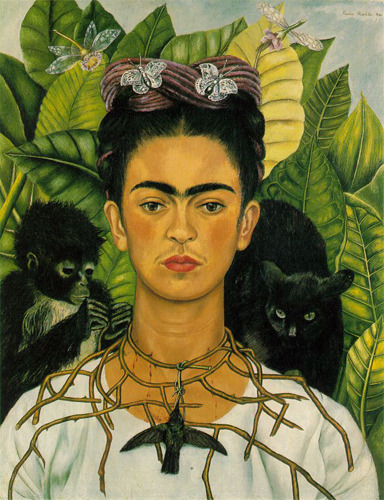
http://en.wikipedia.org/wiki/Frida_Kahlo
And a baroque painter who died at 57, Artemisia Gentileschi, interesting read about her struggle to overcome sexism and also her subject matter, which was quite graphic.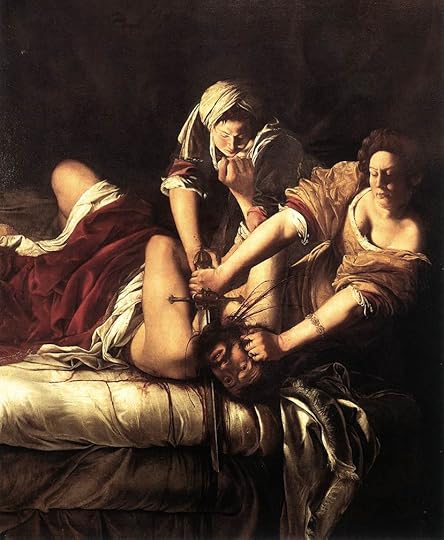
http://en.wikipedia.org/wiki/Artemisi...
Very good references, Lorie! Two of my favorite artists!

I think this is a great idea! A topic that unfortunately I am not as familiar with but would like to learn more...take it away everyone!