
The History Book Club discussion
HEALTH- MEDICINE - SCIENCE
>
HEALTH
date newest »
newest »
 The Chlorine Revolution: Water Disinfection and the Fight to Save Lives
 by
by
 Michael J. McGuire
Synopsis
Perhaps no other advancement of public health has been as significant. Yet, few know the intriguing story of a simple idea—disinfecting public water systems with chlorine—that in just 100 years has saved more lives than any other single health development in human history.
At the turn of the 20th century, most scientists and doctors called the addition of chloride of lime, a poisonous chemical, to public water supplies not only a preposterous idea but also an illegal act—until a courageous physician, working with the era’s greatest sanitary engineer, proved it could be done safely and effectively on a large scale.
This is the first book to tell the incredible true story of the first use of chlorine to disinfect a city water supply, in Jersey City, New Jersey, in 1908. This important book also corrects misinformation long-held in the historical record about who was responsible for this momentous event, giving overdue recognition to the true hero of the story—an unflagging champion of public health, Dr. John L. Leal.
I too like little discoveries like this. It can prompt further exploring. It's why my TBR list is always growing!

 This book is very thought provoking as it covers the undercover trade in human body parts. It reads more like fiction than fact but the premise is based on proven fact.
The Red Market
 by Scott Carney (no photo)
Synopsis
An in-depth report that takes readers on a shocking tour through a macabre global underworld where organs, bones, and live people are bought and sold on the red market
Investigative journalist Scott Carney has spent five years on the ground tracing the lucrative and deeply secretive trade in human bodies and body parts—a vast hidden economy known as the "red market." From the horrifying to the ridiculous, he discovers its varied forms: an Indian village nicknamed "Kidneyvakkam" because most of its residents have sold their kidneys for cash; unscrupulous grave robbers who steal human bones from cemeteries, morgues, and funeral pyres for anatomical skeletons used in Western medical schools and labs; an ancient temple that makes money selling the hair of its devotees to wig makers in America—to the tune of $6 million annually.
The Red Market reveals the rise, fall, and resurgence of this multibillion-dollar underground trade through history, from early medical study and modern universities to poverty-ravaged Eurasian villages and high-tech Western labs; from body snatchers and surrogate mothers to skeleton dealers and the poor who sell body parts to survive. While local and international law enforcement have cracked down on the market, advances in science have increased the demand for human tissue—ligaments, kidneys, even rented space in women's wombs—leaving little room to consider the ethical dilemmas inherent in the flesh-and-blood trade. At turns tragic, voyeuristic, and thought-provoking, The Red Market is an eye-opening, surreal look at a little-known global industry and its implications for all our lives
 Mod
In the past few years we have seen the rise in the medical community of health education which includes the concept of preventive medicine.....doing what you should do with your lifestyle to avoid illness that is preventable.
Mod
In the past few years we have seen the rise in the medical community of health education which includes the concept of preventive medicine.....doing what you should do with your lifestyle to avoid illness that is preventable.The Strategy of Preventive Medicine
 by Geoffrey Rose (no photo)
Synopsis
This book explores and analyzes the options for preventive medicine, considered from various viewpoints - epidemiological, sociological, political, practical, and ethical. The uniting theme is the concept of health as an issue for populations as well as for individuals. This has applications throughout medicine and these are illustrated by a wide range of examples. The book will be valuable to professionals and students in public health, epidemiology and health economics. It will also be of interest to health service managers and planners, clinicians interested in prevention, and all those concerned with health as a public issue.
A memoir by a talented woman who got caught up in the eating disorders that so many suffer in modern times. Very eye-opening.Wasted: A Memoir of Anorexia and Bulimia
 by
by
 Marya Hornbacher
Synopsis
Why would a talented young woman enter into a torrid affair with hunger, drugs, sex, and death? Through five lengthy hospital stays, endless therapy, and the loss of family, friends, jobs, and all sense of what it means to be "normal," Marya Hornbacher lovingly embraced her anorexia and bulimia -- until a particularly horrifying bout with the disease in college put the romance of wasting away to rest forever. A vivid, honest, and emotionally wrenching memoir, Wasted is the story of one woman's travels to reality's darker side -- and her decision to find her way back on her own terms.

 by Rebecca Skloot
This book goes back to the birth of informed consent, as we know it today. It takes both the sociological and scientific points of view and is written in an easy to follow form.
Mod
Mod
This book was listed under another topic (plagues) in this thread. It belonged there but also belongs here as it covers the first attempts at epidemiology and public health during an outbreak of cholera in London in 1853.The Ghost Map
 by
by
 Steven Johnson
Synopsis
Trust Steven Johnson to put an intriguing and unconventional spin on a well-known story! The nimble-minded nonfiction writer who dazzled us in Emergence, Mind Wide Open, and Everything Bad Is Good for You now parses a storied incident from the annals of public health-- the Broad Street cholera epidemic of 1854, a deadly outbreak that decimated London's population in eight days.
At the center of the story stand two heroic figures: Reverend Henry Whitehead and Dr. John Snow, whose combined efforts in mapping the disease solved the mystery of how cholera spreads and created a model of information design with wide-ranging implications. Using historical narrative as a scaffolding for some of his famously big ideas, Johnson shows how this story from Victorian times offers lessons for modern cities facing a host of problems--from urban sprawl to environmental crises and the threat of bio-terrorism.
Mod
 Kathy wrote: "The China Study
 by [author:T..."
A book I'm intending to read since my college years.
I vehemently disagree with the theory put forth by this author. Immunization has been a focus of much discussion for years and there is much misinformation out there which frightens parents about immunizing their children. But it is only fair to add this book about the dissenting side of this issue.Immunization Theory Vs. Reality: Expose on Vaccinations
 by Neil Z. Miller (No photo)
Synopsis:
Take a trip into the shadowy underworld of vaccine theory, where live viruses are brewed in diseased animal organs proir to being "stabilized" with chemical compounds and carcinogenic substances, prior to being injected into your healthy child. Then take a look behind the scenes at vaccine reality, where thousands of children are damaged and killed every year, where Persian Gulf War patriots are freely experimented on, and where human genetic patterns are altered indiscriminately. These stories and more are revealed in this profound expose on vaccinations.
School vaccination comes before our State legislature every year, since WV is one of the few states that does not allow for any exemption...religious, moral, etc. Again this year, there is a bill to exempt for moral/ethical/religious reasons. As a member of WIN (WV Immunization Network), it is our job to state the facts as clinically proven and attempt to show that certain beliefs (such as immunizations causes autism) are not built on medical fact and research. It is a very sensitive issue and it is the right of those on both sides of the question to be heard.Thanks for the link, Kathy.
I am currently reading The Anatomy of Body Worlds edited byT. Christine Jespersen(no photo).
Although I barely started, I like it a lot. I especially loved a quote by Gunther Von Hagens(no photo) stating that his two-year term in prison made him accept uncertainty. I guess that's the first step to be creative and achieve something great.
I wish I studied anatomy on the beautiful human plastinates without any formaldehyde smell...
Mod
 Less Medicine, More Health: 7 Assumptions That Drive Too Much Medical Care
 by H. Gilbert Welch (no photo)
Synopsis:
The author of the highly acclaimed Overdiagnosed describes seven widespread assumptions that encourage excessive, often ineffective, and sometimes harmful medical care.
To maintain a healthy lifestyle, the US Department of Health and Human Services advises the public to “eat smart, exercise regularly, and get routine health screenings.” And that is absolutely correct—except for the checkup part. The American public has been sold the idea that seeking medical care is one of the most important steps to maintaining wellness. Surprisingly, medical care is not, in fact, well correlated with good health. The major determinants of health exist outside individual medical care.
Dr. H. Gilbert Welch pushes against established wisdom and suggests that medical care may be too aggressive. Drawing on his twenty-five years of medical practice and research, Dr. Welch explains that excessive medical care is often powered by economics and lawyers. But American medical care would not exist in this state if the general public did not harbor powerful assumptions about the value of tests and treatments—a number of which are just plain wrong.

 Persona Non Grata With Diabetes by Paul Cathcart (no photo )is an interesting book on being diagnosed with diabetes and how it changes your life.
DIY Hydrogen Peroxide: How to Clean Naturally, Improve Your Health, and Much, Much, More!
Persona Non Grata With Diabetes by Paul Cathcart (no photo )is an interesting book on being diagnosed with diabetes and how it changes your life.
DIY Hydrogen Peroxide: How to Clean Naturally, Improve Your Health, and Much, Much, More! by Rachel Hendrickson (no photo)
Synopsis:
You probably know of hydrogen peroxide because it is often used to clean cuts and scrapes. It seems that everyone has a little bottle of this cleaner in the bathroom cabinet, just waiting for the moment that it's needed. However, if you've never before read an introduction to hydrogen peroxide, what you probably didn't know is that this simple, natural compound is really a miracle cleaner with an incredible amount of uses! It's not just for cuts and scrapes anymore. You can use it for everything, from cleaning off a dirty cookie sheet to removing a stain from your favorite shirt. Best of all, it's natural, safe, and environmentally friendly.
This book will cover:
An Introduction To Hydrogen Peroxide
The Many Uses For Hydrogen Peroxide
Natural Cleaning With Hydrogen Peroxide
Hydrogen Peroxide Household Recipe mixes
Skin Benefits of Hydrogen Peroxide
Hydrogen Peroxide in the Garden
Additional Uses Hydrogen Peroxide
Final Word
 The PKU Paradox: A Short History of a Genetic Disease
 by Diane B. Paul (no photo)
Synopsis:
In a lifetime of practice, most physicians will never encounter a single case of PKU. Yet every physician in the industrialized world learns about the disease in medical school and, since the early 1960s, the newborn heel stick test for PKU has been mandatory in many countries. Diane B. Paul and Jeffrey P. Brosco’s beautifully written book explains this paradox.
PKU (phenylketonuria) is a genetic disorder that causes severe cognitive impairment if it is not detected and treated with a strict and difficult diet. Programs to detect PKU and start treatment early are deservedly considered a public health success story. Some have traded on this success to urge expanded newborn screening, defend basic research in genetics, and confront proponents of genetic determinism. In this context, treatment for PKU is typically represented as a simple matter of adhering to a low-phenylalanine diet. In reality, the challenges of living with PKU are daunting.
In this first general history of PKU, a historian and a pediatrician explore how a rare genetic disease became the object of an unprecedented system for routine testing. The PKU Paradox is informed by interviews with scientists, clinicians, policymakers, and individuals who live with the disease. The questions it raises touch on ongoing controversies about newborn screening and what happens to blood samples collected at birth.
Francie wrote: "Less Medicine, More Health: 7 Assumptions That Drive Too Much Medical Care by [author:H. Gilbert Wel..."interesting book. Most patients have to be convinced that caring is not a function of the number of medical tests you order.
Mod
Aging: What Really Matters?: A Complete Guide to Successful & Healthy Aging by Susie Harper (no photo)
Synopsis:
Maybe you’re not concerned about age at the moment but you know aging is just around the corner! Or maybe it has started to affect your day to day life and you desperately need some help and advice to make things more positive?
Susie Harper has been through this phase of life with & without a partner and experienced many of the things which you might be going through right now!
She also spent most of her adult working life in the care professions and has proven time and again that she has the capacity to get right to the heart of the matter in a helpful and loving way
This ‘Complete Guide to Successful & Healthy Aging ‘ discusses the different hardships the process of aging brings along and gives you proven and useful examples about how to overcome them.
Cure: A Journey into the Science of Mind Over Body by Jo Marchant (no photo)
Synopsis:
A rigorous, skeptical, deeply reported look at the new science behind the mind's extraordinary ability to heal the body
Have you ever felt a surge of adrenaline after narrowly avoiding an accident? Salivated at the sight (or thought) of a sour lemon? Felt turned on just from hearing your partner's voice? If so, then you've experienced how dramatically the workings of your mind can affect your body.
Yet while we accept that stress or anxiety can damage our health, the idea of "healing thoughts" was long ago hijacked by New Age gurus and spiritual healers. Recently, however, serious scientists from a range of fields have been uncovering evidence that our thoughts, emotions, and beliefs can ease pain, heal wounds, fend off infection and heart disease, even slow the progression of AIDS and some cancers.
In Cure, award-winning science writer Jo Marchant travels the world to meet the physicians, patients, and researchers on the cutting edge of this new world of medicine. We learn how meditation protects against depression and dementia, how social connections increase life expectancy, and how patients who feel cared for recover from surgery faster. We meet Iraq war veterans who are using a virtual arctic world to treat their burns and children whose ADHD is kept under control with half the normal dose of medication. We watch as a transplant patient uses the smell of lavender to calm his hostile immune system and an Olympic runner shaves vital seconds off his time through mind-power alone.
Drawing on the very latest research, Marchant explores the vast potential of the mind's ability to heal, acknowledges its limitations, and explains how we can make use of the findings in our own lives.
The Great Nation in Decline: Sex, Modernity and Health Crises in Revolutionary France C.1750 1850 by Sean M. Quinlan (no photo)
Synopsis:
This book studies how doctors responded to a and helped shape a deep-seated fears about nervous degeneracy and population decline in France between 1750 and 1850. It uncovers a rich and far-ranging medical debate in which four generations of hygiene activists used biomedical science to transform the self, sexuality and community in order to regenerate a sick and decaying nation; a programme doctors labelled 'physical and moral hygiene'.
Moreover, it is shown how doctors imparted biomedical ideas and language that allowed lay people to make sense of often bewildering socio-political changes, thereby giving them a sense of agency and control over these events.
Combining a chronological and thematic approach, the six chapters in this book trace how doctors began their medical crusade during the middle of the Enlightenment, how this activism flowered during the French Revolution, and how they then revised their views during the period of post-revolutionary reaction. The study concludes by arguing that medicine acquired an unprecedented political, social and cultural position in French society, with doctors becoming the primary spokesmen for bourgeois values, and thus helped to define the new world that emerged from the post-revolutionary period."
 Across The Globe, Our Diets Are Making Us Sicker, Report Finds
by RHITU CHATTERJEE
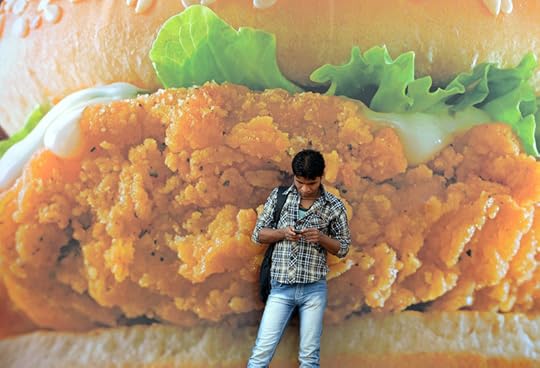
An Indian pedestrian checks his mobile phone in front of an advertisement for a burger of a fast-food giant in Mumbai, India. Fast food and highly processed foods and sodas are increasingly becoming more popular around the world, one of the main reasons for increasing rates of overweight and obesity. Indranil Mukherjee/AFP/Getty Images
Diet and nutrition are now the biggest risk factors for people's health across the globe, even in poorer countries. That's according to a recent report published by the Global Panel on Agriculture and Food Systems Nutrition, an independent group of experts on nutrition and health.
"If you look at all the diet-related risk factors for health, they outweigh the burden of all of the other risk factors combined," says Lawrence Haddad, an author on the report and formerly, a senior fellow with the International Food Policy Research Institute. The other risk factors include unsafe sex, alcohol, drug and tobacco use.
The report, which uses some recent data on what people around the world are eating, offers some good news, too. We have fewer hungry people in the world now than a couple of decades ago – only one in 10 people, as opposed to about one in five in 1990. And the number of stunted (a sign of chronic malnutrition) children has decreased from 39.6 percent to 23.8 percent. That means fewer people suffering and dying from insufficient food. This has been possible because of targeted projects to tackle hunger, as well as overall reductions in poverty, better education, improved health care and sanitation.
As poorer countries have developed over the past couple of decades, many aspects of life in those countries have gotten better, says Haddad, who is now the executive director of the Global Alliance for Improved Nutrition, a non-governmental organization. "More kids go to school, more clean water and sanitation," he says. But diet doesn't necessarily get better with higher incomes. Yes, people eat more healthy foods when they earn more money – for example, milk, fruits and seafood. But their consumption of unhealthy foods – processed foods and sugary drinks – increases much more with rising incomes, according to the report. "These kinds of things, they have very high concentrations of calories," says Haddad.
In fact, the sale of processed foods is growing at the fastest rate in developing countries, the report finds. "Income is sort of a double-edged sword. It allows us to buy healthy stuff and also unhealthy stuff," says Haddad.
As a result, the planet is seeing a rapid rise in rates of overweight and obesity. If current trends continue, we may have as many as 3.28 billion overweight and obese people by 2030 (up from 1.33 billion in 2005), the vast majority of them in low- and middle-income countries. For example, in China, "the combined rate of overweight and obese adults is projected to rise to over 50 percent by 2030," the report notes.
What follows is a concomitant rise in the rates of diet-related health problems. For example, in Nigeria, the number of adults with diabetes is projected to double between 2011 and 2030, from 3.1 million to 6.1 million. Countries like Nigeria are simultaneously facing the burden of hunger, malnutrition, infectious disease, as well as these diet-related, non-communicable diseases that are expensive to treat. The report estimates an annual loss of 10 percent of global GDP from diet-related illnesses. "Wake up, world!" says Haddad. "Our diet is not killing us, but it's making us sick."
The report blames these trends on changing food environments in most countries. Healthy foods are becoming increasingly expensive the world over, while unhealthy food is becoming cheaper and easier to buy. "The price of fruits and vegetables is going up and up," he says. "The price of processed foods is going down and down." In other words, it is becoming easier and more economical to buy unhealthy foods.

Pedestrians visit fast-food restaurants in Mumbai, India. Rapid urbanization in many developing countries is driving the demand for fast foods and highly processed, packaged foods. Aniruddha Chowhdury/Mint/Hindustan Times via Getty Images
These changes are happening even in remote and poor corners of the globe, says Jessica Fanzo, a nutrition and diet expert at Johns Hopkins University, who wasn't involved in the report. On a recent trip to Kenya, Fanzo visited a remote place in the northeastern part of the country called Gotu, where food and water are scarce. Local communities are mostly pastoralists who rely on food being shipped in on bad roads from a nearby town called Isiolo. Pulses, fruits and vegetables are difficult to find, says Fanzo, but "you can get soda there." "It's warm soda, but it's soda!"
Globalization has changed food environments in most countries, according to the report, allowing many multinational food companies selling processed foods to enter developing country markets. And rapid urbanization is also playing a role.
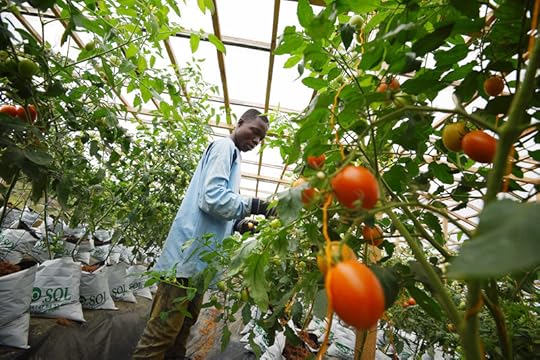
A man works in a hydroponic tomato farm in Bingerville, Côte d'Ivoire. According to a new report, governments should help make fruits and vegetables more affordable, so people are more likely to eat them. Sia Kambou/AFP/Getty Images
Read the remainder of the article: http://www.npr.org/sections/thesalt/...
Discussion topics:
a) Have you witnessed the changing food environments in developing countries, and what are your thoughts on these changes?
b) Why do you think governments are allowing such increases in processed food companies, rather than promoting the introduction of companies offering healthy food options?
Source: National Public Radio
Mod
 by
by
 Melanie Joy
Synopsis:
In her groundbreaking new book, Why We Love Dogs, Eat Pigs, and Wear Cows, Melanie Joy explores the invisible system that shapes our perception of the meat we eat, so that we love some animals and eat others without knowing why.
She calls this system carnism. Carnism is the belief system, or ideology, that allows us to selectively choose which animals become our meat, and it is sustained by complex psychological and social mechanisms. Like other "isms" (racism, ageism, etc.), carnism is most harmful when it is unrecognized and unacknowledged.
Why We Love Dogs, Eat Pigs, and Wear Cows names and explains this phenomenon and offers it up for examination. Unlike the many books that explain why we shouldn't eat meat, Joy's book explains why we do eat meat -- and thus how we can make more informed choices as citizens and consumers.
Mod
 by
by
 Radha Agrawal
Synopsis:
It’s the great paradox of the digital age, what Radha Agrawal calls “community confusion”—the internet connects us to hundreds, thousands, even millions of people, and yet we feel more isolated than ever, with 1 in 4 Americans saying they have zero friends to confide in.
Where are our people? The answer is found in Belong , a highly energetic and beautifully illustrated guide to discovering where and with whom you fit.
After suffering her own bout of community confusion, Agrawal embarked on a journey that ultimately resulted in cofounding Daybreaker, a transformative phenomenon where thousands of people get up at the crack of dawn, meet in event spaces in 22 cities around the world, and dance. Now she’s distilled her experience for finding meaningful connections into a two-step process.
The first step is GOING IN. This includes determining what we want in a friend and community and what we offer, becoming intentional about our relationships, gauging the type of energy we emit and respond to, and understanding how we do—or don’t—show up for others.
Then comes GOING OUT—how to find a few special friends who feed our soul; or how to find a fully engaged group with similar business, artistic, and social aims; or both.
Connectedness is the most significant factor in human happiness— Belong is a creative blueprint for bringing this most important dimension back into our lives.
Mod
 by
by
 Suzanne Mettler
“Keep your government hands off my Medicare!” Such comments spotlight a central question animating Suzanne Mettler’s provocative and timely book: why are many Americans unaware of government social benefits and so hostile to them in principle, even though they receive them?
The Obama administration has been roundly criticized for its inability to convey how much it has accomplished for ordinary citizens.
Mettler argues that this difficulty is not merely a failure of communication; rather it is endemic to the formidable presence of the “submerged state.”
In recent decades, federal policymakers have increasingly shunned the outright disbursing of benefits to individuals and families and favored instead less visible and more indirect incentives and subsidies, from tax breaks to payments for services to private companies.
These submerged policies, Mettler shows, obscure the role of government and exaggerate that of the market.
As a result, citizens are unaware not only of the benefits they receive, but of the massive advantages given to powerful interests, such as insurance companies and the financial industry.
Neither do they realize that the policies of the submerged state shower their largest benefits on the most affluent Americans, exacerbating inequality.
Mettler analyzes three Obama reforms—student aid, tax relief, and health care—to reveal the submerged state and its consequences, demonstrating how structurally difficult it is to enact policy reforms and even to obtain public recognition for achieving them.
She concludes with recommendations for reform to help make hidden policies more visible and governance more comprehensible to all Americans.
The sad truth is that many American citizens do not know how major social programs work—or even whether they benefit from them.
Suzanne Mettler’s important new book will bring government policies back to the surface and encourage citizens to reclaim their voice in the political process.
Reviews:
“The Submerged State is a vitally important analysis for anyone who has bemoaned the inertia and inequities of modern US politics.”-- (Times Higher Education)
“[I]nformative [and] engaging. . . . This is an important, well-reasoned, welcome volume. Highly recommended.”-- (D. R. Imig Choice)
“Mettler demonstrates convincingly that the submerged state perpetuates economic inequality as well as confusion, ignorance, and apathy. The average citizen would benefit greatly if, as far as possible, Mettler’s prescriptions for the reduction of the submerged state were to be effected.” -- (Ursula Hackett Oxonian Review)
“Important and provocative.” -- (Jeffery A. Jenkins, University of Virginia Congress & the Presidency)
“Why do Americans find government so baffling and irritating—even though many of us depend on public programs for a secure retirement, an affordable mortgage, or a college loan?
In this timely and important book, political scientist Suzanne Mettler explains how the United States has come to rely on hidden, indirect policies that privilege special interests but puzzle regular citizens. American democracy can do better, and she shows how. Politicians and the public alike have much to learn from her brilliant and engaging analysis.” -- (Theda Skocpol, Harvard University)
“Americans want government policies to be transparent, straightforward, and fair, but many social programs are confusing and opaque and shower benefits disproportionately on the well-to-do. In this timely, penetrating, and highly readable book, Suzanne Mettler illuminates the hidden government benefits and subsidies that comprise our ‘submerged state’ and demonstrates how its murky operation impairs democratic practice and weakens civic engagement.”--(Eric M. Patashnik, University of Virginia)
Mod
 by Joe Soss (no photo)
Synopsis:
Over the past three decades, the contours of American social, economic, and political life have changed dramatically.
The post-war patterns of broadly distributed economic growth have given way to stark inequalities of income and wealth, the GOP and its allies have gained power and shifted U.S. politics rightward, and the role of government in the lives of Americans has changed fundamentally.
Remaking America explores how these trends are related, investigating the complex interactions of economics, politics, and public policy.
Remaking America explains how the broad restructuring of government policy has both reflected and propelled major shifts in the character of inequality and democracy in the United States.
The contributors explore how recent political and policy changes affect not just the social standing of Americans but also the character of democratic citizenship in the United States today.
Lawrence Jacobs shows how partisan politics, public opinion, and interest groups have shaped the evolution of Medicare, but also how Medicare itself restructured health politics in America.
Kimberly Morgan explains how highly visible tax policies created an opportunity for conservatives to lead a grassroots tax revolt that ultimately eroded of the revenues needed for social-welfare programs.
Deborah Stone explores how new policies have redefined participation in the labor force—as opposed to fulfilling family or civic obligations—as the central criterion of citizenship.
Frances Fox Piven explains how low-income women remain creative and vital political actors in an era in which welfare programs increasingly subject them to stringent behavioral requirements and monitoring.
Joshua Guetzkow and Bruce Western document the rise of mass incarceration in America and illuminate its unhealthy effects on state social-policy efforts and the civic status of African-American men.
For many disadvantaged Americans who used to look to government as a source of opportunity and security, the state has become increasingly paternalistic and punitive.
Far from standing alone, their experience reflects a broader set of political victories and policy revolutions that have fundamentally altered American democracy and society.
Empirically grounded and theoretically informed, Remaking America connects the dots to provide insight into the remarkable social and political changes of the last three decades.
About the Authors:
JOE SOSS is the Cowles Professor for the Study of Public Service at the Hubert H. Humphrey Institute of Public Affairs, University of Minnesota.
JACOB S. HACKER is professor of political science at Yale University and resident fellow of the Institution for Social and Policy Studies.
SUZANNE METTLER is Clinton Rossiter Professor of American Institutions in the Government Department at Cornell University.

The History Book Club
Books mentioned in this topic
Remaking America: Democracy and Public Policy in an Age of Inequality (other topics)The Submerged State: How Invisible Government Policies Undermine American Democracy (other topics)
Belong: Find Your People, Create Community, and Live a More Connected Life (other topics)
Why We Love Dogs, Eat Pigs, and Wear Cows: An Introduction to Carnism (other topics)
The Great Nation in Decline (other topics)
More...
Authors mentioned in this topic
Joe Soss (other topics)Suzanne Mettler (other topics)
Radha Agrawal (other topics)
Melanie Joy (other topics)
Sean M. Quinlan (other topics)
More...
Please also feel free to discuss also any historical fictional efforts which focus on health and/or health issues.