
The History Book Club discussion
HEALTH- MEDICINE - SCIENCE
>
BIOLOGY
date newest »
newest »
message 1:
by
Bentley, Group Founder, Leader, Chief
(new)
Apr 26, 2011 04:38AM
 Mod
Mod
reply
|
flag
 This looks good.
The Machinery of Life
Goodreads blurb:
Now available in soft-cover, this bestselling, well-received book takes readers on a fascinating journey into the world of cells and molecules. With a crisp text and extraordinary illustrations, "The Machinery of Life" guides readers through the interior of cells, exploring the ways in which molecular machines drive the process of life. 93 illus.
 by David S. Goodsell (no photo)
 This book is one of entomology but this biology topic is close enough.
Wicked Bugs
 by
by  Amy Stewart
In this darkly comical look at the sinister side of man's relationship with the natural world, Stewart tracks down more than 100 of the worst entomological foes--creatures that infest, infect, and generally wreak havoc on human affairs.
This book will make you think twice about putting your hand under that rock in your yard and be assured that everything is the rural South wants to kill you! A fun but chilling look at our neighbors in the bug world.
Mod
 Sounds interesting, Kathy, thanks for adding it to this thread.
 I really enjoyed this book:
 by
by
 Rebecca Stott
Synopsis
Soon after the publication of On the Origin of Species, Charles Darwin received an unsettling letter that accused him of taking credit for a theory that had already been discovered by others. Realizing his error of omission, Darwin tried to trace all of the natural philosophers who had laid the groundwork for his theory, but he found that history had already forgotten many of them.
Rebecca Stott goes in search of these ghosts, telling the epic story of the discovery of evolution and natural selection from Aristotle to the ninth-century Arab writer Al-Jahiz to Leonardo da Vinci to the brilliant naturalists of the Jardin des Plantes to Alfred Wallace and Erasmus Darwin, and finally to Charles Darwin himself. Evolution was not discovered single-handedly. It was an idea that was advanced over centuries by daring individuals across the globe who had the imagination to speculate on nature’s extraordinary ways—and the courage to articulate such speculations at a time when to do so was often considered heresy.
 The title "Bug Music: How Insects Gave Us Rhythm and Noise" brings back memories of amphibian noises on my visit to the historical city of Ephesus, Turkey. The public latrines built from smooth rock in 1C AD were located in the center of the city. The toilets were openly exposed side by side in a large semi-circle around a pool of water, which held many bull frogs. The croaking frogs masked the sounds of human nature. :-)
 David Rothenberg
 I heard Terry Gross interview Mary Roach on FRESH AIR. It sounded like a fun book, in spite of the subject.
 Mary Roach
 I saw her on the daily show with jon stewart, im adding this to my reading list
Mod
Mod
Mod
I saw her on the daily show with jon stewart, im adding this to my reading list
Mod
Mod
Mod
 I've recently read The Selfish Gene.
It is about the biology of selfishness and altruism, and evolution from a gene's perspective.
This book is also where the term meme originated.
 by
by
 Richard Dawkins
Synopsis
Richard Dawkins' brilliant reformulation of the theory of natural selection has the rare distinction of having provoked as much excitement and interest outside the scientific community as within it. His theories have helped change the whole nature of the study of social biology, and have forced thousands of readers to rethink their beliefs about life.
In his internationally bestselling, now classic volume, The Selfish Gene, Dawkins explains how the selfish gene can also be a subtle gene. The world of the selfish gene revolves around savage competition, ruthless exploitation, and deceit, and yet, Dawkins argues, acts of apparent altruism do exist in nature. Bees, for example, will commit suicide when they sting to protect the hive, and birds will risk their lives to warn the flock of an approaching hawk.
This 30th anniversary edition of Dawkins' fascinating book retains all original material, including the two enlightening chapters added in the second edition. In a new Introduction the author presents his thoughts thirty years after the publication of his first and most famous book, while the inclusion of the two-page original Foreword by brilliant American scientist Robert Trivers shows the enthusiastic reaction of the scientific community at that time. This edition is a celebration of a remarkable exposition of evolutionary thought, a work that has been widely hailed for its stylistic brilliance and deep scientific insights, and that continues to stimulate whole new areas of research today.
You're welcome, Kathy. And it's already closer to 40 years now.It's his first book and some parts may be a bit more technical to the layman compared to his later books, but it's still very good and thought provoking. He is perhaps unequaled when it comes to explaining science.
Mod
 Kathy wrote: "The Gap: The Science of What Separates Us from Other Animals
 by Thomas Suddendorf (no photo)
Syn..."
Douglas Adams had this to say:
"For instance, on the planet Earth, man had always assumed that he was more intelligent than dolphins because he had achieved so much—the wheel, New York, wars and so on—whilst all the dolphins had ever done was muck about in the water having a good time. But conversely, the dolphins had always believed that they were far more intelligent than man—for precisely the same reasons.”
Mod
Mod
Mod
 Kathy wrote: "Life Unfolding: How the Human Body Creates Itself "
This sounds wonderful Kathy! I will never forget the wonder of watching the first hours of life of a fertilized snail egg, glowing golden in the light of my dissecting microscope. It was nothing short of miraculous.
Most people don't have a clue how complex the process of pattern formation (morphogenesis) is--I never cease to wonder how well it works most of the time and how little we understand it.
I'm years away from the days when I learned about this and would love to recapture some of that knowledge and discover some of the new things science has uncovered.
 Isaac Newton Notes Explain How Water Rises in Plants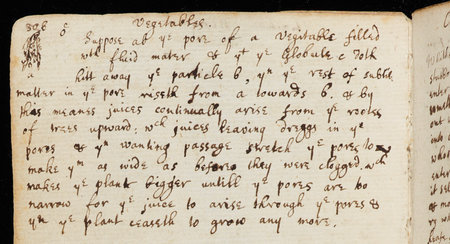
Sir Isaac Newton's interest in botany extended well beyond the fabled apple falling from a tree -- he also appears to have understood how water moves from roots to leaves over 200 years before botanists did.
Newton, who lived from 1643-1727, is known for his observations on the properties of light, the invention of calculus, and for his time as head of the Royal Mint, and president of the Royal Society, the leading scientific body of the day.
But buried in a notebook Newton used during his undergraduate days, is half a page of text on plant function, which has been reviewed in the journal Nature Plants by Professor David Beerling of the University of Sheffield.
See the remainder of the article here: Isaac Newton Notes Explain How Water Rises in Plants
 The Choanoflagellates: Evolution, Biology and Ecology
 by Barry S.C. Leadbeater (no photo)
Synopsis:
Choanoflagellates have three distinctive claims to fame: they are the closest, living, unicellular relatives of animals; they are a major component of aquatic microbial foodwebs; and one group is remarkable for its siliceous basket-like coverings. This landmark book offers a unique synthesis of over forty years of choanoflagellates research. Key areas are covered, from the phylogenetic evidence supporting the sister-group relationship between choanoflagellates and Metazoa, to choanoflagellate distribution and diversity in marine and freshwater environments. The structure and assembly of choanoflagellate loricae is also presented together with a full discussion of a novel example of 'regulatory evolution', suggesting that the switch from nudiform to tectiform cell division and lorica production was achieved by a sudden reorganisation of existing structures and mechanisms. Providing an authoritative summary of what is currently known about choanoflagellates, this title will serve as a foundation upon which future research and discussion can take place.
Photosynthesis by D.O. Hall (no photo)
Synopsis:
The authors present a new edition of their highly successful introductory textbook. The book has been enlarged and fully revised. Through clear and concise text, attractive presentation and the use of beautiful colour plates, the biology student is drawn into this fascinating introduction to the photosynthetic process. The authors discuss photosynthesis at both a macro and molecular level, placing new ideas in the context of past, present and future research. The role of photosynthesis as a source of food and fuel is highlighted. The student is also encouraged to think practically with a useful chapter on simple laboratory experiments. The book will appeal to students and teachers of biology from those doing A-levels to undergraduate degrees.
Power, Sex, Suicide: Mitochondria and the Meaning of Life by
by
 Nick Lane
Synopsis:
If it weren't for mitochondria, scientists argue, we'd all still be single-celled bacteria. Indeed, these tiny structures inside our cells are important beyond imagining. Without mitochondria, we would have no cell suicide, no sculpting of embryonic shape, no sexes, no menopause, no aging.
In this fascinating and thought-provoking book, Nick Lane brings together the latest research in this exciting field to show how our growing insight into mitochondria has shed light on how complex life evolved, why sex arose (why don't we just bud?), and why we age and die. These findings are of fundamental importance, both in understanding life on Earth, but also in controlling our own illnesses, and delaying our degeneration and death. Readers learn that two billion years ago, mitochondria were probably bacteria living independent lives and that their capture within larger cells was a turning point in the evolution of life, enabling the development of complex organisms.
Lane describes how mitochondria have their own DNA and that its genes mutate much faster than those in the nucleus. This high mutation rate lies behind our aging and certain congenital diseases. The latest research suggests that mitochondria play a key role in degenerative diseases such as cancer. We also discover that mitochondrial DNA is passed down almost exclusively via the female line. That's why it has been used by some researchers to trace human ancestry daughter-to-mother, to "Mitochondrial Eve," giving us vital information about our evolutionary history.
Written by Nick Lane, a rising star in popular science, Power, Sex, Suicide is the first book for general readers on the nature and function of these tiny, yet fascinating structures.
Life on the Edge: The Coming of Age of Quantum Biology by Johnjoe McFadden (no photo)
Synopsis:
Life is the most extraordinary phenomenon in the known universe; but how did it come to be? Even in an age of cloning and artificial biology, the remarkable truth remains: nobody has ever made anything living entirely out of dead material. Life remains the only way to make life. Are we still missing a vital ingredient in its creation?
Like Richard Dawkins' The Selfish Gene, which provided a new perspective on how evolution works, Life on the Edge alters our understanding of our world's fundamental dynamics. Bringing together first-hand experience at the cutting edge of science with unparalleled gifts of explanation, Jim Al-Khalili and Johnjoe Macfadden reveal that missing ingredient to be quantum mechanics; the phenomena that lie at the heart of this most mysterious of sciences.
Drawing on recent ground-breaking experiments around the world, each chapter in Life on the Edge engages by illustrating one of life's puzzles: How do migrating birds know where to go? How do we really smell the scent of a rose? How do our genes copy themselves with such precision? Life on the Edge accessibly reveals how quantum mechanics can answer these probing questions of the universe.
Guiding the reader through the rapidly unfolding discoveries of the last few years, Al-Khalili and McFadden communicate the excitement of the explosive new field of quantum biology and its potentially revolutionary applications, while offering insights into the biggest puzzle of all: what is life? As they brilliantly demonstrate in these groundbreaking pages, life exists on the quantum edge.
Essential Cell Biology by Bruce Alberts (no photo)
Synopsis:
The original purpose of writing this book was to provide a straightforward explanation of the workings of a living cell. The key to every biological problem must finally be sought in the cell, for every living organism is, or at sometime has been, a cell.
Horseshoe Crabs and Velvet Worms: The Story of the Animals and Plants That Time Has Left Behind by
by
 Richard Fortey
Synopsis:
From one of the world’s leading natural scientists and the acclaimed author of Trilobite!, Life: A Natural History of Four Billion Years of Life on Earth and Dry Storeroom No. 1 comes a fascinating chronicle of life’s history told not through the fossil record but through the stories of organisms that have survived, almost unchanged, throughout time. Evolution, it seems, has not completely obliterated its tracks as more advanced organisms have evolved; the history of life on earth is far older—and odder—than many of us realize.
Scattered across the globe, these remarkable plants and animals continue to mark seminal events in geological time. From a moonlit beach in Delaware, where the hardy horseshoe crab shuffles its way to a frenzy of mass mating just as it did 450 million years ago, to the dense rainforests of New Zealand, where the elusive, unprepossessing velvet worm has burrowed deep into rotting timber since before the breakup of the ancient supercontinent, to a stretch of Australian coastline with stromatolite formations that bear witness to the Precambrian dawn, the existence of these survivors offers us a tantalizing glimpse of pivotal points in evolutionary history. These are not “living fossils” but rather a handful of tenacious creatures of days long gone.
Written in buoyant, sparkling prose, Horseshoe Crabs and Velvet Worms is a marvelously captivating exploration of the world’s old-timers combining the very best of science writing with an explorer’s sense of adventure and wonder.
The Aging Gap Between Species by
by
 Anca Ioviţă
Synopsis:
Aging is a puzzle to solve.
This process is traditionally studied in a couple of biological models like fruit flies, worms and mice. What all these species have in common is their fast aging. This is excellent for lab budgets. It is a great short-term strategy. Who has time to study species that live for decades?
But lifespan differences among species are magnitudes of order larger than any lifespan variation achieved in the lab. This is the reason for which I studied countless information resources in an attempt to gather highly specialized research into one easy-to-follow book. I wanted to see the forest among the trees. I wanted to expose the aging gap between species in an easy-to-follow and logical sequence. This book is my attempt at doing just that.
What are the mechanisms underlying the aging gap between species? I intentionally chose to write the answer to this question in plain English. Aging research is too important to hide it behind the closed doors of formal scientific jargon. This book could not have existed if green tea, libraries and the Internet were not invented. The amount of data I had to browse in order to keep the essential patterns is huge. Yet this book is not exhaustive. This is not a dry academic textbook. I tried to instill life in a topic that is hugely important for the extension of human lifespan. Only you can decide if I achieved this.
Mod
Biology of Wonder: Aliveness, Feeling and the Metamorphosis of Science  by Andreas Weber (no photo)
Synopsis:
The disconnection between humans and nature is perhaps one of the most fundamental problems faced by our species today. The schism between us and the natural world is arguably the root cause of most of the environmental catastrophes unraveling around us. However, until we come to terms with the depths of our alienation, we will continue to fail to understand that what happens to nature also happens to us.
In "The Biology of Wonder "author Andreas Weber proposes a new approach to the biological sciences that puts the human back in nature. He argues that feelings and emotions, far from being superfluous to the study of organisms, are the very foundation of life. From this basic premise flows the development of a "poetic ecology" which intimately connects our species to everything that surrounds usshowing that subjectivity and imagination are prerequisits of biological existence.
"The Biology of Wonder "demonstrates that there is no separation between us and the world we inhabit, and in so doing it validates the essence of our deep experience. By reconciling science with meaning, expression and emotion, this landmark work brings us to a crucial understanding of our place in the rich and diverse framework of life-a revolution for biology as groundbreaking as the theory of relativity for physics.
Dr. Andreas Weber is a German academic, scholar and author. He is a leader in the emerging fields of "biopoetics" and "biosemiotics," and his work has been translated into several languages and published around the globe."

The History Book Club
Books mentioned in this topic
The Biology of Wonder: Aliveness, Feeling and the Metamorphosis of Science (other topics)The Aging Gap Between Species (other topics)
Horseshoe Crabs and Velvet Worms: The Story of the Animals and Plants That Time Has Left Behind (other topics)
Essential Cell Biology (other topics)
Life on the Edge: The Coming of Age of Quantum Biology (other topics)
More...
Authors mentioned in this topic
Andreas Weber (other topics)Anca Ioviţă (other topics)
Richard Fortey (other topics)
Bruce Alberts (other topics)
Johnjoe McFadden (other topics)
More...