
The History Book Club discussion
AMERICAN DEMOCRACY - GOVERNMENT
>
SENATE

message 1:
by
Bentley, Group Founder, Leader, Chief
(new)
May 26, 2011 08:12PM
 Mod
Mod
reply
|
flag
 I know this particular one is posted in the presidential series but a work that also deserves mention here.
 by Robert A. Caro
Power -- how it is won, used, and abused -- fascinates Robert Caro. It fascinated Lyndon B. Johnson, a born-poor son of backcountry Texas. His statement "I do understand power.... I know where to look for it, and how to use it," reflects a focused intelligence that Machiavelli would have admired.
In this third volume of his magisterial biography of the protean LBJ, Caro brilliantly analyzes his marshaling and manipulation of power. During LBJ's Senate years, as civil rights became a more urgent issue, the power of individuals to block legislation became a major issue. Opposition to civil rights, Caro notes, was the southern senators' ongoing revenge for Gettysburg, a defense of the mythologized southern way of life: gentility in the big house, obedient blacks in field and factory, and respect for God, woman, and tradition.
Caro provides an unforgettable account of LBJ's self-serving late-hour conversion to the Constitution and decency and demonstrates how -- by promise, threat, and trade-off -- he used his power as majority leader to steer the 1957 Civil Rights Bill into law. Caro's explorations of hearts and minds, particularly senators', are unrivaled. Courteous, unyielding Richard Russell; anti-Semitic James Eastland; honorable Paul Douglas; visionary Hubert Humphrey; brilliant Bobby Baker; underrated John Connally -- they and a myriad of others people a Darwinian world. Caro pitches his readers into their gut-felt emotions, into the nation's diverse hopes, fears, and needs. He demonstrates that politics is the art of getting bills passed. When simple, legislation is seldom fair, and vice versa; hence the endless add-ins and strikeouts that accompany congressional enactment of a law.
There are a dozen histories here: the Senate, the committee system, parliamentary procedure, states' rights, voter registration, the Johnson clan, political skullduggery, and more, all intensively researched and wonderfully told. Driving the narrative, energizing every issue, manipulating every situation, is the dynamic, ego-fueled LBJ, the flawed giant and divided personality who could within an hour lovingly cradle a Hispanic child and coarsely abuse his wife, who sought back-at-the-ranch simplicity while ruthlessly manipulating policy and process.
LBJ won the battle for civil rights legislation -- laws that reshaped the nation. He deserves a biographer of the prizewinning Caro's energy and brilliance.
Another giant of this government body by Peter Canellos
No figure in American public life has had such great expectations thrust upon him, or has responded so poorly. But Ted Kennedy -- the youngest of the Kennedy children and the son who felt the least pressure to satisfy his father's enormous ambitions -- would go on to live a life that no one could have predicted: dismissed as a spent force in politics by the time he reached middle age, Ted became the most powerful senator of the last half century and the nation's keeper of traditional liberalism.
As Peter S. Canellos and his team of Boston Globe reporters show in this revealing and intimate biography, the gregarious, pudgy, and least academically successful of the Kennedy boys has witnessed greater tragedy and suffered greater pressure than any of his siblings. At the age of thirty-six, Ted Kennedy found himself the last brother, the champion of a generation's dreams and ambitions. He would be expected to give the nation the confidence to confront its problems and to build a fairer society at home and abroad.
He quickly failed in spectacular fashion. Late one night in the summer of 1969, he left the scene of a fatal automobile accident on Chappaquiddick Island. The death there of a young woman from his brother's campaign would haunt and ultimately doom his presidential ambitions. Political rivals turned his all-too-human failings -- drinking, philandering, and divorce -- into a condemnation of his liberal politics.
But as the presidency eluded his grasp, Kennedy was finally liberated from the expectations of others, free to become his own man. Once a symbol of youthful folly and nepotism, he transformed himself in his later years into a symbol of wisdom and perseverance. He built a deeply loving marriage with his second wife, Victoria Reggie. He embraced his role as the family patriarch. And as his health failed, he anointed the young and ambitious presidential candidate Barack Obama, whom many commentators compared to his brother Jack. The Kennedy brand of liberalism was rediscovered by a new generation of Americans.
Perceptive and carefully reported, drawing heavily from candid interviews with the Kennedy family and inner circle, Last Lion captures magnificently the life and historic achievements of Ted Kennedy, as well as the personal redemption that he found.
Mod
 A few more giants:
 Irving H. Bartlett
Library Journal:
Bartlett ( Wendell and Ann Phillips , Norton, 1982; Daniel Webster , Norton, 1981) examines in detail the life and career of one of the South's great men. He reveals the highlights of Calhoun's career: his role as a war hawk in Congress in 1812, his almost total reformation of the War Department as Secretary of War under President Monroe, and his many clashes with a paranoid but popular Andrew Jackson. He also details Calhoun's family life, revealing a man who appears to be very different from the persona cultivated in public. But, as Bartlett shows, Calhoun's most historic role was as the creator of the concept of nullification, which was a response to the Tariff Crisis of 1824. Calhoun's prime concern was how a state may protect itself against unjust and unconstitutional Federal legislation. A well-wrought study written in an accessible style; highly recommended.- Robert A. Curtis, Taylor Memorial P.L., Cuyahoga Falls, Ohio Copyright 1993 Reed Business Information, Inc.
 Robert V. Remini
Library Journal:
The life of Daniel Webster, eminent politician and statesman of the four decades preceding the Civil War, is here chronicled by a veteran biographer of the Jacksonian era (Andrew Jackson and the Course of American Democracy, 1833-1845, LJ 5/1/84). Called one of our five greatest senators and arguably America's finest orator by Remini, Webster also served three presidents as secretary of state and contributed to U.S. constitutional thought. His personal life was less successful: he was grieved by the early deaths of his children, and his inability to manage money led him into dubious financial stratagems. And he ended his career as a poignant antique crying for compromise to save the Union in an age that demanded slavery's final resolution. Remini's scholarship and style are flawless, and he introduces substantial new information?notably a new medical interpretation of Webster's death. It may be difficult to rouse public interest in a fat book about Webster, but this biography is strongly recommended for academic collections and larger public libraries.?Fritz Buckallew, Univ. of Central Oklahoma Lib., Edmond Copyright 1997 Reed Business Information, Inc.
 Robert V. Remini
Publisher's Weekly:
By the distinguished biographer of Andrew Jackson, this is the first major study of the "great compromiser" in half a century. Henry Clay's prolonged feud with Jackson and his failed quest for the White House are traced in detail, with Remini showing how the unfounded charge of political collusion when Clay was appointed secretary of State contributed significantly to that failure. The author explains Clay's role in the Missouri Compromise of 1820; and later, when the country faced the slavery question over territory acquired in the Mexican War, his role in shaping the Compromise of 1850. Thus tension between North and South was eased and civil war delayed for a decade. Remini points out that many historians have argued that had secession and war occurred in 1850 the South "undoubtedly" would have won its independence. This majestic work brings into sharp focus the private and public Henry Clay (1777-1852): gambler, drinker, duelist, as well as brilliant orator, a man with a "gift for the outrageous," and savior of the Union. Photos.
Copyright 1991 Reed Business Information, Inc.
Mod
Keep an eye on this institute. It's the Edward M. Kennedy Institute for the Senate. It had a recent ground-breaking near the JFK library. It will house a museum for Senator Kennedy but the Senate, too. Also, it will bring freshman senators in for training.http://emkinstitute.org/
The Edward M. Kennedy Institute for the United States Senate (the EMK Institute) is dedicated to educating the public about our government, invigorating public discourse, encouraging participatory democracy, and inspiring the next generation of citizens and leaders to engage in the public square. The Institute will be a dynamic center of non-partisan learning and engagement that takes advantage of cutting-edge technology to provide each visitor and other participants with a unique and information rich, personalized experience that will bring history alive.
I remember hearing about this when it first came out and it escaped my attention until this thread popped up.  by Barbara Boxer
 , Kay Bailey Hutchison, and others.
What a difference a woman makes. The nine women of the United States Senate have changed the political landscape, and there's no turning back. Now, for the first time, in Nine and Counting, readers will be treated to an inside view of their private and public lives. As the senators share their stories and reflections with refreshing candor, insight, and humor, they demonstrate how ordinary women can overcome barriers and achieve extraordinary goals. These nine women are more different than they are alike. Their backgrounds, personal styles, and political ideals are as diverse as the United States itself. Yet they share a commonality that runs deeper than politics or geography: the desire to give voice to all of their constituents while serving as role models for women young and old. Each seantor brings her unique perspective to the mix.
Very interesting, Alisa; it would be a good read.
I just came across this and added it my reading list. I had no idea.  by Essie Mae Washington-Williams
In Dear Senator, Essie Mae Washington-Williams - daughter of the late Senator Strom Thurmond - breaks her lifelong silence and tells the story of her life. Hers is a story seven decades in the making, yet one whose unique historical importance has only recently been revealed. Until the age of sixteen, Washington-Williams assumed that the aunt and uncle who raised her in Pennsylvania were her parents. The revelation of her true parents' identities was a shock that changed the course of her life. Her father, the longtime senator from South Carolina, was once the nation's leading voice for racial segregation; he ran for president on a segregationist ticket in 1948 and once mounted a twenty-four-hour filibuster against the Civil Rights Act of 1957 - in the name of saving the South from "mongrelization." Her mother was Carrie Butler, a black teenager who worked as a maid on the Thurmond family's South Carolina plantation." Set against the explosively changing times of the civil rights movement, Washington-Williams's memoir reveals a brave young woman who struggled with the discrepancy between the father she knew - one who was financially generous, supportive of her education, even affectionate - and the old Southern politician, railing against greater racial equality, who refused to acknowledge their relationship in public. She describes what it felt like to face overt racism, especially in the slow-to-change South, despite the fact that her father was the most powerful politician in Dixie. From her narrative emerges a nuanced portrait of a father who counseled his daughter about her goals, and supported her in reaching them - but who was ultimately unwilling to break with the values of his Dixiecrat constituents.
 That story almost reads like fiction, doesn't it? An amazing woman who came to terms with her father who was one of the most bigoted Senators in the South.
by Essie Mae Washington-Williams
I don't think these are books you have on your bedside, but they are considered the standards:
That story almost reads like fiction, doesn't it? An amazing woman who came to terms with her father who was one of the most bigoted Senators in the South.
by Essie Mae Washington-Williams
I don't think these are books you have on your bedside, but they are considered the standards:


 by
by
 Robert C. Byrd
Mod
Wondering if anyone has read this yet?
by Peter Canellos
Robert C. Byrd
Mod
Wondering if anyone has read this yet?
by Peter CanellosNo figure in American public life has had such great expectations thrust upon him, or has responded so poorly. But Ted Kennedy -- the youngest of the Kennedy children and the son who felt the least pressure to satisfy his father's enormous ambitions -- would go on to live a life that no one could have predicted: dismissed as a spent force in politics by the time he reached middle age, Ted became the most powerful senator of the last half century and the nation's keeper of traditional liberalism.
As Peter S. Canellos and his team of Boston Globe reporters show in this revealing and intimate biography, the gregarious, pudgy, and least academically successful of the Kennedy boys has witnessed greater tragedy and suffered greater pressure than any of his siblings. At the age of thirty-six, Ted Kennedy found himself the last brother, the champion of a generation's dreams and ambitions. He would be expected to give the nation the confidence to confront its problems and to build a fairer society at home and abroad.
He quickly failed in spectacular fashion. Late one night in the summer of 1969, he left the scene of a fatal automobile accident on Chappaquiddick Island. The death there of a young woman from his brother's campaign would haunt and ultimately doom his presidential ambitions. Political rivals turned his all-too-human failings -- drinking, philandering, and divorce -- into a condemnation of his liberal politics.
But as the presidency eluded his grasp, Kennedy was finally liberated from the expectations of others, free to become his own man. Once a symbol of youthful folly and nepotism, he transformed himself in his later years into a symbol of wisdom and perseverance. He built a deeply loving marriage with his second wife, Victoria Reggie. He embraced his role as the family patriarch. And as his health failed, he anointed the young and ambitious presidential candidate Barack Obama, whom many commentators compared to his brother Jack. The Kennedy brand of liberalism was rediscovered by a new generation of Americans.
Perceptive and carefully reported, drawing heavily from candid interviews with the Kennedy family and inner circle, Last Lion captures magnificently the life and historic achievements of Ted Kennedy, as well as the personal redemption that he found.
Alisa wrote: "Wondering if anyone has read this yet? by Peter CanellosNo figure in American public life has had such great ex..."
I used it for work and it is pretty good.
The most balanced book on EMK is:
 by Adam Clymer
 by Terence Samuel (no photo)
I think this book has gotten mixed reviews because the title is somewhat misleading. It is about the "freshman" class of Senators in 2006 and what they faced when they entered the Senate and does not necessarily go "behind the closed doors". Nevertheless, the reader gets a taste of how difficult it can be to be the "new guy/gal in town".
This looks interesting: by Sen. Arlen Specter
A revealing memoir of how Washington is changing---and not for the better
During a storied thirty-year career in the U.S. Senate, Arlen Specter rose to Judiciary Committee chairman, saved and defeated Supreme Court nominees, championed NIH funding, wrote watershed crime laws, always staying defiantly independent, “The Contrarian,” as Time magazine billed him in a package of...moreA revealing memoir of how Washington is changing---and not for the better
During a storied thirty-year career in the U.S. Senate, Arlen Specter rose to Judiciary Committee chairman, saved and defeated Supreme Court nominees, championed NIH funding, wrote watershed crime laws, always staying defiantly independent, “The Contrarian,” as Time magazine billed him in a package of the nation’s ten-best Senators. It all ended with one vote, for President Obama’s stimulus, when Specter broke with Republicans to provide the margin of victory to prevent another Depression.
Shunned by the GOP faithful, Specter changed parties, giving Democrats a sixty-vote supermajority and throwing Washington into a tailspin. He kept charging, taking the first bursts of Tea Party fire at public meetings on Obama’s health care--reform plan. Undaunted, Specter cast the key vote for the health plan.
In Life Among the Cannibals, Specter candidly describes the battles that led to his party switch, his tough transition, the unexpected struggles and duplicity that he faced, and his tumultuous campaign and eventual defeat in the 2010 Pennsylvania Democratic primary.
Taking us behind the scenes in the Capitol, the White House, and on the campaign trail, he shows how the rise of extremists---in both parties---has displaced tolerance with purity tests, purging centrists, and precluding moderate, bipartisan consensus.
Mod
Former Senator Arlen Specter passed away today, losing his battle with cancer. He had a thirty year Senate career and a fairly public one at that. A few works in addition to the one cited above:Never Give In: Battling Cancer in the Senate
 by Arlen Specter
Synopsis
This is not simply the memoir of a cancer survivor. Nor is it just the memoir of a respected senator. This is an unprecedented glimpse into a man who is both. It is inspiration for people of all political persuasions; of how to persevere and succeed---despite what the doctors may say, despite what the tests might show.
In early 2004, Senator Specter was in the midst of a grueling primary race, facing significant opposition from the right as he worked to win his party’s nomination to run for reelection for his Pennsylvania senate seat. It would be the most difficult election in his quarter-century career in the Senate. Following on its heels were two more challenges---the general-election race and opposition to his elevation as Chairman of the Judiciary Committee, his lifelong ambition. He overcame all three challenges in time for his seventy-fifth birthday.
But exhaustion and fatigue---initially thought to be the aftereffects of months of vigorous campaigning---were found to be far more serious. After a series of tests and consultation with several doctors, Specter was diagnosed with Hodgkin’s disease, Stage IVB, the most advanced stage.
He had received death sentences before and lived to tell about it. To Senator Specter, this diagnosis was another challenge. After all, he still had a job to do.
His cancer treatments came as he reached the height of his power---surrounded by political storms that polarized Washington and threatened to shut the Senate down. His leadership positions made it his job to manage Supreme Court nominations and public- health appropriations as he faced his own illness. He had fought on public-health issues for years, but now it added potency to the message that the messenger was ailing himself.
The phrase “Never give in” became Specter’s mantra, invoking the famous words from Churchill in his battle with cancer. This moving book describes the treatment the Senator received and offers his advice on how to handle the side effects (both visible and private), hair loss, and of course, maintain a nearly daily squash regimen. So, how does one move forward when faced with mortality? It’s simple. Work.
"Never Give In brims with the singular tenacity and humor that have characterized Arlen Specter's nearly thirty years in the United States Senate. This book is both an entertaining read and an unflinching account of the experience of fighting an intensely personal battle on a highly public stage."---Michael J. Fox
"Working with Arlen for many years on the Senate Judiciary Committee, I have witnessed firsthand his spirited battles on the political stage. Even while confronting his physical trials, Senator Specter continued to be a great asset to Pennsylvania, the Senate, and our country. Highlighted by insight that only Arlen could provide, Never Give In portrays a life of courage and fortitude." ---Senator Orrin Hatch (R-UT)
"Understanding Arlen Specter's steely endurance is a key to understanding his success in the Senate and in life. Look up tenacity in the dictionary and you'll find Arlen's picture. Trial by fire has tempered him and made him stronger, and wiser."-- Senator Patrick Leahy (D-VT, Chairman, Senate Judiciary Committee)
“Written in Senator Specter’s trademark candor, Never Give In is a compelling tale of survival – both personal and political – from one of the Senate’s most independent voices. Riding the train home with him now for almost 25 years, I count Arlen among my closest friends in the Senate. The words courageous and inspiring hardly do him justice – but trust me, he is both.”-- Senator Joe Biden (D-DE)
“I’ve been privileged to work side by side with Arlen for over 18 years. While I respect his intelligence and honesty, and value his friendship, perhaps most of all I have admired his toughness in the face of adversity. He just never gives up.”—Senator Tom Harkin (D-IA)
Passion for Truth: From Finding JFK's Single Bullet to Questioning Anita Hill to Impeaching Clinton
 by Arlen Specter
Synopsis
A veteran Senator provides insights into the major political controversies that have marked his career, including the Kennedy assassination and President Clinton's impeachment.
Mod
He was a man of courage and strength.
Strom Thurmond's America Joseph Crespino
Synopsis
“Do not forget that ‘skill and integrity’ are the keys to success.” This was the last piece of advice on a list Will Thurmond gave his son Strom in 1923. The younger Thurmond would keep the words in mind throughout his long and colorful career as one of the South’s last race-baiting demagogues and as a national power broker who, along with Barry Goldwater and Ronald Reagan, was a major figure in modern conservative politics.
But as the historian Joseph Crespino demonstrates in Strom Thurmond’s America, the late South Carolina senator followed only part of his father’s counsel. Political skill was the key to Thurmond’s many successes; a consummate opportunist, he had less use for integrity. He was a thoroughgoing racist—he is best remembered today for his twenty-four-hour filibuster in opposition to the Civil Rights Act of 1957—but he fathered an illegitimate black daughter whose existence he did not publicly acknowledge during his lifetime. A onetime Democrat and labor supporter, he switched parties in 1964 and helped to dismantle New Deal protections for working Americans.
If Thurmond was a great hypocrite, though, he was also an innovator who saw the future of conservative politics before just about anyone else. As early as the 1950s, he began to forge alliances with Christian Right activists, and he eagerly took up the causes of big business, military spending, and anticommunism. Crespino’s adroit, lucid portrait reveals that Thurmond was, in fact, both a segregationist and a Sunbelt conservative. The implications of this insight are vast. Thurmond was not a curiosity from a bygone era, but rather one of the first conservative Republicans we would recognize as such today. Strom Thurmond’s America is about how he made his brand of politics central to American life.
One of the results of the recent election cycle is that there will now be more women in the Senate than at any time before: 21. This book addresses a time when the group was smaller and set out to build their own coalition, not so long ago. It's been on my to-read list for awhile and I am more eager than ever to get to it.Nine and Counting: The Women of the Senate
 by
by
 Barbara Boxer
Synopsis
The Women of the United States Senate have forever changed the political landscape. Their backgrounds, personal styles, and political ideals may be as diverse as the nation they serve. Yet they share a commonality that runs deeper than politics or geography -- they desire to give a voice to all their constituents while serving as role models for women young and old.
Once every month, these distinguished women for an informal dinner to share their knowledge, their hearts, and a good meal. Leaving behind partisanship and rhetoric, they discuss and debate the issues, both political and personal, affecting their lives. And following the 2000 election of four women to the Senate, the table is now set for thirteen. Weaving together their individual stories of triumph, adversity, adaptability, and leadership, "Nine and Counting" gives voice to these charismatic women as never before, offering a rare, insider's glimpse into Washington and sending the powerful message that membership in the "world's most exclusive club" is open to every woman in America.
My first memory of Senator Inouye was during the Watergate hearings. I was saddend at the news of his passing. Unfortunately I could not find any books specifically about him so am putting up an excerpt from Wikipedia. Daniel Inouye
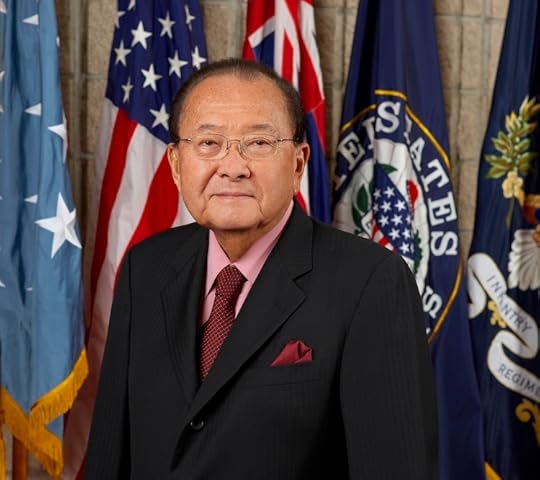
Daniel Ken "Dan" Inouye (pronounced /ɨˈnoʊweɪ/;[1] September 7, 1924 – December 17, 2012) was a United States Senator from Hawaii, a member of the Democratic Party, and the President pro tempore of the United States Senate from 2010 until his death in 2012, making him the highest-ranking Asian American politician in U.S. history. Inouye was the chairman of the U.S. Senate Committee on Appropriations.
A senator since 1963, Inouye was the most senior senator at the time of his death. He was also the second-longest serving U.S. Senator in history after Robert Byrd. Inouye continuously represented Hawaii in the U.S. Congress since it achieved statehood in 1959 until the time of his death, serving as Hawaii's first U.S. Representative and later a senator. Inouye was the first Japanese American to serve in the U.S. House of Representatives and later the first in the U.S. Senate. Before then, he served in the Hawaii territorial house from 1954 to 1958 and the territorial senate from 1958 to 1959. He never lost an election in 58 years as an elected official. At the time of his death, Inouye was the second-oldest current U.S. senator, after Frank Lautenberg of New Jersey. He was also a World War II Medal of Honor recipient.
Because of his seniority, following Senator Byrd's death on June 28, 2010, Inouye became President pro tempore of the Senate; this made him third in the presidential line of succession after the Vice President and the Speaker of the House of Representatives.
Early life
Inouye was born on September 7, 1924, in Honolulu, Hawaii, the son of Kame (née Imanaga) and Hyotaro Inouye. He was a Nisei Japanese American, as the son of a Japanese immigrant father and a mother whose parents had also immigrated from Japan. He grew up in the Bingham Tract, a Chinese American enclave within the predominantly Japanese American community of Mōʻiliʻili in Honolulu. He graduated from Honolulu's President William McKinley High School.
Military service (1941–1947)
Inouye was at the Pearl Harbor attack in 1941 as a medical volunteer.
In 1943, when the U.S. Army dropped its enlistment ban on Japanese Americans, Inouye curtailed his premedical studies at the University of Hawaii and enlisted in the Army. He volunteered to be part of the all-Nisei 442nd Regimental Combat Team. This army unit was mostly made up of second-generation Japanese Americans from Hawaii and the mainland.
Inouye was promoted to the rank of sergeant within his first year, and he was given the role of platoon leader. He served in Italy in 1944 during the Rome-Arno Campaign before his regiment was transferred to the Vosges Mountains region of France, where he spent two weeks in the battle to relieve the Lost Battalion, a battalion of the 141st Infantry Regiment that was surrounded by German forces. He was promoted to the rank of second lieutenant for his actions there. At one point while he was leading an attack, a shot struck him in the chest directly above his heart, but the bullet was stopped by the two silver dollars he happened to have stacked in his shirt pocket. He continued to carry the coins throughout the war in his shirt pocket as good luck charms until he lost them shortly before the battle in which he lost his arm.
Inouye as a Lieutenant in the U.S. ArmyOn April 21, 1945, Inouye was grievously wounded while leading an assault on a heavily-defended ridge near San Terenzo in Tuscany, Italy called Colle Musatello. The ridge served as a strongpoint along the strip of German fortifications known as the Gothic Line, which represented the last and most unyielding line of German defensive works in Italy. As he led his platoon in a flanking maneuver, three German machine guns opened fire from covered positions just 40 yards away, pinning his men to the ground. Inouye stood up to attack and was shot in the stomach; ignoring his wound, he proceeded to attack and destroy the first machine gun nest with hand grenades and fire from his Thompson submachine gun. After being informed of the severity of his wound by his platoon sergeant, he refused treatment and rallied his men for an attack on the second machine gun position, which he also successfully destroyed before collapsing from blood loss.
As his squad distracted the third machine gunner, Inouye crawled toward the final bunker, eventually drawing within 10 yards. As he raised himself up and cocked his arm to throw his last grenade into the fighting position, a German inside the bunker fired a rifle grenade that struck him on the right elbow, severing most of his arm and leaving his own primed grenade reflexively "clenched in a fist that suddenly didn't belong to me anymore". Inouye's horrified soldiers moved to his aid, but he shouted for them to keep back out of fear his severed fist would involuntarily relax and drop the grenade. As the German inside the bunker reloaded his rifle, Inouye pried the live grenade from his useless right hand and transferred it to his left. As the German aimed his rifle to finish him off, Inouye tossed the grenade off-hand into the bunker and destroyed it. He stumbled to his feet and continued forward, silencing the last German resistance with a one-handed burst from his Thompson before being wounded in the leg and tumbling unconscious to the bottom of the ridge. When he awoke to see the concerned men of his platoon hovering over him, his only comment before being carried away was to gruffly order them to return to their positions, since, as he pointed out, "nobody called off the war!"
The remainder of Inouye's mutilated right arm was later amputated at a field hospital without proper anesthesia, as he had been given too much morphine at an aid station and it was feared any more would lower his blood pressure enough to kill him.
Although Inouye had lost his right arm, he remained in the military until 1947 and was honorably discharged with the rank of captain. At the time of his leaving the Army, he was a recipient of the Bronze Star Medal and the Purple Heart. Inouye was initially awarded the Distinguished Service Cross for his bravery in this action, with the award later being upgraded to the Medal of Honor by President Bill Clinton (alongside 19 other Nisei servicemen who served in the 442nd Regimental Combat Team and were believed to have been denied proper recognition of their bravery due to their race). His story, along with interviews with him about the war as a whole, were featured prominently in the 2007 Ken Burns documentary The War.
While recovering from war wounds and the amputation of his right forearm from the grenade wound (mentioned above) at Percy Jones Army Hospital, Inouye met future Republican presidential candidate Bob Dole, then a fellow patient. While at the same hospital, Inouye also met future fellow Democrat and Senator Philip Hart, who had been injured on D-Day. Dole mentioned to Inouye that after the war he planned to go to Congress; Inouye beat him there by a few years. The two remained lifelong friends. In 2003, the hospital was renamed the Hart-Dole-Inouye Federal Center in honor of the three WWII veterans.
Daniel Inouye (continued)Congressional career
Due to the loss of his arm, Inouye abandoned his plans to become a surgeon, and returned to college to study political science under the G.I. Bill. He graduated from the University of Hawaii at Manoa in 1950 with a Bachelor of Arts in political science. He earned his law degree from The George Washington University Law School in Washington, D.C. in 1953 and was elected into the Phi Delta Phi legal fraternity. In 1953, he was elected to the Hawaii territorial House of Representatives, and was immediately elected majority leader. He served two terms there, and was elected to the Hawaii territorial senate in 1957.
Midway through his first term in the territorial senate, Hawaii achieved statehood. He won a seat in the U.S. House of Representatives as Hawaii's first full member, and took office on August 21, 1959, the same date Hawaii became a state; he was re-elected in 1960.
In 1962, he was elected to the U.S. Senate, succeeding fellow Democrat Oren E. Long. He was reelected eight times, usually without serious difficulty. His only close race was in 1992, when state senator Rick Reed held him to 57 percent of the vote—the only time he received less than 69 percent of the vote. He delivered the keynote address at the turbulent 1968 Democratic National Convention in Chicago, and gained national attention for his service on the Senate Watergate Committee. He was chairman of the Select Committee on Intelligence from 1975 until 1979, and chairman of the Committee on Indian Affairs from 1987 until 1995 and from 2001 until 2003. Inouye was also involved in the Iran-Contra investigations of the 1980s, chairing a special committee from 1987 until 1989. During the hearings Inouye referred to the operations that had been revealed as a "secret government" saying:
"[There exists] a shadowy Government with its own Air Force, its own Navy, its own fundraising mechanism, and the ability to pursue its own ideas of the national interest, free from all checks and balances, and free from the law itself."
Criticizing the logic of Marine Lt. Colonel Oliver North's justifications for his actions in the affair, Inouye made reference to the Nuremberg trials, provoking a heated interruption from North's attorney Brendan V. Sullivan, Jr., an exchange that was widely repeated in the media at the time. He was also seen as a pro-Taiwan senator, and helped in forming the Taiwan Relations Act.
In 2009, Inouye assumed leadership of the powerful Senate Committee on Appropriations after longtime chairman Robert Byrd stepped down. Following the latter's death on June 28, 2010, Inouye was elected President pro tempore, the officer third in the presidential line of succession.
In 2010, Inouye announced his decision to run for a ninth term. He easily won the Democratic primary–the real contest in this heavily Democratic state--and then trounced Republican state representative Campbell Cavasso with 74 percent of the vote.
Prior to his death, Inouye announced that he planned to run for a record tenth term in 2016, when he would have been 92 years old. He also said, "I have told my staff and I have told my family that when the time comes, when you question my sanity or question my ability to do things physically or mentally, I don't want you to hesitate, do everything to get me out of here, because I want to make certain the people of Hawaii get the best representation possible."
Gang of 14
On May 23, 2005, Inouye was a member of a bipartisan group of fourteen moderate senators, known as the Gang of 14, to forge a compromise on the Democrats' use of the judicial filibuster, thus blocking the Republican leadership's attempt to implement the "nuclear option", a means of forcibly ending a filibuster. Under the agreement, the Democrats would retain the power to filibuster a Bush judicial nominee only in an "extraordinary circumstance", and the three most conservative Bush appellate court nominees (Janice Rogers Brown, Priscilla Owen and William H. Pryor, Jr.) would receive a vote by the full U.S. Senate.
Honors and decorations
On June 21, 2000, Inouye was presented the Medal of Honor by President Bill Clinton for his service during World War II
Also in 2000, Inouye was awarded the Grand Cordon of the Order of the Rising Sun by the Emperor of Japan, in recognition of his long and distinguished career in public service.
In 2006, the U S Navy Memorial awarded Inouye its Naval Heritage award for his support of the U S Navy and the military during his terms in the Senate.
In 2007, Inouye was personally inducted as a Chevalier of the Legion of Honor by President of France Nicolas Sarkozy
In February 2009, a bill was filed in the Philippine House of Representatives by Rep. Antonio Diaz seeking to confer honorary Filipino citizenship on Inouye, Senators Ted Stevens and Daniel Akaka and Representative Bob Filner, for their role in securing the passage of benefits for Filipino World War II veterans.
In June 2011, Inouye was appointed a Grand Cordon of the Order of the Paulownia Flowers, the highest Japanese honor which may be conferred upon a foreigner who is not a head of state. Only the seventh American to be so honored, he is also the first American of Japanese descent to receive it. The conferment of the order was "to recognize his continued significant and unprecedented contributions to the enhancement of goodwill and understanding between Japan and the United States."
In 2011, Philippine president Benigno Aquino III conferred Order of Sikatuna upon Inouye. He had previously been awarded Order of Lakandula and a Philippine Republic Presidential Unit Citation.
Inouye was inducted as an honorary member of the Navajo Nation and titled "The Leader Who Has Returned With a Plan".
Medal of Honor citation
President Clinton presenting the Medal of Honor to Senator Inouye on June 21, 2000 (Citation):
Second Lieutenant Daniel K. Inouye distinguished himself by extraordinary heroism in action on 21 April 1945, in the vicinity of San Terenzo, Italy. While attacking a defended ridge guarding an important road junction, Second Lieutenant Inouye skillfully directed his platoon through a hail of automatic weapon and small arms fire, in a swift enveloping movement that resulted in the capture of an artillery and mortar post and brought his men to within 40 yards of the hostile force. Emplaced in bunkers and rock formations, the enemy halted the advance with crossfire from three machine guns. With complete disregard for his personal safety, Second Lieutenant Inouye crawled up the treacherous slope to within five yards of the nearest machine gun and hurled two grenades, destroying the emplacement. Before the enemy could retaliate, he stood up and neutralized a second machine gun nest. Although wounded by a sniper’s bullet, he continued to engage other hostile positions at close range until an exploding grenade shattered his right arm. Despite the intense pain, he refused evacuation and continued to direct his platoon until enemy resistance was broken and his men were again deployed in defensive positions. In the attack, 25 enemy soldiers were killed and eight others captured. By his gallant, aggressive tactics and by his indomitable leadership, Second Lieutenant Inouye enabled his platoon to advance through formidable resistance, and was instrumental in the capture of the ridge. Second Lieutenant Inouye’s extraordinary heroism and devotion to duty are in keeping with the highest traditions of military service and reflect great credit on him, his unit, and the United States Army.
Death
In 2012 Inouye began using a wheelchair in the Senate to preserve his knees, and received an oxygen concentrator to aid his breathing. In November of that year he suffered a minor cut after falling in his apartment and was treated at Walter Reed National Military Medical Center. On December 6, 2012, he was again hospitalized at George Washington University Hospital so doctors could further regulate his oxygen intake, and was transferred to Walter Reed on December 10, where he issued a statement saying "For the most part, I am OK." He died there of respiratory complications seven days later on December 17, 2012. According to the senator's Congressional web site, his last word was "Aloha". Prior to his death, Inouye left a letter encouraging Governor Neil Abercrombie to appoint Rep. Colleen Hanabusa to succeed Inouye should he become incapacitated.
Harry Reid, the Senate Majority Leader, announced Inouye's death on the floor of the Senate, referring to Inouye as "certainly one of the giants of the Senate." Senate Minority Leader Mitch McConnell referred to Inouye as one of the finest senators in United States history. President Barack Obama referred to him as a "true American hero."
source of above two posts:http://en.wikipedia.org/wiki/Daniel_I...
more information: http://www.inouye.senate.gov/
Jeannette RankinOn this day in 1916, Jeannette Pickering Rankin became the first woman elected to the United States Congress, remarkably before the 19th Amendment granting women the right to vote was even passed! Her success sparked a long line of women in Congress whose presence on the Hill continues to grow.
Known for doing things that women weren't supposed to do, Rankin graduated from high school and from the University of Montana with a Bachelor of Science degree in Biology. From there she attended the New York School of Philanthropy, becoming involved with the New York Women's Suffrage Party and then becoming a lobbyist for the National American Woman Suffrage Association.
A driving force in the Women's Suffrage movement, Rankin successfully rallied for Montana to grant women the right to vote in 1914. With the support of her brother, a powerhouse in the Montana Republican Party, Rankin led a campaign for a 1916 Congressional seat. Despite an early announcement by the press that she lost, Rankin wound up winning by over 7,500 votes.
During her time in Congress she helped to pass the Nineteenth Amendment, and as an ardent pacifist, voted against entering both World Wars explaining that "as a woman I can't go to war, and I refuse to send anyone else."
Rankin's legacy as a groundbreaker in U.S. politics has continued to shine on as a record number of women are currently represented in Congress like MAKERS Kirsten Gillibrand, Senator; Ileana Ros-Lehtinen, the first Latina elected to Congress; Nancy Pelosi, the first woman to hold office as Speaker of the House; and previously, Pat Schroeder, the longest serving woman in Congress.
Source: www.makers.com
 by Gretchen Woelfle
 by Norma Smith
 by James J. Lopach
 Rankin also had some good quotations, e.g.
 "You can no more win a war than you can win an earthquake"
"We're half the people, we should be half the congress"
and
"It is unconscionable that 10,000 boys have died in Vietnam. If 10,000 American women had mind enough they could end the war, if they were committed to the task, even if it meant going to jail."
There can't be many people who were alive and old enough to be against WW I *and* Vietnam: She was, as was Bertrand Russell.
Mod
Great quotes indeed. Worth remembering the words of these early trailblazers. Thanks Peter.
 Alisa wrote: "Another giant of this government body
 by Peter Canellos
No figure in American public life has had such great expectations thrust upo..."
This is a very interesting book on Kennedy as is Kennedy's autobiography

 Edward M. Kennedy Another very good book on the Senate is the last Great Senate
 Ira ShapiroIra Shapiro
Alisa wrote: "Jeannette Rankin
Ira ShapiroIra Shapiro
Alisa wrote: "Jeannette RankinOn this day in 1916, Jeannette Pickering Rankin became the first woman elected to the United States Congress, remarkably before the 19th Amendment granting women the right to vot..."
Being a Montanan, living in a state that sent the first woman to Congress has always been a point of pride. A bit of trivia which no one may care about but that also relates to the discussion on the Senate is that after she had lost her seat, a man named Jerry O'Connell was elected. He was from here in Butte and made his intention clear that he planned to challenge Senator Burton K. Wheeler when Wheeler's term was up. In the meantime, O'Connell had to win re-election to his House seat. Wheeler was a very powerful senator both here and in Washington and would entertain no challenges to his seat. So he actively campaigned for a man whose name escapes me at the time but who won and ended up being notable only because he was one of the most vitriolic anti-semites in the history in the House. Anyway, Wheeler still perceived O'Connell as a threat so he convinced Jeanette Rankin to run again and she won. Back to Wheeler. He was a very powerful senator and in his early years was very progressive. He even took on the Anaconda Company which took a lot of courage. He was the one who opposed FDR's attempt to pack SCOTUS, he opposed U.S. entry into WW11, and carried on a vendetta against Roosevelt until his defeat in 1946. His story is fascinating. I am not aware of any books about him but there are a myriad of articles about him from the time and he wrote an autobiography. There are no links for it but the name of the book is "Yankee from the West".
Mod
Yankee from the West: The Candid, Turbulent Life Story of the Yankee-Born U.S. Senator from Montana by Burton Wheeler (no cover, no photo)
With reference to Clay, Rimini wrote another book called On the Edge of the Precipice.

 Robert V. Remini In this very short book, Remini puts forth the argument that the proposals set forth by Henry Clay which led to the Compromise of 1850, saved the country. He posits that if war had broken out at that time, the presidents and those in contention would not have been able to save the Union.
Colleen wrote: "Alisa wrote: "Jeannette Rankin
Robert V. Remini In this very short book, Remini puts forth the argument that the proposals set forth by Henry Clay which led to the Compromise of 1850, saved the country. He posits that if war had broken out at that time, the presidents and those in contention would not have been able to save the Union.
Colleen wrote: "Alisa wrote: "Jeannette RankinOn this day in 1916, Jeannette Pickering Rankin became the first woman elected to the United States Congress, remarkably before the 19th Amendment granting women th..."
Thanks Bentley. I will remember that.
Mod
by Robert V. Remini (no photo)
Colleen what an interesting story! Politics is full of interesting stories I think. Thanks for sharing that.
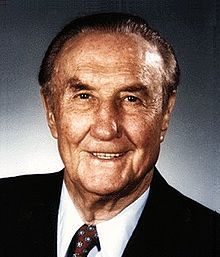
Senator Rand Paul's filibuster this week,at 12 hours, 52 minutes was the 9th longest in Senate history.The record for the longest filibuster goes to U.S. Sen. Strom Thurmond of South Carolina, who spoke for 24 hours and 18 minutes against the Civil Rights Act of 1957, according to U.S. Senate records.
Thurmond began speaking at 8:54 p.m. on Aug. 28 and continued until 9:12 p.m. the following evening, reciting the Declaration of Independence, Bill of Rights, President George Washington's farewell address and other historical documents along the way.
Thurmond was not the only lawmaker to filibuster on the issue, however. According to Senate records, teams of senators consumed 57 days filibustering between March 26 and June 19, the day the Civil Rights Act of 1957 passed.
 Bentley wrote: "Good book. Colleen, you may have noticed that all of the mods put the entire citation at the bottom of the post after we have written our text - it is much easier. If there is not any photo, then..."
I agree that politics is definitely full of interesting stories and Wheeler's life also adds credence to the addage that power corrupts.
Way back when I was an undergraduate (late 1970s) I was a Poli. Sci. major at NYU. I took a course on the Congress, taught by Prof Rita Cooley. She was great. We used to joke that you could name any person in the congress and she would not only know the basic facts about him or her, but have a story.
Mod
Here is nice article on the Senate historian, Dr. Donald Ritchie from the History News Network:http://hnn.us/articles/donald-ritchie...
Contemporary history:Act of Congress: How America's Essential Institution Works, and How It Doesn't
 Robert G. Kaiser
Synopsis
In the wake of the 2008 economic collapse, the Dodd-Frank Wall Street Reform and Consumer Protection Act introduced the most sweeping changes to financial regulation since the New Deal. In Act of Congress, longtime Washington Post reporter Robert G. Kaiser chronicles the journey of this bill from its introduction to its signing into law by President Obama in 2010. Never before has the birth of a major bill been dissected in such vivid detail.
Kaiser focuses on two of the major players behind the legislation: colorful, wisecracking congressman Barney Frank, and careful, insightful senator Christopher Dodd, both of whom met regularly with Kaiser while they worked on the bill. Taking us beyond these key figures, he shows how congressional staff play a critical role, writing the legislation and often making the crucial deals. And he also had access to the key Republican actors in this story, which enables him to illuminate the hidden intricacies of legislative enterprise and offer a clearer picture than before of how Congress works best—or sometimes doesn’t work at all.
The American Senate: An Insider's History by Neil MacNeil (no photo)
Synopsis:
The United States Senate has fallen on hard times. Once known as the greatest deliberative body in the world, it now has a reputation as a partisan, dysfunctional chamber. What happened to the house that forged American history's great compromises?
In this groundbreaking work, a distinguished journalist and an eminent historian provide an insider's history of the United States Senate. Richard A. Baker, historian emeritus of the Senate, and the late Neil MacNeil, former chief congressional correspondent for Time magazine, integrate nearly a century of combined experience on Capitol Hill with deep research and state-of-the-art scholarship. They explore the Senate's historical evolution with one eye on persistent structural pressures and the other on recent transformations. Here, for example, are the Senate's struggles with the presidency--from George Washington's first, disastrous visit to the chamber on August 22, 1789, through now-forgotten conflicts with Presidents Garfield and Cleveland, to current war powers disputes. The authors also explore the Senate's potent investigative power, and show how it began with an inquiry into John Brown's raid on Harpers Ferry in 1859. It took flight with committees on the conduct of the Civil War, Reconstruction, and World War II; and it gained a high profile with Joseph McCarthy's rampage against communism, Estes Kefauver's organized-crime hearings (the first to be broadcast), and its Watergate investigation.
Within the book are surprises as well. For example, the office of majority leader first acquired real power in 1952--not with Lyndon Johnson, but with Republican Robert Taft. Johnson accelerated the trend, tampering with the sacred principle of seniority in order to control issues such as committee assignments. Rampant filibustering, the authors find, was the ironic result of the passage of 1960s civil rights legislation. No longer stigmatized as a white-supremacist tool, its use became routine, especially as the Senate became more partisan in the 1970s.
Thoughtful and incisive, The American Senate: An Insider's History transforms our understanding of Congress's upper house.
A biography of the man who started the "red scare" and took down friends and enemies with little or no facts. It was to McCarthy that Attorney (later Judge) Joseph Welch said, "Senator; you've done enough. Have you no sense of decency, sir? At long last, have you left no sense of decency?" This book takes an apologist's position but you can decide for yourself if he was a monster or just a misguided man.Joseph McCarthy: Reexamining the Life and Legacy of America's Most Hated Senator
 by Arthur Herman (no photo)
Synopsis;
Was Joe McCarthy a bellicose, shameless witch-hunter who whipped up hysteria, ruined the reputation of innocents, and unleashed a destructive carnival of smears and guilt-by-association accusations? Were McCarthy and McCarthyism the worst things to happen to American politics in the postwar era? Or was McCarthy just a well-intentioned politician who seized a legitimate issue with the fervor of a true believer?
Perhaps something in between. For the first time, here is a biography of Joe McCarthy that cuts through the cliches and misconceptions surrounding this central figure of the "red scare" of the fifties, and reexamines his life and legacy in the, light of newly declassified archival sources from the FBI, the National Security Agency, the U.S. Congress, the Pentagon, and the former Soviet Union. After more than four decades, here is the untold story of America's most hated political figure, shorn of the rhetoric and stereotypes of the past.
"Joseph McCarthy" explains how this farm boy from Wisconsin sprang up from a newly confident postwar America, and how he embodied the hopes and anxieties of a generation caught in the toils of the Cold War. It shows how McCarthy used the explosive issue of Communist spying in the thirties and forties to challenge the Washington political establishment and catapult himself into the headlines. Above all, it gives us a picture of the red scare far different from and more accurate than the one typically portrayed in the news media and the movies.
We now know that the Communist spying McCarthy fought against was amazingly extensive -- reaching to the highest levels of the White House and the top-secret Manhattan Project. Herman hasthe facts to show in detail which of McCarthy's famous anti-Communist investigations were on target (such as the notorious cases of Owen Lattimore and Irving Peress, the Army's "pink dentist") and which were not (including the case that led to McCarthy's final break with Whittaker Chambers). When McCarthy accused two American employees of the United Nations of being Communists, he was widely criticized -- but he was right. When McCarthy called Owen Lattimore "Moscow's top spy," he was again assailed -- but we now know Lattimore was a witting aid to Soviet espionage networks. McCarthy often overreached himself. "But McCarthy was often right."
In "Joseph McCarthy," Arthur Herman reveals the human drama of a fascinating, troubled, and self-destructive man who was often more right than wrong, and yet in the end did more harm than good.
Mod
I got a chance to see Senator Robert C.Byrd (WV D) on the floor of the senate filibustering. He was a constitutional scholar and spoke without notes, quoting everything from the Constitution to the Bible. I lasted about 1 1/2 hours and he was just getting into full swing. I don't even remember what the filibuster was about but I'm glad I got to see him in action.Filibustering: A Political History of Obstruction in the House and Senate
 by Gregory Koger (no photo)
Synopsis:
n the modern Congress, one of the highest hurdles for major bills or nominations is gaining the sixty votes necessary to shut off a filibuster in the Senate. But this wasn’t always the case. Both citizens and scholars tend to think of the legislative process as a game played by the rules in which votes are the critical commodity—the side that has the most votes wins. In this comprehensive volume, Gregory Koger shows, on the contrary, that filibustering is a game with slippery rules in which legislators who think fast and try hard can triumph over superior numbers.
Howard Baker DiesFormer senator Howard H. Baker Jr. of Tennessee, who framed the central question of the Watergate scandal when he asked “what did the president know and when did he know it?” and framed portraits of history with his ever-present camera while Senate majority leader and White House chief of staff, died June 26 at his home in Huntsville, Tenn. He was 88.
More:
http://www.washingtonpost.com/nationa...
 by J. Lee Annis (no photo)
Mod
by J. Lee Annis (no photo)
Mod

The History Book Club
Books mentioned in this topic
200 Notable days "Senate stories 1787 to 2002" (other topics)The American Senate (other topics)
Conscience of a Conservative: A Rejection of Destructive Politics and a Return to Principle (other topics)
This Fight Is Our Fight: The Battle to Save America's Middle Class (other topics)
The Last Great Senate: Courage and Statesmanship in Times of Crisis (other topics)
More...
Authors mentioned in this topic
Richard Baker (other topics)Lindsay Rogers (other topics)
Jeff Flake (other topics)
Elizabeth Warren (other topics)
Ira Shapiro (other topics)
More...