
Art Lovers discussion
Art Related Crime
>
Related Books about Art Theft and Forgeries
date newest »
newest »
message 1:
by
Heather
(new)
Nov 30, 2011 05:39AM
 Here we can list, share and discuss various books relating to the theft and forgery of art subjects.
reply
|
flag
The Gardner Heist: The True Story of the World's Largest Unsolved Art Theft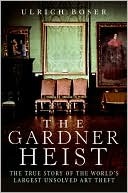
Shortly after midnight on March 18, 1990, two men broke into the Isabella Stewart Gardner Museum in Boston and committed the largest art heist in history. They stole a dozen masterpieces, including one Vermeer, three Rembrandts, and five Degas. But after thousands of leads—and a $5 million reward—none of the paintings have been recovered. Worth as much as $500 million, the missing masterpieces have become one of the nation's most extraordinary unsolved mysteries.
After the death of famed art detective Harold Smith, reporter Ulrich Boser decided to take up the case. Exploring Smith's unfinished leads, Boser travels deep into the art underworld and comes across a remarkable cast of characters, including a brilliant rock 'n' roll thief, a gangster who professes his innocence in rhyming verse, and the enigmatic late Boston heiress Isabella Stewart Gardner herself. Boser becomes increasingly obsessed with the case and eventually uncovers startling new evidence about the identities of the thieves. A tale of art and greed, of obsession and loss, The Gardner Heist is as compelling as the stolen masterpieces themselves.
The Gardner Heist Special ReportListen to the Boston Globe's Stephen Kurkjian describe the Garner Museum heist of 1990. Still unsolved, it remains the biggest art theft in history.
http://www.boston.com/news/specials/g...
Secrets behind the largest art theft in history
By Stephen Kurkjian
The Globe
As they struggled to remove a heavy-framed Rembrandt from the silk-draped wall of the Isabella Stewart Gardner Museum, the two thieves abruptly stopped as a high-pitched alarm beeped from the baseboard.
They must have been startled.
But not for long. Intended to alert guards when museum visitors ventured too close to the art, the alarm was quickly hunted down by the men. They smashed it silent and went back to work on what remains, 15 years after that misty March night in 1990, the biggest art heist in history.
The warning beeper proved to be the only part of the museum's security system that deterred the men at all. They would spend 81 minutes moving through the darkened galleries of the Italianate mansion Mrs. Jack Gardner built at the turn of the century to house her private art collection and share it with the public; they could have stayed all night.
It is also one of the many secrets about the case that investigators have kept to themselves these many years, as they waited in vain for a reliable tip on the whereabouts of the 13 paintings and other artworks stolen that night.
A Globe reexamination of the case, including the first interview with the guard who let the thieves in, uncovers several of those secrets and allows the clearest account yet of what happened on the night of the theft -- an account that underscores how defenseless the Gardner was, with its easily foiled security system and two inexperienced guards on duty, one of whom admits he was sometimes stoned while on the job.
More details also have emerged about the many leads investigators have pursued, including a sighting of the thieves just before they entered the museum, and a 1994 offer to return the paintings that was never publicized but is considered the most promising tip received so far. The Gardner plans a public appeal today to the anonymous writer who made the offer, and then fell silent for 11 years.
The Globe also came across a possible clue that not even the FBI was aware of -- one of the paintings stolen, a small Rembrandt etching, had been taken once before.
Time is often the enemy of crime investigators; the trail quickly gets cold. But time has changed the Gardner case in one way that could increase the chances of the paintings' being recovered: The statute of limitations has passed for prosecution of the theft itself. And the US attorney in Boston now says he will not prosecute anyone who has the paintings and offers to return them.
But while investigators have experienced some brief flurries of hope, mostly they have had to deal with frustration, fool's errands, and silence. The paintings, whose total value today is more than $300 million, have never surfaced, not even as a strong rumor, in the international art underworld. The Gardner has offered a $5 million reward for the paintings' return.
Museum officials say they take heart in the fact that some masterworks stolen from other museums have surfaced after many years. But like the investigators, the museum's leaders are baffled by how little progress has been made since thieves entered the museum in the early morning hours of March 18, 1990, as St. Patrick's Day festivities in the city wound down.
They are baffled especially because the thieves, though bold and clever, were hardly meticulous professionals. They took no great pains to avoid being seen, nor were they careful to avoid damaging the masterpieces they were stealing.
They posed as Boston police officers, and even though they flashed badges and wore insignias, their long coats were not part of any official uniform. The Globe located several passersby who remember seeing them sitting quietly in a red hatchback near the museum's side entrance, perhaps waiting for a St. Patrick's Day party in a nearby apartment building to break up before making their move. And their disguises left their faces uncovered, giving the guards a good look at them.
Paintings Stolen in the Garner Heist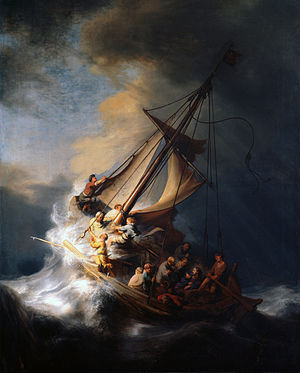
Rembrandt's Storm on the Sea of Galilee

A Lady and Gentleman in Black
and a Rembrandt Self-Portrait
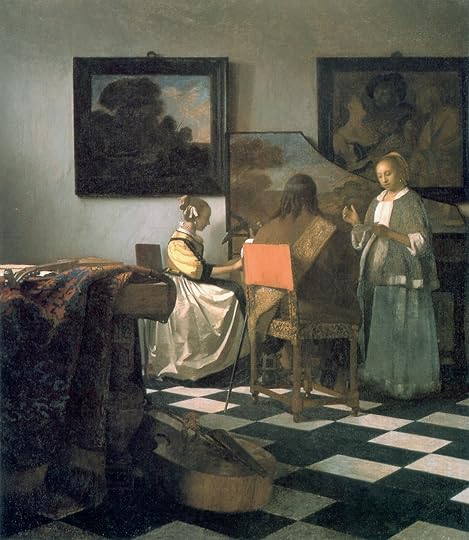
Vermeer's The Concert

Govaert Flinck Landscape with an Obelisk
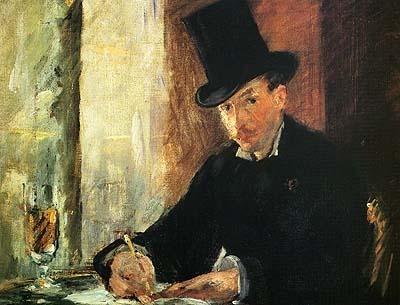
Edouard Manet Chez Tortoni
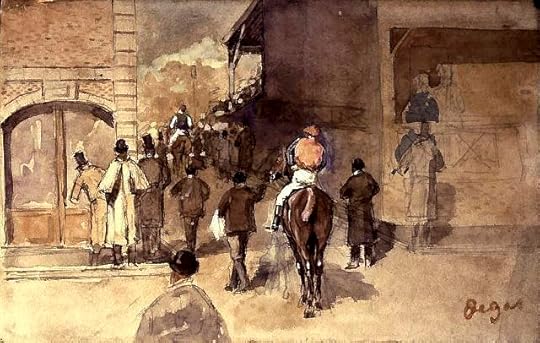
Edgar Degas La Sortie de Pesage
Cortege aux Environs de Florence, Three Mounted Jockeys, 2 sketches called Program for an Artistic Soiree; a gilded Napoleonic eagle ornament; and an ancient Chinese bronze beaker.
The Man Who Made Vermeers: Unvarnishing the Legend of Master Forger Han van Meegerenby Jonathan Lopez
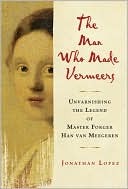
It's a story that made Dutch painter Han van Meegeren famous worldwide when it broke at the end of World War II: A lifetime of disappointment drove him to forge Vermeers, one of which he sold to Hermann Goering in mockery of the Nazis. And it's a story that's been believed ever since. Too bad it isn't true.
Jonathan Lopez has drawn on never-before-seen documents from dozens of archives to write a revelatory new biography of the world’s most famous forger. Neither unappreciated artist nor antifascist hero, Van Meegeren emerges as an ingenious, dyed-in-the-wool crook—a talented Mr. Ripley armed with a paintbrush. Lopez explores a network of illicit commerce that operated across Europe: Not only was Van Meegeren a key player in that high-stakes game in the 1920s and '30s, landing fakes with famous collectors such as Andrew Mellon, but he and his associates later cashed in on the Nazi occupation.
The Man Who Made Vermeers is a long-overdue unvarnishing of Van Meegeren’s legend and a deliciously detailed story of deceit in the art world.
The Art Forgers Handbook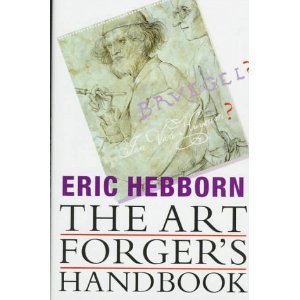
The international art world was plunged into turmoil when it was revealed in 1980 that many drawings previously attributed to artists as varied as Brueghel, Piranesi, Pontormo, Corot, and Augustus John were in fact the work of the English artist Eric Hebborn (1934-1996). Here, in The Art Forger's Handbook, compiled shortly before his mysterious and untimely death, Hebborn unpacks the secrets of his forging techniques. 64 illustrations.
 I heard the guy who stole the Picasso was also going into swanky hotels, pulling the paintings off the walls and stuffing then in a tote bag and walking out the front door with them....
Art-theft suspect pleads not guilty in NYC
By JENNIFER PELTZ, Associated Press – 9 hours ago
NEW YORK (AP) — A wine steward suspected in a bicoastal art-theft spree lifted pricey art from New York hotels simply by walking out with the works in a canvas tote bag and then used them to line his own walls, prosecutors said Friday....
http://www.google.com/hostednews/ap/a...
Good article. It says "more like someone who was in the midst of a psychiatric episode". That was my very first thought while initially reading about him. Well, even if the guy is a little 'unbalanced', he did have good taste!

As riveting as a World War II thriller, "The Forger's Spell" is the true story of Johannes Vermeer and the small-time Dutch painter who dared to impersonate him centuries later. The con man's mark was Hermann Goering, one of the most reviled leaders of Nazi Germany and a fanatic collector of art.
It was an almost perfect crime. For seven years a no-account painter named Han van Meegeren managed to pass off his paintings as those of one of the most beloved and admired artists who ever lived. But, as Edward Dolnick reveals, the reason for the forger's success was "not" his artistic skill. Van Meegeren was a mediocre artist. His true genius lay in psychological manipulation, and he came within inches of fooling both the Nazis and the world. Instead, he landed in an Amsterdam court on trial for his life.
"ARTnews" called Dolnick's previous book, the Edgar Award-winning "The Rescue Artist," "the best book ever written on art crime." In "The Forger's Spell," the stage is bigger, the stakes are higher, and the villains are blacker.
http://www.goodreads.com/book/show/29...
 A friend recommended to me --
 Art Held Hostage: The Battle Over the Barnes Collection by John Anderson
http://www.goodreads.com/book/show/14...
Dr. Albert Barnes pulled himself out of poverty at a young age, eventually becoming a pharmaceutical tycoon and snapping up art treasures during Depression fire sales. At the end of his combative life, Barnes, who changed his will to match his mercurial moods, left the collection not to his alma mater, the University of Pennsylvania, but to Lincoln University, a once-acclaimed African-American institution that had produced graduates such as Langston Hughes before seeing its reputation and enrollment decline. Located in the Main Line suburb of Philadelphia, the collection is currently worth more than $6 billion and contains masterworks by Picasso, Renoir and Matisse.
A deputy editor of American Lawyer magazine, Anderson turns his keen eye to the struggle for power over the collection that has been waged since Barnes's death in 1951. At the center of the conflict is lawyer Richard Glanton, who as president of the Barnes during the 1990s launched a costly lawsuit alleging racial discrimination against the township that houses the collection, put paintings from the collection on tour despite Barnes's "no tour" clause to his gift and pondered the once unthinkable tactic of selling paintings from the collection to raise additional funds. Glanton's one-time ally in behind-the-scenes power plays, Lincoln University president Niara Sudarkasa, found herself helming an institution unprepared for the responsibilities of the collection and was later embroiled in her own legal troubles stemming from spending practices at the university.
Through detailed storytelling and insightful interviews with key players (shown in 16 pages of b&w photos), Anderson vividly depicts the downfall of now-enemies Glanton and Sudarkasa and the devastating financial impact of their power struggles on the foundation itself. Anyone interested in the intersection of art, race and power politics will find this tale engrossing—and depressing.
The artwork -- http://www.amazon.com/Great-French-Pa...
also “The Art of the Steal, 2009” film--
http://www.amazon.com/Art-Steal-Don-A...
NYTimes article on the film--
http://www.nytimes.com/2010/02/21/mov...
article -- http://maryrayme.suite101.com/art-hel...
 The professor in a class I'm taking recommended this one: Loot: The Battle over the Stolen Treasures of the Ancient World.
That one was suggested in that Art Crimes group. They have a topic on looting. It looks good.
The professor in a class I'm taking recommended this one: Loot: The Battle over the Stolen Treasures of the Ancient World.
That one was suggested in that Art Crimes group. They have a topic on looting. It looks good.
 This also happens to be the topic of Jonathan Lopez's book The Man Who Made Vermeers, mentioned above in this topic and written by our very own Jonathan!!
Heather wrote: "
As riveting as a World War II thriller, "The Forger's Spell" is the true story of Johannes Vermeer and the small-time Dutch painter who dared to impersonate him centuries later. The con man's mar..."
 Crime and the Art Market
is a serious, solid introduction to the broad issues surrounding art-related crime, that also happens to be reasonably readable. Although it’s short (160 pages), you won’t want to try to read it on the beach, but it won’t break your brain, either. It’s not so much reportage as is it truth-seeking. Don’t come in expecting James Patterson and you won’t be disappointed. Three and a half special-exhibit tickets rounded up to four as a membership bonus.
Crime and the Art Market
is a serious, solid introduction to the broad issues surrounding art-related crime, that also happens to be reasonably readable. Although it’s short (160 pages), you won’t want to try to read it on the beach, but it won’t break your brain, either. It’s not so much reportage as is it truth-seeking. Don’t come in expecting James Patterson and you won’t be disappointed. Three and a half special-exhibit tickets rounded up to four as a membership bonus.Because I wrote this review for Criminal Element, I can't reproduce it all here. Read the complete review -- and other good stuff -- here.
 Lance wrote: "Crime and the Art Market is a serious, solid introduction to the broad issues surrounding art-related crime, that also happens to be reasonably readable. Although it’s short (160 pa..."
That looks like a good book, Lance.
What do you mean "Three and a half special-exhibit tickets rounded up to four as a membership bonus."?
Heather wrote: "That looks like a good book, Lance. What do you mean 'Three and a half special-exhibit tickets rounded up to four as a membership bonus.'?"
I like to have fun with my reviews when I can. One way I do that is by messing with the "stars" concept.
Lance wrote: "I like to have fun with my reviews when I can. One way I do that is by messing with the "stars" concept."It's always fun entertaining ones self in a review. And the reviews can be interesting at the same time.
I'm sorry if I'm dense, but what exactly is the "stars concept"? Is that like rating something 1-5 stars in how well it is written (or painted or whatever)? But then I don't understand what you are saying in your other post "Three and a half special-exhibit tickets rounded up to four as a membership bonus". I don't think in abstract well, if you can't tell!
Like I said in another thread, I enjoy getting to know members of this group. I have actually gotten to know some of these members through personal messages and a few outside of GR (such as FB). You seem like an interesting member and since you are new and have offered to dive into the group, please don't be offended or assume anything by my questions. I'm only getting to know you. Your introduction fascinated me.
Heather wrote: "I'm sorry if I'm dense, but what exactly is the "stars concept"? Is that like rating something 1-5 stars in how well it is written (or painted or whatever)?..."It is. Both GR and Amazon use a 1-5 stars scale as shorthand for how much we like a book/video/toaster/whatever. (Oddly, the scales aren't exactly alike.) We don't get to award fractional stars, though, something I've poked at GR about over time. So, even though I may think a book rates around 3.5 stars, I have to either round up or down, and I tend to mention that in my reviews. And because stars get boring after a while, I may use bullets, mojitos, estrellas, dumplings, or whatever else seems fitting. In this case, I may have gotten too abstract.
The Art of the Steal
is Christopher Mason's exhaustive retelling of the Sotheby's-Christie's commission-fixing scandal of the late 1990s. While obviously well-researched, at bottom it's a story of supposedly smart people doing egregiously dumb things for no especially good reason. Its greatest fault is its failure to explain why any of it matters, or why it needs its obsessive detail or dead-serious approach. Two stars, bought in.Read the full review here.

 Great suggestions! One of my favorite books about art crimes is Museum of the Missing: A History of Art Theft by Simon Houpt.
Here's part of my review:
"I’d originally borrowed this from a local library to find out more about the Gardner heist in Boston, but was so captivated by the author’s storytelling and interesting tidbits of background information that he’d woven into the short texts, that I bought my own hardback copy and read the whole thing.
Not only does the author describe in detail several of the more brazen and important art crimes worldwide, he goes further, placing the robberies or looting in historical context, describing the value of the objects within criminal organizations, and explaining the important role of forgeries in many thefts."
It's a solid introduction to some of the more interesting art-related crimes and forgery cases. Happy reading everyone!
Thank you for the suggestions and reviews Lance and Jennifer! Wow, there is so much I want to read and it all looks great!
 I am fascinated by forgery, and the division between "fine art" and "just a forgery". My favorite book on the subject was Thomas Hoving's False Impressions: The Hunt for Big-Time Art Fakes; Hoving was a terrific raconteur.
 (And I think this is my first post in the group, so - hi!)
I have not read that, but I have read Hoving's King of the Confessors, which is a good read. (And does relate to "forgery," as there was much debate over whether the item in question was a forgery or not.)
 Tracey wrote: "I am fascinated by forgery, and the division between "fine art" and "just a forgery". My favorite book on the subject was Thomas Hoving's [book:False Impressions: The Hunt for Big-Ti..."
Hoving was an excellent writer - glad to see him mentioned!
I liked it too. In case you're interested...False Impressions: The Hunt for Big-Time Art Fakes is a relatively painless introduction to the world of art fraud and forgery, led by a highly experienced and articulate guide. It's much more like listening to stories at a cocktail party than being in the field or the lab, and you'll learn more about the author and less about detecting forgeries than you strictly need to. Still, it's not a bad way to get started. Fourish stars.
Read the full review here.

 The director of the Gardner Museum was Anne Hawley in real life. Previously, she had been appointed director of the Massachusetts Art Lottery, by the conservative Democrat governor who interrupted Michael Dukakis´s stewardship of the state in 1980. His name was King and was generally considered incompetent and served one term only.Anne was a bit high powered herself. I was director of a tiny photography center and she was extremely insistent that the academic director dismiss a student from a course who had already paid to make room for her and her good friend.
Chasing Aphrodite: The Hunt for Looted Antiquities at the World's Richest Museum
is one of the best true-crime books I've read, a thorough but engaging account of the many criminal and ethical train wrecks hidden behind the imposing façade of the world's richest museum. This could be the basis for a fine soap opera, or Law & Order franchise. Five stars.
The director of the Gardner Museum was Anne Hawley in real life. Previously, she had been appointed director of the Massachusetts Art Lottery, by the conservative Democrat governor who interrupted Michael Dukakis´s stewardship of the state in 1980. His name was King and was generally considered incompetent and served one term only.Anne was a bit high powered herself. I was director of a tiny photography center and she was extremely insistent that the academic director dismiss a student from a course who had already paid to make room for her and her good friend.
Chasing Aphrodite: The Hunt for Looted Antiquities at the World's Richest Museum
is one of the best true-crime books I've read, a thorough but engaging account of the many criminal and ethical train wrecks hidden behind the imposing façade of the world's richest museum. This could be the basis for a fine soap opera, or Law & Order franchise. Five stars.Read the full review at http://www.goodreads.com/review/show/....
 Lance wrote: "Chasing Aphrodite: The Hunt for Looted Antiquities at the World's Richest Museum is one of the best true-crime books I've read, a thorough but engaging account of the many criminal a..."
I like the title of this book, it draws me in to investigate it further. Thank you.
I keep meaning to read more about the Gardner. Long, long ago I read Murder at the Gardner by Jane Langton, and always meant to follow it up.
The Art of the Con: The Most Notorious Fakes, Frauds, and Forgeries in the Art World
presents a problem in rating. Do I give it four stars for its content (a panoramic rundown of a dozen interesting, recent art-based frauds)? Do I give it three stars for the bloodless prose that turns what should be fascinating stories into feature newspaper articles? Aw, screw it -- three stars, and a hope for a literary co-author next time.Read the full review here.
 Provenance: How a Con Man and a Forger Rewrote the History of Modern Art
is the real-life story of how pathological liar John Drewe tinkered with the history of European Modern art in order to sell hundreds of forged paintings to collectors, galleries and museums. If you like con men, you'll love this book. Four stars.
Provenance: How a Con Man and a Forger Rewrote the History of Modern Art
is the real-life story of how pathological liar John Drewe tinkered with the history of European Modern art in order to sell hundreds of forged paintings to collectors, galleries and museums. If you like con men, you'll love this book. Four stars.Read the full review here.
 Lance wrote: "Chasing Aphrodite: The Hunt for Looted Antiquities at the World's Richest Museum is one of the best true-crime books I've read, a thorough but engaging account of the many criminal a..."
I, too, like the title. It in itself makes me want to read the book. But I did just read your detailed review and want it close to the top of my TBR shelf due to your review.
Since I don't really read fiction of any kind, it sounds intriguing and interesting to know that it reads more like a true-crime novel. Is it a page turner? I find that some of the art books I have read, although they are good, they are also more full of facts than a story. I do finish most of them but they take me more time to finish because at the same time I am reading several other books and if it doesn't really have a 'story line' as opposed to facts alone with a bit of history, my time dedicated to reading seems to gravitate toward some of the other books I am reading.
But it does sound fascinating and I've always loved a good mystery.
I appreciate the fact that you said it could use more pictures of the pieces about which they are writing. That could add so much more to attaching reference to the piece about which it is written.
I have been to the Getty several times and love it! But I had no idea that it is the richest museum in the world! I count myself lucky to have even been there once!
And thank you for attaching the website and blog link for the writers. I will definitely check it out.
All in all, great review. Thank you!
Joshua Knelman's
Hot Art: Chasing Thieves and Detectives Through the Secret World of Stolen Art
features snappy writing and a cast of interviewees from both sides of the law that make art theft come alive. Like Chasing Aphrodite, it takes a large and complicated subject and makes it sound like pulp fiction. If you’d like to know more about art theft than just Rene Russo’s transparent dress, check this out. 4.5 stars.Read the full review here.
 Read
Caveat Emptor: The Secret Life of an American Art Forger
for the social history, or read it for its discussion of the art forger's craft. The author made his career as perhaps one of the most prolific (and successful) art forgers in American history -- and he never got caught. He makes his forging career sound like a romp. Don't expect this book to provide sparkling prose, moral uplift or spiritual redemption and you won't be disappointed. Four stars.
Read
Caveat Emptor: The Secret Life of an American Art Forger
for the social history, or read it for its discussion of the art forger's craft. The author made his career as perhaps one of the most prolific (and successful) art forgers in American history -- and he never got caught. He makes his forging career sound like a romp. Don't expect this book to provide sparkling prose, moral uplift or spiritual redemption and you won't be disappointed. Four stars.Read the full review here.
 Lance wrote: "Read Caveat Emptor: The Secret Life of an American Art Forger for the social history, or read it for its discussion of the art forger's craft. The author made his career as perhaps ..."
Great review, Lance! Thank you for sharing it, the book seems interesting.
Not strictly related to art crime, but in the neighborhood...The Art Detective: Adventures of an Antiques Roadshow Appraiser is an entertaining and engaging account of real-life detective work in the rather odd world of art collecting. If you're at all interested in how we figure out whether a painting is a masterpiece or hotel art, this is a good place to start. Four and a half stars.
Read the full review here.
 Lance wrote: "Not strictly related to art crime, but in the neighborhood...
The Art Detective: Adventures of an Antiques Roadshow Appraiser is an entertaining and engaging account of real-life de..."
That sounds fabulous! I was at the Dutch version of this show (Tussen Kunst and Kitsch) on Monday and found out my 'antique' necklace was a fake! It was disappointing of course, but I was amazed to see how quickly he spotted the forgery. Sounds like a great read.
Jennifer wrote: "That sounds fabulous! I was at the Dutch version of this show (Tussen Kunst and Kitsch) on Monday and found out my 'antique' necklace was a fake! It was disappointing of course, but I was amazed to see how quickly he spotted the forgery. The Art Detective: Adventures of an Antiques Roadshow Appraiser is an entertaining and engaging account o..."
That would be fun, fascinating, and frustrating (if some of them were your own pieces) to attend an antique show where you have experts appraise the pieces, their quality, their uniqueness, and whether they are actually genuine.
Heather wrote: "Jennifer wrote: "That sounds fabulous! I was at the Dutch version of this show (Tussen Kunst and Kitsch) on Monday and found out my 'antique' necklace was a fake! It was disappointing of course, bu..."I was always curious to see how the experts worked 'behind the scenes'. Ultimately it was a fun and enlightening experience!
Science has gone boho to help answer one of the thornier questions in art: is that painting real? This is the story Dr. Jehane Ragai tells in clear, non-textbook prose in
The Scientist and the Forger: Insights Into the Scientific Detection of Forgery in Paintings
.Whether you’re marking time until CSI: National Gallery comes along, or you need the latest scoop on what not to do while you’re producing your next counterfeit Picasso, you need this book. But it’s also a good pick if you’re into art crime, forensic science, or just seeing scientists doing things that fit Clarke’s third law. Five gold stars for an academic book.
Because I reviewed this book for Criminal Element, I can't copy it all here. However, you can read the entire review -- and a bunch of other good stuff -- here.
 Sacred and Stolen: Confessions of a Museum Director
lifts the modest skirts of the museum trade to give us a taste for the politics and sometimes shady business that goes on behind the glass cases full of (perhaps looted) shiny things. Author Gary Vikan is a personable guide through his thirty-plus years dealing with heiresses, smugglers, art dealers, thieves, crafty church officials, middlemen, local politicians and scholars, not all of whom behave well. Four strong stars and a free gallery pass.
Sacred and Stolen: Confessions of a Museum Director
lifts the modest skirts of the museum trade to give us a taste for the politics and sometimes shady business that goes on behind the glass cases full of (perhaps looted) shiny things. Author Gary Vikan is a personable guide through his thirty-plus years dealing with heiresses, smugglers, art dealers, thieves, crafty church officials, middlemen, local politicians and scholars, not all of whom behave well. Four strong stars and a free gallery pass.Read the full review here.


Art Lovers
Books mentioned in this topic
Sacred and Stolen: Confessions of a Museum Director (other topics)The Scientist and the Forger: Insights Into the Scientific Detection of Forgery in Paintings (other topics)
The Art Detective: Adventures of an Antiques Roadshow Appraiser (other topics)
The Art Detective: Adventures of an Antiques Roadshow Appraiser (other topics)
The Art Detective: Adventures of an Antiques Roadshow Appraiser (other topics)
More...
Authors mentioned in this topic
Jane Langton (other topics)Thomas Hoving (other topics)
Thomas Hoving (other topics)
Simon Houpt (other topics)
