
Discover new books on Goodreads
Meet your next favorite book
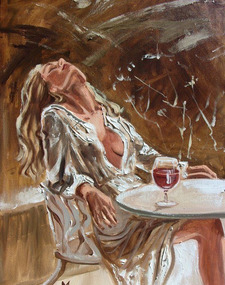


“Perhaps the greatest faculty our minds possess is the ability to cope with pain. Classic thinking teaches us of the four doors of the mind, which everyone moves through according to their need.
First is the door of sleep. Sleep offers us a retreat from the world and all its pain. Sleep marks passing time, giving us distance from the things that have hurt us. When a person is wounded they will often fall unconscious. Similarly, someone who hears traumatic news will often swoon or faint. This is the mind's way of protecting itself from pain by stepping through the first door.
Second is the door of forgetting. Some wounds are too deep to heal, or too deep to heal quickly. In addition, many memories are simply painful, and there is no healing to be done. The saying 'time heals all wounds' is false. Time heals most wounds. The rest are hidden behind this door.
Third is the door of madness. There are times when the mind is dealt such a blow it hides itself in insanity. While this may not seem beneficial, it is. There are times when reality is nothing but pain, and to escape that pain the mind must leave reality behind.
Last is the door of death. The final resort. Nothing can hurt us after we are dead, or so we have been told.”
― The Name of the Wind
First is the door of sleep. Sleep offers us a retreat from the world and all its pain. Sleep marks passing time, giving us distance from the things that have hurt us. When a person is wounded they will often fall unconscious. Similarly, someone who hears traumatic news will often swoon or faint. This is the mind's way of protecting itself from pain by stepping through the first door.
Second is the door of forgetting. Some wounds are too deep to heal, or too deep to heal quickly. In addition, many memories are simply painful, and there is no healing to be done. The saying 'time heals all wounds' is false. Time heals most wounds. The rest are hidden behind this door.
Third is the door of madness. There are times when the mind is dealt such a blow it hides itself in insanity. While this may not seem beneficial, it is. There are times when reality is nothing but pain, and to escape that pain the mind must leave reality behind.
Last is the door of death. The final resort. Nothing can hurt us after we are dead, or so we have been told.”
― The Name of the Wind

“Good Morning!" said Bilbo, and he meant it. The sun was shining, and the grass was very green. But Gandalf looked at him from under long bushy eyebrows that stuck out further than the brim of his shady hat.
"What do you mean?" he said. "Do you wish me a good morning, or mean that it is a good morning whether I want it or not; or that you feel good this morning; or that it is a morning to be good on?"
"All of them at once," said Bilbo. "And a very fine morning for a pipe of tobacco out of doors, into the bargain.
...
"Good morning!" he said at last. "We don't want any adventures here, thank you! You might try over The Hill or across The Water." By this he meant that the conversation was at an end.
"What a lot of things you do use Good morning for!" said Gandalf. "Now you mean that you want to get rid of me, and that it won't be good till I move off.”
― The Hobbit, or There and Back Again
"What do you mean?" he said. "Do you wish me a good morning, or mean that it is a good morning whether I want it or not; or that you feel good this morning; or that it is a morning to be good on?"
"All of them at once," said Bilbo. "And a very fine morning for a pipe of tobacco out of doors, into the bargain.
...
"Good morning!" he said at last. "We don't want any adventures here, thank you! You might try over The Hill or across The Water." By this he meant that the conversation was at an end.
"What a lot of things you do use Good morning for!" said Gandalf. "Now you mean that you want to get rid of me, and that it won't be good till I move off.”
― The Hobbit, or There and Back Again

“We want to imagine that people are consistent, steady, stable. We define who they are, create descriptions to lock them on a page, divide them up by their likes, talents, beliefs. Then we pretend some—perhaps most—are better than we are, because they stick to their definitions, while we never quite fit ours. Truth is, people are as fluid as time is. We adapt to our situation like water in a strangely shaped jug, though it might take us a little while to ooze into all the little nooks. Because we adapt, we sometimes don’t recognize how twisted, uncomfortable, or downright wrong the container is that we’ve been told to inhabit.”
― Tress of the Emerald Sea
― Tress of the Emerald Sea

“We buy books because we believe we're buying the time to read them.”
―
―

“Mon ami, двоє людей рідко можуть похвалитись, що бачать однакові речі”
― The Murder on the Links
― The Murder on the Links

ma_chérie’s 2025 Year in Books
Take a look at ma_chérie’s Year in Books, including some fun facts about their reading.


Favorite Genres
Polls voted on by ma_chérie
Lists liked by ma_chérie