
Discover new books on Goodreads
Meet your next favorite book
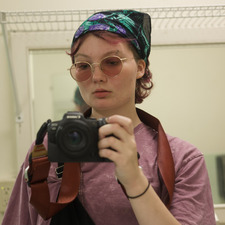
Gabby Risley
https://www.goodreads.com/gabbyrisley


“he found himself asking was there any point in being alive without helping one another?”
― Small Things Like These
― Small Things Like These

“You cannot create results. You can only create conditions in which something might happen.”
―
―

“What science does is what I would like more literature to do too: show us that we are living in an exquisitely complicated world that is not all about us. It does not belong to us alone. It never has done.”
― Vesper Flights
― Vesper Flights
“There is a persistent belief amongst abled people that a cure is what disabled people should want. To abandon our disabled selves and bodies and assimilate into a perhaps unachievable abled skin. Pushback to this idea often comes in the form of the social model of disability, which states that we are disabled by society and lack of access rather than by our bodies. For many, the social model can be liberating: by locating the cause of our problems outside our bodies, we can begin to love ourselves again. Tackling systemic ableism may feel like tilting at windmills, but it is still easier to address than some kind of failing within ourselves. There is a criticism of the social model of disability, located in the idea that some disabled people may want a cure. Particularly with matters like chronic pain/chronic illness, a cure is seen as something that can itself be liberating: a way to simply be in one’s body without feeling pain, for example. There is a danger in the cure mentality, as it can be a slippery slope toward eugenics when it is applied by abled people. Many in the Deaf and autistic communities do not want a cure and feel that those who advocate for a cure are advocating that they not exist anymore. Sometimes it comes down to how we see our individual disabilities: Are they an intrinsic part of who we are? Or are they an identity that comes with a side of agony we would gladly give up? How do we feel when abled people start advocating for “cures”—which may come in the form of eliminating our people entirely—rather than when the desire for a cure comes from disabled advocates?”
― Disability Visibility: First-Person Stories from the Twenty-first Century
― Disability Visibility: First-Person Stories from the Twenty-first Century
“Someone once told me that every writer has a subject that underlies everything they write. It can be love or death, betrayal or belonging, home or hope or exile. I choose to think that my subject is love, and most specifically love for the glittering world of non-human life around us.”
― Vesper Flights
― Vesper Flights


Gabby’s 2025 Year in Books
Take a look at Gabby’s Year in Books, including some fun facts about their reading.

623 books
|
4 friends

18 books
|
1 friend
30 books
|
1 friend
83 books
|
3 friends


Favorite Genres
Art, Classics, Contemporary, Fantasy, Historical fiction, Memoir, Poetry, Romance, Science, and Spirituality
Polls voted on by Gabby
Lists liked by Gabby