
 Sign in with Facebook


“In his work Maladies and Remedies of the Life of the Flesh, published in Leiden under the pseudonym Christianus Democritus, he claimed to have discovered the Elixir of Life—a liquid counterpart to the Philosopher’s Stone—which would heal any ailment and grant eternal life to the person who drank it. He tried, but failed, to exchange the formula for the deed to Frankenstein Castle, and the only use he ever made of his potion—a mixture of decomposing blood, bones, antlers, horns and hooves—was as an insecticide, due to its incomparable stench. This same quality led the German troops to employ the tarry, viscous fluid as a non-lethal chemical weapon (therefore exempt from the Geneva Convention), pouring it into wells in North Africa to slow the advance of General Patton and his men, whose tanks pursued them across the desert sands. An ingredient in Dippel’s elixir would eventually produce the blue that shines not only in Van Gogh’s Starry Night and in the waters of Hokusai’s Great Wave, but also on the uniforms of the infantrymen of the Prussian army, as though something in the colour’s chemical structure invoked violence: a fault, a shadow, an existential stain passed down from those experiments in which the alchemist dismembered living animals to create it, assembling their broken bodies in dreadful chimeras he tried to reanimate with electrical charges, the very same monsters that inspired Mary Shelley to write her masterpiece, Frankenstein; or, The Modern Prometheus, in whose pages she warned of the risk of the blind advancement of science, to her the most dangerous of all human arts.”
― When We Cease to Understand the World
― When We Cease to Understand the World

“If you look for a meaning, you’ll miss everything that happens.”
―
―
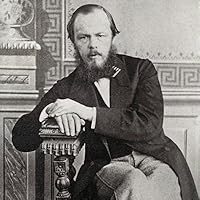
“Whether it’s good or bad, it is sometimes very pleasant, too, to smash things.”
― Notes from Underground
― Notes from Underground
“My objective is to create my own world and these images which we create mean nothing more than the images which they are. We have forgotten how to relate emotionally to art: we treat it like editors, searching in it for that which the artist has supposedly hidden. It is actually much simpler than that, otherwise art would have no meaning. You have to be a child—incidentally children understand my pictures very well, and I haven’t met a serious critic who could stand knee-high to those children. We think that art demands special knowledge; we demand some higher meaning from an author, but the work must act directly on our hearts or it has no meaning at all.”
―
―

“Only dogmatic thinking, the result of the laziness of mind and heart, tries to construct simplistic schemes of the either-or type that block any real understanding.”
― The Anatomy of Human Destructiveness
― The Anatomy of Human Destructiveness

Tolga’s 2025 Year in Books
Take a look at Tolga’s Year in Books, including some fun facts about their reading.


Favorite Genres
Polls voted on by Tolga
Lists liked by Tolga
