
 Sign in with Facebook
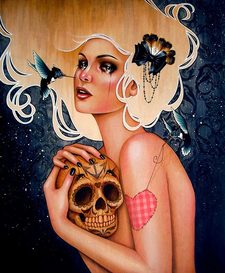


“Wittgenstein once wrote that when the eye sees something beautiful, the hand wants to draw it. I wish I could draw you.”
― The History of Love
― The History of Love


“Love is an ideal thing, marriage a real thing.”
―
―

“There is no living being on earth at this moment except myself. I could walk down the halls, and empty rooms would yawn mockingly at me from every side. God, but life is loneliness, despite all the opiates, despite the shrill tinsel gaiety of 'parties' with no purpose, despite the false grinning faces we all wear. And when at last you find someone to whom you feel you can pour out your soul, you stop in shock at the words you utter — they are so rusty, so ugly, so meaningless and feeble from being kept in the small cramped dark inside you so long. Yes, there is joy, fulfillment and companionship — but the loneliness of the soul in it's appalling self-consciousness, is horrible and overpowering.”
― The Unabridged Journals of Sylvia Plath
― The Unabridged Journals of Sylvia Plath

“But this was not enough on its own to generate the kind of terror that Mao wanted. On 18 August, a mammoth rally was held in Tiananmen Square in the center of Peking, with over a million young participants. Lin Biao appeared in public as Mao's deputy and spokesman for the first time. He made a speech calling on the Red Guards to charge out of their schools and 'smash up the four olds' defined as 'old ideas, old culture, old customs, and old habits."
Following this obscure call, Red Guards all over China took to the streets, giving full vent to their vandalism, ignorance, and fanaticism. They raided people's houses, smashed their antiques, tore up paintings and works of calligraphy. Bonfires were lit to consume books. Very soon nearly all treasures in private collections were destroyed.
Many writers and artists committed suicide after being cruelly beaten and humiliated, and being forced to witness their work being burned to ashes. Museums were raided.
Palaces, temples, ancient tombs, statues, pagodas, city walls anything 'old' was pillaged. The few things that survived, such as the Forbidden City, did so only because Premier Zhou Enlai sent the army to guard them, and issued specific orders that they should be protected. The Red Guards only pressed on when they were encouraged.
Mao hailed the Red Guards' actions as "Very good indeed!" and ordered the nation to support them.
He encouraged the Red Guards to pick on a wider range of victims in order to increase the terror. Prominent writers, artists, scholars, and most other top professionals, who had been privileged under the Communist regime, were now categorically condemned as 'reactionary bourgeois authorities." With the help of some of these people's colleagues who hated them for various reasons, ranging from fanaticism to envy, the Red Guards began to abuse them. Then there were the old 'class enemies': former landlords and capitalists, people with Kuomintang connections, those condemned in previous political campaigns like the 'rightists' and their children.”
― Wild Swans: Three Daughters of China
Following this obscure call, Red Guards all over China took to the streets, giving full vent to their vandalism, ignorance, and fanaticism. They raided people's houses, smashed their antiques, tore up paintings and works of calligraphy. Bonfires were lit to consume books. Very soon nearly all treasures in private collections were destroyed.
Many writers and artists committed suicide after being cruelly beaten and humiliated, and being forced to witness their work being burned to ashes. Museums were raided.
Palaces, temples, ancient tombs, statues, pagodas, city walls anything 'old' was pillaged. The few things that survived, such as the Forbidden City, did so only because Premier Zhou Enlai sent the army to guard them, and issued specific orders that they should be protected. The Red Guards only pressed on when they were encouraged.
Mao hailed the Red Guards' actions as "Very good indeed!" and ordered the nation to support them.
He encouraged the Red Guards to pick on a wider range of victims in order to increase the terror. Prominent writers, artists, scholars, and most other top professionals, who had been privileged under the Communist regime, were now categorically condemned as 'reactionary bourgeois authorities." With the help of some of these people's colleagues who hated them for various reasons, ranging from fanaticism to envy, the Red Guards began to abuse them. Then there were the old 'class enemies': former landlords and capitalists, people with Kuomintang connections, those condemned in previous political campaigns like the 'rightists' and their children.”
― Wild Swans: Three Daughters of China

Vonda’s 2025 Year in Books
Take a look at Vonda’s Year in Books, including some fun facts about their reading.

183 books
|
7 friends

509 books
|
2 friends

252 books
|
2 friends

593 books
|
33 friends

295 books
|
6 friends

202 books
|
5 friends

164 books
|
2 friends

433 books
|
65 friends
More friends…


Favorite Genres
Polls voted on by Vonda
Lists liked by Vonda
