Goodreads helps you follow your favorite authors. Be the first to learn about new releases!
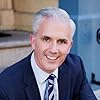
Start by following Scott Eblin.

Showing 1-18 of 18
“She tries to take the first 60 to 90 minutes of the workday to organize herself, answer e-mails, make follow-up calls, review her calendar, and set her priorities for the day.”
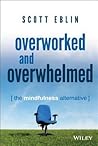
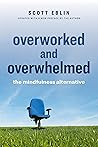
― Overworked and Overwhelmed: The Mindfulness Alternative
― Overworked and Overwhelmed: The Mindfulness Alternative
“Evolent Health CEO Frank Williams who says, “Whatever time I invest in exercise, I get four times back in terms of energy and productivity and all of those types of things.”
― Overworked and Overwhelmed: The Mindfulness Alternative
― Overworked and Overwhelmed: The Mindfulness Alternative
“Visualize How You Want to Show Up World-class athletes in just about every sport go through a process of visualization before they compete or start the next play. I’ve had the opportunity to talk with Olympic athletes about this process, and they tell me that there are two basic questions they’re thinking through in those last few moments before the competition or the play begins: • What am I trying to do?”
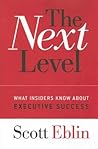
― The Next Level: What Insiders Know About Executive Success
― The Next Level: What Insiders Know About Executive Success
“How do I need to perform to do that? These athletes have trained themselves to create a rich mental picture of what they’re doing and how they’re doing it when they’re performing at their best. This mental visualization process makes them feel more confident and primes them to physically perform at their best in the actual event.”
― The Next Level: What Insiders Know About Executive Success
― The Next Level: What Insiders Know About Executive Success
“Primal Leadership. There”
― The Next Level: What Insiders Know About Executive Success
― The Next Level: What Insiders Know About Executive Success
“For some reason, a lot of driven business people take pride in how little sleep they get. They claim they do just fine with four or five hours of sleep per night and that, as a result, they are much more productive than most in any given twenty-four-hour period. There’s around a 95 percent chance that they’re wrong. Researchers at the University of California, San Francisco, have demonstrated that at least 95 percent of all people—business or otherwise—need at least seven hours of sleep each night, not only to be fully productive, energetic, and mentally acute the next day but to live to their full and healthy life expectancy. Anyone who thinks they can get by with less sleep than seven hours a night must be in the 5 percent of the population that has a rare genetic mutation that lets them get away with that. It’s pretty much guaranteed that all of those sleep-deprived warriors are not in the 5 percent. You need your”
― The Next Level: What Insiders Know About Executive Success
― The Next Level: What Insiders Know About Executive Success
“A farmer had a beautiful, powerful horse that was the envy of his neighbors in the community. One day the horse jumped the fence and ran away. The farmer's neighbors were quick to come over and offer their regrets over the farmer's loss of such a horse. He simply shrugged and said, “Good thing, bad thing, who knows?” Then one day the horse came back to the farm along with five magnificent wild horses. The farmer and his son corralled the horses to train them for work on the farm. When they saw the horses, the neighbors rushed over to admire the horses and marvel at the farmer's good fortune. In response to their comments, he just shrugged and said, “Good thing, bad thing, who knows?” A few days later, the farmer's son was training one of the new horses and fell off and severely broke his leg. After several months, it became clear that the son would never walk normally again. The neighbors came by to offer their condolences over the son's infirmity. The farmer shrugged and said, “Good thing, bad thing, who knows?” Then war came to the kingdom and all of the young, able-bodied males were conscripted for the king's army, likely to never return home again. Because of his broken leg, the farmer's son was left at home. The neighbors, with much grief at their own losses, came by to comment on the farmer's good fortune in keeping his son. The farmer simply replied, “Good thing, bad thing, who knows?” Of course, the point of the story is you never know how things are going to play out over the long run, so why spend a lot of energy on mulling over whether any particular outcome is good or bad? Things can and will change. I think the reason Diane and I use “Good thing, bad thing, who knows?” as a catch phrase is that our experience with my multiple sclerosis has taught us to suspend judgment on what could happen or is likely to happen in life. It's taught us both to be more mindful—aware and intentional—about how we live our lives. In this final chapter of the book, I want to share some of those mindfulness lessons I've learned from MS in the hope that they'll be useful to you on your journey.”
― Overworked and Overwhelmed: The Mindfulness Alternative
― Overworked and Overwhelmed: The Mindfulness Alternative
“Frankl wrote, “Between stimulus and response there is a space. In that space is our power to choose our response. In our response lies our growth and our freedom.”3”
― Overworked and Overwhelmed: The Mindfulness Alternative
― Overworked and Overwhelmed: The Mindfulness Alternative
“Teresa Amabile, Harvard Business School professor and coauthor of The Progress Principle, summed things up nicely: Work is now part of everything we do. We're never away from it. We really have to go to extremes to get away from it. There used to be much clearer demarcations between work and nonwork time. I think because of technology we've come to have higher expectations of each other and of ourselves and of our organizations.”
― Overworked and Overwhelmed: The Mindfulness Alternative
― Overworked and Overwhelmed: The Mindfulness Alternative
“The thing about the office stress,” he said, “is that it kind of just eats away at you day after day. It's just kind of chinking away at the armor to the point where it will crack.”
― Overworked and Overwhelmed: The Mindfulness Alternative
― Overworked and Overwhelmed: The Mindfulness Alternative
“broader expectations that come with her new role. She has to put in place the processes and systems that enable her to be accountable for the results without acting as if she’s personally responsible for all of the results. If you’re accountable, you own it; if you’re responsible, you do it. Amy needs to own it more and do it less.”
― The Next Level: What Insiders Know About Executive Success
― The Next Level: What Insiders Know About Executive Success
“You have to be careful about what rents space in your head.”
― Overworked and Overwhelmed: The Mindfulness Alternative
― Overworked and Overwhelmed: The Mindfulness Alternative
“Aristotle said: “We are what we repeatedly do. Excellence, then, is not an act but a habit.”
― Overworked and Overwhelmed: The Mindfulness Alternative
― Overworked and Overwhelmed: The Mindfulness Alternative
“Visualise how you want to show up: World-class athletes in just about every sport go through a process of visualisation before they compete or start the next play. In golf, for example, it's called a swing thought.
Before swinging the club and hitting the ball, an accomplished golfer will visualise the desired result and the swing it will take to produce that result. While the result doesn't always match up to the thought, a positive swing thought is much more likely to yield a good outcome than a negative swing thought or no particular thought at all.”
― The Next Level: What Insiders Know About Executive Success
Before swinging the club and hitting the ball, an accomplished golfer will visualise the desired result and the swing it will take to produce that result. While the result doesn't always match up to the thought, a positive swing thought is much more likely to yield a good outcome than a negative swing thought or no particular thought at all.”
― The Next Level: What Insiders Know About Executive Success
“The largest factor in our well-being is the place where our mind dwells.”
― Overworked and Overwhelmed: The Mindfulness Alternative
― Overworked and Overwhelmed: The Mindfulness Alternative
“Visualise how you want to show up: World-class athletes in just about every sport go through a process of visualisation before they compete or start the next play. In golf, for example, it's called a swing thought. Before swinging the club and hitting the ball, an accomplished golfer will visualise the desired result and the swing it will take to produce that result. While the result doesn't always match up to the thought, a positive swing thought is much more likely to yield a good outcome than a negative swing thought or no particular thought at all.”
― The Next Level: What Insiders Know About Executive Success
― The Next Level: What Insiders Know About Executive Success
“Summarizing the work of Aristotle, philosopher Will Durant wrote, “We are what we repeatedly do. Excellence, then, is not an act but a habit.” While”
― The Next Level: What Insiders Know About Executive Success
― The Next Level: What Insiders Know About Executive Success
“Slowing Down to the Speed of Life by Richard Carlson and Joseph Bailey.”
― The Next Level: What Insiders Know About Executive Success
― The Next Level: What Insiders Know About Executive Success