Goodreads helps you follow your favorite authors. Be the first to learn about new releases!
Start by following Galway Kinnell.

Showing 1-30 of 58
“Let our scars fall in love.”
―
―
“Wait
Wait, for now.
Distrust everything, if you have to.
But trust the hours. Haven't they
carried you everywhere, up to now?
Personal events will become interesting again.
Hair will become interesting.
Pain will become interesting.
Buds that open out of season will become lovely again.
Second-hand gloves will become lovely again,
their memories are what give them
the need for other hands. And the desolation
of lovers is the same: that enormous emptiness
carved out of such tiny beings as we are
asks to be filled; the need
for the new love is faithfulness to the old.
Wait.
Don't go too early.
You're tired. But everyone's tired.
But no one is tired enough.
Only wait a while and listen.
Music of hair,
Music of pain,
music of looms weaving all our loves again.
Be there to hear it, it will be the only time,
most of all to hear,
the flute of your whole existence,
rehearsed by the sorrows, play itself into total exhaustion.”
―
Wait, for now.
Distrust everything, if you have to.
But trust the hours. Haven't they
carried you everywhere, up to now?
Personal events will become interesting again.
Hair will become interesting.
Pain will become interesting.
Buds that open out of season will become lovely again.
Second-hand gloves will become lovely again,
their memories are what give them
the need for other hands. And the desolation
of lovers is the same: that enormous emptiness
carved out of such tiny beings as we are
asks to be filled; the need
for the new love is faithfulness to the old.
Wait.
Don't go too early.
You're tired. But everyone's tired.
But no one is tired enough.
Only wait a while and listen.
Music of hair,
Music of pain,
music of looms weaving all our loves again.
Be there to hear it, it will be the only time,
most of all to hear,
the flute of your whole existence,
rehearsed by the sorrows, play itself into total exhaustion.”
―
“Sometimes it is necessary
To reteach a thing its loveliness”
―
To reteach a thing its loveliness”
―
“The first step ... shall be to lose the way.”
―
―
“To me, poetry is somebody standing up, so to speak, and saying, with as little concealment as possible, what it is for him or her to be on earth at this moment”
―
―
“When I sleepwalk
into your room, and pick you up,
and hold you up in the moonlight, you cling to me
hard,
as if clinging could save us. I think
you think
I will never die, I think I exude
to you the permanence of smoke or stars,
even as
my broken arms heal themselves around you.”
―
into your room, and pick you up,
and hold you up in the moonlight, you cling to me
hard,
as if clinging could save us. I think
you think
I will never die, I think I exude
to you the permanence of smoke or stars,
even as
my broken arms heal themselves around you.”
―
“...it is necessary
to reteach a thing its loveliness,
to put a hand on its brow
of the flower
and retell it in words and in touch
it is lovely
until it flowers again from within, of self-blessing...”
―
to reteach a thing its loveliness,
to put a hand on its brow
of the flower
and retell it in words and in touch
it is lovely
until it flowers again from within, of self-blessing...”
―
“Prose is walking; poetry is flying”
―
―
“I did care...
I did say everything I thought
In the mildest words I knew. And
now,...
I have to say I'm relieved it is over:
At the end I could feel only pity
For that urge toward more life.
...Goodbye”
―
I did say everything I thought
In the mildest words I knew. And
now,...
I have to say I'm relieved it is over:
At the end I could feel only pity
For that urge toward more life.
...Goodbye”
―
“Never mind. The self is the least of it. Let our scars fall in love”
―
―
“The bud
stands for all things,
even for those things that don’t flower,
for everything flowers, from within, of self-blessing;
though sometimes it is necessary
to reteach a thing its loveliness,
to put a hand on its brow
of the flower
and retell it in words and in touch
it is lovely
until it flowers again from within, of self-blessing”
― Three Books: Body Rags; Mortal Acts, Mortal Words; The Past
stands for all things,
even for those things that don’t flower,
for everything flowers, from within, of self-blessing;
though sometimes it is necessary
to reteach a thing its loveliness,
to put a hand on its brow
of the flower
and retell it in words and in touch
it is lovely
until it flowers again from within, of self-blessing”
― Three Books: Body Rags; Mortal Acts, Mortal Words; The Past
“Little sleep's-head sprouting hair in the moonlight,
when I come back
we will go out together,
we will walk out together among,
the ten thousand things,
each scratched too late with such knowledge, the wages of dying is love.”
―
when I come back
we will go out together,
we will walk out together among,
the ten thousand things,
each scratched too late with such knowledge, the wages of dying is love.”
―
“Turn on the dream you lived
through the unwavering gaze.
It is as you thought: the living burn.
In the floating days
may you discover grace.”
―
through the unwavering gaze.
It is as you thought: the living burn.
In the floating days
may you discover grace.”
―
“Second-hand gloves will become lovely again, their memories are what give them the need for other hands. And the desolation of lovers is the same: that enormous emptiness carved out of such tiny beings as we are asks to be filled; the need for the new love is faithfulness to the old.”
―
―
“There are two versions to every poem – the crying version and the straight version”
―
―
“The wages of dying are love.”
―
―
“Rapture
I can feel she has got out of bed.
That means it is seven a.m.
I have been lying with eyes shut,
thinking, or possibly dreaming,
of how she might look if, at breakfast,
I spoke about the hidden place in her
which, to me, is like a soprano’s tremolo,
and right then, over toast and bramble jelly,
if such things are possible, she came.
I imagine she would show it while trying to conceal it.
I imagine her hair would fall about her face
and she would become apparently downcast,
as she does at a concert when she is moved.
The hypnopompic play passes, and I open my eyes
and there she is, next to the bed,
bending to a low drawer, picking over
various small smooth black, white,
and pink items of underwear. She bends
so low her back runs parallel to the earth,
but there is no sway in it, there is little burden, the day has hardly begun.
The two mounds of muscles for walking, leaping, lovemaking,
lift toward the east—what can I say?
Simile is useless; there is nothing like them on earth.
Her breasts fall full; the nipples
are deep pink in the glare shining up through the iron bars
of the gate under the earth where those who could not love
press, wanting to be born again.
I reach out and take her wrist
and she falls back into bed and at once starts unbuttoning my pajamas.
Later, when I open my eyes, there she is again,
rummaging in the same low drawer.
The clock shows eight. Hmmm.
With huge, silent effort of great,
mounded muscles the earth has been turning.
She takes a piece of silken cloth
from the drawer and stands up. Under the falls
of hair her face has become quiet and downcast,
as if she will be, all day among strangers,
looking down inside herself at our rapture.”
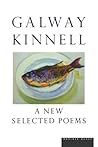
― A New Selected Poems
I can feel she has got out of bed.
That means it is seven a.m.
I have been lying with eyes shut,
thinking, or possibly dreaming,
of how she might look if, at breakfast,
I spoke about the hidden place in her
which, to me, is like a soprano’s tremolo,
and right then, over toast and bramble jelly,
if such things are possible, she came.
I imagine she would show it while trying to conceal it.
I imagine her hair would fall about her face
and she would become apparently downcast,
as she does at a concert when she is moved.
The hypnopompic play passes, and I open my eyes
and there she is, next to the bed,
bending to a low drawer, picking over
various small smooth black, white,
and pink items of underwear. She bends
so low her back runs parallel to the earth,
but there is no sway in it, there is little burden, the day has hardly begun.
The two mounds of muscles for walking, leaping, lovemaking,
lift toward the east—what can I say?
Simile is useless; there is nothing like them on earth.
Her breasts fall full; the nipples
are deep pink in the glare shining up through the iron bars
of the gate under the earth where those who could not love
press, wanting to be born again.
I reach out and take her wrist
and she falls back into bed and at once starts unbuttoning my pajamas.
Later, when I open my eyes, there she is again,
rummaging in the same low drawer.
The clock shows eight. Hmmm.
With huge, silent effort of great,
mounded muscles the earth has been turning.
She takes a piece of silken cloth
from the drawer and stands up. Under the falls
of hair her face has become quiet and downcast,
as if she will be, all day among strangers,
looking down inside herself at our rapture.”
― A New Selected Poems
“The Correspondence-School Instructor Says Goodbye to His Poetry Students
Goodbye, lady in Bangor, who sent me
snapshots of yourself, after definitely hinting
you were beautiful; goodbye,
Miami Beach urologist, who enclosed plain
brown envelopes for the return of your very
“Clinical Sonnets”; goodbye, manufacturer
of brassieres on the Coast, whose eclogues
give the fullest treatment in literature yet
to the sagging breast motif; goodbye, you in San Quentin,
who wrote, “Being German my hero is Hitler,”
instead of “Sincerely yours,” at the end of long,
neat-scripted letters extolling the Pre-Raphaelites:
I swear to you, it was just my way
of cheering myself up, as I licked
the stamped, self-addressed envelopes,
the game I had of trying to guess
which one of you, this time,
had poisoned his glue. I did care.
I did read each poem entire.
I did say everything I thought
in the mildest words I knew. And now,
in this poem, or chopped prose, no better,
I realize, than those troubled lines
I kept sending back to you,
I have to say I am relieved it is over:
at the end I could feel only pity
for that urge toward more life
your poems kept smothering in words, the smell
of which, days later, tingled in your nostrils
as new, God-given impulses
to write.
Goodbye,
you who are, for me, the postmarks again
of imaginary towns—Xenia, Burnt Cabins, Hornell—
their solitude given away in poems, only their loneliness kept.
Galway Kinnell”
― Three Books: Body Rags; Mortal Acts, Mortal Words; The Past
Goodbye, lady in Bangor, who sent me
snapshots of yourself, after definitely hinting
you were beautiful; goodbye,
Miami Beach urologist, who enclosed plain
brown envelopes for the return of your very
“Clinical Sonnets”; goodbye, manufacturer
of brassieres on the Coast, whose eclogues
give the fullest treatment in literature yet
to the sagging breast motif; goodbye, you in San Quentin,
who wrote, “Being German my hero is Hitler,”
instead of “Sincerely yours,” at the end of long,
neat-scripted letters extolling the Pre-Raphaelites:
I swear to you, it was just my way
of cheering myself up, as I licked
the stamped, self-addressed envelopes,
the game I had of trying to guess
which one of you, this time,
had poisoned his glue. I did care.
I did read each poem entire.
I did say everything I thought
in the mildest words I knew. And now,
in this poem, or chopped prose, no better,
I realize, than those troubled lines
I kept sending back to you,
I have to say I am relieved it is over:
at the end I could feel only pity
for that urge toward more life
your poems kept smothering in words, the smell
of which, days later, tingled in your nostrils
as new, God-given impulses
to write.
Goodbye,
you who are, for me, the postmarks again
of imaginary towns—Xenia, Burnt Cabins, Hornell—
their solitude given away in poems, only their loneliness kept.
Galway Kinnell”
― Three Books: Body Rags; Mortal Acts, Mortal Words; The Past
“When a group of people get up from a table, the table doesn’t
know which way any of them will go.”
― Three Books: Body Rags; Mortal Acts, Mortal Words; The Past
know which way any of them will go.”
― Three Books: Body Rags; Mortal Acts, Mortal Words; The Past
“Isn't it worth missing whatever joy / you might have dreamed, to wake in the night and find / you and your beloved are holding hands in your sleep?”
―
―
“The secret title of every good poem might be 'Tenderness”
―
―
“It was more or less late afternoon
and I came over a hilltop
and smack in front of me was the sunset.”
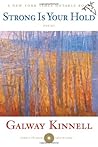
― Strong Is Your Hold
and I came over a hilltop
and smack in front of me was the sunset.”
― Strong Is Your Hold
“How many nights must it take
one such as me to learn
that we aren’t, after all, made
from that bird that flies out of its ashes,
that for us
as we go up in flames, our one work
is
to open ourselves, to be
the flames?”
―
one such as me to learn
that we aren’t, after all, made
from that bird that flies out of its ashes,
that for us
as we go up in flames, our one work
is
to open ourselves, to be
the flames?”
―
“This happened to your father and to you, Galway-sick to stay, longing
to come up against the ends of the earth, and climb over.”
―
to come up against the ends of the earth, and climb over.”
―
“I have always intended to live forever; but not until now, to live now.”
―
―
“maybe there is no sublime; only the shining of the amnion's tatters.”
― Selected Poems
― Selected Poems
“What do they sing, the last birds
coasting down the twilight,
banking
across woods filled with darkness, their
frayed wings
curved on the world like a lover’s arms
which form, night after night, in sleep,
an irremediable absence?”
― Body Rags: Poems
coasting down the twilight,
banking
across woods filled with darkness, their
frayed wings
curved on the world like a lover’s arms
which form, night after night, in sleep,
an irremediable absence?”
― Body Rags: Poems
“For here, the moment all the spaces along the road between here and there - which the young know are infinite and all others know are not - get used up, that's it.”
― The Past
― The Past