Goodreads helps you follow your favorite authors. Be the first to learn about new releases!
Start by following Elizabeth Pisani.
Showing 1-13 of 13
“We, the people of Indonesia, hereby declare the independence of Indonesia. Matters relating to the transfer of power etc. will be executed carefully and as soon as possible.’ Indonesia has been working on that ‘etc.’ ever since.”
― Indonesia, Etc.: Exploring the Improbable Nation
― Indonesia, Etc.: Exploring the Improbable Nation
“A journalist's work depends on a willingness to ask questions of people who are better informed and more powerful than you.”
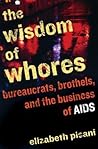
― The Wisdom of Whores: Bureaucrats, Brothels, and the Business of AIDS
― The Wisdom of Whores: Bureaucrats, Brothels, and the Business of AIDS
“Yes, our social and economic circumstances shape decisions we make about all sorts of things in life, including sex. Sometimes they rob us of the power to make any decisions at all. But of all human activity, sex is among the least likely to fit neatly into the blueprint of rational decision making favoured by economists. To quote my friend Claire in Istanbul, sex is about 'conquest, fantasy, projection, infatuation, mood, anger, vanity, love, pissing off your parents, the risk of getting caught, the pleasure of cuddling afterwards, the thrill of having a secret, feeling desirable, feeling like a man, feeling like a woman, bragging to your mates the next day, getting to see what someone looks like naked and a million-and-one-other-things.' When sex isn't fun, it is often lucrative, or part of a bargain which gives you access to something you want or need.
If HIV is spread by 'poverty and gender equality', how come countries that have plenty of both, such as Bangladesh, have virtually no HIV? How come South Africa and Botswana, which have the highest female literacy and per capita incomes in Africa, are awash with HIV, while countries that score low on both - such as Guinea, Somalia, Mali, and Sierra Leone - have epidemics that are negligible by comparison? How come in country after country across Africa itself, from Cameroon to Uganda to Zimbabwe and in a dozen other countries as well, HIV is lowest in the poorest households, and highest in the richest households? And how is it that in many countries, more educated women are more likely to be infested with HIV than women with no schooling?
For all its cultural and political overtones, HIV is an infectious disease. Forgive me for thinking like an epidemiologist, but it seems to me that if we want to explain why there is more of it in one place than another, we should go back and take a look at the way it is spread.”
― The Wisdom of Whores: Bureaucrats, Brothels, and the Business of AIDS
If HIV is spread by 'poverty and gender equality', how come countries that have plenty of both, such as Bangladesh, have virtually no HIV? How come South Africa and Botswana, which have the highest female literacy and per capita incomes in Africa, are awash with HIV, while countries that score low on both - such as Guinea, Somalia, Mali, and Sierra Leone - have epidemics that are negligible by comparison? How come in country after country across Africa itself, from Cameroon to Uganda to Zimbabwe and in a dozen other countries as well, HIV is lowest in the poorest households, and highest in the richest households? And how is it that in many countries, more educated women are more likely to be infested with HIV than women with no schooling?
For all its cultural and political overtones, HIV is an infectious disease. Forgive me for thinking like an epidemiologist, but it seems to me that if we want to explain why there is more of it in one place than another, we should go back and take a look at the way it is spread.”
― The Wisdom of Whores: Bureaucrats, Brothels, and the Business of AIDS
“Doing honest analysis that would lead to programme improvement is a glorious way to be hated by just about everyone.”
― The Wisdom of Whores: Bureaucrats, Brothels, and the Business of AIDS
― The Wisdom of Whores: Bureaucrats, Brothels, and the Business of AIDS
“All you have to do to make money in Indonesia is to figure out what no one else is doing,' Ade said. It made me think of how often I had noticed copy-cat businesses in smaller Indonesian towns. I was caught out by it early on. In Waikabubak, for example, every third shop prints photos. Even the little tailor opposite the market has a sideline in photo printing. This made me lazy; having promised to print photos and send them to people before I left Waikabubak, I thought: I'll do it in the next town I go to. But the next town is all pharmacies- there's not a single photo printer. Here it's wall-to-wall perfume sellers, there it's all hair salons... 'People see a business doing well, and they just copy it,' said Ade. 'The concept of market saturation is not well understood.”
― Indonesia, Etc.: Exploring the Improbable Nation
― Indonesia, Etc.: Exploring the Improbable Nation
“There’s no doubt that Indonesia’s infrastructure is in a parlous state. It’s the largest country in the world to consist entirely of islands, yet the World Economic Forum ranked it 104 out of 139 countries for its port infrastructure; even landlocked countries such as Zimbabwe, Switzerland and Botswana reported better access to ports. It did nearly as badly on roads, air transport and electricity.*”
― Indonesia Etc.: Exploring the Improbable Nation
― Indonesia Etc.: Exploring the Improbable Nation
“More dizzying in its diversity, but also bound more tightly together in ways that I had not expected, it is a nation quite different from the one I thought I knew.”
― Indonesia, Etc.: Exploring the Improbable Nation
― Indonesia, Etc.: Exploring the Improbable Nation
“Indonesia is forever curdling the expectations.”
― Indonesia, Etc.: Exploring the Improbable Nation
― Indonesia, Etc.: Exploring the Improbable Nation
“When the country’s founding fathers declared independence from Dutch colonists in 1945, the declaration read, in its entirety: ‘We, the people of Indonesia, hereby declare the independence of Indonesia. Matters relating to the transfer of power etc. will be executed carefully and as soon as possible.’ Indonesia has been working on that ‘etc.’ ever since.”
― Indonesia Etc.: Exploring the Improbable Nation
― Indonesia Etc.: Exploring the Improbable Nation
“Local NGOs are like high-fashion boutiques. They sell very high-quality products – the Prada bag, the Armani frock – to a small number of people at very high prices.”
― The Wisdom of Whores: Bureaucrats, Brothels and the Business of Aids
― The Wisdom of Whores: Bureaucrats, Brothels and the Business of Aids
“Bullshit Bingo is a game we play in really, really boring meetings. You make a card with all the push button development-speak phrases and then check them off everytime a speaker trots one out. But to win, you have to stay awake.”
― The Wisdom of Whores: Bureaucrats, Brothels, and the Business of AIDS
― The Wisdom of Whores: Bureaucrats, Brothels, and the Business of AIDS
“In Nigeria, the Global Fund to Fight AIDS, Tuberculosis and Malaria has granted US$74 million so far for HIV, all of it for work with the ‘general population’. Nigeria gets large slabs from PEPFAR, too, US$105 million in 2006 and rising; 90 per cent of the prevention money was going to ‘general population’ interventions.4 ‘Youth’ is an especially popular focus for prevention efforts in Nigeria, even though HIV tests in several thousand recent graduates from technical college showed that just 1.2 per cent were infected–hardly a sign of an epidemic that is out of control among young people in the general population. Meanwhile, Nigeria has a vibrant sex industry. I can’t say how vibrant because the national programme has until now more or less ignored commercial sex. In a national survey in 2003, 3 per cent of men said they visited a prostitute in the last year, so that would be 1.2 million clients right there, and the probable total is a lot higher.5 There are no estimates of how many women sell sex, and there’s no routine HIV surveillance among sex workers. Sporadic studies are not encouraging. In 2003, 21 per cent of sex workers in the western city of Ibadan and 48 per cent in nearby Saki were infected with HIV.6 Of course, we don’t have a clue how much HIV is spread in sex between men in Nigeria, because no one has asked–the first studies got underway only in 2007. Scattered assessments in drug injectors in eight Nigerian cities in the early 2000s showed that they were as yet no more likely to be infected with HIV than non-injectors, which suggests that there’s still a chance to prevent a major epidemic in this group.7 But how much of the millions of dollars sloshing around for HIV prevention in Nigeria is being spent on drug injectors? As of mid-2007, none.”
― The Wisdom of Whores: Bureaucrats, Brothels, and the Business of AIDS
― The Wisdom of Whores: Bureaucrats, Brothels, and the Business of AIDS
“Jakarta has no mass transit system to speak of, so traffic jams are legendary... Each year, another 200,000 cars pour onto the streets. That means more traffic, and longer commutes. The chauffeur-driven rich kit their cars out with mobile offices so that they can use the time they spend on gridlocked roads more productively. A few years ago, the city government decided it would cut congestion on the city's main arteries by insisting that in rush hour, each car must have at least three passengers. Again, Jakarta's infinitely creative residents made the most of the change. Within days, the pavements of the feeder roads were crowded with unemployed people hiring themselves out as 'jockeys', extra passengers for rich people's smooth, air-conditioned cars.”
― Indonesia, Etc.: Exploring the Improbable Nation
― Indonesia, Etc.: Exploring the Improbable Nation