
Discover new books on Goodreads
See if your friends have read any of Elizabeth Pisani's books
Elizabeth Pisani’s Followers (207)


15,593 books
|
78 friends

460 books
|
36 friends

223 books
|
50 friends

229 books
|
1,043 friends

3,332 books
|
97 friends

324 books
|
12 friends

367 books
|
181 friends

627 books
|
417 friends
More friends…
Elizabeth Pisani
Goodreads Author
Member Since
September 2007


|
Indonesia, Etc: Exploring the Improbable Nation
—
published
2014
—
34 editions
|
|

|
The Wisdom of Whores: Bureaucrats, Brothels, and the Business of AIDS
—
published
2008
—
29 editions
|
|

|
Dirt: The Filthy Reality of Everyday Life
by
—
published
2011
—
2 editions
|
|

|
Granta Italia n. 6: L'invisibile
by |
|

|
Guidelines for Second Generation HIV Surveillance
—
published
2000
|
|
|
|
Acting Early to Prevent AIDS: The Case of Senegal
—
published
1999
|
|
|
|
National AIDS Programmes: A Guide to Monitoring and Evaluation
by
—
published
2000
|
|
|
|
Researching Regional Consensus on Improved Behavioural and Serosurveillance for HIV: Report from a Regional Conference in East Africa
—
published
1998
|
|
|
|
Report on the Global HIV/AIDS Epidemic - June 2000
by
—
published
2000
|
|
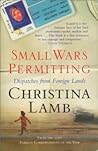
Elizabeth
rated a book really liked it
 Elizabeth said:
"
Christina Lamb has always been one of my favourite correspondents. Mostly because she just gets out there and talks to people. And in large part, too, because she's a really lovely writer with a pronounced sense of the absurd. It's nice to be reminde
...more
"
Elizabeth said:
"
Christina Lamb has always been one of my favourite correspondents. Mostly because she just gets out there and talks to people. And in large part, too, because she's a really lovely writer with a pronounced sense of the absurd. It's nice to be reminde
...more
"

“We, the people of Indonesia, hereby declare the independence of Indonesia. Matters relating to the transfer of power etc. will be executed carefully and as soon as possible.’ Indonesia has been working on that ‘etc.’ ever since.”
― Indonesia, Etc.: Exploring the Improbable Nation
― Indonesia, Etc.: Exploring the Improbable Nation
“A journalist's work depends on a willingness to ask questions of people who are better informed and more powerful than you.”
― The Wisdom of Whores: Bureaucrats, Brothels, and the Business of AIDS
― The Wisdom of Whores: Bureaucrats, Brothels, and the Business of AIDS
“Yes, our social and economic circumstances shape decisions we make about all sorts of things in life, including sex. Sometimes they rob us of the power to make any decisions at all. But of all human activity, sex is among the least likely to fit neatly into the blueprint of rational decision making favoured by economists. To quote my friend Claire in Istanbul, sex is about 'conquest, fantasy, projection, infatuation, mood, anger, vanity, love, pissing off your parents, the risk of getting caught, the pleasure of cuddling afterwards, the thrill of having a secret, feeling desirable, feeling like a man, feeling like a woman, bragging to your mates the next day, getting to see what someone looks like naked and a million-and-one-other-things.' When sex isn't fun, it is often lucrative, or part of a bargain which gives you access to something you want or need.
If HIV is spread by 'poverty and gender equality', how come countries that have plenty of both, such as Bangladesh, have virtually no HIV? How come South Africa and Botswana, which have the highest female literacy and per capita incomes in Africa, are awash with HIV, while countries that score low on both - such as Guinea, Somalia, Mali, and Sierra Leone - have epidemics that are negligible by comparison? How come in country after country across Africa itself, from Cameroon to Uganda to Zimbabwe and in a dozen other countries as well, HIV is lowest in the poorest households, and highest in the richest households? And how is it that in many countries, more educated women are more likely to be infested with HIV than women with no schooling?
For all its cultural and political overtones, HIV is an infectious disease. Forgive me for thinking like an epidemiologist, but it seems to me that if we want to explain why there is more of it in one place than another, we should go back and take a look at the way it is spread.”
― The Wisdom of Whores: Bureaucrats, Brothels, and the Business of AIDS
If HIV is spread by 'poverty and gender equality', how come countries that have plenty of both, such as Bangladesh, have virtually no HIV? How come South Africa and Botswana, which have the highest female literacy and per capita incomes in Africa, are awash with HIV, while countries that score low on both - such as Guinea, Somalia, Mali, and Sierra Leone - have epidemics that are negligible by comparison? How come in country after country across Africa itself, from Cameroon to Uganda to Zimbabwe and in a dozen other countries as well, HIV is lowest in the poorest households, and highest in the richest households? And how is it that in many countries, more educated women are more likely to be infested with HIV than women with no schooling?
For all its cultural and political overtones, HIV is an infectious disease. Forgive me for thinking like an epidemiologist, but it seems to me that if we want to explain why there is more of it in one place than another, we should go back and take a look at the way it is spread.”
― The Wisdom of Whores: Bureaucrats, Brothels, and the Business of AIDS
Topics Mentioning This Author
| topics | posts | views | last activity | |
|---|---|---|---|---|
| Challenge: 50 Books: Dini's List for 2009 - 50 and ongoing | 87 | 423 | Jan 02, 2010 07:37AM | |
You'll love this ...:
 New Purchases - 2015
|
1214 | 204 | Dec 31, 2015 11:57AM | |
| 2026 Reading Chal...: Bella's 2016 Challenges | 5 | 45 | Jan 21, 2016 04:15PM | |
| 2026 Reading Chal...: The TBR Randomiser Challenge - 2016 | 452 | 1296 | Jan 25, 2017 06:41AM | |
|
Read Women:
Women Author Challenge 2018
|
33 | 184 | Nov 15, 2018 08:42AM | |
| 21st Century Lite...: What 21st Century Nonfiction Stands Above the Rest? (12/2/18) | 30 | 101 | Dec 08, 2018 02:53PM | |
|
Non Fiction Book ...:
Voting for August/September Books of the Month (First Round closed)
|
34 | 33 | Jul 08, 2019 09:36AM | |
| Read Women: The A-Z of Women Authors | 76 | 1052 | Sep 08, 2021 01:27AM | |
| Around the Year i...: Bill's 2024 ATY Reading Challenge Plan | 2 | 21 | Feb 08, 2024 10:05AM |