Goodreads helps you follow your favorite authors. Be the first to learn about new releases!
Start by following Herbert Benson.

Showing 1-28 of 28
“You will learn that evoking the Relaxation Response is extremely simple if you follow a very short set of instructions which incorporate four essential elements: (1) a quiet environment; (2) a mental device such as a word or a phrase which should be repeated in a specific fashion over and over again; (3) the adoption of a passive attitude, which is perhaps the most important of the elements; and (4) a comfortable position. Your appropriate practice of these four elements for ten to twenty minutes once or twice daily should markedly enhance your well-being.”
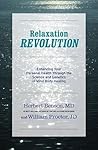
― The Relaxation Response: A Harvard physician's ten-minute mind-body technique to ease stress, anxiety, depression, and high blood pressure
― The Relaxation Response: A Harvard physician's ten-minute mind-body technique to ease stress, anxiety, depression, and high blood pressure
“kneeling, swaying, or sitting in a cross-legged position are believed to have evolved to prevent falling asleep. You should be comfortable and relaxed.”
― The Relaxation Response: A Harvard physician's ten-minute mind-body technique to ease stress, anxiety, depression, and high blood pressure
― The Relaxation Response: A Harvard physician's ten-minute mind-body technique to ease stress, anxiety, depression, and high blood pressure
“emblem. The meditator would place his head between his knees and whisper hymns and repeat the name of a magic emblem. Repetition of the magic emblem was used as the object to dwell upon and would chase away distractions and cause the “demons and hostile angels to flight.” A state of ecstasy was reached, which Gershom G. Scholem, a scholar of Jewish mysticism, has described as “an attitude of deep self-oblivion.”
― The Relaxation Response: A Harvard physician's ten-minute mind-body technique to ease stress, anxiety, depression, and high blood pressure
― The Relaxation Response: A Harvard physician's ten-minute mind-body technique to ease stress, anxiety, depression, and high blood pressure
“One way to know whether hibernation is occurring is to measure the body’s rectal temperature. During hibernation this temperature decreases. Meditators, it appears, do not hibernate. Their rectal temperatures do not decrease during the practice of meditation.”
― The Relaxation Response: A Harvard physician's ten-minute mind-body technique to ease stress, anxiety, depression, and high blood pressure
― The Relaxation Response: A Harvard physician's ten-minute mind-body technique to ease stress, anxiety, depression, and high blood pressure
“Dr. Jean Martin Charcot, a famous nineteenth-century French neurologist, once stated that “the best inspirer of hope is the best physician.” The success of the shaman in many primitive societies has been attributed primarily to psychological factors rather than to the intrinsic value of the therapies themselves.”
― The Mind Body Effect: How to Counteract the Harmful Effects of Stress
― The Mind Body Effect: How to Counteract the Harmful Effects of Stress
“Latham was aware of this potential when he said: “Among the perils of disease we must not refuse to reckon the errors of physicians.”
― The Mind Body Effect: How to Counteract the Harmful Effects of Stress
― The Mind Body Effect: How to Counteract the Harmful Effects of Stress
“Then, when your mind is quiet, when focusing has opened a door in your mind, visualize an outcome that is meaningful to you. If you are intent on alleviating a pain, envision yourself without the pain. If you are concerned with your performance at work or on the golf course or tennis court, imagine yourself performing well in these venues. Whatever your goal, these two steps can be powerful, allowing anyone to reap the benefits of the Relaxation Response and take advantage of a quiet mind to rewire thoughts and actions in desired directions.”
― The Relaxation Response: A Harvard physician's ten-minute mind-body technique to ease stress, anxiety, depression, and high blood pressure
― The Relaxation Response: A Harvard physician's ten-minute mind-body technique to ease stress, anxiety, depression, and high blood pressure
“Sit down alone and in silence. Lower your head, shut your eyes, breathe out gently, and imagine yourself looking into your own heart. As you breathe out, say “Lord Jesus Christ, have mercy on me.” Say it, moving your lips gently, or simply say it in your mind. Try to put all other thoughts aside. Be calm, be patient and repeat the process very frequently.”
― The Relaxation Response: A Harvard physician's ten-minute mind-body technique to ease stress, anxiety, depression, and high blood pressure
― The Relaxation Response: A Harvard physician's ten-minute mind-body technique to ease stress, anxiety, depression, and high blood pressure
“man gained direct knowledge of God by losing all awareness of himself. Referring to his title, the author depicts a passive attitude as the way “to cover,” or forget, all distractions: “Try to cover these thoughts with a thick cloud of forgetting as though they never existed neither for you nor for any other man. And if they continue to arise, continue to put them down.”
― The Relaxation Response: A Harvard physician's ten-minute mind-body technique to ease stress, anxiety, depression, and high blood pressure
― The Relaxation Response: A Harvard physician's ten-minute mind-body technique to ease stress, anxiety, depression, and high blood pressure
“Usually, because she became too tired during the first stages of the activity and too sore the next day, she quickly gave up.”
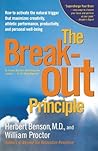
― The Breakout Principle: How to Activate the Natural Trigger That Maximizes Creativity, Athletic Performance, Productivity and Personal Well-Being
― The Breakout Principle: How to Activate the Natural Trigger That Maximizes Creativity, Athletic Performance, Productivity and Personal Well-Being
“In the Judaic literature, one also finds portrayals of contemplative or meditative exercises. As in other religious literatures, the end purpose here is union with God. The earliest form of mysticism in Judaism is Merkabolism, which dates back approximately to the first century A.D., the time of the Second Temple. Practices of this sect included various forms of asceticism, including fasting. Merkabolism’s meditative exercises focused on body posture and the dwelling upon hymns and a magic”
― The Relaxation Response: A Harvard physician's ten-minute mind-body technique to ease stress, anxiety, depression, and high blood pressure
― The Relaxation Response: A Harvard physician's ten-minute mind-body technique to ease stress, anxiety, depression, and high blood pressure
“He goes on to discuss the element of “dwelling upon” and advises that his readers can develop “special ways, tricks, private techniques, and spiritual devices” in order to achieve contemplation. One means is the use of a single syllable such as “God” or “love”:”
― The Relaxation Response: A Harvard physician's ten-minute mind-body technique to ease stress, anxiety, depression, and high blood pressure
― The Relaxation Response: A Harvard physician's ten-minute mind-body technique to ease stress, anxiety, depression, and high blood pressure
“Dr. Arthur K. Shapiro of the Payne-Whitney Psychiatric Clinic at New York Hospital has adopted a broader view of the placebo. He describes the placebo as any treatment (or any part of a treatment) which does not have a specific action on the patient’s symptoms or disease but which nonetheless may have an effect upon the patient.”
― The Mind Body Effect: How to Counteract the Harmful Effects of Stress
― The Mind Body Effect: How to Counteract the Harmful Effects of Stress
“(1) A Quiet Environment Ideally, you should choose a quiet, calm environment with as few distractions as possible. A quiet room is suitable, as is a place of worship. The quiet environment contributes to the effectiveness of the repeated word or phrase by making it easier to eliminate distracting thoughts. (2) A Mental Device To shift the mind from logical, externally oriented thought, there should be a constant stimulus: a sound, word, or phrase repeated silently or aloud; or fixed gazing at an object. Since one of the major difficulties in the elicitation of the Relaxation Response is “mind wandering,” the repetition of the word or phrase is a way to help”
― The Relaxation Response: A Harvard physician's ten-minute mind-body technique to ease stress, anxiety, depression, and high blood pressure
― The Relaxation Response: A Harvard physician's ten-minute mind-body technique to ease stress, anxiety, depression, and high blood pressure
“If you wish to acquire recollection by practicing this holy exercise, remember to make use of a very brief means of ridding yourself of various distracting thoughts. This is that you say “No” to them when they come to you during prayer.”
― The Relaxation Response: A Harvard physician's ten-minute mind-body technique to ease stress, anxiety, depression, and high blood pressure
― The Relaxation Response: A Harvard physician's ten-minute mind-body technique to ease stress, anxiety, depression, and high blood pressure
“Commercial interests capitalize upon people’s expectations of perpetual health. The exploitation of these expectations creates a market for products which are not only useless and costly but also carry risks. The perception of pain in one’s joints, muscles or head has become a target of many different pills.”
― The Mind Body Effect: How to Counteract the Harmful Effects of Stress
― The Mind Body Effect: How to Counteract the Harmful Effects of Stress
“You will know that the Lord will come and enter your soul if the doors, which are your senses, are closed…But you will answer that it would be wrong to say “no” to God and he alone is expected. But God comes in some other way of which you know nothing.”
― The Relaxation Response: A Harvard physician's ten-minute mind-body technique to ease stress, anxiety, depression, and high blood pressure
― The Relaxation Response: A Harvard physician's ten-minute mind-body technique to ease stress, anxiety, depression, and high blood pressure
“Regular elicitation of the Relaxation Response can prevent, and compensate for, the damage incurred by frequent nervous reactions that pulse through our hearts and bodies.”
― The Relaxation Response: A Harvard physician's ten-minute mind-body technique to ease stress, anxiety, depression, and high blood pressure
― The Relaxation Response: A Harvard physician's ten-minute mind-body technique to ease stress, anxiety, depression, and high blood pressure
“Lord, Jesus Christ, Son of God, have mercy upon me.” Let this be its constant occupation, never to be abandoned. For this work, by keeping the mind free from dreaming, renders it unassailable to suggestions of the enemy and leads it to Divine desire and love….”
― The Relaxation Response: A Harvard physician's ten-minute mind-body technique to ease stress, anxiety, depression, and high blood pressure
― The Relaxation Response: A Harvard physician's ten-minute mind-body technique to ease stress, anxiety, depression, and high blood pressure
“As a result of these legal actions, “defensive medicine” is being practiced. Defensive medicine involves the ordering of a multitude of tests, regardless of their medical necessity or expense. Therefore, if a malpractice suit is filed, the physician cannot be accused of failure to obtain all “relevant” diagnostic information. Defensive medicine is a poor practice of medicine, as it is excessively expensive and invites iatrogenic disease. Thus the legal profession, due to its own lucrative role in malpractice suits, helps to perpetuate this vicious cycle.”
― The Mind Body Effect: How to Counteract the Harmful Effects of Stress
― The Mind Body Effect: How to Counteract the Harmful Effects of Stress
“Therapies we can purchase and caregivers we can consult, whether available through conventional or unconventional medicine, are still far more impressive to us than our own hearts and minds, lungs and hopes, muscles and beliefs, even though they sustain us day in and day out.”
― The Relaxation Response: A Harvard physician's ten-minute mind-body technique to ease stress, anxiety, depression, and high blood pressure
― The Relaxation Response: A Harvard physician's ten-minute mind-body technique to ease stress, anxiety, depression, and high blood pressure
“However, it appears that medicine in the Western world, which was once an integration of both science and art, has shifted to an emphasis on science at the expense of art.”
― The Mind Body Effect: How to Counteract the Harmful Effects of Stress
― The Mind Body Effect: How to Counteract the Harmful Effects of Stress
“Sir William Osler, the first Professor of Medicine at Johns Hopkins Medical School and a unique teacher and clinician, said: “One of the first duties of the physician is to educate… [people] not to take medicine.” You should not assume a physician is inadequate if he does not give a prescription at the end of your visit.”
― The Mind Body Effect: How to Counteract the Harmful Effects of Stress
― The Mind Body Effect: How to Counteract the Harmful Effects of Stress
“(1) A Quiet Environment Ideally, you should choose a quiet, calm environment with as few distractions as possible. A quiet room is suitable, as is a place of worship. The quiet environment contributes to the effectiveness of the repeated word or phrase by making it easier to eliminate distracting thoughts. (2) A Mental Device To shift the mind from logical, externally oriented thought, there should be a constant stimulus: a sound, word, or phrase repeated silently or aloud; or fixed gazing at an object. Since one of the major difficulties in the elicitation of the Relaxation Response is “mind wandering,” the repetition”
― The Relaxation Response: A Harvard physician's ten-minute mind-body technique to ease stress, anxiety, depression, and high blood pressure
― The Relaxation Response: A Harvard physician's ten-minute mind-body technique to ease stress, anxiety, depression, and high blood pressure
“sound or word; of course, your eyes are open if you are gazing. Attention to the normal rhythm of breathing is also useful and enhances the repetition of the sound or the word. (3) A Passive Attitude When distracting thoughts occur, they are to be disregarded and attention redirected to the repetition or gazing; you should not worry about how well you are performing the technique, because this may well prevent the Relaxation Response from occurring. Adopt a “let it happen” attitude. The passive attitude is perhaps the most important element in eliciting the Relaxation Response. Distracting thoughts will occur. Do not worry about them. When these thoughts do present themselves and you become aware of them, simply return to the repetition of the mental device. These other thoughts do not mean you are performing the technique incorrectly. They are to be expected. (4) A Comfortable Position A comfortable posture is important so that there is no undue muscular tension. Some methods call for a sitting position. A few practitioners use the crosslegged “lotus” position of the Yogi. If you are lying down, there is a tendency to fall asleep. As we have noted previously, the various postures of”
― The Relaxation Response: A Harvard physician's ten-minute mind-body technique to ease stress, anxiety, depression, and high blood pressure
― The Relaxation Response: A Harvard physician's ten-minute mind-body technique to ease stress, anxiety, depression, and high blood pressure
“Dr. William J. Mayo, one of the founders of Minnesota’s Mayo Clinic, remarked: “One meets with many men who have been fine students, and have stood high in their classes, who have great knowledge of medicine but very little wisdom in application. They have mastered the science, and have failed in the understanding of the human being.”
― The Mind Body Effect: How to Counteract the Harmful Effects of Stress
― The Mind Body Effect: How to Counteract the Harmful Effects of Stress
“The placebo effect, or the effect of nonspecific factors of treatment, was not studied further because there was no profit in it.”
― The Mind Body Effect: How to Counteract the Harmful Effects of Stress
― The Mind Body Effect: How to Counteract the Harmful Effects of Stress