Goodreads helps you follow your favorite authors. Be the first to learn about new releases!
Start by following Mark Elvin.

Showing 1-7 of 7
“One of the most momentous, yet all but invisible, psychological changes in human history has been the intensification of a sense of insecurity and alienation from the world around us that arose when we became no longer able easily to get food in a few hours just by gathering it, or hunting it, but had to organize ourselves in a purposeful fashion simply to survive. This change is undocumented, though occasional clues can be gained about it from the comments of the few still alive who have lived through a version of it, such as old Australian Aboriginals. Its essence is subjection to a pervasive but unacknowledged, indeed unnamed, fear. It is the foundation of civilization.”
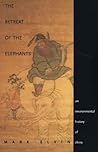
― The Retreat of the Elephants: An Environmental History of China
― The Retreat of the Elephants: An Environmental History of China
“It must be remembered: fields end freedom. Whatever the astonishing subsequent achievements of civilization, it had a little recognized price: humanity itself became one of its own domesticated species. We enslaved ourselves to conquer.”
―
―
“I have taken a different approach. One that I hope is more easily accessible to the reader’s emotional imagination, though less analytically systematic. I have summoned back into life again—through my own translations from a selection of popular Chinese novel sand poems—some of the imagined worlds in which Chinese have passed their daily reality during the last two hundred years. I have tried to convey something of what it felt like to be a Chinese, living in Chinese society, in different settings of status, age, and gender, and how this has changed over time. For reasons of method, I have looked at a small number of organically coherent emotional spaces, contained in individual works or parts of works, and considered them in detail. ... It would be pretending to more wisdom than I have to claim that the selection I have made is the result of a rigorous intellectual winnowing process from a harvest of widespread reading in late-imperial and modern Chinese literature. Honesty compels the admission that it is more the outcome of chance, serendipity, and whatever happened to catch my imagination, for reasons that I am probably in no position to do more than guess at. ... In so far as there has been a guiding principle behind my choices it has been the desire to show as much as the constraints of space allow of the contrasts among those in different social position, different periods, and different ideologies.”
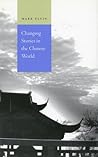
― Changing Stories in the Chinese World
― Changing Stories in the Chinese World
“[There is a] gulf that can exist between different emotional and perceptual worlds—all 'Chinese'—in recent times [post-Deng Xiaoping].”
― Changing Stories in the Chinese World
― Changing Stories in the Chinese World
“Perhaps the most overpowering contrast [with the West] is the virtual absence in premodern China of the idea of a transcendent creator God who is distinct from Nature in a fundamental qualitative sense. The Chinese had notions of a supreme god in various guises (that is, ‘hypatotheism’), and also, as we have seen, of a somewhat demiurge-like ‘transformer’ constantly reshaping the cosmos.”
― The Retreat of the Elephants: An Environmental History of China
― The Retreat of the Elephants: An Environmental History of China
“The resurrection of this once popular work [Ping Jinya's forgotten bestseller of the 1930s, Tides in the Human Sea] is a reminder that the histories of 'Chinese literature' currently in circulation are far from being histories of what most people actually read.”
― Changing Stories in the Chinese World
― Changing Stories in the Chinese World
“Human history has no unique pattern of intelligibility.”
― Changing Stories in the Chinese World
― Changing Stories in the Chinese World