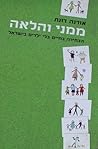
Goodreads helps you follow your favorite authors. Be the first to learn about new releases!
Start by following Orna Donath.

Showing 1-30 of 38
“An early desire for nonmotherhood is seen as the primary deviation a girl can take from her path toward becoming a socially acceptable woman, and it is often thought to be something that will change, or align, with time.”
― Regretting Motherhood
― Regretting Motherhood
“Women, especially those over the age of 30, are caught within a mind-game of threats and warnings: Your time is running out for making a family. You may think that you’re not interested in being a mother, but you are wrong; the desire will strike you eventually, but then it will be too late. You are going to regret this.”
― Regretting Motherhood
― Regretting Motherhood
“When it comes to reproduction and the transition to motherhood, it is crucial to cast doubt on this rhetoric of all-embracing choice: how much room to maneuver do women actually have if we are free to choose only what society wants us to choose?”
― Regretting Motherhood
― Regretting Motherhood
“...sometimes, a couple’s home will turn into an arena of threats and coercion, where unborn children become instruments of power and negotiation—and sometimes, children are born to preserve the relationship. Despite the growing notion that female-male partnerships are equal and symmetrical, this presumed balance is not necessarily reflected in reality. This means that the different power structures—manifest, latent, or invisible—that are often formed between partners attest to an ongoing gender inequality when it comes to deliberations such as the decision to have children.”
― Regretting Motherhood
― Regretting Motherhood
“What does “worth it” mean? I don’t know. What is worth it? I don’t see the sense in the comparison. It’s like saying, “A child’s smile is worth everything.” It’s bullshit. It’s not true at all. One has nothing to do with the other—what’s the connection? It’s like taking a knife and cutting a person and then smiling at them. Is it worth the smile? There is no connection. Why should you suffer for it? What is this masochism? Okay, “masochism” may involve more pleasant situations. What is the connection? I don’t see any reason to suffer for a child’s smile.”
― Regretting Motherhood
― Regretting Motherhood
“Today I am in my mid-30s and I still do not hear my biological clock tick. [ … ] neither my body nor my psyche are telling me that my time has come, but only society.”
― Regretting Motherhood
― Regretting Motherhood
“Fathers have the ability to create a “time-out,” whereas mothers find it much harder to do so”
― Regretting Motherhood
― Regretting Motherhood
“The American feminist philosopher Diana Tietjens Meyers refers to this as the colonization of our imagination, whereby we absorb the notion that motherhood is the only path to the point that we cannot conceive of other available options, making the only decision that can be imagined appear to have come from a “pure space.”
― Regretting Motherhood
― Regretting Motherhood
“And even though ambivalence is a feeling that may accompany each and every one of our human relationships, there is only one answer society tolerates from mothers to the question of motherhood: “I love it.”25”
― Regretting Motherhood
― Regretting Motherhood
“As Luce Irigaray described so beautifully, “You look at yourself in the mirror. And already you see your own mother there. And soon your daughter, a mother. Between the two, what are you? What space is yours alone? In what frame must you contain yourself? And how to let your face show through, beyond all the masks.”17”
― Regretting Motherhood
― Regretting Motherhood
“Una madre que a las siete de la tarde aún no ha acostado a sus hijos es una madre negligente, pero a los hombres se les permite ir a la otra parte del país, o a Brasil, o a Marte, y nunca son padres negligentes. Los hombres nunca pueden ser malos padres.[21]”
― Madres arrepentidas: Una mirada radical a la maternidad y sus falacias sociales
― Madres arrepentidas: Una mirada radical a la maternidad y sus falacias sociales
“it may be the sacredness we have placed on motherhood that prevents us from accepting that a woman can both love and acknowledge the broader implications of that love in her life.”
― Regretting Motherhood
― Regretting Motherhood
“There are women who wish to become mothers but deeply fear the state of pregnancy and delivery, and therefore tend to avoid motherhood.”
― Regretting Motherhood
― Regretting Motherhood
“Regret is like a ferry that moves those it carries back and forth through time—from what was to what could have been, but also from what has already happened to what could happen.”
― Regretting Motherhood
― Regretting Motherhood
“Like the distinction between a map and a sense of territory, a differentiation can also be made between a clock and temporal experience.2 Time may elude us when we enjoy ourselves; it may feel like an eternity when we are waiting; there is not enough of it when we are busy, and too much of it when idleness is imposed on us. It is also often sheathed in the “internal time” of memories, daydreaming, nightmares, and flashbacks, all of which can be triggered by visual images, scents, or even listening to music. This internal time machine can take us back to other moments and days, while shattering our perception of sequential continuity.”
― Regretting Motherhood
― Regretting Motherhood
“...Bir rüyayı gerçekleştirdiniz. Başka insanların rüyası ama yine de siz gerçekleştirdiniz...
...Bazı anlar var, ama bu anların insanın yaşadığı her şeye değdiğini düşünmüyorum...
...İlk başta gerçek bir bağ var, belki size ihtiyaçları olduğu için. Birinin size o kadar ihtiyacı olması. Ama her şeyi alıyorlar. Elinizden her şeyi alıyorlar...”
― Regretting Motherhood
...Bazı anlar var, ama bu anların insanın yaşadığı her şeye değdiğini düşünmüyorum...
...İlk başta gerçek bir bağ var, belki size ihtiyaçları olduğu için. Birinin size o kadar ihtiyacı olması. Ama her şeyi alıyorlar. Elinizden her şeyi alıyorlar...”
― Regretting Motherhood
“las madres cargan con el sambenito de «malas» que les pone la sociedad debido no solo a lo que hacen o dejan de hacer, sino también a las circunstancias en las que mantienen su relación maternofilial, y a quienes son. Si son pobres y/o no blancas, y/o incultas y/o se las considera aquejadas de una enfermedad, ya sea física o mental, pueden verse expuestas a sospechas públicas con respecto a su capacidad para concebir y criar hijos, y sus decisiones se perciben como potencialmente perjudiciales para los niños en particular, y para la sociedad en su conjunto, lo que las sitúa en un riguroso punto de mira.”
― Madres arrepentidas: Una mirada radical a la maternidad y sus falacias sociales
― Madres arrepentidas: Una mirada radical a la maternidad y sus falacias sociales
“İnsanın şahsi egosunu okşuyor yalnızca ve gerçekten, insan çok farklı bir yol seçtiği için özür dilemek zorunda kalmıyor.
...Fiilen ölümle muhatap olmadığımızda bile, annelik ölümü bünyesinde barındırmaya meyilli görünüyor; önceki benliğin ölümü ve kimsenin annesi olmayan önceki kişiden ayrı, farklı bir kimliğin yaratılması...”
― Regretting Motherhood
...Fiilen ölümle muhatap olmadığımızda bile, annelik ölümü bünyesinde barındırmaya meyilli görünüyor; önceki benliğin ölümü ve kimsenin annesi olmayan önceki kişiden ayrı, farklı bir kimliğin yaratılması...”
― Regretting Motherhood
“Hay madres que tienen sentimientos ambivalentes pero que no se arrepienten de ser madres, y hay madres que se arrepienten de serlo y no tienen sentimientos encontrados hacia la maternidad. En otras palabras, el arrepentimiento no trata la cuestión de «¿cómo puedo llegar a sentirme a gusto con la maternidad?», sino la experiencia según la cual «ser madre ha sido un error».”
― Madres arrepentidas: Una mirada radical a la maternidad y sus falacias sociales
― Madres arrepentidas: Una mirada radical a la maternidad y sus falacias sociales
“Me resultaba difícil no actuar frente a la resolución dicotómica que define con contundencia el arrepentimiento por el hecho de no tener hijos como un arma con la que amenazar a las mujeres,”
― Madres arrepentidas: Una mirada radical a la maternidad y sus falacias sociales
― Madres arrepentidas: Una mirada radical a la maternidad y sus falacias sociales
“En numerosos países se puede deducir quiénes son las que se consideran «buenas madres» viendo los anuncios de pañales o potitos, pues en ellos aparecen mujeres blancas en la mayoría de los casos. Es decir, esos anuncios no solo tratan de vender los productos, sino que materializan la imagen de las mujeres «apropiadas» que tienen la capacidad de criar a sus hijos de la manera «más sana» exigida.”
― Madres arrepentidas: Una mirada radical a la maternidad y sus falacias sociales
― Madres arrepentidas: Una mirada radical a la maternidad y sus falacias sociales
“Anneler fiziksel bebekliklerinin üzerinden yıllar geçse bile, çocuklarını sembolik olarak beslemeye devam ediyor ve bilinçlerinde çocuklarını gözetiyorlar.
Onlar için söz konusu hayali göbek bağı, dolaşma, uzaklaşma ve büyükanne çağlarında olsalar bile kendilerini kendilerinin efendisi gibi hissetme yetilerini yok ediyor.”
― Regretting Motherhood
Onlar için söz konusu hayali göbek bağı, dolaşma, uzaklaşma ve büyükanne çağlarında olsalar bile kendilerini kendilerinin efendisi gibi hissetme yetilerini yok ediyor.”
― Regretting Motherhood
“Mientras que este juego mental de amenazas y advertencias se emplea de forma sistemática hacia muchas mujeres, la otra cara de la moneda permanece en silencio; y las voces de aquellas que al mirar atrás se arrepienten de ser madres siguen sin oírse, lo que enseguida alimenta la suposición”
― Madres arrepentidas: Una mirada radical a la maternidad y sus falacias sociales
― Madres arrepentidas: Una mirada radical a la maternidad y sus falacias sociales
“al mismo tiempo es a la madre a quien se suele culpar por ser demasiado afectuosa o distante, demasiado dominante y sobreprotectora o demasiado indiferente y desapegada, principalmente por un motivo: porque era ella, en términos generales, la que estaba presente durante la infancia de los hijos.[28] O es la única a la que se acusa por no estar presente. Este”
― Madres arrepentidas: Una mirada radical a la maternidad y sus falacias sociales
― Madres arrepentidas: Una mirada radical a la maternidad y sus falacias sociales
“esa creencia de que todos queremos tener hijos y de que no seremos felices si no los tenemos. Yo me crié con dichas ideas. Y no es sencillo. Nada sencillo. Y tengo tres hijos. No es sencillo. Existe una dicotomía muy fuerte entre los mensajes que recibes de la sociedad y lo que sientes.”
― Madres arrepentidas: Una mirada radical a la maternidad y sus falacias sociales
― Madres arrepentidas: Una mirada radical a la maternidad y sus falacias sociales
“Hay numerosos testimonios que plasman la manera en que la maternidad puede amenazar la salud física y mental de las mujeres: náuseas, depresión, fatiga, crisis emocionales y pérdida de estatus social son solo algunos ejemplos de las experiencias de las mujeres incluso años después de haber dado a luz. Y”
― Madres arrepentidas: Una mirada radical a la maternidad y sus falacias sociales
― Madres arrepentidas: Una mirada radical a la maternidad y sus falacias sociales
“Un uso que se le da es apuntar con él a la sien de las mujeres, es decir, servirse del arrepentimiento como arma pensada para amenazar, amedrentar, alinear y regular, asegurándoles que si abortan sin duda lo lamentarán, pues deben estar intrínsecamente vinculadas a su embarazo dado su deseo innato de ser madres. Este”
― Madres arrepentidas: Una mirada radical a la maternidad y sus falacias sociales
― Madres arrepentidas: Una mirada radical a la maternidad y sus falacias sociales
“regret is an emotional stance that bridges between the past and the present and between the tangible and the remembered.”
― Regretting Motherhood
― Regretting Motherhood
“L’amore materno è un’invenzione dell’Occidente moderno legata, tra le altre cose, all’emergenza della famiglia nucleare e alla separazione tra la sfera «privata» e la sfera «pubblica», nonché alle conseguenze dei cambiamenti demografici e al calo dei tassi di mortalità infantile.”
― Pentirsi di essere madri: Storie di donne che tornerebbero indietro. Sociologia di un tabù
― Pentirsi di essere madri: Storie di donne che tornerebbero indietro. Sociologia di un tabù
“Mothers might be characterized as “uncaring” when they resume paid work “too soon” after birth, or as “giving up on themselves” when they return to work “too late” or never; when they do not breastfeed as well as when they do so for “too long” or “too publicly”; when they turn to homeschooling their children, or when mothers—single parents or not—must work long hours outside the home and are therefore accused of neglect. In addition, single mothers, mothers receiving welfare, immigrant mothers, and lesbian mothers—circumstances and identities that also often overlap—tend to be looked at even more critically.”
―
―