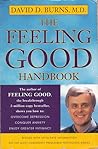
Goodreads helps you follow your favorite authors. Be the first to learn about new releases!
Start by following David D. Burns.

Showing 1-30 of 380
“When two people respect each other, the ability to be vulnerable and to reveal hurt feelings can create a powerful emotional connection that is the source of real intimacy and friendship.”
―
―
“Perfection' is man's ultimate illusion. It simply doesn't exist in the universe.... If you are a perfectionist, you are guaranteed to be a loser in whatever you do.”
―
―
“Aim for success, not perfection. Never give up your right to be wrong, because then you will lose the ability to learn new things and move forward with your life. Remember that fear always lurks behind perfectionism. Confronting your fears and allowing yourself the right to be human can, paradoxically, make yourself a happier and more productive person.”
―
―
“Labeling yourself is not only self-defeating, it is irrational. Your self cannot be equated with any one thing you do. Your life is a complex and ever-changing flow of thoughts, emotions, and actions. To put it another way, you are more like a river than a statue. Stop trying to define yourself with negative labels—they”
― Feeling Good: Overcome Depression and Anxiety with Proven Techniques
― Feeling Good: Overcome Depression and Anxiety with Proven Techniques
“There is only one person who could ever make you happy, and that person is you.”
―
―
“The price you pay for your addiction to praise will be an extreme vulnerability to the opinions of others. Like any addict, you will find you must continue to feed your habit with approval in order to avoid withdrawal pangs. The moment someone who is important to you expresses disapproval, you will crash painfully, just like the junkie who can no longer get his “stuff.” Others will be able to use this vulnerability to manipulate you. You will have to give in to their demands more often than you want to because you fear they might reject or look down on you. You set yourself up for emotional blackmail.”
― Feeling Good: Overcome Depression and Anxiety with Proven Techniques
― Feeling Good: Overcome Depression and Anxiety with Proven Techniques
“Let me explain why. "Perfection" is man's ultimate illusion. It simply doesn't exist in the universe. There is no perfection. It's really the world's greatest con game; it promises riches and delivers misery. The harder you strive for perfection, the worse your disappointment will become because it's only an abstraction, a concept that doesn't fit reality. Everything can be improved if you look at it closely and critically enough—every person, every idea, every work of art, every experience, everything. So if you are a perfectionist, you are guaranteed to be a loser in whatever you do.”
― Feeling Good: Overcome Depression and Anxiety with Proven Techniques
― Feeling Good: Overcome Depression and Anxiety with Proven Techniques
“Table 3–1. Definitions of Cognitive Distortions 1. ALL-OR-NOTHING THINKING: You see things in black-and-white categories. If your performance falls short of perfect, you see yourself as a total failure. 2. OVERGENERALIZATION: You see a single negative event as a never-ending pattern of defeat. 3. MENTAL FILTER: You pick out a single negative detail and dwell on it exclusively so that your vision of all reality becomes darkened, like the drop of ink that colors the entire beaker of water. 4. DISQUALIFYING THE POSITIVE: You reject positive experiences by insisting they “don’t count” for some reason or other. In this way you can maintain a negative belief that is contradicted by your everyday experiences. 5. JUMPING TO CONCLUSIONS: You make a negative interpretation even though there are no definite facts that convincingly support your conclusion. a. Mind reading. You arbitrarily conclude that someone is reacting negatively to you, and you don’t bother to check this out. b. The Fortune Teller Error. You anticipate that things will turn out badly, and you feel convinced that your prediction is an already-established fact. 6. MAGNIFICATION (CATASTROPHIZING) OR MINIMIZATION: You exaggerate the importance of things (such as your goof-up or someone else’s achievement), or you inappropriately shrink things until they appear tiny (your own desirable qualities or the other fellow’s imperfections). This is also called the “binocular trick.” 7. EMOTIONAL REASONING: You assume that your negative emotions necessarily reflect the way things really are: “I feel it, therefore it must be true.” 8. SHOULD STATEMENTS: You try to motivate yourself with shoulds and shouldn’ts, as if you had to be whipped and punished before you could be expected to do anything. “Musts” and “oughts” are also offenders. The emotional consequence is guilt. When you direct should statements toward others, you feel anger, frustration, and resentment. 9. LABELING AND MISLABELING: This is an extreme form of overgeneralization. Instead of describing your error, you attach a negative label to yourself: “I’m a loser.” When someone else’s behavior rubs you the wrong way, you attach a negative label to him: “He’s a goddam louse.” Mislabeling involves describing an event with language that is highly colored and emotionally loaded. 10. PERSONALIZATION: You see yourself as me cause of some negative external event which in fact you were not primarily responsible for.”
― Feeling Good: Overcome Depression and Anxiety with Proven Techniques
― Feeling Good: Overcome Depression and Anxiety with Proven Techniques
“Achievements can bring you satisfaction but not happiness.”
― Feeling Good: The New Mood Therapy
― Feeling Good: The New Mood Therapy
“You must first consider that a human life is an ongoing process that involves a constantly changing physical body as well as an enormous number of rapidly changing thoughts, feelings, and behaviors. Your life therefore is an evolving experience, a continual flow. You are not a thing; that's why any label is constricting, highly inaccurate, and global.”
― Feeling Good: Overcome Depression and Anxiety with Proven Techniques
― Feeling Good: Overcome Depression and Anxiety with Proven Techniques
“After all, this is how you learned how to walk. You didn't just jump up from your crib one day and waltz gracefully across the room. You stumbled and fell on your face and got up and tried again. At what age are you suddenly expected to know everything and never make any more mistakes? If you can love and respect yourself in failure, worlds of adventure and new experiences will open up before you, and your fears will vanish.”
―
―
“In my experience the most crucial predictor of recovery is a persistent willingness to exert some effort to help yourself. Given this attitude, you will succeed.”
― Feeling Good: Overcome Depression and Anxiety with Proven Techniques
― Feeling Good: Overcome Depression and Anxiety with Proven Techniques
“Unfortunately, you’re wrong. Motivation does not come first, action does! You have to prime the pump. Then you will begin to get motivated, and the fluids will flow spontaneously.”
― Feeling Good: Overcome Depression and Anxiety with Proven Techniques
― Feeling Good: Overcome Depression and Anxiety with Proven Techniques
“Ultimately you, and only you, can make yourself consistently happy. No one else can.”
― Feeling Good: Overcome Depression and Anxiety with Proven Techniques
― Feeling Good: Overcome Depression and Anxiety with Proven Techniques
“Much everyday anger results when we confuse our own personal wants with general moral codes.”
― Feeling Good: Overcome Depression and Anxiety with Proven Techniques
― Feeling Good: Overcome Depression and Anxiety with Proven Techniques
“Oxygen is a need, but love is a want. I repeat: LOVE IS NOT AN ADULT HUMAN NEED!”
― Feeling Good: Overcome Depression and Anxiety with Proven Techniques
― Feeling Good: Overcome Depression and Anxiety with Proven Techniques
“The secret of successful treatment is not to become a perfect, shining star or to learn to be in complete control of your feelings. These strategies are doomed to failure. In contrast, when you accept yourself as an imperfect but eminently lovable human being, and you stop fighting your emotions so strenuously, your fear will often lose its grip over you.”
― The Feeling Good Handbook
― The Feeling Good Handbook
“Although the idea has been around for ages, most depressed people do not really comprehend it. If you feel depressed, you may think it is because of bad things that have happened to you. You may think you are inferior and destined to be unhappy because you failed in your work or were rejected by someone you loved. You may think your feelings of inadequacy result from some personal defect—you may feel convinced you are not smart enough, successful enough, attractive enough, or talented enough to feel happy and fulfilled. You may think your negative feelings are the result of an unloving or traumatic childhood, or bad genes you inherited, or a chemical or hormonal imbalance of some type. Or you may blame others when you get upset: “It’s these lousy stupid drivers that tick me off when I drive to work! If it weren’t for these jerks, I’d be having a perfect day!” And nearly all depressed people are convinced that they are facing some special, awful truth about themselves and the world and that their terrible feelings are absolutely realistic and inevitable. Certainly all these ideas contain an important gem of truth—bad things do happen, and life beats up on most of us at times. Many people do experience catastrophic losses and confront devastating personal problems. Our genes, hormones, and childhood experiences probably do have an impact on how we think and feel. And other people can be annoying, cruel, or thoughtless. But all these theories about the causes of our bad moods have the tendency to make us victims—because we think the causes result from something beyond our control. After all, there is little we can do to change the way people drive at rush hour, or the way we were treated when we were young, or our genes or body chemistry (save taking a pill). In contrast, you can learn to change the way you think about things, and you can also change your basic values and beliefs. And when you do, you will often experience profound and lasting changes in your mood, outlook, and productivity. That, in a nutshell, is what cognitive therapy is all about. The theory is straightforward”
― Feeling Good: Overcome Depression and Anxiety with Proven Techniques
― Feeling Good: Overcome Depression and Anxiety with Proven Techniques
“Your thoughts create your emotions; therefore, your emotions cannot prove that your thoughts are accurate.”
― Feeling Good: Overcome Depression and Anxiety with Proven Techniques
― Feeling Good: Overcome Depression and Anxiety with Proven Techniques
“It is okay to be flawed and defective, or even wonderful”
―
―
“ALL-OR-NOTHING THINKING: You see things in black-and-white categories. If your performance falls short of perfect, you see yourself as a total failure.”
― Feeling Good: Overcome Depression and Anxiety with Proven Techniques
― Feeling Good: Overcome Depression and Anxiety with Proven Techniques
“But these abnormal emotions feel just as valid and realistic as the genuine feelings created by undistorted thoughts, so you automatically attribute truth to them. This is why depression is such a powerful form of mental black magic.”
― Feeling Good: Overcome Depression and Anxiety with Proven Techniques
― Feeling Good: Overcome Depression and Anxiety with Proven Techniques
“Self-esteem can be defined as the state that exists when you are not arbitrarily haranguing and abusing yourself but choose to fight back against those automatic thoughts with meaningful rational responses.”
― Feeling Good: Overcome Depression and Anxiety with Proven Techniques
― Feeling Good: Overcome Depression and Anxiety with Proven Techniques
“So remember three crucial steps when you are upset: Zero in on those automatic negative thoughts and write them down. Don't let them buzz around in your head; snare them on paper! Read over the list of ten cognitive distortions. Learn precisely how you are twisting things and blowing them out of proportion. Substitute a more objective thought that puts the lie to the one which made you look down on yourself. As you do this, you'll begin to feel better. You'll be boosting your self-esteem, and your”
― Feeling Good: Overcome Depression and Anxiety with Proven Techniques
― Feeling Good: Overcome Depression and Anxiety with Proven Techniques
“There was nothing dreadfully wrong with me, I was just upsetting myself with my irrational thinking. I just couldn't admit it until I knew for sure. Now, I feel like a whole man, and I had to call you up and let you know where I stood . . . It was hard for me to do this, and I'm sorry it took so long for me to get around to telling you.”
― Feeling Good: Overcome Depression and Anxiety with Proven Techniques
― Feeling Good: Overcome Depression and Anxiety with Proven Techniques
“Nearly two thousand years ago the Greek philosopher, Epictctus, stated that people are disturbed “not by things, but by the views we take of them.”
― Feeling Good: Overcome Depression and Anxiety with Proven Techniques
― Feeling Good: Overcome Depression and Anxiety with Proven Techniques
“In addition, we still do not really know how the brain creates emotions. We do not know why some people are more prone to negative thinking and gloomy moods throughout their lives, whereas others seem to be eternal optimists who always have a positive outlook and a cheerful disposition.”
― Feeling Good: Overcome Depression and Anxiety with Proven Techniques
― Feeling Good: Overcome Depression and Anxiety with Proven Techniques
“Ask people for suggestions on how to improve, and if they're going to reject you for being imperfect, let them do it and get it over with.”
― Feeling Good: Overcome Depression and Anxiety with Proven Techniques
― Feeling Good: Overcome Depression and Anxiety with Proven Techniques
“For example, when a loved one dies, you validly think, "I lost him (or her), and I will miss the companionship and love we shared." The feelings such a thought creates are tender, realistic, and desirable. Your emotions will enhance your humanity and add depth to the meaning of life. In this way you gain from your loss.”
― Feeling Good: Overcome Depression and Anxiety with Proven Techniques
― Feeling Good: Overcome Depression and Anxiety with Proven Techniques
“The attitude that depression is necessary strikes me as destructive, inhuman, and victimizing.”
― Feeling Good: Overcome Depression and Anxiety with Proven Techniques
― Feeling Good: Overcome Depression and Anxiety with Proven Techniques