Goodreads helps you follow your favorite authors. Be the first to learn about new releases!
Start by following Padmasambhava.

Showing 1-30 of 99
“If you want to know your past life, look at your present condition.
If you want to know your future life, look at your present actions.”
―
If you want to know your future life, look at your present actions.”
―
“Abandon your notions of the past, without attributing a temporal sequence! Cut off your mental associations regarding the future, without anticipation! Rest in a spacious modality, without clinging to [the thoughts of] the present. Do not meditate at all, since there is nothing upon which to meditate. Instead, revelation will come through undistracted mindfulness — Since there is nothing by which you can be distracted.”
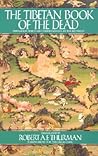
― The Tibetan Book of the Dead. First Complete Translation
― The Tibetan Book of the Dead. First Complete Translation
“ Are you oblivious to the sufferings of birth, old age, sickness and death? There is no guarantee that you will survive, even past this very day! The time has come [for you] to develop perseverance in [your] practice. For, at this singular opportunity, you could attain the everlasting bliss [of nirvāṇa]. So now is [certainly] not the time to sit idly, But, starting with [the reflection on] death, you should bring your practice to completion!3 The moments of our life are not expendable, And the [possible] circumstances of death are beyond imagination. If you do not achieve an undaunted confident security now, What point is there in your being alive, O living creature?”
― The Tibetan Book of the Dead. First Complete Translation
― The Tibetan Book of the Dead. First Complete Translation
“You don’t have to be a
philosopher; you just have to want to know who you are”
― The Tibetan Book of the Dead: Liberation Through Understanding in the Between
philosopher; you just have to want to know who you are”
― The Tibetan Book of the Dead: Liberation Through Understanding in the Between
“In modern science the methods of analysis are principally applied to investigating the nature of material entities. Thus, the ultimate nature of matter is sought through a reductive process and the macroscopic world is reduced to the microscopic world of particles. Yet, when the nature of these particles is further examined, we find that ultimately their very existence as objects is called into question.”
― The Tibetan Book of the Dead. First Complete Translation
― The Tibetan Book of the Dead. First Complete Translation
“If, upon looking outwards towards the external expanse of the sky, There are no projections emanated by the mind, And if, on looking inwards at one’s own mind, There is no projectionist who projects [thoughts] by thinking them, Then, one’s own mind, completely free from conceptual projections, will become luminously clear. [This]”
― The Tibetan Book of the Dead. First Complete Translation
― The Tibetan Book of the Dead. First Complete Translation
“The moments of our life are not expendable, And the [possible] circumstances of death are beyond imagination. If you do not achieve an undaunted confident security now, What point is there in your being alive, O living creature?”
― The Tibetan Book of the Dead. First Complete Translation
― The Tibetan Book of the Dead. First Complete Translation
“Please guide all beings from this swamp of cyclic existence!”
― The Tibetan Book of the Dead. First Complete Translation
― The Tibetan Book of the Dead. First Complete Translation
“My father is wisdom and my mother is voidness.
My country is the country of Dharma.
I am of no caste and no creed.
I am sustained by perplexity; and I am here to destroy lust, anger and sloth.”
―
My country is the country of Dharma.
I am of no caste and no creed.
I am sustained by perplexity; and I am here to destroy lust, anger and sloth.”
―
“death holds up an all-seeing mirror, ‘the mirror of past actions’, to our eyes, in which the consequences of all our negative and positive actions are clearly seen and there is a weighing of our past actions in the light of their consequences, the balance of which will determine the kind of existence or mental state we are being driven to enter.”
― The Tibetan Book of the Dead. First Complete Translation
― The Tibetan Book of the Dead. First Complete Translation
“Transcendent renunciation is developed by meditating on the preciousness of human
life in terms of the ocean of evolutionary possibilities, the immediacy of death, the
inexorability of evolutionary causality, and the sufferings of the ignorance-driven,
involuntary life cycle. Renunciation automatically occurs when you come face-to-face
with your real existential situation, and so develop a genuine sympathy for yourself,
having given up pretending the prison of habitual emotions and confusions is just fine.
Meditating on the teachings given on these themes in a systematic way enables you to
generate quickly an ambition to gain full control of your body and mind in order at least
to face death confidently, knowing you can navigate safely through the dangers of further
journeys. Wasting time investing your life in purposes that “you cannot take with you”
becomes ludicrous, and, when you radically shift your priorities, you feel a profound
relief at unburdening yourself of a weight of worry over inconsequential things”
― The Tibetan Book of the Dead: Liberation Through Understanding in the Between
life in terms of the ocean of evolutionary possibilities, the immediacy of death, the
inexorability of evolutionary causality, and the sufferings of the ignorance-driven,
involuntary life cycle. Renunciation automatically occurs when you come face-to-face
with your real existential situation, and so develop a genuine sympathy for yourself,
having given up pretending the prison of habitual emotions and confusions is just fine.
Meditating on the teachings given on these themes in a systematic way enables you to
generate quickly an ambition to gain full control of your body and mind in order at least
to face death confidently, knowing you can navigate safely through the dangers of further
journeys. Wasting time investing your life in purposes that “you cannot take with you”
becomes ludicrous, and, when you radically shift your priorities, you feel a profound
relief at unburdening yourself of a weight of worry over inconsequential things”
― The Tibetan Book of the Dead: Liberation Through Understanding in the Between
“Agitation due to circumstances occurs when because of an external incident, you follow a thought, and your mind becomes agitated and scatters into a disturbing emotion. When that happens, keep the attitude of “There is no need to do anything!” Train in loving kindness and compassion, disenchantment, means and knowledge, and devotion. Following that, persevere in the practice as at the time of the view. That will clear it.”
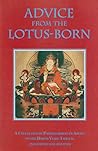
― Advice from the Lotus-Born: A Collection of Padmasambhava's Advice to the Dakini Yeshe Tsogyal and Other Close Disciples
― Advice from the Lotus-Born: A Collection of Padmasambhava's Advice to the Dakini Yeshe Tsogyal and Other Close Disciples
“O, [you], with your mind far away, thinking that death will not come, Entranced by the pointless activities of this life, If you were to return empty-handed now, would not your [life’s] purpose have been [utterly] confused? Recognise what it is that you truly need! It is a sacred teaching [for liberation]! So, should you not practise this divine [sacred] teaching, beginning from this very moment?”
― The Tibetan Book of the Dead. First Complete Translation
― The Tibetan Book of the Dead. First Complete Translation
“Associate with companions who are in harmony with the Dharma and who don't promote disturbing emotions. Keeping company with unwholesome friends, you cannot possibly avoid being influenced by their evil ways. That is the root of going astray...”
― Advice from the Lotus-Born: A Collection of Padmasambhava's Advice to the Dakini Yeshe Tsogyal and Other Close Disciples
― Advice from the Lotus-Born: A Collection of Padmasambhava's Advice to the Dakini Yeshe Tsogyal and Other Close Disciples
“In our own present world age, one thousand Buddhas will appear. Each one will be accompanied by an emanation of Guru Rinpoche to carry out the Buddha’s activities.”
― Dispeller of Obstacles: The Heart Practice of Padmasambhava
― Dispeller of Obstacles: The Heart Practice of Padmasambhava
“When your body is in seclusion your mind will be also. Give up idle gossip and speak less. If you hurt another's feelings, both of you create negative karma […] don't allow yourself to feel attached or hostile. Maintain a peaceful frame of mind. Give up angry and harsh words; instead speak with a smiling face.”
― Advice from the Lotus-Born: A Collection of Padmasambhava's Advice to the Dakini Yeshe Tsogyal and Other Close Disciples
― Advice from the Lotus-Born: A Collection of Padmasambhava's Advice to the Dakini Yeshe Tsogyal and Other Close Disciples
“Whenever you suffer misfortune or illness, think "This repays my karmic debts from former lifetimes and purifies my negative karma!" No matter what happiness you have, regard it as the kindness of the Three Jewels and arouse the strong yearning of devoted gratitude! When you meet with enmity and hatred, think "This is a good friend helping me to cultivate patience!" Think, "This helper for patience is a messenger sent by the victorious ones!" (p. 105)”
― Advice from the Lotus-Born: A Collection of Padmasambhava's Advice to the Dakini Yeshe Tsogyal and Other Close Disciples
― Advice from the Lotus-Born: A Collection of Padmasambhava's Advice to the Dakini Yeshe Tsogyal and Other Close Disciples
“When you hear pleasant or unpleasant words, understand them to be an empty resounding, like an echo. When you encounter severe misfonune and misery, understand it to be a temporary occurrence, a deluded experience. Recognize that the innate nature is never apart from you.”
― Advice from the Lotus-Born: A Collection of Padmasambhava's Advice to the Dakini Yeshe Tsogyal and Other Close Disciples
― Advice from the Lotus-Born: A Collection of Padmasambhava's Advice to the Dakini Yeshe Tsogyal and Other Close Disciples
“Don't mistake mere words to be the meaning of the teachings. Mingle the practice with your own being and attain liberation from samsara right now.”
― Advice from the Lotus-Born: A Collection of Padmasambhava's Advice to the Dakini Yeshe Tsogyal and Other Close Disciples
― Advice from the Lotus-Born: A Collection of Padmasambhava's Advice to the Dakini Yeshe Tsogyal and Other Close Disciples
“May all sentient beings be endowed with happiness! May they all be separated from suffering and its causes! May they be endowed with joy, free from suffering! May they abide in equanimity, free from attachment or aversion”
― The Tibetan Book of the Dead. First Complete Translation
― The Tibetan Book of the Dead. First Complete Translation
“All phenomena of samsara and nirvana are your own mind.”
― Advice from the Lotus-Born: A Collection of Padmasambhava's Advice to the Dakini Yeshe Tsogyal and Other Close Disciples
― Advice from the Lotus-Born: A Collection of Padmasambhava's Advice to the Dakini Yeshe Tsogyal and Other Close Disciples
“Look into the awakened mind of your own awareness! It has neither form nor color, neither center nor edge. At first, it has no origin but is empty. Next, it has no dwelling place but is empty. At the end, it has no destination but is empty. This emptiness is not made of anything and is clear and cognizant. When you see this and recognize it, you know your natural face. You understand the nature of things. (p. 101)”
― Advice from the Lotus-Born: A Collection of Padmasambhava's Advice to the Dakini Yeshe Tsogyal and Other Close Disciples
― Advice from the Lotus-Born: A Collection of Padmasambhava's Advice to the Dakini Yeshe Tsogyal and Other Close Disciples
“The root of faults is nothing other than your ego-clinging, the attitude of deluded fixation, so cut the ties of ego-clinging! Cast away the fixation on enemy and friend! Forsake worldly concerns! Abandon materialistic pursuits! Engage in nothing but the Dharma from the core of your heart! Just as a seedling doesn't grow on a stone, there will be no enhancement without removing the fault of ego-clinging. You should therefore abandon the root of all evils, ego-clinging. (p. 90)”
― Advice from the Lotus-Born: A Collection of Padmasambhava's Advice to the Dakini Yeshe Tsogyal and Other Close Disciples
― Advice from the Lotus-Born: A Collection of Padmasambhava's Advice to the Dakini Yeshe Tsogyal and Other Close Disciples
“Your numerous worldly pursuits that are not causes for liberation or omniscient enlightenment will, in addition to being futile, only cause further sarnsaric misery. So it is essential to exert yourself, heart and soul and in thought, word, and deed, in accomplishing the unexcelled enlightenment!”
― Advice from the Lotus-Born: A Collection of Padmasambhava's Advice to the Dakini Yeshe Tsogyal and Other Close Disciples
― Advice from the Lotus-Born: A Collection of Padmasambhava's Advice to the Dakini Yeshe Tsogyal and Other Close Disciples
“Within the sky-like empty mind, habitual tendencies and disturbing emotions are just like clouds and mist. When they appear, they appear within the expanse of empty mind. When they remain, they remain within the expanse of empty mind. And when they dissolve, they dissolve in that same expanse of empty mind.”
― Treasures from Juniper Ridge
― Treasures from Juniper Ridge
“What is the difference between buddhas and sentient beings?' It is nothing other than realizing or not realizing mind. The substance of the awakened state, of buddha, is present within you, but you don't recognize it.”
― Advice from the Lotus-Born: A Collection of Padmasambhava's Advice to the Dakini Yeshe Tsogyal and Other Close Disciples
― Advice from the Lotus-Born: A Collection of Padmasambhava's Advice to the Dakini Yeshe Tsogyal and Other Close Disciples
“May all sentient beings, children of buddha nature, realise the ultimate nature of mind: insight and compassion, in blissful union.”
― The Tibetan Book of the Dead
― The Tibetan Book of the Dead
“When realization occurs you should definitely be free from samsara, so that your disturbing emotions naturally subside and become original wakefulness. What is the use of a realization that fails to reduce your disturbing emotions?”
― Advice from the Lotus-Born: A Collection of Padmasambhava's Advice to the Dakini Yeshe Tsogyal and Other Close Disciples
― Advice from the Lotus-Born: A Collection of Padmasambhava's Advice to the Dakini Yeshe Tsogyal and Other Close Disciples
“The guru said: If you want to genuinely practice the Dharma, do what is virtuous, even the most minute deed. Renounce what is evil, even the tiniest deed. The largest ocean is made from drops of water; even Mount Sumeru and the four continents are made of tiny atoms. (p. 30)”
― Advice from the Lotus-Born: A Collection of Padmasambhava's Advice to the Dakini Yeshe Tsogyal and Other Close Disciples
― Advice from the Lotus-Born: A Collection of Padmasambhava's Advice to the Dakini Yeshe Tsogyal and Other Close Disciples
“The master replied: Tsogyal, the empty essence of your awareness is not created by anyone. Without causes and conditions, it is originally present. Don't try to change or alter awareness. Let it remain exactly as it is! Thus you will be free from straying and awaken within the state of primordial purity.”
― Advice from the Lotus-Born: A Collection of Padmasambhava's Advice to the Dakini Yeshe Tsogyal and Other Close Disciples
― Advice from the Lotus-Born: A Collection of Padmasambhava's Advice to the Dakini Yeshe Tsogyal and Other Close Disciples