Goodreads helps you follow your favorite authors. Be the first to learn about new releases!
Start by following Robert A.F. Thurman.

Showing 1-30 of 53
“No sane person fears nothingness.”
― The Tibetan Book of the Dead
― The Tibetan Book of the Dead
“Imagine a culture in which everything is geared toward helping all individuals become the best human beings they can be; in which individuals are driven to devoting their lives to becoming enlightened by the natural flood of compassion for others that arises from their wisdom.”
―
―
“Buddhism is all about science. If science is the systematic pursuit of the accurate knowledge of reality, then science is Buddhism, Buddhism is science.”
― Why The Dalai Lama Matters
― Why The Dalai Lama Matters
“To become enlightened is not just to slip into some disconnected euphoria, an oceanic feeling of mystic oneness apart from ordinary reality. It is not even to come up with a solution, a sort of formula to control reality. Rather, it is an experience of release from all compulsions and sufferings, combined with a precise awareness of any relevent subject of knowledge. Having attained enlightenment one knows everything that matters, and the precise nature of all that is.”
―
―
“Anger spoils relationships where there should be great reciprocity.”
― Love Your Enemies: How to Break the Anger Habit & Be a Whole Lot Happier
― Love Your Enemies: How to Break the Anger Habit & Be a Whole Lot Happier
“There is no reason for a sound faith to be irrational. A useful faith should not be blind, but should be well aware of its grounds. A sound faith should be able to use scientific investigation to strengthen itself. it should be open to the spirit not to lock itself up in the letter. A nourishing, useful, healthful faith should be no obstacle to developing a science of death.”
― The Tibetan Book of the Dead
― The Tibetan Book of the Dead
“In the practice of exchanging self & other, paradoxes abound.”
― Love Your Enemies: How to Break the Anger Habit & Be a Whole Lot Happier
― Love Your Enemies: How to Break the Anger Habit & Be a Whole Lot Happier
“Buddhist Psychology
You can use enlightening Buddhist practices to transform your life. Unfortunately, many people do not know it, but the Buddhist Dharma, or teaching, is actually a scientific system of psychology, developed in India and further refined in Tibet. It is a psychology that works. I call it a „joyous science of the heart“ because it is based on the idea that while unenlightened life is full of suffering, you are completely capable of escaping from that suffering. You can get well. In fact, you already are well; you just need to awaken to that fact.
And how do you do this? By analyzing your thought patterns. When you do, you realize that you are full of „misknowledge“ - misunderstandings of yourself and the world that lead to anger, discontent, and fear. The target of Buddhist practice and the constant theme of this book is the primal misconception that you are the center of the universe, that your „self“ is a fixed, constant, and bounded entity. When you meditate on enlightened insights into the true nature of reality and the boundlessness of the self, you develop new habits of thinking. You free yourself from the constraints of your habitual mind. In other words, you teach yourself to think differently. This in turn leads you to act differently. And voila! You are on the path to happiness, fulfillment, and even enlightenment.
The battle for happiness is fought and won or lost primarily within the mind. The mind is the absolute key, both to enlightenment and to life. When your mind is peaceful, aware, and under your command, you will be securely happy. When your mind is unaware of its true nature, constantly in turmoil, and in command of you, you will suffer endlessly. This is the whole secret of the Dharma. If you recognize delusion, greed, anger, envy, and pride as the main enemies of your well-being and learn to focus your mind on overcomming them, you can install wisdom, generosity, tolerance, love, and altruism in their place. This is where enlightened psychology can be most useful. Psychology and philosophy are really one entity in Buddhism. They are called the inner science, the science of the human interior. In the flow of Indian history, it is fair to say that the Buddha was a great explorer of the human interior rather than some sort of religious prophet.
He came into the world at a time when people were just beginning to experiment with self-exploration, but mostly in an escapist way, using their focus on the inner world to run away from the sufferings of life by entering a supposed realm of absolute quiet far removed from everday existence. The Buddha started out exploring that way too, but then realized the futility of escapism and discovered instead a way of being happier here and now. (pp. 32-33)”
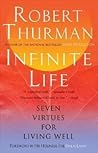
― Infinite Life: Awakening to Bliss Within
You can use enlightening Buddhist practices to transform your life. Unfortunately, many people do not know it, but the Buddhist Dharma, or teaching, is actually a scientific system of psychology, developed in India and further refined in Tibet. It is a psychology that works. I call it a „joyous science of the heart“ because it is based on the idea that while unenlightened life is full of suffering, you are completely capable of escaping from that suffering. You can get well. In fact, you already are well; you just need to awaken to that fact.
And how do you do this? By analyzing your thought patterns. When you do, you realize that you are full of „misknowledge“ - misunderstandings of yourself and the world that lead to anger, discontent, and fear. The target of Buddhist practice and the constant theme of this book is the primal misconception that you are the center of the universe, that your „self“ is a fixed, constant, and bounded entity. When you meditate on enlightened insights into the true nature of reality and the boundlessness of the self, you develop new habits of thinking. You free yourself from the constraints of your habitual mind. In other words, you teach yourself to think differently. This in turn leads you to act differently. And voila! You are on the path to happiness, fulfillment, and even enlightenment.
The battle for happiness is fought and won or lost primarily within the mind. The mind is the absolute key, both to enlightenment and to life. When your mind is peaceful, aware, and under your command, you will be securely happy. When your mind is unaware of its true nature, constantly in turmoil, and in command of you, you will suffer endlessly. This is the whole secret of the Dharma. If you recognize delusion, greed, anger, envy, and pride as the main enemies of your well-being and learn to focus your mind on overcomming them, you can install wisdom, generosity, tolerance, love, and altruism in their place. This is where enlightened psychology can be most useful. Psychology and philosophy are really one entity in Buddhism. They are called the inner science, the science of the human interior. In the flow of Indian history, it is fair to say that the Buddha was a great explorer of the human interior rather than some sort of religious prophet.
He came into the world at a time when people were just beginning to experiment with self-exploration, but mostly in an escapist way, using their focus on the inner world to run away from the sufferings of life by entering a supposed realm of absolute quiet far removed from everday existence. The Buddha started out exploring that way too, but then realized the futility of escapism and discovered instead a way of being happier here and now. (pp. 32-33)”
― Infinite Life: Awakening to Bliss Within
“The Bodhisattva is in no rush. For once we have tasted a single drop of the bliss of bringing others into that freedom, with the Spirit of Enlightenment of love and compassion, once we have loosened the grip of the solid, separated, alienated self that is the core of self-centeredness, then we are already happy in a certain way. The Bodhisattva is always joyful, even when suffering. Bodhisattvas are always happy and cheerful under pressure, because they have felt the essence of reality as freedom (p. 223)”
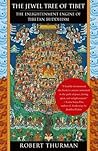
― The Jewel Tree of Tibet: The Enlightenment Engine of Tibetan Buddhism
― The Jewel Tree of Tibet: The Enlightenment Engine of Tibetan Buddhism
“How are you going to experience bliss and voidness, wisdom and compassion, if you are a rigid, independent self? You can't enter into the ideal universe, the „buddhaverse“ as I like to call it, of enjoyment, wisdom, and compassion, until you first detach from this world of suffering, this prison that is the fixed and absolute self-image. (p. 67)”
― Infinite Life: Awakening to Bliss Within
― Infinite Life: Awakening to Bliss Within
“There is no need for you to formally promote certain doctrines: your very presence becomes a teaching example to others, a liberating art that opens their imagination to the potential freedom they also can experience. (p. 79)”
― Infinite Life: Awakening to Bliss Within
― Infinite Life: Awakening to Bliss Within
“We have the assurance of the enlightened beings that reality is goodness, that reality is freedom from suffering, that reality is bliss. So we should never fear to open ourselves to reality, to cast aside our preconceptions and biases, and to open more and more to whatever turns out to be real. You can have faith in enlightenment, faith in evolutionary potential, faith in infinity, faith in your infinite self. (p. 222)”
― The Jewel Tree of Tibet: The Enlightenment Engine of Tibetan Buddhism
― The Jewel Tree of Tibet: The Enlightenment Engine of Tibetan Buddhism
“Thus, once you have adopted such an attitude of infinite interconnectedness, you naturally want to liberate not just yourself but all beings from suffering. The Buddha calls this „the conception of the Spirit of Enlightenment“ it is the soul of the Bodhisattva, the person who dedicates him- or herself to helping all beings achieve total happiness. When you open to the inevitability of your infinite interconnection with other sensitive beings, you develop compassion. You learn to feel empathy for them, to love them, to want their happiness. You want to keep them from suffering, and you do so just as if they were a part of you. You don‘t think your behavior makes you special. You don‘t congratulate yourself for helping others, just as you wouldn't congratulate yourself for healing your own legs when you hurt it. It is natural for you to love your leg because it is one with you, and so it is natural for you to love others. You would certainly never harm another being. As the great Buddhist adept Shantideva (eighth-century Indian sage) wrote, „How wonderful will it be when all beings experience each other as limbs on the one body of life! (p. 27)”
― Infinite Life: Awakening to Bliss Within
― Infinite Life: Awakening to Bliss Within
“Eventually, you reach your goal of complete nondual freedom, the simultaneous nondual experience of supremely liberated cognitive dissonance, wherein you joyfully live the moment-to-moment reconciliation of all dichotomies. (p. 77)”
― Infinite Life: Awakening to Bliss Within
― Infinite Life: Awakening to Bliss Within
“Any change in your mind, positive or negative, affects all others. The wish-granting gem tree is a morphic resonance field. The energy of one contains within it the energy of all. Every action affects all other actions. Whenever you turn your mind towards the wish-granting gems, everyone else‘s mind is turned in that way, too. The planet‘s mind turns with your mind. If you let your mind go in some negative, paranoid, self-indulgent, distracted way, the planet‘s mind turns in that way. You‘re totally interconnected with everything.”
― The Jewel Tree of Tibet: The Enlightenment Engine of Tibetan Buddhism
― The Jewel Tree of Tibet: The Enlightenment Engine of Tibetan Buddhism
“I invite you to embrace a new reality. It is not a matter of religion – it is a matter of fact, a matter of science, a matter of experiment, and a matter of awareness. I invite you to awaken to the infinite life you already have, no matter what your worldview. I invite you to take up responsibility for your own evolutionary destiny. I invite you to take advantage of your priceless human opportunity to make a definitive turn toward ultimate security, complete freedom, and unbounded happiness. (p. 23, The Nature of Reality)”
― Infinite Life: Awakening to Bliss Within
― Infinite Life: Awakening to Bliss Within
“You yourself can be god. You really are that, in fact. You, yourself, are reality. You, yourself, are buddha. (p. 18)”
― The Jewel Tree of Tibet: The Enlightenment Engine of Tibetan Buddhism
― The Jewel Tree of Tibet: The Enlightenment Engine of Tibetan Buddhism
“Each of us individually has an effect on the lives of beings around us through the quiet processes going on in our minds. If we are full of good feelings, they radiate around us and people want to be near. If we are full of bad feelings, others tend to stay away. So if we would be activists for good, for the positive, we must assume responsibility for our minds as well as our speech and our physical activities, otherwise our negative mental habits will drag down the entire community of beings. On the other hand, when we break through into the liberty of the heart, mind, and spirit in the process of enlightenment, we free others at the same time. (p. 28)”
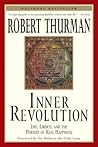
― Inner Revolution: Life, Liberty, and the Pursuit of Real Happiness
― Inner Revolution: Life, Liberty, and the Pursuit of Real Happiness
“According to the Dharma teaching, psychology is about understanding what human beings are made of, how our world works, how reality is put together, and how our minds function. The purpose of doing this, ultimately, is not to adjust people to go back and live according to how society tells them they should live, so that they can fit into some meaningless, supposedly wealth-producing, militaristic scheme. That‘s a total waste of human life. If somebody has the good sense to be depressed, malfunctioning, hallucinating, dropping out of society because their mind-body complex is saying „no“ to the whole nonsense and looking for some better way of being, a liberating psychology should not try to stuff them back into the box. They should not be just rushed straight ahead, encouraged to wash the dishes, do their jobs, and pounce on the enemy, just because that‘s what everybody else is doing. People who have the sensitivity and insight to see through the meaninglessness should be able to find someone to help them discover freedom, which is what they are looking for. They should be supported in their endeavors.”
― Infinite Life: Awakening to Bliss Within
― Infinite Life: Awakening to Bliss Within
“Some people decided they couldn‘t wait for society to achieve freedom over a long period of time, felt they couldn‘t wait for enlightenment through many, many lifetimes of their own. These people decided they would achieve this perfect freedom and perfect ability to help others achieve freedom in a single lifetime. This was the beginning of the Tantric tradition, which was very esoteric at first. In the Tibetan view, Tantra emerged at the same time as the Mahayana, around one hundred years before the Common Era, but it remained completely esoteric for seven hundred years, without a single book on it being published. In its esoteric tradition, people lived on the fringes, on the margins; they were the magical people, the magicians, the siddas, the adepts. (p. 20)”
― The Jewel Tree of Tibet: The Enlightenment Engine of Tibetan Buddhism
― The Jewel Tree of Tibet: The Enlightenment Engine of Tibetan Buddhism
“The Three Jewels are the foundation of all forms of Buddhism, and the first jewel is the Buddha. The word buddha means „the Awakened One“. And it doesn‘t mean only Shakyamuni Buddha, formerly the prince Siddhartha, who became a perfect Buddha in the sixth century before the Common Era in India, whom we sometimes call the „historical Buddha“. Buddha means all those who have awakened from the sleep of ignorance and blossomed into their full potential. Awakened and blossomed, they are teachers of others. (pp. 30-31).”
― The Jewel Tree of Tibet: The Enlightenment Engine of Tibetan Buddhism
― The Jewel Tree of Tibet: The Enlightenment Engine of Tibetan Buddhism
“Silence is the Buddha‘s greatest expression. It‘s the Buddha‘s great teaching, what the Hindus call „You are That“ in the Upanishads. „You are the ultimate reality. You are God!“ the Hindus boldly declare. But the Buddha‘s way of affirming that fact is by being silent, because if you are that, after all, if you are what the theists think is God, you already know it yourself. (p. 15)”
― The Jewel Tree of Tibet: The Enlightenment Engine of Tibetan Buddhism
― The Jewel Tree of Tibet: The Enlightenment Engine of Tibetan Buddhism
“Great dangers stalk the globe—the four horsemen of the apocalypse: war, famine, pestilence, and death. There is no mystery about them. They are self-fulfilling prophecies. Joyous, transcendent creativity expresses itself in the positive vision that is the key to defeat the general that commands the four horsemen—despair itself. Trust, hope, and creativity can defeat the horsemen. We must not just call for them. We must develop them step-by-step.”
―
―
“The world is what the individual makes it. A world of individuals is the intersubjective, collective mind field of all those individuals. Standing on the ground of freedom, we can see things afresh, enter relationships renewed and with a new purpose of sharing freedom and happiness. We can become poets and seers of reality. We can become great adepts, true individuals, agents of compassion. To live in a world is to be constantly creating that world. (p. 215)”
― Inner Revolution: Life, Liberty, and the Pursuit of Real Happiness
― Inner Revolution: Life, Liberty, and the Pursuit of Real Happiness
“The power of the enlightened being to affect his or her environment is immense. The enlightened mind can landscape worlds, preserve planets, save whole environments, create buddhaverses. The enlightened being is almost like a god. (p. 150)”
― Inner Revolution: Life, Liberty, and the Pursuit of Real Happiness
― Inner Revolution: Life, Liberty, and the Pursuit of Real Happiness
“I enjoy experiencing a taste of the feeling that I am infinite. But you have to risk going into a sphere where you can‘t quite remember exactly who you are. You have to negate it anytime you feel the „I“ emerging as a fixed, independent, absolute thing, and then negate it again. It‘s not that nonexistence is your final goal, but that you want to rid yourself of your habitual sense that you exist in a static way. This practice has its thrilling moments of revelation, its unsettling moments of doubt, its quiet moments of mindfulness – all of which add up to a continuous, ever-deepening, evolving flow of liberation.
Your infinite life thus becomes grounded in the greatest virtue of all – wisdom. Your wisdom deepens constantly as you gain a deeper and deeper understanding of your own selflessness and your resulting interconnectedness with all other beings. You engage other people with generosity, sensitive and empathic justice, and invincible tolerance, forbearance, and forgiveness. With practice, you gradually erase the division between meditation and action until you are filled with endless joy and bliss. Your newfound freedom energizes your actions in daily life, and you become an inexhaustible source of the infinite life force. Your embrace of beings who feel lost and frightened and abandoned does not ruffle the surface of the great ocean of your happy, loving presence, as you unleash waves of dynamic effort to help them. (p. 72)”
― Infinite Life: Awakening to Bliss Within
Your infinite life thus becomes grounded in the greatest virtue of all – wisdom. Your wisdom deepens constantly as you gain a deeper and deeper understanding of your own selflessness and your resulting interconnectedness with all other beings. You engage other people with generosity, sensitive and empathic justice, and invincible tolerance, forbearance, and forgiveness. With practice, you gradually erase the division between meditation and action until you are filled with endless joy and bliss. Your newfound freedom energizes your actions in daily life, and you become an inexhaustible source of the infinite life force. Your embrace of beings who feel lost and frightened and abandoned does not ruffle the surface of the great ocean of your happy, loving presence, as you unleash waves of dynamic effort to help them. (p. 72)”
― Infinite Life: Awakening to Bliss Within
“There is no full stopping of anything, it‘s nonsense to say something can become nothing; your consciousness is a something, just like your body! You are body and mind, spirit and soul – the whole „you“ is what is immortal! Always has been and always will be, living and dying, changing and experiencing. The question is not really whether or not you go on, but rather how are you going to enjoy it? How are your friends going to enjoy you, once you‘re all going to be there together forever?(p. 4, The Nature of Reality)”
― Infinite Life: Awakening to Bliss Within
― Infinite Life: Awakening to Bliss Within
“From a strictly realistic perspective, should we bet on infinite life and endless consequences to our actions? Pascal would argue that our answer must be a resounding „Yes!“ We might as well assume that there will be a future continuity of our personal consciousness, however changed, however disembodied or re-embodied, however connected or disconnected we remain to the „self“ we experience in this life. If we make that bet on our own future lives, then we will prepare in whatever way we can to assure that we continue in a good way, in a better embodiment and environment. We will become truly responsible for our thoughts and our acts. Even though we may not remember the previous-life self who made those preparations, we certainly will want to enjoy the results. If our bet is misplaced, and our preparations have no effect because we actually do enter oblivion at death, we will simply not exist to regret having made them.
But if we wrongly bet on noncontinuity and therefore do not prepare for the future and have to face it unprepared, then we may suffer seriously in our next existence, and we will very much regret our decision. Even if we don‘t remember making it, don‘t know why we are suffering, don‘t know how to fault ourselves for being so unconscious in our previous life, we will still suffer and regret. Pascal‘s wager is therefore a very safe bet – it has a clear-cut positive outcome. Whether our personal life is really terminal at death or in fact infinite in continuity, if we bet, like Pascal, on the existence of our life after death, in whatever form, we will be in the best possible position, however things turn out. (pp. 7-8, The Nature of Reality)”
― Infinite Life: Awakening to Bliss Within
But if we wrongly bet on noncontinuity and therefore do not prepare for the future and have to face it unprepared, then we may suffer seriously in our next existence, and we will very much regret our decision. Even if we don‘t remember making it, don‘t know why we are suffering, don‘t know how to fault ourselves for being so unconscious in our previous life, we will still suffer and regret. Pascal‘s wager is therefore a very safe bet – it has a clear-cut positive outcome. Whether our personal life is really terminal at death or in fact infinite in continuity, if we bet, like Pascal, on the existence of our life after death, in whatever form, we will be in the best possible position, however things turn out. (pp. 7-8, The Nature of Reality)”
― Infinite Life: Awakening to Bliss Within
“So the Buddha took off, leaving his old life behind, and went into the jungle to be by himself so that he could quietly investigate the inner world through meditation. After many years, he gained tremendous insight into the functioning of the human mind and the problems we create for ourselves. He came to understand how negative states develop, how those negative states can be replaced by positive states, and how those positive states can be cultivated without limit. The Buddha realized that the human life-form is the ideal life-form in which to do that cultivation, each person ultimately by themselves but with the help of therapists and teachers and philosophers. And that was the birth of psychology, really: the beginning of the systematic scientific exploration of the way the mind works.”
― Infinite Life: Awakening to Bliss Within
― Infinite Life: Awakening to Bliss Within
“The strange thing about the messianic ideal of liberating yourself so that you can free all others is that just trying to adopt it makes you feel happier. Even though you know on some level that there is only so much you can get done in any given period of time, the fact that you do not let go of the determination to do everything gives you immense good cheer. (p. 20)”
― Inner Revolution: Life, Liberty, and the Pursuit of Real Happiness
― Inner Revolution: Life, Liberty, and the Pursuit of Real Happiness