Goodreads helps you follow your favorite authors. Be the first to learn about new releases!
Start by following Christian G. Appy.

Showing 1-12 of 12
“new mainstream consensus emerged around the idea that the Vietnam War had primarily been an American tragedy that had badly wounded and divided the nation. The focus was on healing, not history.”
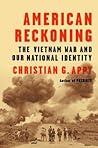
― American Reckoning: The Vietnam War and Our National Identity
― American Reckoning: The Vietnam War and Our National Identity
“During the years of solitary confinement we had communicated with other POWs using a tap code -- tapping on the walls. During the time I was tortured I mainly tapped on the wall with Howie Dunn, a marine F-4 pilot. I poured out my heart to him. We talked about what the Vietnamese were doing to us, we talked about food, we talked about women, we talked about our past lives and what we wanted to do in the future. We tapped for hours. At one point I said, "Howie, what do you look like?" He tapped back and said, "Actually, I look a lot like John Wayne." We were moved away from each other, and I didn't talk to him for about five years. Right before we were coming home the Vietnamese allowed us to all get out together in a big compound and "greet one another" as they said. So I'm standing there talking to some people and this guy walks up to me -- he's short and bald and nondescript, a complete and absolute stranger. I had never laid eyes on him before. He sticks out his hand and says, "Hi, I'm Howie Dunn." In a flash, there he was, my best friend.
[Porter Halyburton, US Navy pilot POW in North Vietnam, 1965 - 1973]”
― Vietnam: The Definitive Oral History, Told from All Sides
[Porter Halyburton, US Navy pilot POW in North Vietnam, 1965 - 1973]”
― Vietnam: The Definitive Oral History, Told from All Sides
“History is a product of human agency, not blind fate.”
― Patriots: The Vietnam War Remembered from All Sides
― Patriots: The Vietnam War Remembered from All Sides
“What would those soldiers have thought if they were privy to a classified memo written in March 1965 by Assistant Secretary of Defense John McNaughton? While outlining the “course of action” in Vietnam, McNaughton includes a brief, haunting breakdown of American objectives in Vietnam: US aims: 70%—To avoid a humiliating US defeat (to our reputation as a guarantor). 20%—To keep SVN (and then adjacent) territory from Chinese hands. 10%—To permit the people of SVN to enjoy a better, freer way of life. ALSO—To emerge from crisis without unacceptable taint from methods used. NOT—To “help a friend,” although it would be hard to stay in if asked out.”
― American Reckoning: The Vietnam War and Our National Identity
― American Reckoning: The Vietnam War and Our National Identity
“It was the senior stew's position to be at the top of the ramp when the men got off in Vietnam. But when we were about two hours out she would usually ask for a volunteer to take the forward door. All you had to do is stand at the door and say good-bye, but nobody wanted that job. It's nothing disparaging about the other gals, but many just couldn't do it. I'd always take the forward door and I was good at it.
I never said "good-bye" or "good luck." I would shake their hand, look them in the eye, smile and say, "See you later." Sometimes I'd say, "See you in twelve months." They really wanted somebody to look at them. At the top of the ramp was the world, at the bottom of the ramp was the war. I saw eyes full of fear, some with real terror. And maybe this sounds crazy, but I saw death in some of those eyes. At that moment, at the top of the ramp, I was their wife, their sister, their girlfriend, and for those troops who had no one else -- and there were many -- I was their mother. That was the most important thing I´ve ever done. I can't imagine doing anything more important than to nudge a troop into war. If he wasn't lucky, I was nudging him to his death with the best "It will be okay" smile I could conjure up.
I don't think there was one of us who did not want to keep them on the plane. That's why some of the girls were back in the bathroom crying. They couldn't stand to watch them leave. We were very aware we were sending them to war and that some would never come back. Therein lies the guilt.
[Helen Tennant Hegelheimer, World Airways flight attendant accompanying American troops to Vietnam, 1966-67.]”
― Vietnam: The Definitive Oral History, Told from All Sides
I never said "good-bye" or "good luck." I would shake their hand, look them in the eye, smile and say, "See you later." Sometimes I'd say, "See you in twelve months." They really wanted somebody to look at them. At the top of the ramp was the world, at the bottom of the ramp was the war. I saw eyes full of fear, some with real terror. And maybe this sounds crazy, but I saw death in some of those eyes. At that moment, at the top of the ramp, I was their wife, their sister, their girlfriend, and for those troops who had no one else -- and there were many -- I was their mother. That was the most important thing I´ve ever done. I can't imagine doing anything more important than to nudge a troop into war. If he wasn't lucky, I was nudging him to his death with the best "It will be okay" smile I could conjure up.
I don't think there was one of us who did not want to keep them on the plane. That's why some of the girls were back in the bathroom crying. They couldn't stand to watch them leave. We were very aware we were sending them to war and that some would never come back. Therein lies the guilt.
[Helen Tennant Hegelheimer, World Airways flight attendant accompanying American troops to Vietnam, 1966-67.]”
― Vietnam: The Definitive Oral History, Told from All Sides
“renewal, a “national crusade to make America great”
― American Reckoning: The Vietnam War and Our National Identity
― American Reckoning: The Vietnam War and Our National Identity
“My main argument is that the Vietnam War shattered the central tenet of American national identity—the broad faith that the United States is a unique force for good in the world,”
― American Reckoning: The Vietnam War and Our National Identity
― American Reckoning: The Vietnam War and Our National Identity
“By 1971, 58 percent of Americans had concluded that the war in Vietnam was not just a mistake, but immoral.”
― American Reckoning: The Vietnam War and Our National Identity
― American Reckoning: The Vietnam War and Our National Identity