
Find & Share Quotes with Friends
Prison Life Quotes
Quotes tagged as "prison-life"
Showing 1-27 of 27

“When our life crackles and sparks like a torch, we curse the necessity of spending eight hours uselessly in sleep. When we have been deprived of everything, when we have been deprived of hope, then bless you, fourteen hours of sleep!”
― The Gulag Archipelago
― The Gulag Archipelago
“I had a chance to read
Monte Christo
in prison once, too, but not to the end. I observed that while Dumas tries to create a feeling of horror, he portrays the Château d'If as a rather benevolent prison. Not to mention his missing such nice details as the carrying of the latrine bucket from the cell daily, about which Dumas with the ignorance of a free person says nothing. You can figure out why Dantès could escape. For years no one searched the cell, whereas cells are supposed to be searched every week. So the tunnel was not discovered. And then they never changed the guard detail, whereas experience tells us that guards should be changed every two hours so one can check on the other. At the Château d'If they didn't enter the cells and look around for days at a time. They didn't even have any peepholes, so d'If wasn't a prison at all, it was a seaside resort. They even left a metal bowl in the cell, with which Dantès could dig through the floor. Then, finally, they trustingly sewed a dead man up in a bag without burning his flesh with a red-hot iron in the morgue and without running him through with a bayonet at the guardhouse. Dumas ought to have tightened up his premises instead of darkening the atmosphere.”
― The First Circle
― The First Circle

“Prison is designed to break one's spirit and destroy one's resolve. To do this, the authorities attempt to exploit every weakness, demolish every initiative, negate all signs of individuality--all with the idea of stamping out that spark that makes each of us human and each of us who we are.”
― Long Walk to Freedom
― Long Walk to Freedom
“It was clearly a prisoner's craftwork; that is, the most painstaking work in the world, for prisoners have nowhere to hurry to.”
― The First Circle
― The First Circle
“No zek had the right to stay one second in his workroom without the supervision of a free employee because prudence dictated that the prisoner would be bound to use that unsupervised second to break into the steel safe with a lead pencil, photograph its secret documents with a trouser button, explode an atom bomb, and fly to the moon.”
― The First Circle
― The First Circle
“All the values turn upside down with the years, and what was considered a privilege in the Special Purpose Camp of the twenties—to wear government-issue clothing—would become an annoyance in the Special Camp of the forties: there the privilege would be not to wear government-issue clothing, but to wear at least something of one's own, even just a cap. The reason here was not economic only but was a cry of the whole epoch: one decade saw as its ideal how to join in the common lot, and the other how to get away from it.”
― The Gulag Archipelago, 1918-1956: An Experiment in Literary Investigation, Books III-IV
― The Gulag Archipelago, 1918-1956: An Experiment in Literary Investigation, Books III-IV
“Oh, without the brigade one could still somehow manage to survive the camp! Without the brigade you are an individual, you yourself choose your own line of conduct. Without the brigade you can at least die proudly, but in the brigade the only way they allow you even to die is in humiliation, on your belly. From the chief, from the camp foreman, from the jailer, from the convoy guard, from all of them you can hide and catch a moment of rest; you can ease up a bit here on hauling, shirk a bit there on lifting. But from the driving belts, from your comrades in the brigade, there is neither a hiding place, nor salvation, nor mercy. You cannot not want to work. You cannot, conscious of being a political [prisoner], prefer death from hunger to work. No! Once you have been marched outside the compound, once you have been registered as going out to work, everything the brigade does today will be divided not by twenty-five but by twenty-six, and because of you the entire brigade's percentage of norm will fall from 123 to 119, which makes the difference between the ration allotted to record breakers and ordinary rations, and everyone will lose a millet cake and three and a half ounces of bread. And that is why your comrades keep watch on you better than any jailers! And the brigade leader's fist will punish you far more effectively than the whole People's Commissariat of Internal Affairs.
Now that is what spontaneous initiative in re-education means! That is psychological enrichment of the personality by the collective!”
― The Gulag Archipelago, 1918-1956: An Experiment in Literary Investigation, Books III-IV
Now that is what spontaneous initiative in re-education means! That is psychological enrichment of the personality by the collective!”
― The Gulag Archipelago, 1918-1956: An Experiment in Literary Investigation, Books III-IV
“It’s not the physical things that you’re without that make it so hard to be incarcerated for life. It’s the fact that you’re helpless to take care of your family when they’re sick, to raise your children, to help in their times of struggle, and to give back to your community. Instead you’re a burden, a charity case, someone to pity. It strips you of your self-esteem and your self-respect.”
― Hell Is a Very Small Place: Voices from Solitary Confinement
― Hell Is a Very Small Place: Voices from Solitary Confinement
“We wanted to recreate inside ourselves our former front-line self-assurance. We were pups and we did not understand to what extent the Archipelago was unlike the front, to what degree its war of siege was more difficult than our war of explosives.”
― The Gulag Archipelago, 1918-1956: An Experiment in Literary Investigation, Books III-IV
― The Gulag Archipelago, 1918-1956: An Experiment in Literary Investigation, Books III-IV
“And the conclusion is: Survive to reach it! Survive! At any price!
This is simply a turn of phrase, a sort of habit of speech: "at any price."
But then the words swell up with their full meaning, and an awesome vow takes shape: to survive at any price.
And whoever takes that vow, whoever does not blink before its crimson burst—allows his own misfortune to overshadow both the entire common misfortune and the whole world.
This is the great fork of camp life. From this point the roads go to the right and to the left. One of them will rise and the other will descend. If you go to the right—you lose your life, and if you go to the left—you lose your conscience.”
― The Gulag Archipelago, 1918-1956: An Experiment in Literary Investigation, Books III-IV
This is simply a turn of phrase, a sort of habit of speech: "at any price."
But then the words swell up with their full meaning, and an awesome vow takes shape: to survive at any price.
And whoever takes that vow, whoever does not blink before its crimson burst—allows his own misfortune to overshadow both the entire common misfortune and the whole world.
This is the great fork of camp life. From this point the roads go to the right and to the left. One of them will rise and the other will descend. If you go to the right—you lose your life, and if you go to the left—you lose your conscience.”
― The Gulag Archipelago, 1918-1956: An Experiment in Literary Investigation, Books III-IV
“When a guy goes out there and kills somebody, he might look at himself as the winner. But in truth he’s also a loser, because now he would be lost in the system. If you were listening to the news recently, some people you know well are doing 45, and 64 years for murder. They might have won their fight, but they lost their lives to the system. Franco ‘Co’ Bethel, former gang leader and right hand man to Scrooge.”
― The Fight of My Life is Wrapped Up in My Father
― The Fight of My Life is Wrapped Up in My Father
“The fact is, we need prisons that are more like schools, and schools that are less like prisons. But for this to happen, the teachers also need freedom.”
― La tempesta di Sasà
― La tempesta di Sasà
“There were times that I may have broken the rules for justice.
I may have done things that were wrong but it was for the right reasons.”
― One Under: Face to face with the violent offenders he put away, can a New York City police officer survive the rigors of a corrupt prison?
I may have done things that were wrong but it was for the right reasons.”
― One Under: Face to face with the violent offenders he put away, can a New York City police officer survive the rigors of a corrupt prison?

“It's a free country. Inmates once bought this. Thus, they're inmates.”
― We have our difference in common 2.
― We have our difference in common 2.
“Shukhov started to pick out the cabbage in his bowl. There was only one piece of potato and that turned up in the bowl he got from Caesar. It wasn't much of a potato. It was frostbitten of course, a little hard and on the sweet side. And there was hardly any fish, just a piece of bone here and there without any flesh on it. But every little fishbone and every piece of fin had to be sucked to get all the juice out of it-it was good for you. All this took time but Shukhov was in no hurry now. He'd had a real good day-he'd managed to get an extra helping at noon and for supper too. So he could skip everything else he wanted to do that evening. Nothing else mat-tered now.”
― One Day in the Life of Ivan Denisovich
― One Day in the Life of Ivan Denisovich

“The one who learns to live in the prison is always free and the one who fights for freedom is always prisoned”
―
―
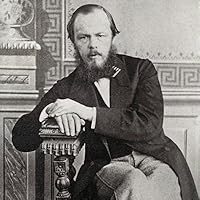

“Finally winning his subject’s trust, he took the seeds he had smuggled in there in his head and planted them in the loosened soil of prison life.”
― Silent Legacy
― Silent Legacy
“There were occasional dances at the main prison compound with live bands as well as holiday dinners, activities that Blanche greatly enjoyed. In her scrapbooks, she placed an autographed promotional photograph of one visiting band, The Rural Ramblers. ...
Blanche loved to dance and by all accounts she was very good at it. She applied to a correspondence course in dancing that came complete with diagrams of select dance steps to place on the floor and practice. She also cut similar dance instructions and diagrams from newspapers and magazines and put them in her scrapbooks. By 1937, she had mastered popular dances like jitterbug, rumba, samba, and tango.
The men’s prison, or “the big prison” as the women called it, hosted movies on Friday nights. Features like Roll Along Cowboy ... were standard, usually accompanied by some short musical feature such as Who’s Who and a newsreel. The admission was five cents. Blanche attended many of these movies. She loved movies all of her life.
Blanche Barrow’s periodic visits to the main prison allowed her to fraternize with males. She apparently had a brief encounter with “the boy in the warden’s office” in the fall of 1934. There are few details, but their relationship was evidently ended abruptly by prison officials in December.
There were other suitors, some from Blanche Barrow’s past, and some late arrivals...”
― My Life with Bonnie and Clyde
Blanche loved to dance and by all accounts she was very good at it. She applied to a correspondence course in dancing that came complete with diagrams of select dance steps to place on the floor and practice. She also cut similar dance instructions and diagrams from newspapers and magazines and put them in her scrapbooks. By 1937, she had mastered popular dances like jitterbug, rumba, samba, and tango.
The men’s prison, or “the big prison” as the women called it, hosted movies on Friday nights. Features like Roll Along Cowboy ... were standard, usually accompanied by some short musical feature such as Who’s Who and a newsreel. The admission was five cents. Blanche attended many of these movies. She loved movies all of her life.
Blanche Barrow’s periodic visits to the main prison allowed her to fraternize with males. She apparently had a brief encounter with “the boy in the warden’s office” in the fall of 1934. There are few details, but their relationship was evidently ended abruptly by prison officials in December.
There were other suitors, some from Blanche Barrow’s past, and some late arrivals...”
― My Life with Bonnie and Clyde
“No one. No Hunkies, no Spicks. No niggers and no Hoosiers. No Christ-killer no Christ-worshipers. No junkies and no torpedoes. Announcement and pronouncements were made by the front office and were rejected by the very minorities they were designed to aid.”
― Reprieve: The Testament of John Resko
― Reprieve: The Testament of John Resko

“Nothing is more disappointing than the long-awaited fulfillment of a wish: for the reality itself is too concrete and brings with it a certain calm. The exaltation on which one was living disappears, leaving in its place a great void in which things only appear as they are, nothing more.”
― Men in Prison
― Men in Prison
“During the years of solitary confinement we had communicated with other POWs using a tap code -- tapping on the walls. During the time I was tortured I mainly tapped on the wall with Howie Dunn, a marine F-4 pilot. I poured out my heart to him. We talked about what the Vietnamese were doing to us, we talked about food, we talked about women, we talked about our past lives and what we wanted to do in the future. We tapped for hours. At one point I said, "Howie, what do you look like?" He tapped back and said, "Actually, I look a lot like John Wayne." We were moved away from each other, and I didn't talk to him for about five years. Right before we were coming home the Vietnamese allowed us to all get out together in a big compound and "greet one another" as they said. So I'm standing there talking to some people and this guy walks up to me -- he's short and bald and nondescript, a complete and absolute stranger. I had never laid eyes on him before. He sticks out his hand and says, "Hi, I'm Howie Dunn." In a flash, there he was, my best friend.
[Porter Halyburton, US Navy pilot POW in North Vietnam, 1965 - 1973]”
― Vietnam: The Definitive Oral History, Told from All Sides
[Porter Halyburton, US Navy pilot POW in North Vietnam, 1965 - 1973]”
― Vietnam: The Definitive Oral History, Told from All Sides
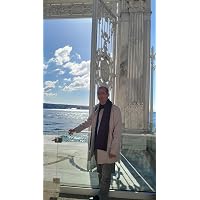
“One morning I came out of the mosque where I had been sleeping upstairs. A Qatari prisoner stepped out from the room next to it. His English was good. “Turk, come into my room. Don’t go downstairs. They’re going to execute a prisoner by firing squad. You can see it from here.” He had been in this prison for ten years, he told me, and had watched executions from that window more than once. He said it as if he were talking about the weather.”
― The Other Side: A True Story of Survival and Hope Inside Qatar Central Jail
― The Other Side: A True Story of Survival and Hope Inside Qatar Central Jail
All Quotes
|
My Quotes
|
Add A Quote
Browse By Tag
- Love Quotes 102.5k
- Life Quotes 81k
- Inspirational Quotes 77.5k
- Humor Quotes 45.5k
- Philosophy Quotes 32k
- Inspirational Quotes Quotes 28.5k
- God Quotes 27k
- Wisdom Quotes 25k
- Romance Quotes 25k
- Truth Quotes 25k
- Poetry Quotes 24.5k
- Life Lessons Quotes 23k
- Quotes Quotes 21.5k
- Death Quotes 21k
- Happiness Quotes 19k
- Hope Quotes 19k
- Faith Quotes 18.5k
- Inspiration Quotes 18k
- Relationships Quotes 16k
- Spirituality Quotes 16k
- Motivational Quotes 16k
- Religion Quotes 15.5k
- Life Quotes Quotes 15.5k
- Writing Quotes 15k
- Love Quotes Quotes 15k
- Success Quotes 14.5k
- Motivation Quotes 14k
- Time Quotes 13k
- Science Quotes 12.5k
- Motivational Quotes Quotes 12k