
Find & Share Quotes with Friends
Stalinism Quotes
Quotes tagged as "stalinism"
Showing 1-30 of 99

“Because the horror of Communism, Stalinism, is not that bad people do bad things — they always do. It's that good people do horrible things thinking they are doing something great."
[Six Questions for Slavoj Žižek, Harper's Magazine, November 11, 2011]”
―
[Six Questions for Slavoj Žižek, Harper's Magazine, November 11, 2011]”
―

“It’s ridiculous to talk about freedom in a society dominated by huge corporations. What kind of freedom is there inside a corporation? They’re totalitarian institutions - you take orders from above and maybe give them to people below you. There’s about as much freedom as under Stalinism.”
―
―

“...you are strong only as long as you don't deprive people of everything. For a person you've taken everything from is no longer in your power. He's free all over again.”
― The First Circle
― The First Circle

“The idealized market was supposed to deliver ‘friction free’ exchanges, in which the desires of consumers would be met directly, without the need for intervention or mediation by regulatory agencies. Yet the drive to assess the performance of workers and to measure forms of labor which, by their nature, are resistant to quantification, has inevitably required additional layers of management and bureaucracy. What we have is not a direct comparison of workers’ performance or output, but a comparison between the audited representation of that performance and output. Inevitably, a short-circuiting occurs, and work becomes geared towards the generation and massaging of representations rather than to the official goals of the work itself. Indeed, an anthropological study of local government in Britain argues that ‘More effort goes into ensuring that a local authority’s services are represented correctly than goes into actually improving those services’. This reversal of priorities is one of the hallmarks of a system which can be characterized without hyperbole as ‘market Stalinism’. What late capitalism repeats from Stalinism is just this valuing of symbols of achievement over actual achievement.
[…]
It would be a mistake to regard this market Stalinism as some deviation from the ‘true spirit’ of capitalism. On the contrary, it would be better to say that an essential dimension of Stalinism was inhibited by its association with a social project like socialism and can only emerge in a late capitalist culture in which images acquire an autonomous force. The way value is generated on the stock exchange depends of course less on what a company ‘really does’, and more on perceptions of, and beliefs about, its (future) performance. In capitalism, that is to say, all that is solid melts into PR, and late capitalism is defined at least as much by this ubiquitous tendency towards PR-production as it is by the imposition of market mechanisms.”
― Capitalist Realism: Is There No Alternative?
[…]
It would be a mistake to regard this market Stalinism as some deviation from the ‘true spirit’ of capitalism. On the contrary, it would be better to say that an essential dimension of Stalinism was inhibited by its association with a social project like socialism and can only emerge in a late capitalist culture in which images acquire an autonomous force. The way value is generated on the stock exchange depends of course less on what a company ‘really does’, and more on perceptions of, and beliefs about, its (future) performance. In capitalism, that is to say, all that is solid melts into PR, and late capitalism is defined at least as much by this ubiquitous tendency towards PR-production as it is by the imposition of market mechanisms.”
― Capitalist Realism: Is There No Alternative?
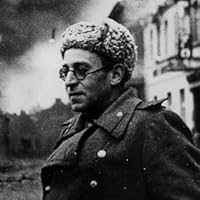
“And it was not merely tens of thousands, or hundreds of thousands, but hundreds of millions of people who were the obedient witnesses of this slaughter of the innocent. Nor were they merely obedient witnesses: when ordered to, they gave their support to this slaughter, voting in favour of it amid a hubbub of voices. There was something unexpected in their degree of obedience... The extreme violence of the totalitarian social systems proved able to paralyse the human spirit throughout whole continents.”
― Life and Fate
― Life and Fate
“That bowl of soup—it was dearer than freedom, dearer than life itself, past, present, and future.”
― One Day In The Life Of Ivan Denisovich
― One Day In The Life Of Ivan Denisovich

“The degeneration of the revolution in Russia does not pass from the revolution for communism to the revolution for a developed kind of capitalism, but to a pure capitalist revolution. It runs in parallel with world-wide capitalist domination which, by successive steps, eliminates old feudal and Asiatic forms in various zones. While the historical situation in the seventeenth, eighteenth and nineteenth centuries caused the capitalist revolution to take liberal forms, in the twentieth century it must have totalitarian and bureaucratic ones.”
―
―

“There is one key area in which Zuma has made no attempt at reconciliation whatsoever: criminal justice and security. The ministers of justice, defence, intelligence (now called 'state security' in a throwback to both apartheid and the ANC's old Stalinist past), police and communications are all die-hard Zuma loyalists. Whatever their line functions, they will also play the role they have played so ably to date: keeping Zuma out of court—and making sure the state serves Zuma as it once did Mbeki.”
―
―

“So, whenever the subject of Iraq came up, as it did keep on doing through the Clinton years, I had no excuse for not knowing the following things: I knew that its one-party, one-leader state machine was modeled on the precedents of both National Socialism and Stalinism, to say nothing of Al Capone. I knew that its police force was searching for psychopathic killers and sadistic serial murderers, not in order to arrest them but to employ them. I knew that its vast patrimony of oil wealth, far from being 'nationalized,' had been privatized for the use of one family, and was being squandered on hideous ostentation at home and militarism abroad. (Post-Kuwait inspections by the United Nations had uncovered a huge nuclear-reactor site that had not even been known about by the international community.) I had seen with my own eyes the evidence of a serious breach of the Genocide Convention on Iraqi soil, and I had also seen with my own eyes the evidence that it had been carried out in part with the use of weapons of mass destruction. I was, if you like, the prisoner of this knowledge. I certainly did not have the option of un-knowing it.”
― Hitch 22: A Memoir
― Hitch 22: A Memoir
“Since the fall of the Berlin Wall in 1989, historians have become both more accurate and more honest—fractionally more brave, one might say—about that 'other' cleansing of the regions and peoples that were ground to atoms between the upper and nether millstones of Hitlerism and Stalinism. One of the most objective chroniclers is Professor Timothy Snyder of Yale University. In his view, it is still 'Operation Reinhardt,' or the planned destruction of Polish Jewry, that is to be considered as the centerpiece of what we commonly call the Holocaust, in which of the estimated 5.7 million Jewish dead, 'roughly three million were prewar Polish citizens.' We should not at all allow ourselves to forget the millions of non-Jewish citizens of Belarus, Russia, Ukraine, and other Slav territories who were also massacred. But for me the salient fact remains that anti-Semitism was the regnant, essential, organizing principle of all the other National Socialist race theories. It is thus not to be thought of as just one prejudice among many.”
― Hitch 22: A Memoir
― Hitch 22: A Memoir
“The whole discussion now underway on revolutionary forms in Russia and in China boils down to the judgement to be made of the historical phenomenon of the "appearance" of industrialism and mechanisation in huge areas of the world previously dominated by landed and precapitalist forms of production.
Constructing industrialism and mechanising things is supposedly the same as building socialism whenever central and "national" plans are made. This is the mistaken thesis.”
― Murdering the Dead: Amadeo Bordiga on Capitalism and Other Disasters
Constructing industrialism and mechanising things is supposedly the same as building socialism whenever central and "national" plans are made. This is the mistaken thesis.”
― Murdering the Dead: Amadeo Bordiga on Capitalism and Other Disasters
“It can certainly be misleading to take the attributes of a movement, or the anxieties and contradictions of a moment, and to personalize or 'objectify' them in the figure of one individual. Yet ordinary discourse would be unfeasible without the use of portmanteau terms—like 'Stalinism,' say—just as the most scrupulous insistence on historical forces will often have to concede to the sheer personality of a Napoleon or a Hitler. I thought then, and I think now, that Osama bin Laden was a near-flawless personification of the mentality of a real force: the force of Islamic jihad. And I also thought, and think now, that this force absolutely deserves to be called evil, and that the recent decapitation of its most notorious demagogue and organizer is to be welcomed without reserve. Osama bin Laden's writings and actions constitute a direct negation of human liberty, and vent an undisguised hatred and contempt for life itself.”
― The Enemy
― The Enemy
“What people still do not like to admit is that there were two crimes in the form of one. Just as the destruction of Jewry was the necessary condition for the rise and expansion of Nazism, so the ethnic cleansing of Germans was a precondition for the Stalinization of Poland. I first noticed this point when reading an essay by the late Ernest Gellner, who at the end of the war had warned Eastern Europeans that collective punishment of Germans would put them under Stalin's tutelage indefinitely. They would always feel the guilty need for an ally against potential German revenge.”
― Hitch 22: A Memoir
― Hitch 22: A Memoir

“The first thing totalitarian leaders do is make sure their voices are the only ones left.”
― The Psychology of Totalitarianism
― The Psychology of Totalitarianism

“Such impulses have displayed themselves very widely across left and liberal opinion in recent months. Why? For some, because what the US government and its allies do, whatever they do, has to be opposed—and opposed however thuggish and benighted the forces which this threatens to put your anti-war critic into close company with. For some, because of an uncontrollable animus towards George Bush and his administration. For some, because of a one-eyed perspective on international legality and its relation to issues of international justice and morality. Whatever the case or the combination, it has produced a calamitous compromise of the core values of socialism, or liberalism or both, on the part of thousands of people who claim attachment to them. You have to go back to the apologias for, and fellow-travelling with, the crimes of Stalinism to find as shameful a moral failure of liberal and left opinion as in the wrong-headed—and too often, in the circumstances, sickeningly smug—opposition to the freeing of the Iraqi people from one of the foulest regimes on the planet.”
― A Matter of Principle: Humanitarian Arguments for War in Iraq
― A Matter of Principle: Humanitarian Arguments for War in Iraq
“Some lurid things have been said about me—that I am a racist, a hopeless alcoholic, a closet homosexual and so forth—that I leave to others to decide the truth of. I'd only point out, though, that if true these accusations must also have been true when I was still on the correct side, and that such shocking deformities didn't seem to count for so much then. Arguing with the Stalinist mentality for more than three decades now, and doing a bit of soapboxing and street-corner speaking on and off, has meant that it takes quite a lot to hurt my tender feelings, or bruise my milk-white skin.”
― Christopher Hitchens and His Critics: Terror, Iraq, and the Left
― Christopher Hitchens and His Critics: Terror, Iraq, and the Left

“Stalin and Kim made human idols of themselves because they believed, as utopian idealists always do, in the ultimate goodness of themselves and the unchallengeable rightness of their decisions. There was no higher power, and so there could be no higher law. If people disagreed with them, it was because those people were in some way defective--insane, malignant, or mercenary. The rulers could not tolerate actual religion, because they could not tolerate any rival authority or any rival source or judge of goodness, gratitude, and justice.”
―
―
“While they were still transporting the grain, there was dust wherever you went. It was like clouds of smoke—over the village, over the fields, over the face of the moon at night. I remember one man going out of his mind. 'We're on fire!' he kept screaming. 'The sky is burning! The earth is burning!' No, it was not the sky—it was life itself that was burning.”
― Forever Flowing
― Forever Flowing
“Silence!” the NKVD captain snapped, raising his voice sharply before dropping it to a barely audible, growling bass.
“We cannot allow enemies of the people to be captured by the Germans — they are far too valuable material for enemy sabotage units.”
The State Security officer’s hard stare turned icy.
“Therefore, I order this: without delay, together with my men — select the healthy prisoners capable of continuing the march.
All the wounded and the sick — shoot them.”
— Volodymyr Shablia, Stone. Book One
Context note:
During a prisoner transport in Stalin’s USSR at the outbreak of World War II, Soviet security officers order the execution of wounded and sick prisoners to prevent their capture by German forces. The quote reflects the brutal logic of Stalinist repression, where human life was treated as expendable in the name of state security.”
― Камінь. Біографічний роман. Книга перша. Перші кроки до світла та назад: Дитинство та занурення в ГУЛАГ.
“We cannot allow enemies of the people to be captured by the Germans — they are far too valuable material for enemy sabotage units.”
The State Security officer’s hard stare turned icy.
“Therefore, I order this: without delay, together with my men — select the healthy prisoners capable of continuing the march.
All the wounded and the sick — shoot them.”
— Volodymyr Shablia, Stone. Book One
Context note:
During a prisoner transport in Stalin’s USSR at the outbreak of World War II, Soviet security officers order the execution of wounded and sick prisoners to prevent their capture by German forces. The quote reflects the brutal logic of Stalinist repression, where human life was treated as expendable in the name of state security.”
― Камінь. Біографічний роман. Книга перша. Перші кроки до світла та назад: Дитинство та занурення в ГУЛАГ.

“The extreme left promises egalitarian camaraderie for all peoples, regardless of ethnicity or religion. In practice, however, Communist governments have oppresed minority groups.”
― Our Political Nature: The Evolutionary Origins of What Divides Us
― Our Political Nature: The Evolutionary Origins of What Divides Us
“Soviet leaders wanted hearts and minds as much as mmoney and property. To get heart and minds, they needed to get at rituals; and they did. From the Revolution's earliest days, redesigning citizens' ritual lives was a key part of the reformist movement.”
― Ritual in Human Evolution and Religion: Psychological and Ritual Resources
― Ritual in Human Evolution and Religion: Psychological and Ritual Resources
“My comrades, who criticized Soviet socialism and Stalin's dictatorship within the party at every turn, were full of excessive praise for party leaders who were merely imitating it 50 years later.”
―
―
“Daghestan must be governed in accordance with its specific features, its manner of life and customs. We are told that among the Daghestan peoples the Sharia is of great importance. We have also been informed that the enemies of Soviet power are spreading rumours that it has banned the Sharia. I have been authorized by the Government of the Russian Socialist Federative Soviet Republic to state here that these rumours are false. The Government of Russia gives every people the full right to govern itself on the basis of its laws and customs. The Soviet Government considers that the Sharia, as common law, is as fully authorized as that of any other of the peoples inhabiting Russia. If the Daghestan people desire to preserve their laws and customs, they should be preserved. (from Congress of the Peoples of Daghestan, 1920)”
―
―
“I fear that even my authority as an army commander won’t help. The fear of the High Command is too great.”
― Камень. Биографический роман. Книга вторая. Непростые дороги в ад: Выживание в условиях насилия
― Камень. Биографический роман. Книга вторая. Непростые дороги в ад: Выживание в условиях насилия
“Peter had only just graduated with honors from the Zaporizhzhia Pedagogical Institute and was supposed to leave for his first teaching job the very next day. Instead, he was arrested.
For what sins was a student obsessed with honesty punished — a young man who had risen from the very bottom of society and sincerely believed in the socialist ideal? His parents did not know. Peter himself did not know either. He believed what had happened was a terrible mistake and hoped it would soon be corrected.
— Volodymyr Shablia, Stone. Book Two
Context note: In the Stalinist USSR, arrests often struck young, loyal, and idealistic citizens. Many believed their detention was a bureaucratic error — until the machinery of repression proved otherwise.”
― Камінь. Біографічний роман. Книга друга. Непрості дороги до пекла: Виживання в умовах насильства.
For what sins was a student obsessed with honesty punished — a young man who had risen from the very bottom of society and sincerely believed in the socialist ideal? His parents did not know. Peter himself did not know either. He believed what had happened was a terrible mistake and hoped it would soon be corrected.
— Volodymyr Shablia, Stone. Book Two
Context note: In the Stalinist USSR, arrests often struck young, loyal, and idealistic citizens. Many believed their detention was a bureaucratic error — until the machinery of repression proved otherwise.”
― Камінь. Біографічний роман. Книга друга. Непрості дороги до пекла: Виживання в умовах насильства.
“Stalin perceived the world in stark black and white. In the same way, he divided people, nations, actions, and ideas into only two absolute categories: “ours” and “theirs.”
“Ours” were all those — and everything — that, at the moment of decision, fell under his control or contributed to strengthening it. “Theirs” were everyone else, and everything else.
He saw his role as a strategist in constructing a system of power that would force each of the “ours,” individually and collectively, to work at the very limit of human endurance in order to fulfill his strategic design.
That design was simple and ruthless: to endlessly increase the number and strength of the “ours” by coercing the “theirs” into becoming “ours,” while simultaneously destroying — or, as a last resort, neutralizing — all who refused to submit.
— Volodymyr Shablia, Stone. Book One
Context note:
This passage reflects the ideological logic of Stalinist totalitarianism, where power was built on absolute division, forced loyalty, and systematic repression. In the Soviet worldview of the 1930s–1940s, survival depended on belonging to “ours” — or being destroyed as “theirs.”
― Камень. Биографический роман: Часть первая. Первые шаги к свету и обратно
“Ours” were all those — and everything — that, at the moment of decision, fell under his control or contributed to strengthening it. “Theirs” were everyone else, and everything else.
He saw his role as a strategist in constructing a system of power that would force each of the “ours,” individually and collectively, to work at the very limit of human endurance in order to fulfill his strategic design.
That design was simple and ruthless: to endlessly increase the number and strength of the “ours” by coercing the “theirs” into becoming “ours,” while simultaneously destroying — or, as a last resort, neutralizing — all who refused to submit.
— Volodymyr Shablia, Stone. Book One
Context note:
This passage reflects the ideological logic of Stalinist totalitarianism, where power was built on absolute division, forced loyalty, and systematic repression. In the Soviet worldview of the 1930s–1940s, survival depended on belonging to “ours” — or being destroyed as “theirs.”
― Камень. Биографический роман: Часть первая. Первые шаги к свету и обратно
“The prisoners, feral and maddened by thirst, tried to snatch discarded watermelon rinds lying along the road or to drink from muddy puddles nearby. At first, the NKVD guards simply shot those who dared rush toward the water. But soon the situation slipped out of control.
When a small puddle flashed in the sun, all the prisoners surged toward this miserable source of water, ignoring fear of death, desperate shouts, and gunfire from the guards. They fought wildly, beating one another for the right to press their lips to the life-giving moisture.
Peter reached the puddle among the first, but several men were already lying in it, gulping greedily and blocking others. In a fit of rage, Peter grabbed one of them by the clothes, flung him several meters aside, collapsed into his place — and fused his mouth to the water. He drank frantically. For the first few minutes, he felt nothing but a dizzying mix of rapture, pleasure, and joy as his thirst was quenched. Only when mud replaced water in his mouth did awareness of what was happening slowly begin to return.
— Volodymyr Shablia, Stone. Book One
Context note:
During a prisoner transport in Stalin’s USSR in the early years of World War II, extreme thirst drove Gulag inmates to the edge of madness. Even filthy puddles became objects of violent struggle, exposing how wartime Soviet repression reduced human survival to pure instinct.”
― Камінь. Біографічний роман. Книга перша. Перші кроки до світла та назад: Дитинство та занурення в ГУЛАГ.
When a small puddle flashed in the sun, all the prisoners surged toward this miserable source of water, ignoring fear of death, desperate shouts, and gunfire from the guards. They fought wildly, beating one another for the right to press their lips to the life-giving moisture.
Peter reached the puddle among the first, but several men were already lying in it, gulping greedily and blocking others. In a fit of rage, Peter grabbed one of them by the clothes, flung him several meters aside, collapsed into his place — and fused his mouth to the water. He drank frantically. For the first few minutes, he felt nothing but a dizzying mix of rapture, pleasure, and joy as his thirst was quenched. Only when mud replaced water in his mouth did awareness of what was happening slowly begin to return.
— Volodymyr Shablia, Stone. Book One
Context note:
During a prisoner transport in Stalin’s USSR in the early years of World War II, extreme thirst drove Gulag inmates to the edge of madness. Even filthy puddles became objects of violent struggle, exposing how wartime Soviet repression reduced human survival to pure instinct.”
― Камінь. Біографічний роман. Книга перша. Перші кроки до світла та назад: Дитинство та занурення в ГУЛАГ.
“I have quite a few of ‘my own’ people now,” Stalin concluded, “but the very first day of the war revealed a lack of proper organization and coordination among them. Worse still, among these ‘my own’ there are plenty of fools — and traitors lying low. This filth must be eliminated as quickly as possible, because a new system of power can be built only if I do not fear for my rear.”
He turned back to the sheet of paper and wrote decisively:
“Immediately neutralize all spies and potential enemies.”
The General Secretary of the Communist Party raised his eyes to the ceiling. Images of former comrades — now exposed as traitors — flashed before his mind’s eye. Blood rushed to his face; beneath his habitual vigilance, rage began to surface.
Yes, I too had erred for too long, following the lead of Leninist–Trotskyist lackeys who believed the revolution could be exported by financing foreign anti-imperialist movements. Through these empty talkers, colossal resources had vanished abroad like water into sand — resources that should have gone into armaments. And time? Years lost. Years that were desperately needed now.
These double-dealers should have been destroyed immediately after Trotsky’s defeat — a barren breed capable only of parroting outdated ideas of long-dead leaders. At least now they were no longer underfoot, no longer pulling in opposite directions and tearing the system apart.
“Stop,” Stalin ordered himself. “I must not descend into emotion. That is unacceptable. What matters is drawing conclusions from my own miscalculations.”
— Volodymyr Shablia, Stone. Book One
Context note:
An internal monologue of Joseph Stalin during the first days of the German–Soviet War, a later and decisive phase of World War II. The passage reveals the core logic of Stalinist power: paranoia, purges, and the conviction that absolute control — rather than human life — is the true foundation of victory. It exposes how fear, repression, and ideological obsession shaped decision-making at the highest levels of the Soviet state.”
― Камінь. Біографічний роман. Книга перша. Перші кроки до світла та назад: Дитинство та занурення в ГУЛАГ.
He turned back to the sheet of paper and wrote decisively:
“Immediately neutralize all spies and potential enemies.”
The General Secretary of the Communist Party raised his eyes to the ceiling. Images of former comrades — now exposed as traitors — flashed before his mind’s eye. Blood rushed to his face; beneath his habitual vigilance, rage began to surface.
Yes, I too had erred for too long, following the lead of Leninist–Trotskyist lackeys who believed the revolution could be exported by financing foreign anti-imperialist movements. Through these empty talkers, colossal resources had vanished abroad like water into sand — resources that should have gone into armaments. And time? Years lost. Years that were desperately needed now.
These double-dealers should have been destroyed immediately after Trotsky’s defeat — a barren breed capable only of parroting outdated ideas of long-dead leaders. At least now they were no longer underfoot, no longer pulling in opposite directions and tearing the system apart.
“Stop,” Stalin ordered himself. “I must not descend into emotion. That is unacceptable. What matters is drawing conclusions from my own miscalculations.”
— Volodymyr Shablia, Stone. Book One
Context note:
An internal monologue of Joseph Stalin during the first days of the German–Soviet War, a later and decisive phase of World War II. The passage reveals the core logic of Stalinist power: paranoia, purges, and the conviction that absolute control — rather than human life — is the true foundation of victory. It exposes how fear, repression, and ideological obsession shaped decision-making at the highest levels of the Soviet state.”
― Камінь. Біографічний роман. Книга перша. Перші кроки до світла та назад: Дитинство та занурення в ГУЛАГ.
“Somewhere nearby, artillery thundered. Vast fields — flat as a table, without a single tree — turned any moving figure into an easy target against the monotonous landscape, drawing German pilots toward whatever appeared below.
Twice already, the exhausted and terrified prisoners were strafed by Junkers aircraft returning from their missions, deciding to use up their remaining ammunition. At the command of the group leader — a State Security lieutenant — everyone scattered in all directions. Yet despite this, nearly twenty people, including soldiers, were killed by the bullets of the German vultures.
Roughly the same number were executed by the guards themselves. Anyone seriously wounded, anyone unable to keep walking, was shot on the spot.
— Volodymyr Shablia, Stone. Book One
Context note:
During the first weeks of the German–Soviet War in 1941, prisoners and soldiers are driven across the open steppe. Caught between German air attacks and Soviet security forces, the weak and wounded are systematically eliminated. The scene exposes the brutal logic of total war on the Eastern Front.”
― Камень. Биографический роман: Часть первая. Первые шаги к свету и обратно
Twice already, the exhausted and terrified prisoners were strafed by Junkers aircraft returning from their missions, deciding to use up their remaining ammunition. At the command of the group leader — a State Security lieutenant — everyone scattered in all directions. Yet despite this, nearly twenty people, including soldiers, were killed by the bullets of the German vultures.
Roughly the same number were executed by the guards themselves. Anyone seriously wounded, anyone unable to keep walking, was shot on the spot.
— Volodymyr Shablia, Stone. Book One
Context note:
During the first weeks of the German–Soviet War in 1941, prisoners and soldiers are driven across the open steppe. Caught between German air attacks and Soviet security forces, the weak and wounded are systematically eliminated. The scene exposes the brutal logic of total war on the Eastern Front.”
― Камень. Биографический роман: Часть первая. Первые шаги к свету и обратно
“If your case, as a politically repressed person, is reviewed by the Special Council, you are almost guaranteed the standard sentence: ten years in labor camps plus three years’ loss of civil rights. The Special Council delivers verdicts in batches, so it simply does not have time to examine each case in detail. But if a judicial panel hears your case—and if I, as the prosecutor, withdraw the charges—you might even be acquitted. For that, however, you would need to submit a request to be sent to the front and, if acquitted, go to war.”
“And are you prepared to withdraw the charges?” Peter asked in surprise.
“I will be frank with you,” the prosecutor replied, enunciating each word. “As a patriot of my country, I believe that in wartime young, strong, and intelligent men like you should fight the enemy—not rot in the camps. Two of my own sons are at the front fulfilling their duty to the Motherland, and I am ready to help you do the same.”
“Thank you,” Peter said firmly. “I, too, am ready to defend my country rather than remain safely in the rear.”
Context note:
Set during World War II under Stalin’s regime, this scene exposes the legal absurdity of Soviet repression, where “justice” depended less on evidence than on political expediency. Special tribunals could issue sentences in batches, while wartime necessity sometimes transformed prisoners into soldiers—revealing a system in which ideology, survival, and patriotism collided.”
― Камінь. Біографічний роман. Книга третя. Несправджені сподівання.: Все буде Голодомор.
“And are you prepared to withdraw the charges?” Peter asked in surprise.
“I will be frank with you,” the prosecutor replied, enunciating each word. “As a patriot of my country, I believe that in wartime young, strong, and intelligent men like you should fight the enemy—not rot in the camps. Two of my own sons are at the front fulfilling their duty to the Motherland, and I am ready to help you do the same.”
“Thank you,” Peter said firmly. “I, too, am ready to defend my country rather than remain safely in the rear.”
Context note:
Set during World War II under Stalin’s regime, this scene exposes the legal absurdity of Soviet repression, where “justice” depended less on evidence than on political expediency. Special tribunals could issue sentences in batches, while wartime necessity sometimes transformed prisoners into soldiers—revealing a system in which ideology, survival, and patriotism collided.”
― Камінь. Біографічний роман. Книга третя. Несправджені сподівання.: Все буде Голодомор.
All Quotes
|
My Quotes
|
Add A Quote
Browse By Tag
- Love Quotes 102.5k
- Life Quotes 81k
- Inspirational Quotes 77.5k
- Humor Quotes 45.5k
- Philosophy Quotes 32k
- Inspirational Quotes Quotes 29k
- God Quotes 27k
- Wisdom Quotes 25.5k
- Romance Quotes 25k
- Truth Quotes 25k
- Poetry Quotes 24.5k
- Life Lessons Quotes 23k
- Quotes Quotes 21.5k
- Death Quotes 21k
- Happiness Quotes 19k
- Hope Quotes 19k
- Faith Quotes 18.5k
- Inspiration Quotes 18k
- Relationships Quotes 16k
- Spirituality Quotes 16k
- Motivational Quotes 16k
- Religion Quotes 15.5k
- Life Quotes Quotes 15.5k
- Writing Quotes 15k
- Love Quotes Quotes 15k
- Success Quotes 14.5k
- Motivation Quotes 14k
- Time Quotes 13k
- Science Quotes 12.5k
- Motivational Quotes Quotes 12k