
Find & Share Quotes with Friends
Eastern Front Quotes
Quotes tagged as "eastern-front"
Showing 1-9 of 9
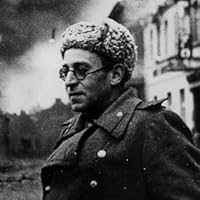
“We leafed through a series of the [1941 Soviet] Front newspaper. I came across the following phrase in a leading article: 'The much-battered enemy continued his cowardly advance.”
― A Writer at War: Vasily Grossman with the Red Army
― A Writer at War: Vasily Grossman with the Red Army
“While the triple wheel suspension gave a smoother ride, it also meant the interleaved wheels were susceptible to becoming fouled with mud and snow. If this clogging were allowed to freeze on the Eastern Front, it set like concrete and jammed up the wheels, leaving the Tiger completely immobilised. The Soviets soon discovered that the Tiger was vulnerable to the Russian winter and timed their attacks for the early hours, when they knew that enemy vehicles had been frozen solid during the night.”
― Tiger I & Tiger II
― Tiger I & Tiger II

“Antanas eased up on the accelerator and pulled the truck onto the shoulder. The sound of the soldiers' footsteps crunching in the snow made Maria sit up straight. The truck had driven about thirty metres past the patrol, but none of the soldiers had fired upon them. Antanas hoped fervently that the transport documents that Peter had furnished him would pass inspection. Maria reached down and touched a metal pipe concealed beneath her seat. She was prepared to use it.
Jadwyga continued to pray quietly. "Mother Mary, spare me, Maria, and the other women from rape, and Antanas from death."
As a sergeant approached the truck, Jadwyga's stomach cramped, sweat broke out on her forehead, and her arms began to shake. Then she fainted. Maria propped Jadwyga up to make it look as though she was sleeping, and then smiled at the sergeant who was rapping on the glass.
Antanas rolled down his window.”
― Caught Between Two Devils
Jadwyga continued to pray quietly. "Mother Mary, spare me, Maria, and the other women from rape, and Antanas from death."
As a sergeant approached the truck, Jadwyga's stomach cramped, sweat broke out on her forehead, and her arms began to shake. Then she fainted. Maria propped Jadwyga up to make it look as though she was sleeping, and then smiled at the sergeant who was rapping on the glass.
Antanas rolled down his window.”
― Caught Between Two Devils

“Silence!” the NKVD captain snapped, raising his voice sharply before dropping it to a barely audible, growling bass.
“We cannot allow enemies of the people to be captured by the Germans — they are far too valuable material for enemy sabotage units.”
The State Security officer’s hard stare turned icy.
“Therefore, I order this: without delay, together with my men — select the healthy prisoners capable of continuing the march.
All the wounded and the sick — shoot them.”
— Volodymyr Shablia, Stone. Book One
Context note:
During a prisoner transport in Stalin’s USSR at the outbreak of World War II, Soviet security officers order the execution of wounded and sick prisoners to prevent their capture by German forces. The quote reflects the brutal logic of Stalinist repression, where human life was treated as expendable in the name of state security.”
― Камінь. Біографічний роман. Книга перша. Перші кроки до світла та назад: Дитинство та занурення в ГУЛАГ.
“We cannot allow enemies of the people to be captured by the Germans — they are far too valuable material for enemy sabotage units.”
The State Security officer’s hard stare turned icy.
“Therefore, I order this: without delay, together with my men — select the healthy prisoners capable of continuing the march.
All the wounded and the sick — shoot them.”
— Volodymyr Shablia, Stone. Book One
Context note:
During a prisoner transport in Stalin’s USSR at the outbreak of World War II, Soviet security officers order the execution of wounded and sick prisoners to prevent their capture by German forces. The quote reflects the brutal logic of Stalinist repression, where human life was treated as expendable in the name of state security.”
― Камінь. Біографічний роман. Книга перша. Перші кроки до світла та назад: Дитинство та занурення в ГУЛАГ.
“For kilometres on end the road was totally jammed with vehicles drawn up three or four abreast - petrol tankers, ammunition trucks, teams of horses,ambulances. It was impossible to move forwards or back. Russian combat aircraft now arrived in wave after wave, and threw bombs into that unprotected, inextricable mass. This is what hell must be like.”
―
―
“We are living in an artificial world—a world of fantasies and illusions. We've learned beautiful phrases but haven't learned yet how to carry out that little bit that we know. Our brains are stuffed with quotations, while at the same time nine out of ten of these dogmas are incomprehensible, murky, or lies. Which are worthwhile and which are not? Yes, I must stop being false before others and myself. How simple it all seems! But how do I do this? Let just a little time pass, and then we may understand—only the simplest, honorable acts determine the value of a man. Only I myself can and must help myself to become an adult.”
― Through the Maelstrom: A Red Army Soldier's War on the Eastern Front, 1942-1945
― Through the Maelstrom: A Red Army Soldier's War on the Eastern Front, 1942-1945
“– But keeping such large troop formations idle here, while the enemy can outflank us from the right, is extremely dangerous!”
Context note: Rigid command structures in the Red Army and a fear of initiative often led to catastrophic delays and encirclements in the early years of the war. In this case, the military leader is frustrated by the impossibility of implementing an obvious solution.”
― Камінь. Біографічний роман. Книга друга. Непрості дороги до пекла: Виживання в умовах насильства.
Context note: Rigid command structures in the Red Army and a fear of initiative often led to catastrophic delays and encirclements in the early years of the war. In this case, the military leader is frustrated by the impossibility of implementing an obvious solution.”
― Камінь. Біографічний роман. Книга друга. Непрості дороги до пекла: Виживання в умовах насильства.
“Bang!”
The explosion thundered right beside him. Danilo’s body was thrown aside like a rag doll, and his mind shut down instantly.
What happened next, Red Army soldier Shablia neither saw nor heard.
The sounds of battle, the shouts of men, machine-gun fire, shell bursts — even the massive shockwave when the bridge and dam were blown up — could no longer reach his consciousness.
Author: Volodymyr Shablia:
Context note: This passage describes the moments of Danylo Shablia's last battle during the chaotic retreat of the Red Army, emphasizing the sudden, impersonal nature of events in World War II.”
― Камінь. Біографічний роман. Книга друга. Непрості дороги до пекла: Виживання в умовах насильства.
The explosion thundered right beside him. Danilo’s body was thrown aside like a rag doll, and his mind shut down instantly.
What happened next, Red Army soldier Shablia neither saw nor heard.
The sounds of battle, the shouts of men, machine-gun fire, shell bursts — even the massive shockwave when the bridge and dam were blown up — could no longer reach his consciousness.
Author: Volodymyr Shablia:
Context note: This passage describes the moments of Danylo Shablia's last battle during the chaotic retreat of the Red Army, emphasizing the sudden, impersonal nature of events in World War II.”
― Камінь. Біографічний роман. Книга друга. Непрості дороги до пекла: Виживання в умовах насильства.
“Somewhere nearby, artillery thundered. Vast fields — flat as a table, without a single tree — turned any moving figure into an easy target against the monotonous landscape, drawing German pilots toward whatever appeared below.
Twice already, the exhausted and terrified prisoners were strafed by Junkers aircraft returning from their missions, deciding to use up their remaining ammunition. At the command of the group leader — a State Security lieutenant — everyone scattered in all directions. Yet despite this, nearly twenty people, including soldiers, were killed by the bullets of the German vultures.
Roughly the same number were executed by the guards themselves. Anyone seriously wounded, anyone unable to keep walking, was shot on the spot.
— Volodymyr Shablia, Stone. Book One
Context note:
During the first weeks of the German–Soviet War in 1941, prisoners and soldiers are driven across the open steppe. Caught between German air attacks and Soviet security forces, the weak and wounded are systematically eliminated. The scene exposes the brutal logic of total war on the Eastern Front.”
― Камень. Биографический роман: Часть первая. Первые шаги к свету и обратно
Twice already, the exhausted and terrified prisoners were strafed by Junkers aircraft returning from their missions, deciding to use up their remaining ammunition. At the command of the group leader — a State Security lieutenant — everyone scattered in all directions. Yet despite this, nearly twenty people, including soldiers, were killed by the bullets of the German vultures.
Roughly the same number were executed by the guards themselves. Anyone seriously wounded, anyone unable to keep walking, was shot on the spot.
— Volodymyr Shablia, Stone. Book One
Context note:
During the first weeks of the German–Soviet War in 1941, prisoners and soldiers are driven across the open steppe. Caught between German air attacks and Soviet security forces, the weak and wounded are systematically eliminated. The scene exposes the brutal logic of total war on the Eastern Front.”
― Камень. Биографический роман: Часть первая. Первые шаги к свету и обратно
All Quotes
|
My Quotes
|
Add A Quote
Browse By Tag
- Love Quotes 102.5k
- Life Quotes 81k
- Inspirational Quotes 77.5k
- Humor Quotes 45.5k
- Philosophy Quotes 32k
- Inspirational Quotes Quotes 28.5k
- God Quotes 27k
- Wisdom Quotes 25k
- Romance Quotes 25k
- Truth Quotes 25k
- Poetry Quotes 24.5k
- Life Lessons Quotes 23k
- Quotes Quotes 21.5k
- Death Quotes 21k
- Happiness Quotes 19k
- Hope Quotes 19k
- Faith Quotes 18.5k
- Inspiration Quotes 18k
- Relationships Quotes 16k
- Spirituality Quotes 16k
- Motivational Quotes 16k
- Religion Quotes 15.5k
- Life Quotes Quotes 15.5k
- Writing Quotes 15k
- Love Quotes Quotes 15k
- Success Quotes 14.5k
- Motivation Quotes 14k
- Time Quotes 13k
- Science Quotes 12.5k
- Motivational Quotes Quotes 12k