
Find & Share Quotes with Friends
Prison Camps Quotes
Quotes tagged as "prison-camps"
Showing 1-19 of 19

“Freedom meant one thing to him—home.
But they wouldn't let him go home.”
― One Day In The Life Of Ivan Denisovich
But they wouldn't let him go home.”
― One Day In The Life Of Ivan Denisovich
“That bowl of soup—it was dearer than freedom, dearer than life itself, past, present, and future.”
― One Day In The Life Of Ivan Denisovich
― One Day In The Life Of Ivan Denisovich
“You don't have to be very bright to carry a handbarrow. So the squad leader gave such work to people who'd been in positions of authority.”
― One Day In The Life Of Ivan Denisovich
― One Day In The Life Of Ivan Denisovich
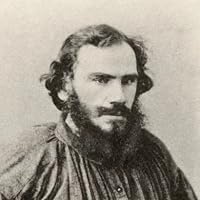
“All these institutions [prisons] seemed purposely invented for the production of depravity and vice, condensed to such a degree that no other conditions could produce it, and for the spreading of this condensed depravity and vice broadcast among the whole population.”
― Resurrection
― Resurrection
“Three thousand six hundred and fifty-three days.
The three extra days were for leap years.”
― One Day In The Life Of Ivan Denisovich
The three extra days were for leap years.”
― One Day In The Life Of Ivan Denisovich
“Shukhov had figured it all out. If he didn't sign he'd be shot. If he signed he'd still get a chance to live. So he signed.”
― One Day In The Life Of Ivan Denisovich
― One Day In The Life Of Ivan Denisovich
“Here a man can live. All right, it's a 'special' camp. So what? Does it bother you to wear a number? They don't weigh anything, those numbers.”
― One Day In The Life Of Ivan Denisovich
― One Day In The Life Of Ivan Denisovich
“Shukhov gazed at the ceiling in silence. Now he didn't know whether he wanted freedom or not. At first he'd longed for it. Every night he'd counted the days of his stretch—how many had passed, how many were coming. And then he'd grown bored with counting. And then it became clear that men like him wouldn't ever be allowed to return home, that they'd be exiled.”
― One Day In The Life Of Ivan Denisovich
― One Day In The Life Of Ivan Denisovich

“Only around 1983 did I begin to realize that not he but rather Kim Il-sung and his regime were the real causes of my suffering. They were the ones responsible for the camp and for filling it with innocent people. All during my childhood, Kim Il-sung had been like a god to me. A few years in the camp cured me of my faith.”
― The Aquariums of Pyongyang: Ten Years in the North Korean Gulag
― The Aquariums of Pyongyang: Ten Years in the North Korean Gulag
“You put your back into the work. For unless you could manage to provide yourself with the means of warming up, you and everyone else would give out on the spot.”
― One Day In The Life Of Ivan Denisovich
― One Day In The Life Of Ivan Denisovich

“The desert is an unpredictable place. One day you're sweating, the next you're freezing. One moment the air is damp and cloudy like when the tide is coming in, the next the entire world is orange and dusty. The desert must be a woman.”
― Of Those So Close Beside Me
― Of Those So Close Beside Me
“A committed escaper! One who never for a minute doubts that a man cannot live behind bars—not even as the most comfortable of trusties, in the accounts office, in the Culture and Education Section, or in charge of the bread ration. One who once he lands in prison spends every waking hour thinking about escape and dreams of escape at night. One who has vowed never to resign himself, and subordinates every action to his need to escape. One for whom a day in prison can never be just another day; there are only days of preparation for escape, days on the run, and days in the punishment cells after recapture and a beating.
A committed escaper! This means one who knows what he is undertaking. One who has seen the bullet-riddled bodies of other escapers on display along the central tract. He has also seen those brought back alive—like the man who was taken from hut to hut, black and blue and coughing blood, and made o shout: "Prisoners! Look at what happened to me! It can happen to you, too!" He knows that a runaway's body is usually too heavy to be delivered to camp. And that therefore the head alone is brought back in a duffel bag, sometimes (this is more reliable proof, according to the rulebook) together with the right arm, chopped off at the elbow, so that the Special Section can check the fingerprints and write the man off.
A committed escaper! It is for his benefit that window bars are set in cement, that the camp area is encircled with dozens of strands of barbed wire, towers, fences, reinforced barriers, that ambushes and booby traps are set, that red meat is fed to gray dogs.”
― The Gulag Archipelago, 1918-1956: An Experiment in Literary Investigation, Books V-VII
A committed escaper! This means one who knows what he is undertaking. One who has seen the bullet-riddled bodies of other escapers on display along the central tract. He has also seen those brought back alive—like the man who was taken from hut to hut, black and blue and coughing blood, and made o shout: "Prisoners! Look at what happened to me! It can happen to you, too!" He knows that a runaway's body is usually too heavy to be delivered to camp. And that therefore the head alone is brought back in a duffel bag, sometimes (this is more reliable proof, according to the rulebook) together with the right arm, chopped off at the elbow, so that the Special Section can check the fingerprints and write the man off.
A committed escaper! It is for his benefit that window bars are set in cement, that the camp area is encircled with dozens of strands of barbed wire, towers, fences, reinforced barriers, that ambushes and booby traps are set, that red meat is fed to gray dogs.”
― The Gulag Archipelago, 1918-1956: An Experiment in Literary Investigation, Books V-VII
“We shall never now be able to arrive at any judgment of the full scale of what took place, of the number who perished, or of the standard they might have attained. No one will ever tell us about the notebooks hurriedly burned before departures on prisoner transports, or of the completed fragments and big schemes carried in heads and cast together with those heads into frozen mass graves. Verses can be read, lips close to ear; they can be remembered, and they or the memory of them can be communicated. But prose cannot be passed on before its time. It is harder for it to survive. It is too bulky, too rigid, too bound up with paper, to pass through the vicissitudes of the Archipelago.”
― The Gulag Archipelago, 1918-1956: An Experiment in Literary Investigation, Books III-IV
― The Gulag Archipelago, 1918-1956: An Experiment in Literary Investigation, Books III-IV
“Without even discussing the question of talent, can a person become a jailer in a prison or camp if he is capable of the very least kind of useful activity? Let us ask: On the whole, can a camp keeper be a good human being? What system of moral selection does life arrange for them? The first selection takes place on assignment to the MVD armies, MVD schools, or MVD courses. Every man with the slightest speck of spiritual training, with a minimally circumspect conscience, or capacity to distinguish good from evil, is instinctively going to back out and use every available means to avoid joining this dark legion. But let us concede that he did not succeed in backing out. A second selection comes during training and the first service assignment, when the bosses themselves take a close look and eliminate all those who manifest laxity (kindness) instead of strong will and firmness (cruelty and mercilessness). And then a third selection takes place over a period of many years: All those who had not visualized where and into what they were getting themselves now come to understand and are horrified. To be constantly a weapon of violence, a constant participant in evil! Not everyone can bring himself to this, and certainly not right off. You see, you are trampling on others' lives. And inside yourself something tightens and bursts. You can't go on this was any longer! And although it is belated, men can still begin to fight their way out, report themselves ill, get disability certificates, accept lower pay, take off their shoulder boards—anything just to get out, get out, get out!
Does that mean the rest of them have got used to it? Yes. The rest of them have got used to it, and their life already seems normal to them. And useful too, of course. And even honorable. And some didn't have to get used to it; they had been that way from the start.”
― The Gulag Archipelago, 1918-1956: An Experiment in Literary Investigation, Books III-IV
Does that mean the rest of them have got used to it? Yes. The rest of them have got used to it, and their life already seems normal to them. And useful too, of course. And even honorable. And some didn't have to get used to it; they had been that way from the start.”
― The Gulag Archipelago, 1918-1956: An Experiment in Literary Investigation, Books III-IV
“Let your work warm you up, that was your only salvation.”
― One Day in the Life of Ivan Denisovitch
― One Day in the Life of Ivan Denisovitch

“They’d been custodians of the absurd, carrying out orders whose purpose they were unaware of, themselves having to submit to incomprehensible rules, and perhaps they had no more idea of our identity than we did of theirs.”
― I Who Have Never Known Men
― I Who Have Never Known Men

“Suddenly Morel had felt something strike against his cheek and fall at his feet. He lowered his eyes cautiously, taking care not to lose his balance. It was a may-beetle. It had fallen on its back and was waving its legs, trying in vain to turn over. Morel stopped and stared fixedly at the insect at his feet. He had been at the camp a year, and for the last three weeks he had been carrying the sacks of cement
for eight hours a day on an empty stomach. But this was something impossible to let pass.
He bent his knee, keeping the sacks balanced on his shoulder, and with a movement of his forefinger placed the insect on its feet again. He did so twice more in the course of that journey. [...]
From that moment practically all the political prisoners assisted the insects, while the common criminals passed by with curses. During the twenty minutes’ break they were allowed, not one of the political prisoners gave way to exhaustion, and
yet that was when they usually threw themselves to the ground and lay without stirring till the next whistle. But this time they seemed to have found new strength. They wandered about with their eyes fixed on the ground in search of insects to help.
It did not last long, of course. Sergeant Gruber arrived on the scene. [...] Immediately he had understood what was happening. He had recognized the enemy. He had known immediately that he was face to face with a scandalous provocation, an affirmation of unbroken spirit and faith, a proclamation of dignity, totally inadmissible in men reduced to zero.”
― The Roots of Heaven
for eight hours a day on an empty stomach. But this was something impossible to let pass.
He bent his knee, keeping the sacks balanced on his shoulder, and with a movement of his forefinger placed the insect on its feet again. He did so twice more in the course of that journey. [...]
From that moment practically all the political prisoners assisted the insects, while the common criminals passed by with curses. During the twenty minutes’ break they were allowed, not one of the political prisoners gave way to exhaustion, and
yet that was when they usually threw themselves to the ground and lay without stirring till the next whistle. But this time they seemed to have found new strength. They wandered about with their eyes fixed on the ground in search of insects to help.
It did not last long, of course. Sergeant Gruber arrived on the scene. [...] Immediately he had understood what was happening. He had recognized the enemy. He had known immediately that he was face to face with a scandalous provocation, an affirmation of unbroken spirit and faith, a proclamation of dignity, totally inadmissible in men reduced to zero.”
― The Roots of Heaven
All Quotes
|
My Quotes
|
Add A Quote
Browse By Tag
- Love Quotes 102.5k
- Life Quotes 81k
- Inspirational Quotes 77.5k
- Humor Quotes 45.5k
- Philosophy Quotes 32k
- Inspirational Quotes Quotes 28.5k
- God Quotes 27k
- Wisdom Quotes 25k
- Romance Quotes 25k
- Truth Quotes 25k
- Poetry Quotes 24.5k
- Life Lessons Quotes 23k
- Quotes Quotes 21.5k
- Death Quotes 21k
- Happiness Quotes 19k
- Hope Quotes 19k
- Faith Quotes 18.5k
- Inspiration Quotes 18k
- Relationships Quotes 16k
- Spirituality Quotes 16k
- Motivational Quotes 16k
- Religion Quotes 15.5k
- Life Quotes Quotes 15.5k
- Writing Quotes 15k
- Love Quotes Quotes 15k
- Success Quotes 14.5k
- Motivation Quotes 14k
- Time Quotes 13k
- Science Quotes 12.5k
- Motivational Quotes Quotes 12k