Goodreads helps you follow your favorite authors. Be the first to learn about new releases!
Start by following Ethan Nichtern.

Showing 1-30 of 101
“one of the greatest lessons that comes from meditation is that a relaxed curiosity about life and sleepwalking through it are two radically different choices”
― One City: A Declaration of Interdependence
― One City: A Declaration of Interdependence
“Here’s my personal definition of a Buddhist: someone who prioritizes cultivating her relationship to her own heartmind—and her relationship to other sentient beings—above whatever else she might achieve in life.”
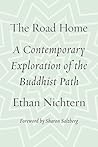
― The Road Home: A Contemporary Exploration of the Buddhist Path
― The Road Home: A Contemporary Exploration of the Buddhist Path
“...thoughts aren't the problem. Problems only develop when thoughts no longer arise from or refer to actual experience. That's when thoughts start ossifying into their own bureaucratic institutions, becoming assumptions and dogma.”
― One City: A Declaration of Interdependence
― One City: A Declaration of Interdependence
“I often find that when I fall into the trap of speaking too harshly, it is because I don’t have enough confidence in the power of my own voice to carry sufficient strength on its own. When you realize that your speech can be powerful, you don’t need to amplify that power by making personal attacks that overgeneralize the specific feedback you are trying to give.”
― The Road Home: A Contemporary Exploration of the Buddhist Path
― The Road Home: A Contemporary Exploration of the Buddhist Path
“If we long to save the whole world but we can’t deal with our own family and friends, something has gone wrong in our understanding of what it means to be human.”
― One City: A Declaration of Interdependence
― One City: A Declaration of Interdependence
“The moment of WANT is really the misunderstood urge to connect with the world around us.”
― One City: A Declaration of Interdependence
― One City: A Declaration of Interdependence
“When we spend lifetimes numbing out against now, even the gentle stillness of the present moment becomes a threat. Even slowing down long enough to look at your own heartmind becomes an act of revolution against the sheer pace of our social karma.”
― The Road Home: A Contemporary Exploration of the Buddhist Path
― The Road Home: A Contemporary Exploration of the Buddhist Path
“The view that human beings are inherently flawed, confused, and aggressive has proliferated throughout human history, across cultures, religions, and countless fields of “secular” inquiry. This view, which Pema Chödrön calls the view of “Basic Badness,” has consequently had a huge “invisible hand” in shaping a wide range of systems within which we all live, especially the system of our own heart and mind. There’s no way to avoid the following point: the Shambhala and Buddhist teachings stand in direct and total opposition to a view that human beings are originally sinful and fundamentally flawed. The Shambhala teachings say that human beings, all human beings, are basically good and endowed with inherent wisdom (Buddha nature). Here, “good” does not mean “better than.” Good does not stand in relation to “bad,” because there is no bad when it comes to human nature. Without comparison, “good” here means whole, pure, and totally worthy of existing.”
― The Road Home: A Contemporary Exploration of the Buddhist Path
― The Road Home: A Contemporary Exploration of the Buddhist Path
“We only have one wireless connection with the real Internet, and that’s our mind. There isn’t a single moment in our lives when our mind is not functioning as the basis of all our interactions—not even one. So it makes sense to train ourselves in the skilful operation of this basic interface. This is what meditation is for.”
― One City: A Declaration of Interdependence
― One City: A Declaration of Interdependence
“In most cases, the truth is a blade that does not need to be sharpened, and we almost never need to twist the knife. Because as a listener we can empathize with the fear that what we hear might hurt, we can also work to apply gentleness when speaking. I”
― The Road Home: A Contemporary Exploration of the Buddhist Path
― The Road Home: A Contemporary Exploration of the Buddhist Path
“When we get overwhelmed by the larger moral implications of our work, we overlook the smaller, more imperceptible effects of our labor. Interdependence is about the little things you do. It’s not just what you produce, but how you treat the people around you, who labor with you. And there is always something we can do that is positive—ALWAYS.”
― One City: A Declaration of Interdependence
― One City: A Declaration of Interdependence
“There’s a bumper sticker that says, “If you’re not outraged, you’re not paying attention.” Anyone who never gets angry when he sees their friends and loved ones doing things that are harmful to themselves or others has to be pretty numb to the deep sadness of suffering. Anyone who just walks on by when she sees humans being treated like objects needs to take a second look. And a third one.”
― One City: A Declaration of Interdependence
― One City: A Declaration of Interdependence
“Projecting our needs onto somebody else’s disagreement is very manipulative and makes it impossible for the parties involved to come to an understanding of what they want and need for themselves. It may also lead us to draw false equivalences between people’s behavior, where we just assume that both sides have equal truth because we are unwilling to accept that there might be very valid grievances at play, and that the people involved might never agree to a solution. What we should be saying instead is, “What do you really want here? Do you want to work this out, or do you want to go your separate ways?”
― The Road Home: A Contemporary Exploration of the Buddhist Path
― The Road Home: A Contemporary Exploration of the Buddhist Path
“Within the realm of mental reactions, when you know what is yours and what is someone else’s, it makes it easier to help another human being, because you no longer take their confusion so personally.”
― The Dharma of The Princess Bride: What the Coolest Fairy Tale of Our Time Can Teach Us About Buddhism and Relationships
― The Dharma of The Princess Bride: What the Coolest Fairy Tale of Our Time Can Teach Us About Buddhism and Relationships
“war doesn't end war any more than a heroin fix ends a heroin addiction.”
― One City: A Declaration of Interdependence
― One City: A Declaration of Interdependence
“Apathy is the rusted armor worn by a scared human being.”
― The Road Home: A Contemporary Exploration of the Buddhist Path
― The Road Home: A Contemporary Exploration of the Buddhist Path
“Whenever an emotion arises in the space of our awareness, it creates a powerful wind that can be either harnessed as wisdom or fixated upon and treated neurotically and destructively.”
― The Road Home: A Contemporary Exploration of the Buddhist Path
― The Road Home: A Contemporary Exploration of the Buddhist Path
“According to a meditator’s understanding of how mindfulness and awareness operate and develop in the mind, the problem with multitasking is simple: if we have too many objects for our mindfulness to keep track of at one time, our mind can’t deepen its familiarity with any of them. With too many points of focus, the mind can’t really immerse itself in each object’s function beyond the realm of superficial glances. If our attention is split-screened, our mindfulness has to leapfrog around to assemble a coherent picture. And when we leapfrog from object to object, task to task, we only delve halfheartedly into each of the particular objects of our attention.”
― One City: A Declaration of Interdependence
― One City: A Declaration of Interdependence
“Our mind is conditioned by the past, and to try to alter what we are feeling right now, especially in the name of being a compassionate spiritual person, is just wishful thinking. This is a crucial realization, because we spend so much of life, and, sadly, so much of our spiritual paths, wishing we were feeling something other than what we are actually feeling in the present moment.”
― The Road Home: A Contemporary Exploration of the Buddhist Path
― The Road Home: A Contemporary Exploration of the Buddhist Path
“The basic premise of Buddhism is that there is no savior to worship: nobody is going to save you from your own mind. Nobody can get into the heart of your experience and fix anything for you. If you want to make your own internal experience more hospitable, only you can do that work. Others can always support and guide you and spark insights, but ultimately you are your own boss and the agent of understanding your mind and opening your heart. Nothing”
― The Road Home: A Contemporary Exploration of the Buddhist Path
― The Road Home: A Contemporary Exploration of the Buddhist Path
“Spiritual bypassing often adopts a rationale based on using absolute truth to deny or disparage relative truth.”
― The Road Home: A Contemporary Exploration of the Buddhist Path
― The Road Home: A Contemporary Exploration of the Buddhist Path
“The results we are looking for, unfortunately, often include stopping our thoughts altogether, or destroying unwanted emotions. One simple reason meditation is difficult to sustain is that the principal benefits of meditation are not short-term, and it is generally hard to convince ourselves to engage in anything that has mostly long-term effects. Our”
― The Road Home: A Contemporary Exploration of the Buddhist Path
― The Road Home: A Contemporary Exploration of the Buddhist Path
“In thinking of home, we have to move beyond considering home as a physical address. We have to start asking what home feels like. My”
― The Road Home: A Contemporary Exploration of the Buddhist Path
― The Road Home: A Contemporary Exploration of the Buddhist Path
“To me, the view that Buddhist teachings are somehow religious, requiring some form of blind belief, and that you would have to relinquish other spiritual practices in order to pursue them fully, is neither accurate nor helpful. It’s not accurate because the Buddha’s central thesis was humanistic; he focused clearly on human suffering and the causes of that suffering. At the same time, viewing Buddhism as a religion is not helpful. People from all walks of life become interested in the vast array of Buddhist ethical, philosophical, and psychological teachings, and to declare that they cannot fully participate because they are also exploring another spirituality is severely confining and unnecessary.”
― The Road Home: A Contemporary Exploration of the Buddhist Path
― The Road Home: A Contemporary Exploration of the Buddhist Path
“From the standpoint of karma, being present is all about trust—trusting vulnerability. Being vulnerable doesn’t always feel like seeing an inspiring painting or taking a walk in nature. It is often a much more painful and awkward experience, the”
― The Road Home: A Contemporary Exploration of the Buddhist Path
― The Road Home: A Contemporary Exploration of the Buddhist Path
“Inhabiting a human nervous system is kind of like living in a house where the doorbell and the burglar alarm make exactly the same sound. Because”
― The Road Home: A Contemporary Exploration of the Buddhist Path
― The Road Home: A Contemporary Exploration of the Buddhist Path
“people struggle because we don’t know where we belong, and we always assume that home lies somewhere other than here and now, a mistake that sets us on an exhausting commute.”
― The Road Home: A Contemporary Exploration of the Buddhist Path
― The Road Home: A Contemporary Exploration of the Buddhist Path
“Thinking that we have to always burn our candle at both ends in order to benefit others is perhaps the greatest idiot compassion of all.”
― The Road Home: A Contemporary Exploration of the Buddhist Path
― The Road Home: A Contemporary Exploration of the Buddhist Path
“When we aren’t personally acquainted with the beings who make up our community, the truth of interdependence becomes an abstraction. And when the connections between us become abstract, we start to doubt they exist. And when that doubt settles in like a rolling fog, we shrug away our responsibility to others. The”
― One City: A Declaration of Interdependence
― One City: A Declaration of Interdependence
“given the way companies function, this change is only possible if the principles and interests guiding corporations shift from being centered on profit to being centered on the morality of interdependence, which means benefit (profit) to all the communities we and they share. And that movement relies on each company’s stockholders beginning to deepen their practices of generosity to overcome the hungry-ghost mentality, because these stockholders happen to also be consumers. Thus consumers have to demand changes in the M.O. of the companies we collectively control. So, our practices of generosity and livelihood (in other words, consumption and production) are . . . well . . . connected.”
― One City: A Declaration of Interdependence
― One City: A Declaration of Interdependence