Goodreads helps you follow your favorite authors. Be the first to learn about new releases!
Start by following Sam Wineburg.

Showing 1-17 of 17
“The problem is not the content of textbooks, but the very idea of them.”
―
―
“Woodrow Wilson claimed that history endows us with the "invaluable mental power we call judgment.”
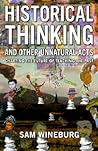
― Historical Thinking and Other Unnatural Acts: Charting the Future of Teaching the Past
― Historical Thinking and Other Unnatural Acts: Charting the Future of Teaching the Past
“The mind demands pattern and form, which build up slowly and require repeated passes, with each pass going deeper and probing further.”
― Why Learn History
― Why Learn History
“Just as math is more than a collection of theorems, history is more than a collection of facts. It’s an intellectual enterprise that requires piecing together a cogent and accurate story from partial scraps of faded words. And the process never ends. Its destination leads to a new beginning. True historical inquiry must end where it begins: with a question mark.”
― Why Learn History
― Why Learn History
“(The historian) "was able to disapprove without being astonished. She could reject and still understand.”
―
―
“As historical texts become rich and conceptually dense, readers may slow down not because they fail to comprehend, but because the very act of comprehension demands that they stop to TALK with their texts. In plain English, they pretend to deliberate with others by talking to themselves.”
―
―
“Texts on a lifeless strings of facts, but the keys to unlocking the character of human beings, people with likes and dislikes, diocese and foibles, errors and convictions. Words have texture and shape, and it is their almost tactile quality that leads readers to sculpt images of the writers who use them. These images are then interrogated, mocked, congratulated, or dismissed, depending on the context of the reading and the disposition of the reader.”
―
―
“The hardest work begins in dry dock.”
―
―
“Memory is most powerful when it is purposeful and selective. . . . [I]t requires that we possess stories and narratives that link facts in ways that are both meaningful and truthful, and provide a . . . way of knowing what facts are worth attending to. . . . We remember those things that fit a template of meaning, and point to a larger whole. We fail to retain the details that, like wandering orphans, have no connection to anything of abiding concern. . . . The design of our courses and”
― Why Learn History
― Why Learn History
“curricula must be an exercise in triage, in making hard choices about what gets thrown out of the story, so that the essentials can survive. . . . We need to be willing to identify those things that every American student needs to know and insist upon them . . . while paring away vigorously at the rest.47”
― Why Learn History
― Why Learn History
“The chief virtue of Bloom’s Taxonomy was its simplicity: six categories, not sixty.”
― Why Learn History
― Why Learn History
“Mechanical testing tempts us with the false promise of efficiency. It whispers that there is an easier, less costly, more scientific way. But the truth is that blackening circles only prepares students to blacken more circles in the future. The sooner we realize this, the sooner we will be redeemed from our craziness.”
― Why Learn History
― Why Learn History
“A history of unalloyed certainties is dangerous because it invites a slide into intellectual torpor. History as truth, issued from the left or the right, abhors shades of gray. It seeks to stamp out the democratic insight that people of goodwill can see the same thing and come to different conclusions. it imputes the basest of motives to those who view the world from a different perch. It detests equivocation and extinguishes 'perhaps', 'maybe', 'might', and the most execrable of them all, 'on the other hand'. In a world devoid of doubt, the truth has no hands.”
― Why Learn History
― Why Learn History
“If history is to have relevance in the digital age, it must make us allergic to the point of nausea to claims attached to spurious evidence--even if issued from the highest offices in the land”
―
―
“Texts are not "processed" as much as they are resurrected, and the image of reader and information processor or computer device, which often dominates current discussions of reading, seems less apt than another metaphor: the reader as necromancer.”
― Historical Thinking and Other Unnatural Acts: Charting the Future of Teaching the Past
― Historical Thinking and Other Unnatural Acts: Charting the Future of Teaching the Past
“The study of history should be a mind-altering encounter that leaves one forever unable to consider the social world without asking questions about where a claim comes from, who’s making it, and how time and place shape human behavior.”
―
―
“History teacher Bob Alston's "expertise late not in his sweeping knowledge of the topic but in his ability to pick after a tumble, to get a fix on what he does not know, and to generate a roadmap to guide his new learning. He was an expert at cultivating puzzlement it was Alston's ability to stand back from first impressions, to question his quick leaps of mind, to keep track of his questions that together pointed him in the direction of new learning.”
―
―