Goodreads helps you follow your favorite authors. Be the first to learn about new releases!
Start by following Marcus Weeks.

Showing 1-6 of 6
“We must learn to accept that there is no meaning to life, but this raises the question whether life is worth living at all – which he saw as the fundamental question of philosophy.”
― Philosophy in Minutes: 200 Key Concepts Explained in an Instant
― Philosophy in Minutes: 200 Key Concepts Explained in an Instant
“It is up to each of us to take responsibility for controlling the way we percieve and react to the world, and learn to adjust to changing circumstances.”
― Psychology in Minutes: 200 Key Concepts Explained in an Instant
― Psychology in Minutes: 200 Key Concepts Explained in an Instant
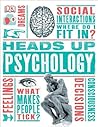
“Biological psychologist Also known as neuro- or biopsychologists, biological psychologists use scanners and other high-tech equipment to study the brain and learn about the biological basis of behavior.”
― Heads Up Psychology
― Heads Up Psychology
“We have the freedom to decide for ourselves how circumstances affect us and can choose to interpret events so that they have a meaning for us. In this way, even suffering can become endurable if it can be shown to be meaningful.”
― Psychology in Minutes: 200 Key Concepts Explained in an Instant
― Psychology in Minutes: 200 Key Concepts Explained in an Instant
“Anxiety is a normal part of human existence, as are other forms of suffering. It is repression of our negative feelings that leads to psychological problems.”
― Psychology in Minutes: 200 Key Concepts Explained in an Instant
― Psychology in Minutes: 200 Key Concepts Explained in an Instant
“Bowlby concluded that in the first 24 months of life, children have an essential need to develop a bond with at least one adult caregiver—usually a parent, and most often the mother. Attachment is different from other relationships in that it is a strong and lasting emotional tie with one particular person, which, if disturbed, can have long-term effects on development.”
― Heads Up Psychology
― Heads Up Psychology