Goodreads helps you follow your favorite authors. Be the first to learn about new releases!
Start by following Cathy Caruth.

Showing 1-5 of 5
“If Freud turns to literature to describe traumatic experience, it is because literature, like psychoanalysis, is interested in the complex relation between knowing and not knowing, and it is at this specific point at which knowing and not knowing intersect that the psychoanalytic theory of traumatic experience and the language of literature meet.”
― Unclaimed Experience: Trauma, Narrative and History
― Unclaimed Experience: Trauma, Narrative and History
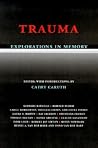
“It is indeed the truth of the traumatic experience that forms the center of its psychopathology; it is not a pathology of falsehood or displacement of meaning, but of history itself” (p. 5)”
― Trauma: Explorations in Memory
― Trauma: Explorations in Memory
“As modern neurobiologists point out, the repetition of the traumatic experience in the flashbacks can be itself re-traumatizing; if not life-threatening, it is at least threatening to the chemical structure of the brain and can ultimately lead to deterioration. And this would also seem to explain the high suicide rate of survivor, for example, survivors of Vietnam.”
― Unclaimed Experience: Trauma, Narrative and History
― Unclaimed Experience: Trauma, Narrative and History
“The traumatized, we might say, carry an impossible history within them. Or they become themselves the symptom of a history that they cannot entirely possess (and thus which possesses them).”
― Unclaimed Experience: Trauma, Narrative and History
― Unclaimed Experience: Trauma, Narrative and History
“إذا كان فرويد قد لجأ للأدب لوصف تجربة الصدمة النفسية (التروما)، فذاك لأن الأدب، كالتحليل النفسي، يهتم بالعلاقة المعقدة بين أن تعرف وألا تعرف. وتحديداً عند النقطة التي تتقاطع بها المعرفة مع عدم المعرفة تلتقي تماماً اللغة والأدب ونظرية تجربة الصدمة النفسية في التحليل النفسي.”
― Unclaimed Experience: Trauma, Narrative and History
― Unclaimed Experience: Trauma, Narrative and History