Goodreads helps you follow your favorite authors. Be the first to learn about new releases!
Start by following Carol J. Adams.

Showing 1-30 of 42
“We live in a culture that has institutionalized the oppression of animals on at least two levels: in formal structures such as slaughterhouses, meat markets, zoos, laboratories, and circuses, and through our language. That we refer to meat eating rather than to corpse eating is a central example of how our language transmits the dominant culture's approval of this activity.”
― The Sexual Politics of Meat: A Feminist-Vegetarian Critical Theory
― The Sexual Politics of Meat: A Feminist-Vegetarian Critical Theory
“While self-interest arising from the enjoyment of meat eating is obviously one reason for its entrenchment, and inertia another, a process of language usage engulfs discussions about meat by constructing the discourse in such a way that these issues need never be addressed. Language distances us from the reality of meat eating, thus reinforcing the symbolic meaning of meat eating, a symbolic meaning that is intrinsically patriarchal and male-oriented. Meat becomes a symbol for what is not seen but is always there--patriarchal control of animals and of language.”
― The Sexual Politics of Meat: A Feminist-Vegetarian Critical Theory
― The Sexual Politics of Meat: A Feminist-Vegetarian Critical Theory
“The situation is established not only to provoke defensiveness but to sidetrack the reformer into answering the wrong questions.... In this, the pattern of discourse resembles that of dinnertime conversations about feminism in the early 1970s. Questions of definition often predominate. Whereas feminists were parlaying questions which trivialized feminism such as "Are you one of those bra burners?" vegetarians must define themselves against the trivializations of "Are you one of those health nuts?" or "Are you one of those animal lovers?" While feminists encountered the response that "men need liberation too," vegetarians are greeted by the postulate that "plants have life too." Or to make the issue appear more ridiculous, the position is forwarded this way: "But what of the lettuce and tomato you are eating; they have feelings too!"
The attempt to create defensiveness through trivialization is the first conversational gambit which greets threatening reforms. This pre-establishes the perimeters of discourse. One must explain that no bras were burned at the Miss America pageant, or the symbolic nature of the action of that time, or that this question fails to regard with seriousness questions such as equal pay for equal work. Similarly, a vegetarian, thinking that answering these questions will provide enlightenment, may patiently explain that if plants have life, then why not be responsible solely for the plants one eats at the table rather than for the larger quantities of plants consumed by the herbivorous animals before they become meat? In each case a more radical answer could be forwarded: "Men need first to acknowledge how they benefit from male dominance," "Can anyone really argue that the suffering of this lettuce equals that of a sentient cow who must be bled out before being butchered?" But if the feminist or vegetarian responds this way they will be put back on the defensive by the accusation that they are being aggressive. What to a vegetarian or a feminist is of political, personal, existential, and ethical importance, becomes for others only an entertainment during dinnertime.”
― The Sexual Politics of Meat: A Feminist-Vegetarian Critical Theory
The attempt to create defensiveness through trivialization is the first conversational gambit which greets threatening reforms. This pre-establishes the perimeters of discourse. One must explain that no bras were burned at the Miss America pageant, or the symbolic nature of the action of that time, or that this question fails to regard with seriousness questions such as equal pay for equal work. Similarly, a vegetarian, thinking that answering these questions will provide enlightenment, may patiently explain that if plants have life, then why not be responsible solely for the plants one eats at the table rather than for the larger quantities of plants consumed by the herbivorous animals before they become meat? In each case a more radical answer could be forwarded: "Men need first to acknowledge how they benefit from male dominance," "Can anyone really argue that the suffering of this lettuce equals that of a sentient cow who must be bled out before being butchered?" But if the feminist or vegetarian responds this way they will be put back on the defensive by the accusation that they are being aggressive. What to a vegetarian or a feminist is of political, personal, existential, and ethical importance, becomes for others only an entertainment during dinnertime.”
― The Sexual Politics of Meat: A Feminist-Vegetarian Critical Theory
“In some respects we all acknowledge the sexual politics of meat. When we think that men, especially male athletes, need meat, or when wives report that they could give up meat but they fix it for their husbands, the overt association between meat eating and virile maleness is enacted. It is the covert associations that are more elusive to pinpoint as they are so deeply embedded within our culture. My”
― The Sexual Politics of Meat - 25th Anniversary Edition: A Feminist-Vegetarian Critical Theory
― The Sexual Politics of Meat - 25th Anniversary Edition: A Feminist-Vegetarian Critical Theory
“Dominance functions best in a culture of disconnections and fragmentation. Feminism recognizes connections. Imagine”
― The Sexual Politics of Meat - 25th Anniversary Edition: A Feminist-Vegetarian Critical Theory
― The Sexual Politics of Meat - 25th Anniversary Edition: A Feminist-Vegetarian Critical Theory
“Granted, vegetarian naming wrests meat eating from a context of acceptance; this does not invalidate its mission. One thing must be acknowledged about vegetarian naming as exemplified in the above examples: these are true words. The dissonance they produce is not due to their being false, but to their being too accurate. These words do not adhere to our common discourse which presumes the edibility of animals.
Just as feminists proclaimed that 'rape is violence, not sex,' vegetarians wish to name the violence of meat eating. Both groups challenge commonly used terms. Mary Daly calls the phrase 'forcible rape' a reversal by redundancy because it implies that all rapes are not forcible. This example highlights the role of language in masking violence, in this case an adjective deflects attention from the violence inherent in the meaning of the noun. The adjective confers a certain benignity on the word 'rape.' Similarly, the phrase 'humane slaughter' confers a certain benignity on the term 'slaughter.' Daly would call this the process of 'simple inversion': 'the usage of terms and phrases to label...activities as the opposite of what they really are.' The use of adjectives in the phrases 'humane slaughter' and 'forcible rape' promotes a conceptual misfocusing that relativizes these acts of violence. Additionally, as we ponder how the end is achieved, 'forcibly,' 'humanely,' our attention is continously framed so that the absent referents--women, animals--do not appear. Just as all rapes are forcible, all slaughter of animals for food is inhumane regardless of what it is called.”
― The Sexual Politics of Meat: A Feminist-Vegetarian Critical Theory
Just as feminists proclaimed that 'rape is violence, not sex,' vegetarians wish to name the violence of meat eating. Both groups challenge commonly used terms. Mary Daly calls the phrase 'forcible rape' a reversal by redundancy because it implies that all rapes are not forcible. This example highlights the role of language in masking violence, in this case an adjective deflects attention from the violence inherent in the meaning of the noun. The adjective confers a certain benignity on the word 'rape.' Similarly, the phrase 'humane slaughter' confers a certain benignity on the term 'slaughter.' Daly would call this the process of 'simple inversion': 'the usage of terms and phrases to label...activities as the opposite of what they really are.' The use of adjectives in the phrases 'humane slaughter' and 'forcible rape' promotes a conceptual misfocusing that relativizes these acts of violence. Additionally, as we ponder how the end is achieved, 'forcibly,' 'humanely,' our attention is continously framed so that the absent referents--women, animals--do not appear. Just as all rapes are forcible, all slaughter of animals for food is inhumane regardless of what it is called.”
― The Sexual Politics of Meat: A Feminist-Vegetarian Critical Theory
“The process of viewing another as consumable, as something, is usually invisible to us. Its invisibility occurs because it corresponds to the view of the dominant culture. The process is also invisible to use because the end product of the process - the object of consumption - is available everywhere.”
― The Sexual Politics of Meat: A Feminist-Vegetarian Critical Theory
― The Sexual Politics of Meat: A Feminist-Vegetarian Critical Theory
“In a situation where flesh is consumed, vegetarians inevitably call attention to themselves. They have made something absent on their plates; perhaps a verbal demurral has been required as well. They then are drawn into a discussion regarding their vegetarianism. Frequently, there will be someone present who actually feels hostile to vegetarianism and regards it as a personal challenge. If this is the case, all sorts of outrageous issues are thrown out to see how the vegetarian will handle them. The vegetarian, enthusiastic reformer, sees the opportunity as one of education; but it is not. instead it is a teasing game of manipulation. At times, ludicrous questions are raised; they imply that the entire discussion is ludicrous.”
― The Sexual Politics of Meat: A Feminist-Vegetarian Critical Theory
― The Sexual Politics of Meat: A Feminist-Vegetarian Critical Theory
“In accepting as two primary texts, Singer's Animal Liberation and Regan's The Case for Animal Rights--texts that valorize rationality--the animal defense movement reiterates a patriarchal disavowal of emotions as having a legitimate role in theory making. The problem is that while on the one hand it articulates positions against animal suffering, on the other hand animal rights theory dispenses with the idea that caring about and emotionally responding to this suffering can be appropriate sources of knowledge.
Emotions and theory are related. One does not have to eviscerate theory of emotional content and reflection to present legitimate theory. Nor does the presence of emotional content and reflection eradicate or militate against thinking theoretically. By disavowing emotional responses, two major texts of animal defense close off the intellectual space for recognizing the role of emotions in knowledge and therefore theory making.
As the issue of caring about suffering is problematized, difficulties with animal rights per se become apparent. Without a gender analysis, several important issues that accompany a focus on suffering are neglected, to the detriment of the movement.
Animal rights theory offers a legitimating language for animal defense without acknowledging the indebtedness of the rights-holder to caring relationships. Nor does it provide models for theoretically engaging with our own emotional responses, since emotions are seen as untrustworthy.
Because the animal advocacy movement has failed to incorporate an understanding of caring as a motivation for so many animal defense activists, and because it has not addressed the gendered nature of caring--that it is woman's duty to provide service to others, while it is men's choice--it has not addressed adequately the implications that a disproportionate number of activists are women motivated because they care about animal suffering.
Animal rights theory that disowns or ignores emotions mirrors on the theoretical level the gendered emotional responses inherent in a patriarchal society. In this culture, women are supposed to do the emotional work for heterosexual intimate relationships: 'a man will come to expect that a woman's role in his life is to take care of his feelings and alleviate the discomfort involved in feeling.' At the cultural level, this may mean that women are doing the emotional work for the animal defense movement. And this emotional work takes place in the context of our own oppression.”
―
Emotions and theory are related. One does not have to eviscerate theory of emotional content and reflection to present legitimate theory. Nor does the presence of emotional content and reflection eradicate or militate against thinking theoretically. By disavowing emotional responses, two major texts of animal defense close off the intellectual space for recognizing the role of emotions in knowledge and therefore theory making.
As the issue of caring about suffering is problematized, difficulties with animal rights per se become apparent. Without a gender analysis, several important issues that accompany a focus on suffering are neglected, to the detriment of the movement.
Animal rights theory offers a legitimating language for animal defense without acknowledging the indebtedness of the rights-holder to caring relationships. Nor does it provide models for theoretically engaging with our own emotional responses, since emotions are seen as untrustworthy.
Because the animal advocacy movement has failed to incorporate an understanding of caring as a motivation for so many animal defense activists, and because it has not addressed the gendered nature of caring--that it is woman's duty to provide service to others, while it is men's choice--it has not addressed adequately the implications that a disproportionate number of activists are women motivated because they care about animal suffering.
Animal rights theory that disowns or ignores emotions mirrors on the theoretical level the gendered emotional responses inherent in a patriarchal society. In this culture, women are supposed to do the emotional work for heterosexual intimate relationships: 'a man will come to expect that a woman's role in his life is to take care of his feelings and alleviate the discomfort involved in feeling.' At the cultural level, this may mean that women are doing the emotional work for the animal defense movement. And this emotional work takes place in the context of our own oppression.”
―
“It is as though the way to create a child's acceptance of animals' deaths is by convincing him or her that sometimes humans must be killed too. "Just" wars justify meat eating.”
― The Sexual Politics of Meat: A Feminist-Vegetarian Critical Theory
― The Sexual Politics of Meat: A Feminist-Vegetarian Critical Theory
“From cutting the throat of a young calf to cutting the throat of our brothers and sisters is but a step. While we are ourselves the living graves of murdered animals, how can we expect any ideal conditions of the earth!"
-Isadora Duncan”
― The Sexual Politics of Meat: A Feminist-Vegetarian Critical Theory
-Isadora Duncan”
― The Sexual Politics of Meat: A Feminist-Vegetarian Critical Theory
“Speak to meat eaters the way you would speak to a wild animal: softly and without any sudden movements.”
― Living Among Meat Eaters: The Vegetarian's Survival Handbook
― Living Among Meat Eaters: The Vegetarian's Survival Handbook
“Manhood is constructed in our culture, in part, by access to meat eating and control of other bodies.”
― The Sexual Politics of Meat: A Feminist-Vegetarian Critical Theory
― The Sexual Politics of Meat: A Feminist-Vegetarian Critical Theory
“Through butchering, animals become absent referents. Animals and name and body are made absent as animals for meat to exist. Animals' lives precede and enable the existence of meat. If animals are alive they cannot be meat. Thus a dead body replaces the live animal. Without animals there would be no meat eating, yet they are abent from the act of eating meat because they have been transformed into food (51).”
― The Sexual Politics of Meat: A Feminist-Vegetarian Critical Theory
― The Sexual Politics of Meat: A Feminist-Vegetarian Critical Theory
“The way in which the story of meat is conceptualized is with constant reference to humans' will: we allow animals their existence and we begin to believe that animals cannot exist without us.”
― The Sexual Politics of Meat: A Feminist-Vegetarian Critical Theory
― The Sexual Politics of Meat: A Feminist-Vegetarian Critical Theory
“I think that in terms of emotion, that our culture allows men to be angry. The animal rights movement gives men a legitimate reason to be angry. I don't think our culture should give men any more reason--that the animal rights movement should not be the place to give men more reasons to be angry. That is not what we need in the world.”
―
―
“Privilege resists self-examination, but exclusion does not.”
― The Sexual Politics of Meat: A Feminist-Vegetarian Critical Theory
― The Sexual Politics of Meat: A Feminist-Vegetarian Critical Theory
“When vegetarians attempt to disarm the dominant control of language, they are seen as picky, particular, embittered, self righteous, confrontative, and especially sentimental.”
― The Sexual Politics of Meat: A Feminist-Vegetarian Critical Theory
― The Sexual Politics of Meat: A Feminist-Vegetarian Critical Theory
“The attempt to create defensiveness through trivialization is the first conversational gambit which greets threatening reforms. This pre-establishes the perimeters of discourse.”
― The Sexual Politics of Meat: A Feminist-Vegetarian Critical Theory
― The Sexual Politics of Meat: A Feminist-Vegetarian Critical Theory
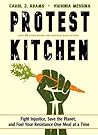
“Our lives are a meaningful stand against injustice, and we can make meaningful choices every day. Your food choices are far more powerful than you imagine. Veganism offers a daily way to enact your values while helping to protect the environment and enhance your health. It becomes a daily reminder that change is possible.
Social change is not just something we must work for; it’s something that constantly asks us to change.”
― Protest Kitchen: Fight Injustice, Save the Planet, and Fuel Your Resistance One Meal at a Time
Social change is not just something we must work for; it’s something that constantly asks us to change.”
― Protest Kitchen: Fight Injustice, Save the Planet, and Fuel Your Resistance One Meal at a Time
“Adopting a vegan diet brings your choices and actions in line with those same beliefs that underlie a commitment to resisting regressive politics: generosity, compassion, and a commitment to justice and fairness. By acting in a way that reflects your values and what you believe, you relieve the cognitive dissonance that can make stress and depression worse.”
― Protest Kitchen: Fight Injustice, Save the Planet, and Fuel Your Resistance One Meal at a Time
― Protest Kitchen: Fight Injustice, Save the Planet, and Fuel Your Resistance One Meal at a Time
“Wars will never be overcome until the belief that is is justifiable to take life, to kill - when expedient - is eradicated from human consciousness."
- Agnes Ryan”
― The Sexual Politics of Meat: A Feminist-Vegetarian Critical Theory
- Agnes Ryan”
― The Sexual Politics of Meat: A Feminist-Vegetarian Critical Theory
“What, for example, could be more calculated to produce brutal wife-beaters than long practice of savage cruelty towards the other animals?"
-Edith Ward”
― The Sexual Politics of Meat: A Feminist-Vegetarian Critical Theory
-Edith Ward”
― The Sexual Politics of Meat: A Feminist-Vegetarian Critical Theory
“I expect after you have many times seen a deer or a woodchuck blown to bits, the thought of a human being being blown to bits is that much less impossible to conceive."
-Grace Knole”
― The Sexual Politics of Meat: A Feminist-Vegetarian Critical Theory
-Grace Knole”
― The Sexual Politics of Meat: A Feminist-Vegetarian Critical Theory
“The story of meat follows a sacred typology: the birth of a God, the dismemberment of the god's body, and the god's resurrection.”
― The Sexual Politics of Meat: A Feminist-Vegetarian Critical Theory
― The Sexual Politics of Meat: A Feminist-Vegetarian Critical Theory
“Et yiyeni yediği hayvandan hayvanı da markette satılan biçiminden yalıtan kültürel duvara kayıp gönderge denir. Kimse kahvaltısının en büyük keyfi olan sucuğunun bir zamanlar nefes alan ve ne zaman özgür kalacağı beklentisi ile esaret altında günlerini geçiren bir canlıdan geldiğini ve sucuk olabilmek için korkunç ve kanlı bir süreçten geçmesi gerektiğini düşünmek istemez; çözümü göndergeyi kaybettirmekte bulur. Kayıp göndergenin var olabilmesi için nesneleştirme-parçalama-tüketme biçimindeki şiddet döngüsünün tamamlanması gerekir. Pornoda parça parça tüketilen kadın bedeni ile sofrada parça parça yenen hayvan bedeni arasında her ikisinin de özünde sömürülmemesi gereken varlıklar olduğunu yadsıyan erkek egemen zihniyet vardır. Erkeklik inşasının bir kısmı et yemek ise, bir başka kısmı da ötekileştirilmişlerin bedenlerini denetim altında tutmaktır.”
― The Sexual Politics of Meat: A Feminist-Vegetarian Critical Theory
― The Sexual Politics of Meat: A Feminist-Vegetarian Critical Theory
“If the wartime killing of human beings is used to establish the legitimacy of meat eating, then challenging meat eating challenges a world at war.”
― The Sexual Politics of Meat: A Feminist-Vegetarian Critical Theory
― The Sexual Politics of Meat: A Feminist-Vegetarian Critical Theory
“If the body becomes a special focus for women's struggle for freedom then what is ingested is a logical initial locus for announcing one's independence. Refusing the male order in food, women practiced the theory of feminism thorugh their bodies and their choice of vegetarianism.”
― The Sexual Politics of Meat: A Feminist-Vegetarian Critical Theory
― The Sexual Politics of Meat: A Feminist-Vegetarian Critical Theory
“Vegetarians, despite the variety of ways in which to argue their perspective, always appear to be saying "Don't eat meat." Meat eaters cannot make sense of this because a part of their definition of what makes sense is eating meat.”
― The Sexual Politics of Meat: A Feminist-Vegetarian Critical Theory
― The Sexual Politics of Meat: A Feminist-Vegetarian Critical Theory
“Frequently, someone is present who actually feels hostile to vegetarianism and regards it as a personal challenge. If this is the case, all sorts of outrageous issues are thrown out to see how the vegetarian will handle them. Vegetarian, enthusiastic reformer, sees the opportunity as one of her education; instead it is a teasing game of manipulation. At times, ludicrous questions are raised; they imply that the entire discussion is ludicrous.”
― The Sexual Politics of Meat: A Feminist-Vegetarian Critical Theory
― The Sexual Politics of Meat: A Feminist-Vegetarian Critical Theory