Goodreads helps you follow your favorite authors. Be the first to learn about new releases!
Start by following Lee McIntyre.

Showing 1-18 of 18
“Our inherent cognitive biases make us ripe for manipulation and exploitation by those who have an agenda to push, especially if they can discredit all other sources of information.”
― Post-Truth
― Post-Truth
“When the mistakes fall disproportionately on one side, it is no respect for the notion of truth to pretend that everything is even.”
― Post-Truth
― Post-Truth
“Aunque el contenido de los sistemas de creencias varíe, todo negacionismo de la ciencia parece fundamentarse en un reducido conjunto de errores del razonamiento humano. [...]
1)Evidencia basada en una selección interesada de datos [cherry-picking evidence].
2)Adhesión a teorías de la conspiración.
3)Confianza en falsos expertos (y denigración de los verdaderos expertos).
4)Comisión de errores lógicos.
5)Establecimiento de expectativas irreales en torno a lo que puede lograr la ciencia.
En conjunto estos factores le proporcionan al negacionista de la ciencia una pauta común sobre cuya base erigir una contranarrativa en cualquier cuestión en la que quieran desafiar el consenso científico.”
― Cómo hablarle a un negacionista de la ciencia: Conversaciones con terraplanistas, negacionistas del cambio climático y otros interlocutores en contra de la razón
1)Evidencia basada en una selección interesada de datos [cherry-picking evidence].
2)Adhesión a teorías de la conspiración.
3)Confianza en falsos expertos (y denigración de los verdaderos expertos).
4)Comisión de errores lógicos.
5)Establecimiento de expectativas irreales en torno a lo que puede lograr la ciencia.
En conjunto estos factores le proporcionan al negacionista de la ciencia una pauta común sobre cuya base erigir una contranarrativa en cualquier cuestión en la que quieran desafiar el consenso científico.”
― Cómo hablarle a un negacionista de la ciencia: Conversaciones con terraplanistas, negacionistas del cambio climático y otros interlocutores en contra de la razón
“Quizá sea tan difícil que un negacionista de la ciencia cambie de opinión a base de evidencia porque, en cierto sentido, la evidencia no es realmente lo que fundamenta sus creencias. Puede que el contenido de la creencia no sea tan importante como la identidad social que proporciona.
Hay poderosas fuerzas cognitivas que nos seducen haciéndonos creer lo que queremos creer, lo que la gente que está a nuestro alrededor —aquellos a quienes conocemos y en quienes confiamos— quiere que creamos”
― Cómo hablarle a un negacionista de la ciencia: Conversaciones con terraplanistas, negacionistas del cambio climático y otros interlocutores en contra de la razón
Hay poderosas fuerzas cognitivas que nos seducen haciéndonos creer lo que queremos creer, lo que la gente que está a nuestro alrededor —aquellos a quienes conocemos y en quienes confiamos— quiere que creamos”
― Cómo hablarle a un negacionista de la ciencia: Conversaciones con terraplanistas, negacionistas del cambio climático y otros interlocutores en contra de la razón
“En su libro tremendamente útil How to Have Impossible Conversations, el filósofo Peter Boghossian y el matemático James Lindsay nos proporcionan un sorprendente consejo para tratar de convencer a alguien de algo en lo que no esté de acuerdo con nosotros: ¡evitar los hechos!
Lo más difícil de aceptar para aquellas personas que se esfuerzan por formar sus creencias a partir de la evidencia es que no todo el mundo forma sus creencias de esa manera. El error que cometen las personas que forman sus creencias a partir de la evidencia es pensar que si la persona con la que hablan tuviera una determinada evidencia entonces no creería lo que cree.
En vez de eso, los autores nos sugieren que hagamos preguntas de desconfirmación, como, por ejemplo, «¿qué hechos o datos te harían cambiar de opinión?»”
― Cómo hablarle a un negacionista de la ciencia: Conversaciones con terraplanistas, negacionistas del cambio climático y otros interlocutores en contra de la razón
Lo más difícil de aceptar para aquellas personas que se esfuerzan por formar sus creencias a partir de la evidencia es que no todo el mundo forma sus creencias de esa manera. El error que cometen las personas que forman sus creencias a partir de la evidencia es pensar que si la persona con la que hablan tuviera una determinada evidencia entonces no creería lo que cree.
En vez de eso, los autores nos sugieren que hagamos preguntas de desconfirmación, como, por ejemplo, «¿qué hechos o datos te harían cambiar de opinión?»”
― Cómo hablarle a un negacionista de la ciencia: Conversaciones con terraplanistas, negacionistas del cambio climático y otros interlocutores en contra de la razón
“Nadie se autoidentifica como negacionista de la ciencia. A menudo se ven a sí mismos como más científicos que los científicos. Lo que uno de nosotros piense de ellos, muchos de ellos lo pensarán de nosotros. Cuando se entabla una conversación con un negacionista de la ciencia, es bueno recordar la regla que sigue todo novelista: el villano es el héroe de su propia historia.”
― Cómo hablarle a un negacionista de la ciencia: Conversaciones con terraplanistas, negacionistas del cambio climático y otros interlocutores en contra de la razón
― Cómo hablarle a un negacionista de la ciencia: Conversaciones con terraplanistas, negacionistas del cambio climático y otros interlocutores en contra de la razón
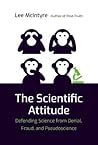
“If the scientific attitude were just a matter of how one feels about whether one cares about evidence, it would not be possible to differentiate between the genuinely earnest person who is searching for a way to test their beliefs against experience versus the ideologues who are deluded into thinking that they care about evidence merely because they cherry pick facts that confirm their prior beliefs.”
― The Scientific Attitude: Defending Science from Denial, Fraud, and Pseudoscience
― The Scientific Attitude: Defending Science from Denial, Fraud, and Pseudoscience
“To stop the truth killers from succeeding, we must get more serious about fighting the amplification of misinformation and disinformation, and for that we need to create more reason for both partisan and social media outlets to curb the role that they play in propagating polluted content.”
― On Disinformation: How to Fight for Truth and Protect Democracy
― On Disinformation: How to Fight for Truth and Protect Democracy
“The Oxford Dictionaries define “post-truth” as “relating to or denoting circumstances in which objective facts are less influential in shaping public opinion than appeals to emotion and personal belief.” In this, they underline that the prefix “post” is meant to indicate not so much the idea that we are “past” truth in a temporal sense (as in “postwar”) but in the sense that truth has been eclipsed—that it is irrelevant.”
― Post-Truth
― Post-Truth
“intentionally false. It is like lying. It is created for the purpose of getting someone to believe what one is saying, even if one knows that it is not true.”
― Post-Truth
― Post-Truth
“Throughout history, autocratic leaders and their wannabes have understood that the quickest way to control a population is to control their information sources. But in a society that still has a free press, disinformation is the new censorship.”
― On Disinformation: How to Fight for Truth and Protect Democracy
― On Disinformation: How to Fight for Truth and Protect Democracy
“The post-truth playbook goes like this: attack the truth tellers, lie about anything and everything, manufacture disinformation, encourage distrust and polarization, create confusion and cynicism, then claim that the truth is available only from the leader himself. The goal is not merely to get people to believe any particular false claim, but to so demoralize them with a tsunami of falsehoods that they begin to give up on the idea that truth can be known at all, outside a political context.”
― On Disinformation: How to Fight for Truth and Protect Democracy
― On Disinformation: How to Fight for Truth and Protect Democracy
“Unlike rival theories, rival ideologies are not decidable on the basis of empirical investigation.”
― Dark Ages: The Case for a Science of Human Behavior
― Dark Ages: The Case for a Science of Human Behavior
“Turite teisę į savo nuomonę, tačiau ne į savo faktus.”
― Post-Truth
― Post-Truth
“At its heart, what is distinctive about science is that it cares about evidence and is willing to change its theories on the basis of evidence.”
― The Scientific Attitude: Defending Science from Denial, Fraud, and Pseudoscience
― The Scientific Attitude: Defending Science from Denial, Fraud, and Pseudoscience
“Neither objectivity nor neutrality require one to feign indifference between the truth and a lie; to refuse to stand up for the truth because it might look partisan is itself to succumb to partisanship.”
― On Disinformation: How to Fight for Truth and Protect Democracy
― On Disinformation: How to Fight for Truth and Protect Democracy
“The genius of disinformation is that it doesn’t just get you to believe a falsehood, but to distrust (and sometimes even hate) anyone who does not also believe this same falsehood.”
― On Disinformation: How to Fight for Truth and Protect Democracy
― On Disinformation: How to Fight for Truth and Protect Democracy
“In social science, in contrast to natural science, it seems that by the time one goes in search of empirical evidence, a favored theory has already been chosen, and evidence is being gathered not in order to test it but in order to confirm it.”
― Dark Ages: The Case for a Science of Human Behavior
― Dark Ages: The Case for a Science of Human Behavior