Goodreads helps you follow your favorite authors. Be the first to learn about new releases!
Start by following Mike Madrid.

Showing 1-30 of 36
“If all superheroines were as indestructible as Superman, leaping across rooftops, smashing through windows, and flying through flames in a skimpy swimsuit wouldn't be such a problem. However, male heroes are usually presented as being unquestionably more powerful than women.Yet, they wear costumes that cover and protect most of their bodies. Women on the other hand, are written as weaker, and presumable less able to protect themselves. Yet they charge into battle with most of their bodies exposed...............................................
...............The reason for this superhero fashion double standard is that comic books have always been primarily targeted to a heterosexual male reader. As a result, female superheroes must look attractive to these readers. And in the world of male fantasy, attractive= sexy. So, revealing costumes are fitted onto idealized bodies with large breasts, tiny waists and impossible long legs. Men need to look powerful and virile, but can't display bulging genitalia showing through their spandex, as it would be too threatening for most straight male readers.”
― Supergirls: Fashion, Feminism, Fantasy, and the History of Comic Book Heroines
...............The reason for this superhero fashion double standard is that comic books have always been primarily targeted to a heterosexual male reader. As a result, female superheroes must look attractive to these readers. And in the world of male fantasy, attractive= sexy. So, revealing costumes are fitted onto idealized bodies with large breasts, tiny waists and impossible long legs. Men need to look powerful and virile, but can't display bulging genitalia showing through their spandex, as it would be too threatening for most straight male readers.”
― Supergirls: Fashion, Feminism, Fantasy, and the History of Comic Book Heroines
“Comic book writers often suggest that women don’t have the same dedication to the noble cause, because their need for love is often of equal or greater importance than their quest for justice. Superheroines want to fight crime, but want to settle down as well. If Mr. Right popped the question, a heroine could easily retire that mask and cape and settle down to life as a wife and mother. The implication is that no matter how powerful a woman is, she needs the love of a man to complete her.”
― Supergirls: Fashion, Feminism, Fantasy, and the History of Comic Book Heroines
― Supergirls: Fashion, Feminism, Fantasy, and the History of Comic Book Heroines
“The movie style eventually known as ‘Film Noir’ served up hard-bitten crime stories featuring morally bankrupt men and mysterious femme fatales, blending violence and sexual desire into bleak tales of modern life, without clear messages of morality. The comic book industry offered younger readers its own version of the Film Noir mood with a wave of crime comics that began sweeping the newsstands around 1947.”
― Supergirls: Fashion, Feminism, Fantasy, and the History of Comic Book Heroines
― Supergirls: Fashion, Feminism, Fantasy, and the History of Comic Book Heroines
“Lois Lane was part of the Superman dynamic from the very start. The intrepid star newspaper reporter had made her first appearance in 1938’s Action Comics #1, the same issue where Superman made his debut. She was infatuated with the powerful, godlike Superman, while repulsed by his meek pantywaist alter ego, her rival reporter Clark Kent. Lois’ 1940s persona of tough crusading reporter was in the mold of Hollywood dames like Rosalind Russell. Lois’ tireless effort to get her next headline, along with her impulsive personality, often put her in danger, from which Superman would have to rescue her. But the 40s Lois was no pushover. She was a modern career woman, and her dream was to get her greatest scoop: Superman’s secret identity.
The Superman/Lois Lane relationship had many complicated factors that would prevent a romance from ever reaching fruition, while still providing the right tension to sustain the relationship for decades. First off, they were literally from different worlds. Superman was the last survivor of the doomed planet Krypton, and was raised by simple midwestern farm folk. Lois Lane was very much a woman of 20th century America: emancipated, headstrong, and unwilling to take “no” for an answer.
Superman’s timid farm boy Clark Kent persona crumbled before Lois’ ferocious, emasculating temperament, while his heroic Man of Steel found himself constantly confounded by her impetuous nature. Meanwhile, the very issue of Superman’s secret identity always threw a wrench into his romance with Lois. Besides the basic duplicity, Superman becomes his own rival, squelching any chance for a healthy relationship. Superman loves Lois Lane, but tries to win her heart as meek Clark Kent, with the rationale that he wants to be sure Lois really loves him for himself, not for his glamorous superhuman persona. But since he’s created a wallflower persona that Lois will never find attractive, he sabotages any chance for love. Lois, for her part, is enamored with Superman, yet has a burning desire to discover his secret identity. Lois never considers that she risks losing Superman’s love if she learns his secret identity, or that the world may lose its champion and protector.
(...) If the Lois Lane of the ’40s owed much to the tough talking heroines of that decade’s screwball comedies, the Lois of the ’50s was defined by the medium of the new era—television.”
― Supergirls: Fashion, Feminism, Fantasy, and the History of Comic Book Heroines
The Superman/Lois Lane relationship had many complicated factors that would prevent a romance from ever reaching fruition, while still providing the right tension to sustain the relationship for decades. First off, they were literally from different worlds. Superman was the last survivor of the doomed planet Krypton, and was raised by simple midwestern farm folk. Lois Lane was very much a woman of 20th century America: emancipated, headstrong, and unwilling to take “no” for an answer.
Superman’s timid farm boy Clark Kent persona crumbled before Lois’ ferocious, emasculating temperament, while his heroic Man of Steel found himself constantly confounded by her impetuous nature. Meanwhile, the very issue of Superman’s secret identity always threw a wrench into his romance with Lois. Besides the basic duplicity, Superman becomes his own rival, squelching any chance for a healthy relationship. Superman loves Lois Lane, but tries to win her heart as meek Clark Kent, with the rationale that he wants to be sure Lois really loves him for himself, not for his glamorous superhuman persona. But since he’s created a wallflower persona that Lois will never find attractive, he sabotages any chance for love. Lois, for her part, is enamored with Superman, yet has a burning desire to discover his secret identity. Lois never considers that she risks losing Superman’s love if she learns his secret identity, or that the world may lose its champion and protector.
(...) If the Lois Lane of the ’40s owed much to the tough talking heroines of that decade’s screwball comedies, the Lois of the ’50s was defined by the medium of the new era—television.”
― Supergirls: Fashion, Feminism, Fantasy, and the History of Comic Book Heroines
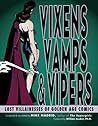
“The real source of her villainy came from those qualities that supposedly make men great leaders- a thirst for power, relentless drive paired with massive ego, and a total lack of emotions.”
― Vixens, Vamps & Vipers: Lost Villanesses of Golden Age Comics
― Vixens, Vamps & Vipers: Lost Villanesses of Golden Age Comics
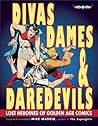
“While the secret identity was a precious commodity for most male heroes, some were confident enough to share theirs with a special someone. Heroes like Dr. Fate, The Flash, and Sandman revealed their heroic identities to their girlfriends, who then became their assistants, or “helpmates.” Hawkman and his girlfriend Shiera were the reincarnations of an ancient Egyptian prince and princess. Shiera’s eagerness to help her winged boyfriend often got her into trouble. “I hope this will teach you to stay out of affairs that aren’t your concern,” Hawkman snaps after he has rescued his sweetheart from yet another scrape. But by 1941, Hawkman needs help, and Shiera is a prime candidate. Hawkman’s costume consisted of tights, mask, and wings that were attached to his bare chest by crisscrossing straps. After quickly making some modifications that would not violate any obscenity laws, Hawkman presents Shiera with a feminized version of his costume, now complete with discreet bikini top. “. . . you mean I’m going to pose as you . . . oboy! This is going to be fun . . .” gushes Shiera, as she slips on the green and red costume. Thus was Hawkgirl born, joining another club for 1940s heroines: the Partners.”
― Supergirls: Fashion, Feminism, Fantasy, and the History of Comic Book Heroines
― Supergirls: Fashion, Feminism, Fantasy, and the History of Comic Book Heroines
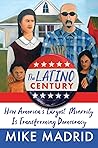
“pandemic began in February 2020. About half of Hispanics (54 percent) who have worked outside their home during the pandemic in a job that involves frequent contact with others say they have experienced a job or wage loss since the start of the pandemic. So, if you’re forced to work in dangerous conditions, often at reduced hours or under conditions that limit your ability to earn more, why are we surprised that Latinos voted in greater numbers than ever for a party looking to open up the economy?”
― The Latino Century: How America's Largest Minority Is Transforming Democracy
― The Latino Century: How America's Largest Minority Is Transforming Democracy
“If Batgirl’s origin sounds like standard comic book fare, it was. But it was her motivations that set Batgirl apart from her sister heroines of the ’60s.”
― Supergirls: Fashion, Feminism, Fantasy, and the History of Comic Book Heroines
― Supergirls: Fashion, Feminism, Fantasy, and the History of Comic Book Heroines
“Perhaps the suspicions stemmed from the distinct lack of women in Batman’s world. True, he crafted his Bruce Wayne alter ego to be an idle playboy, which meant there were a lot of beautiful women in his life. But, the most important female figure in his world seemed only to be his sainted, slain mother, to whose memory, along with that of his late father, Bruce swore to uphold justice and thwart evil. Bruce and Batman might have had romances with girls like debutante Julie Madison or reporter Vicki Vale, but showed neither any true affection. The one female who generated the most heat with Batman was the seductive, whip-wielding jewel thief Catwoman. Of course, since she was on the wrong side of the law, any chance of a romance with Batman was immediately crushed.
(...)
Batman’s sexy foe Catwoman was deemed too racy for the new world of the Comics Code. She was gone by 1954.”
― Supergirls: Fashion, Feminism, Fantasy, and the History of Comic Book Heroines
(...)
Batman’s sexy foe Catwoman was deemed too racy for the new world of the Comics Code. She was gone by 1954.”
― Supergirls: Fashion, Feminism, Fantasy, and the History of Comic Book Heroines
“Housing affordability was affecting us more than any other group in the state. Poverty was disproportionately Latino,”
― The Latino Century: How America's Largest Minority Is Transforming Democracy
― The Latino Century: How America's Largest Minority Is Transforming Democracy
“Latinos aren’t understood by either party, but the one that is able to define itself as the party of an aspirational multiethnic working-class party will dominate American politics for a generation.”
― The Latino Century: How America's Largest Minority Is Transforming Democracy
― The Latino Century: How America's Largest Minority Is Transforming Democracy
“Because brown is made with so many other different colors it becomes the glue that holds a painting together. It flows seamlessly throughout every other color without the eye even noticing it. That is how I think of my fellow Mexican Americans, and of Latinos in general, dozens of shades of brown, dozens of different groupings and subgroupings.”
― The Latino Century: How America's Largest Minority Is Transforming Democracy
― The Latino Century: How America's Largest Minority Is Transforming Democracy
“You attack the media. You attack academia. You attack science. You attack the government. You attack all these as enemies of the people. And when you execute that strategy to the point that you have eroded public confidence to a certain threshold, like after an earthquake, you march into the rubble and boldly declare, “Only I can fix this!”
― The Latino Century: How America's Largest Minority Is Transforming Democracy
― The Latino Century: How America's Largest Minority Is Transforming Democracy
“Who needs power and stamina when you could be pretty, right?”
― The Supergirls: Fashion, Feminism, Fantasy, and the History of Comic Book Heroines
― The Supergirls: Fashion, Feminism, Fantasy, and the History of Comic Book Heroines
“Villains don't want to be a part of society. They want the freedom to live their lives unrestricted by laws by which the rest of us abide. Villains are narcissists, slaves to their own greed and lust for power. They are not interested in the welfare of others, only in satisfying their own desires. As a result, villains give no thought to the death and destruction that may result from their nefarious schemes. Just as heroes are willing to give their lives in the name of good, villains know that death is often the reward for embracing a life of evil.”
― Vixens, Vamps & Vipers: Lost Villanesses of Golden Age Comics
― Vixens, Vamps & Vipers: Lost Villanesses of Golden Age Comics
“The San Francisco Examiner published an article in May 1998 I was happy to see, reporting, “The Latino population is generally younger than the rest of California, but it is getting older, starting families and settling down…. The GOP believes at least some part of this population can shift back to the Republican Party.”
― The Latino Century: How America's Largest Minority Is Transforming Democracy
― The Latino Century: How America's Largest Minority Is Transforming Democracy
“However, like Elasti-Girl and Batgirl, many of the DC’s female characters got better treatment than the heroines featured in Marvel Comics. Scanning a comic book rack in the ’60s, the covers would tell two different stories about the women starring within those pages. Wonder Woman and Supergirl starred in comic books that featured their names on the covers. These heroines were often seen performing great feats of strength like battling monsters or stopping missiles with their bare hands. Batgirl’s name might be featured prominently on a cover of Detective Comics. The Doom Patrol’s Elasti-Girl was shown in the thick of battle fighting side by side with her male compatriots. On the Marvel Comics covers, Invisible Girl, Wasp, and Marvel Girl were shown struggling in the clutches of a villain, or watching helplessly from the background as their male teammates took care of business.”
― Supergirls: Fashion, Feminism, Fantasy, and the History of Comic Book Heroines
― Supergirls: Fashion, Feminism, Fantasy, and the History of Comic Book Heroines
“DC Comics is the present day publisher of Superman, Batman, Wonder Woman, and other well-known superheroes. DC is the amalgamation of two different publishing concerns: National Comics, which produced Superman and Batman, and sister company All-American Comics, which produced Wonder Woman, Flash, and Green Lantern. The two companies merged in 1944 to form National Periodical Publications, whose comic books bore the “Superman-DC” logo. The publisher was known colloquially as “DC,” which it later adopted as its official name.”
― Supergirls: Fashion, Feminism, Fantasy, and the History of Comic Book Heroines
― Supergirls: Fashion, Feminism, Fantasy, and the History of Comic Book Heroines
“As I have said and will say until Democrats start listening, low turnout is a problem for them, a sign that you lack connection to the fastest-growing part of the electorate.”
― The Latino Century: How America's Largest Minority Is Transforming Democracy
― The Latino Century: How America's Largest Minority Is Transforming Democracy
“According to Pew Research and Edison exit polling data in Florida, Cubans were about twice as likely as non-Cuban Latinos to vote for Donald Trump in 2016.”
― The Latino Century: How America's Largest Minority Is Transforming Democracy
― The Latino Century: How America's Largest Minority Is Transforming Democracy
“Trumpism emerged with the collapse of Reaganism. It provided fear where Reagan found strength. It provided anger where Reagan showed confidence. It was scarcity where abundance once overflowed.”
― The Latino Century: How America's Largest Minority Is Transforming Democracy
― The Latino Century: How America's Largest Minority Is Transforming Democracy
“Making her debut in 1947, Black Canary was the archetype of the new Film Noir era heroine. Originally, Black Canary was a mysterious female vigilante, who played the role of criminal in order to infiltrate the underworld and bring its gangsters to justice. A gorgeous blonde in a low cut black swimsuit, bolero jacket and fishnet tights, Black Canary was actually Dinah Drake, a florist who wore her black hair tied in a bun, and sensible, high-necked blouses. When trouble brewed, Dinah slipped into her fishnets and pinned on a blonde wig to become the gutsy, karate chopping Black Canary. But Dinah had another incentive to lead a secret life. A roguishly handsome private detective named Larry Lance became a frequent customer in Dinah’s florist shop. He had a knack for getting into trouble, and Dinah would usually end up switching into her Black Canary guise to rescue him.”
― Supergirls: Fashion, Feminism, Fantasy, and the History of Comic Book Heroines
― Supergirls: Fashion, Feminism, Fantasy, and the History of Comic Book Heroines
“Many on the Biden Latino team were the same people who had missed a million red flags on the Hillary Clinton campaign in 2016. Generational differences and geographic variations were becoming easily evident among Latino voters and the response was to just double down on more of the same stereotypical campaign activities, if they even acknowledged them at all.”
― The Latino Century: How America's Largest Minority Is Transforming Democracy
― The Latino Century: How America's Largest Minority Is Transforming Democracy
“The inclusion of females in stories is specifically discouraged. Women, when used in plot structure, should be secondary in importance .”
― The Supergirls: Fashion, Feminism, Fantasy, and the History of Comic Book Heroines
― The Supergirls: Fashion, Feminism, Fantasy, and the History of Comic Book Heroines
“The power of the changing Latino electorate is most pronounced in one data point: 22 percent of Latinos will be voting in their first presidential election in 2024, with a surprising 38 percent of the entire Latino electorate—nearly four in ten voters—being new since 2016.”
― The Latino Century: How America's Largest Minority Is Transforming Democracy
― The Latino Century: How America's Largest Minority Is Transforming Democracy
“the Latinization of America will also lead to truly a feminization of America.”
― The Latino Century: How America's Largest Minority Is Transforming Democracy
― The Latino Century: How America's Largest Minority Is Transforming Democracy
“The token females of most superhero teams often had to suppress their femininity in order to be taken seriously by their male compatriots. When heroines like Invisible Girl or Wasp do display an interest in traditionally female pursuits like love, fashion or the latest hairstyle, their male teammates chide them for being frivolous females.”
― Supergirls: Fashion, Feminism, Fantasy, and the History of Comic Book Heroines
― Supergirls: Fashion, Feminism, Fantasy, and the History of Comic Book Heroines
“Never send a Democrat to do a Republican’s job!”
― The Latino Century: How America's Largest Minority Is Transforming Democracy
― The Latino Century: How America's Largest Minority Is Transforming Democracy
“When DC Comics was trying to figure out how to retool Wonder Woman’s image to make her cooler, they looked at another Diana—Diana Rigg. Rigg had caused a stir as Mrs. Emma Peel when the British TV series The Avengers was imported to the US in 1966. Mrs. Peel defined the heroine of the mod ’60s—brilliant as she was beautiful, witty, champion fencer, martial arts ex-pert, modern artist, crack shot with a pistol, and fearless secret agent. Attired in sleek black leather catsuits or mod body stockings, Emma Peel was a true force to be reckoned with, combining beauty, brains, and power.”
― Supergirls: Fashion, Feminism, Fantasy, and the History of Comic Book Heroines
― Supergirls: Fashion, Feminism, Fantasy, and the History of Comic Book Heroines
“Sex appeal was the “spoonful of sugar” that helped the “medicine” of feminism go down. A liberated heroine who still looked sexy would be less threatening to the male readers of comic books.”
― Supergirls: Fashion, Feminism, Fantasy, and the History of Comic Book Heroines
― Supergirls: Fashion, Feminism, Fantasy, and the History of Comic Book Heroines