Goodreads helps you follow your favorite authors. Be the first to learn about new releases!
Start by following Susan Shapiro Barash.

Showing 1-8 of 8
“The mother who understands her own intentions and her daughter’s intentions, who has introspection and a strong sense of self, and who is able to separate her identity from her daughter’s, has the key to achieving the right balance.”
―
―
“Every time we cheer the downfall of a powerful woman, we're giving ourselves the message that power is bad and we shouldn't desire it. Every time we revel in a beautiful woman's aging or weight gain, we reinforce the idea that we, too, are less valuable if we are old or overweight. Every time we gloat over a woman's loss of a husband to a younger, prettier rival, we are reminding ourselves that our own relationship is unstable, that someday our man, too, will move on to greener pastures.”
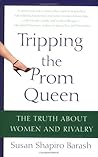
― Tripping the Prom Queen: The Truth About Women and Rivalry
― Tripping the Prom Queen: The Truth About Women and Rivalry
“Although previous studies had suggested that friendship--male and female--could be a powerful antidote to stress, more recent research indicates that broken promises, dashed expectations, and other side effects of friendship gone wrong can actually raise the level of stress in our lives, often to disastrous effect.”
― Tripping the Prom Queen: The Truth About Women and Rivalry
― Tripping the Prom Queen: The Truth About Women and Rivalry
“Not only should the conventional "rules" of marriage not apply necessarily to individual wives, but the euphoria of Phase One is old news. We being to learn that while nothing is as good as it seems, nothing is quite as dire as it appears.”
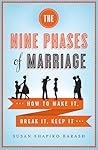
― The Nine Phases of Marriage: How to Make It, Break It, Keep It
― The Nine Phases of Marriage: How to Make It, Break It, Keep It
“The message couldn't have been clearer: women may rise to the top, but they must seem as though they don't care whether they win or lose. Nice girls care only about being nice. They win only by accident or by someone else's efforts.”
― Tripping the Prom Queen: The Truth About Women and Rivalry
― Tripping the Prom Queen: The Truth About Women and Rivalry
“In psychologist Robert Sternberg's triangular theory of love, he identifies three characteristics: passion, intimacy, and commitment. Passion is defined as physical attraction and sexual connection, intimacy as the sense of being close and bonded, and commitment as the decision to be together exclusively. As a romantic relationship moves through time, one of these three characteristics is carrying the most weight. Accordingly, although romantic love offers both intimacy and passion/sex, commitment is needed to complete the triangle.”
― The Nine Phases of Marriage: How to Make It, Break It, Keep It
― The Nine Phases of Marriage: How to Make It, Break It, Keep It
“And I shuddered at the apparent freedom so many women felt simply to take what they wanted without regard for other women's feelings. It was as though we were all crazed customers at some kind of year-end shoe sale, shoving our fellow females out of the way as we clutched desperately at the few remaining pieces of merchandise. I had the discouraging sense that our culture had created female monsters, dooming us to play out these intense and bitter rivalries almost against our will.”
― Tripping the Prom Queen: The Truth About Women and Rivalry
― Tripping the Prom Queen: The Truth About Women and Rivalry
“It wasn't only my friends who suffered from female rivalry. I remember when I was just sixteen years old, during spring vacation, being whisked off to an early lunch by my best friend's brother, only to discover, to my astonishment and hurt, that she was expecting some college boys to drop by and didn't want me there to compete with her. When I started college at Sarah Lawrence, I soon noticed that while some of my classmates were indeed true friends, others seemed to resent that I had a boyfriend. It didn't help that Sarah Lawrence, a former girls' school, included very few straight men among its student body--an early lesson in how competing for items in short supply often brings out the worst in women.
In graduate school, the stakes got higher, and the competition got stiffer, a trend that continued when I went on to vie for a limited number of academic jobs. I always had friends and colleagues with whom I could have trusted my life--but I also found women who seemed to view not only me but all other female academics as their rivals.
This sense of rivalry became more painful when I divorced my first husband. Many of my friends I depended on for comfort and support suddenly began to view me as a threat. Some took me out to lunch to get the dirt, then dropped me soon after. I think they found it disturbing that I left my unhappy marriage while they were still committed to theirs. For other women, the threat seemed more immediate--twice I was told in no uncertain terms that I had better stay away from someone's husband, despite my protests that I would no more go after a friend's husband than I would stay friends with a woman who went after mine.
Thankfully, I also had some true friends who remained loyal and supportive during one of the most difficult times of my life. To this day I trust them implicitly, with the kind of faith you reserve for people who have proved themselves under fire. But I've also never forgotten the shock and disappointment of discovering how quickly those other friendships turned to rivalries.”
― Tripping the Prom Queen: The Truth About Women and Rivalry
In graduate school, the stakes got higher, and the competition got stiffer, a trend that continued when I went on to vie for a limited number of academic jobs. I always had friends and colleagues with whom I could have trusted my life--but I also found women who seemed to view not only me but all other female academics as their rivals.
This sense of rivalry became more painful when I divorced my first husband. Many of my friends I depended on for comfort and support suddenly began to view me as a threat. Some took me out to lunch to get the dirt, then dropped me soon after. I think they found it disturbing that I left my unhappy marriage while they were still committed to theirs. For other women, the threat seemed more immediate--twice I was told in no uncertain terms that I had better stay away from someone's husband, despite my protests that I would no more go after a friend's husband than I would stay friends with a woman who went after mine.
Thankfully, I also had some true friends who remained loyal and supportive during one of the most difficult times of my life. To this day I trust them implicitly, with the kind of faith you reserve for people who have proved themselves under fire. But I've also never forgotten the shock and disappointment of discovering how quickly those other friendships turned to rivalries.”
― Tripping the Prom Queen: The Truth About Women and Rivalry