Goodreads helps you follow your favorite authors. Be the first to learn about new releases!
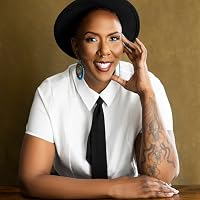
Start by following Jenn M. Jackson.
Showing 1-22 of 22
“When examined over time, it becomes clear that Black women continue to confront the true nature of this society despite the risks to themselves.”
― Black Women Taught Us: An Intimate History of Black Feminism
― Black Women Taught Us: An Intimate History of Black Feminism
“Racism is rooted in law. It is embedded in every institution in this land. It is all around us all the time and it orders all of society.”
― Black Women Taught Us: An Intimate History of Black Feminism
― Black Women Taught Us: An Intimate History of Black Feminism
“To tell the truth is to become beautiful, to begin to love yourself, value yourself. And that’s political, in its most profound way. —June Jordan”
― Black Women Taught Us: An Intimate History of Black Feminism
― Black Women Taught Us: An Intimate History of Black Feminism
“we cannot divorce capitalism from race, nor can we divorce our struggle against racism from our struggle against capitalism. Every financial crisis is a racial crisis as well.”
― Black Women Taught Us: An Intimate History of Black Feminism
― Black Women Taught Us: An Intimate History of Black Feminism
“Freedom is not always about the moments of celebration, the pomp and circumstance, or the big proclamations, declarations, and statements. It doesn’t always come after a war or due to a march, protest, or the violent overthrow of a corrupt political leader. Freedom also rests in the quiet moments when nothing seems to be happening at all. In the waiting and strategizing. Freedom comes in the revolutionary choice to be unmoved by the State, to remain still, grounded, and planted in the truth that we each deserve to be fully recognized and respected in our bodies, beliefs, and objectives. Freedom comes when we are not even doing anything but continuing to live despite a world that does not want us to exist.”
― Black Women Taught Us: An Intimate History of Black Feminism
― Black Women Taught Us: An Intimate History of Black Feminism
“Accountability is about harm acknowledgment, harm reduction, and healing justice. Acknowledging the harm means that we must first be able to tell the truth about what has transpired.”
― Black Women Taught Us: An Intimate History of Black Feminism
― Black Women Taught Us: An Intimate History of Black Feminism
“Telling the truth is not just about freeing ourselves from the weights that press down on us. It isn’t just about shining a light on those things that lurk in the dark. Telling the truth is about vulnerability, intimacy, showing up for ourselves and our comrades, and accountability to those we hold dear. Truth-telling opens up new sites of tenderness. It makes the sensitive places that we’ve left hidden under hurt, grief, and past trauma softer. Truth-telling frees us. But even more than that, it has the potential to radicalize us.”
― Black Women Taught Us: An Intimate History of Black Feminism
― Black Women Taught Us: An Intimate History of Black Feminism
“Telling the truth is about much more than honesty and transparency. It is about cataloging and remembering ourselves. It is about creating an anthology and language to translate and interpret contemporary events. Telling the truth is about believing in the ability of those who come after us to do what is right.”
― Black Women Taught Us: An Intimate History of Black Feminism
― Black Women Taught Us: An Intimate History of Black Feminism
“We must all take full responsibility for our own entanglements with white supremacy and anti-Blackness so that we can adequately account for our complicity in the systems that make others unfree.”
― Black Women Taught Us: An Intimate History of Black Feminism
― Black Women Taught Us: An Intimate History of Black Feminism
“Black women taught us how to listen and work. It’s time we do both.”
― Black Women Taught Us: An Intimate History of Black Feminism
― Black Women Taught Us: An Intimate History of Black Feminism
“What I know for sure is that speaking your truth is the most powerful tool we all have.”
― Black Women Taught Us: An Intimate History of Black Feminism
― Black Women Taught Us: An Intimate History of Black Feminism
“Telling the truth should not be radical.”
― Black Women Taught Us: An Intimate History of Black Feminism
― Black Women Taught Us: An Intimate History of Black Feminism
“accountability is about naming harm for the sake of changing the world.”
― Black Women Taught Us: An Intimate History of Black Feminism
― Black Women Taught Us: An Intimate History of Black Feminism
“The fact of the matter is: There is enough room for all of us. There is enough freedom for all of us. There is enough justice and enough love for all of us. And, when we begin to forget that, we start to reinscribe the same systems that we seek to destroy.”
― Black Women Taught Us: An Intimate History of Black Feminism
― Black Women Taught Us: An Intimate History of Black Feminism
“Black women take on immense risk when we choose to speak, write, and champion the truth despite a societal commitment to misremembering, watering down, and whitewashing history.”
― Black Women Taught Us: An Intimate History of Black Feminism
― Black Women Taught Us: An Intimate History of Black Feminism
“All of these young people have some kind of potential in them. And if we don’t invest in them as a nation, regardless of where they come from or what color they are, if we don’t invest in them, we lose. —Michelle Obama”
― Black Women Taught Us: An Intimate History of Black Feminism
― Black Women Taught Us: An Intimate History of Black Feminism
“Davis writes, “The fact, for example, that many corporations with global markets now rely on prisons as an important source of profit helps us to understand the rapidity with which prisons began to proliferate precisely at a time when official studies indicated that the crime rate was falling.”[35] Prisons have been monetized and so have prisoners. The system as it stands today is one that continues the financialization of poor, Black, Brown, disabled, and immigrant bodies in the name of profit margins.”
― Black Women Taught Us: An Intimate History of Black Feminism
― Black Women Taught Us: An Intimate History of Black Feminism
“Feminist Cathy Cohen says in one of the most seminal queer theoretical texts ever written: For many of us, the label “queer” symbolizes an acknowledgment that through our existence and everyday survival we embody sustained and multi-sited resistance to systems (based on dominant constructions of race and gender) that seek to normalize our sexuality, exploit our labor, and constrain our visibility. At the intersection of oppression and resistance lies the radical potential of queerness to challenge and bring together all those deemed marginal and all those committed to liberatory politics.”
― Black Women Taught Us: An Intimate History of Black Feminism
― Black Women Taught Us: An Intimate History of Black Feminism
“What I have come to learn over the course of my nearly forty years is that the difficulty I faced in trying to find Black women’s voices, work, and contributions wasn’t a matter of its existing or not. It was a direct result of the systems in place that diminish Black women and erase them from history while co-opting and appropriating the very work they have produced.”
― Black Women Taught Us: An Intimate History of Black Feminism
― Black Women Taught Us: An Intimate History of Black Feminism
“They were microcosms of the larger systemic problems of white supremacy”
― Black Women Taught Us: An Intimate History of Black Feminism
― Black Women Taught Us: An Intimate History of Black Feminism
“There’s something a bit neglectful about love. It doesn’t necessarily require an imperative action or reaction. It doesn’t materialize in our day-to-day lives without an explicit cause (like someone saying the words “I,” “love,” and “you” in perfect sequence). And, unless it’s the kind of love that exists between a parent and child, it doesn’t actually ask us for much, if anything at all. Perhaps that is why we use the word so lazily and why we so often fail to show up in loving ways for our comrades, communities, and ourselves. Perhaps that is also why true agape love (a divine love that transcends human knowing and believing) seems so unreal to many people, even those who consider themselves deeply loving.”
― Black Women Taught Us: An Intimate History of Black Feminism
― Black Women Taught Us: An Intimate History of Black Feminism
“truth-telling is a process of self-reflection, unlearning, facing shame, and engaging with the unknown parts of ourselves.”
― Black Women Taught Us: An Intimate History of Black Feminism
― Black Women Taught Us: An Intimate History of Black Feminism