Goodreads helps you follow your favorite authors. Be the first to learn about new releases!
Start by following Charles L. Cohen.

Showing 1-30 of 35
“Defeat, exile, and restoration had altered ancient Israel's religion, but the Second Temple's obliteration, coupled with Jews' declining status in the Roman Empire, would force a far greater reconstruction. Lacking a single agreed-upon holy place, modern Christians, however empathetic, may have difficulty imagining the magnitude of the liturgical renovations that the Temple's loss demanded, though Orthodox Byzantines watching Hagia Sophia—their monumental cathedral—reconfigured as a mosque certainly could. Muslims contemplating a hypothetical demolition of Mecca's Masjid al-Haram (Sacred Mosque) and the consequent disruption of the hajj (pilgrimage) may be able to entertain a more visceral understanding of what the Second Temple's loss portended for Judaism.”
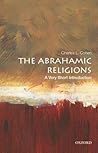
― The Abrahamic Religions: A Very Short Introduction: A Very Short Introduction
― The Abrahamic Religions: A Very Short Introduction: A Very Short Introduction
“It [Islam] likely began as an Arab monotheism, but empire catalyzed its contact with non-Arabs, who in due course converted, integrated themselves into Islamic polities, and eventually ruled them. As a result, Islam neither totally detached itself from its founders' ethnicity (as did Christianity) nor elevated its identity and language to exclusive status (as did Judaism). Instead, it ended up a hybrid, privileging its ethnic origins even as non-Arab Muslims began to outnumber Arab ones.”
― The Abrahamic Religions: A Very Short Introduction: A Very Short Introduction
― The Abrahamic Religions: A Very Short Introduction: A Very Short Introduction
“Ever since Christians and then Muslims joined Jews in asserting the primacy of Abraham's One God, they have lived within one another's gravitational fields. The varying political contexts in which they have operated have had much to do with their trajectories, both individual and collective. Setting these traditions in dynamic juxtaposition emphasizes their identities as changing historical phenomena, however much each may claim singular possession of eternal truth. There may be one God, but there is no single Judaism, Christianity, or Islam.”
― The Abrahamic Religions: A Very Short Introduction: A Very Short Introduction
― The Abrahamic Religions: A Very Short Introduction: A Very Short Introduction
“By the first century CE, Jews living abroad had long outnumbered those inhabiting the Holy Land. The diaspora's existence inaugurated an ongoing, pregnant dynamic for Judaism and Jewish identity. On the one hand, Eretz Yisrael, especially Jerusalem, maintained its emotional resonance and ritual importance; diaspora Jews flocked to the Temple for the pilgrimage festivals and, in the later second century BCE, began to pay annual half-shekel contributions toward its support. For some, particularly after the Second Temple's destruction, the homeland beckoned as the place of return, a distant object of longing. At the same time, diaspora Jews seem to have experienced little dissonance between the respect they accorded the Holy Land and the loyalty they paid their own communities and governments.”
― The Abrahamic Religions: A Very Short Introduction: A Very Short Introduction
― The Abrahamic Religions: A Very Short Introduction: A Very Short Introduction
“The quest for the historical Jesus, begun during the Enlightenment to purge the Gospels of "superstition" by subjecting them to critical reason, has since sought to situate him within his own time and place. That endeavor has proved troublesome. Historians depend on records, the best of which are produced contemporaneously with the events they relate, but most documentation about Jesus is neither collateral nor detailed. Although the Gospels offer abundant information and appear to contain primary-source material, they are not firsthand testimonies, and determining to what degree they may include unmediated reports about Jesus has generated substantial disagreement.”
― The Abrahamic Religions: A Very Short Introduction: A Very Short Introduction
― The Abrahamic Religions: A Very Short Introduction: A Very Short Introduction
“The Quran departs from Tanakh and the Bible in both format and literary structure. It is a single volume composed of what might be described as oral poetry that embeds snippets of stories, parables, liturgies, and laws. The text is broken into 114 suras (conventionally called "chapters") that are generally arranged in descending order of length. Each now bears a number (adopted from Western practice) and a name added later by Muslims.”
― The Abrahamic Religions: A Very Short Introduction: A Very Short Introduction
― The Abrahamic Religions: A Very Short Introduction: A Very Short Introduction
“For virtually all of their mutual existence, Christians and Jews considered themselves separate groups and wanted little interaction. The idea of a Judeo-Christian civilization is a twentieth-century creation, one result of which has been a massive reconsideration of Christianity's Jewish origins. The phrase "Abrahamic religions" connotes a category founded on the three traditions' practice of invoking Abraham, but this book further deploys it to consider Islam as being less alien to the Jewish and Christian worldviews than one might suppose. Any conclusion that Islam belongs to a different civilization than do Judaism and Christianity should emerge (if at all) only after long consideration about their intertwined pasts, rather than be asserted as an axiom.”
― The Abrahamic Religions: A Very Short Introduction: A Very Short Introduction
― The Abrahamic Religions: A Very Short Introduction: A Very Short Introduction
“Contemporary non-Muslim sources confirm only scattered details about Muhammad, and the single seventh-century Islamic witness—the Quran—is not (nor does it purport to be) a biography. The historical quests for both Muhammad and Jesus thus face similar dilemmas.”
― The Abrahamic Religions: A Very Short Introduction: A Very Short Introduction
― The Abrahamic Religions: A Very Short Introduction: A Very Short Introduction
“Although no longer gospel, the assumption that multiple sources underlie the Torah can still help clarify many of the text's contradictions. Some version of it existed in 458 BCE, when Ezra, a Jewish priest in the Persian emperor's service, read it to the Yehudites in Jerusalem, but that scroll included less than what exists today.”
― The Abrahamic Religions: A Very Short Introduction: A Very Short Introduction
― The Abrahamic Religions: A Very Short Introduction: A Very Short Introduction
“One can classify Judaism, Christianity, and Islam variously. From one perspective, they are monotheisms, religions that uphold God's singularity. Islam itself provides another view, linking them by a tradition of continued divine revelation disclosed in scripture and culminating in the Quran. Muslims regard Jews and Christians as "People of the Book"—a name that outside observers occasionally apply to Muslims too. As apt as these designations may be, however, they do not entirely differentiate these three religions from others. Sikhism and ancient Egyptian Atenism, for example, also qualify as monotheisms, and Muslims came to include Zoroastrians and Hindus as other "People of the Book." The most useful term for collating Judaism, Christianity, and Islam into a single category is "Abrhamic," which distinguishes them by stressing the significance they accord to Abraham: Israel's founding patriarch for Jews, guarantor of the covenant for Christians, and a prophet for Muslims. These Abrahamic identities unite the religions conceptually, even while frequently polarizing their adherents.”
― The Abrahamic Religions: A Very Short Introduction: A Very Short Introduction
― The Abrahamic Religions: A Very Short Introduction: A Very Short Introduction
“By ca. 400 BCE, roughly when Tanakh's historical material ends, a religious community, the self-acknowledged heir of Biblical Israel, had unified itself around a collective self-understanding that distinguished it from its neighbors. That identity included lore about how the God of nations had covenanted with them and guided their history, an attachment to the land God had deeded them, distinctive customs (such as infant male circumcision and a prohibition against eating pork), a common language, and shared worship. Religious life revolved around the Temple, not sacred scripture, and presumed that its rituals were secured by either an Israelite government or a foreign ruler disposed to protect it. We can begin to call these people "Jews" (Yehudim), a name derived from "Yehud" and used in some of Tanakh's late-written books. It is, however, to early to speak of a coherent "Judaism," at least if that designation denotes the liturgical centrality of the Torah, much less of Tanakh, the whole of which did not yet exist.”
― The Abrahamic Religions: A Very Short Introduction: A Very Short Introduction
― The Abrahamic Religions: A Very Short Introduction: A Very Short Introduction
“Forced to govern as well as preach, Muhammad in Medina was a prophet with exceptional civil power, given that the umma was a polity as well as a congregation.”
― The Abrahamic Religions: A Very Short Introduction: A Very Short Introduction
― The Abrahamic Religions: A Very Short Introduction: A Very Short Introduction
“Recognizing a supreme divinity did not . . . translate immediately into conceiving one universal God. Israelites first took YHWH/El as their own while sometimes continuing to worship other people's deities as well. God could be described as heading an assembly of divine beings, but the Lord also sentences its members to death for "showing favor to the wicked" (Ps. 82:2). The prophets frequently express both themes: God is both virtuous and unique. This characterization of a single God who upholds moral standards ("ethical monotheism") surfaced strongly in light of the theological and military problems that Assyria posed. Did that empire's devastating triumph discredit God for having betrayed or failed Israel? "No," answered the prophets. God rules the nations, disposes their affairs justly, and deploys foreign powers as agents to rebuke Israel's iniquities. By the sixth century, this conclusion had become axiomatic. Consoling the exiles, the anonymous "Second Isaiah" reverenced "The Creator.... who alone is God" and who will reduce Babylon for having shown Israel "no mercy" (Is. 45:18, 47:5, 6).”
― The Abrahamic Religions: A Very Short Introduction: A Very Short Introduction
― The Abrahamic Religions: A Very Short Introduction: A Very Short Introduction
“The People of Israel understood their relationship with God as a covenant, an agreement stipulating mutual obligations. While this form was a political commonplace in the ancient Near East, its use to articulate the relationship between a people and their deity seems to have been unique to them.”
― The Abrahamic Religions: A Very Short Introduction: A Very Short Introduction
― The Abrahamic Religions: A Very Short Introduction: A Very Short Introduction
“The actual exercise of Israel's relationship with God began with the king and was managed by a hereditary priesthood. During the monarchical period, publics devotions took place at various shrines, and the Jerusalem Temple eventually became the supreme focus of state-sanctioned ceremony. The principal rite—public and private—was animal sacrifice. Tanakh glosses over the underlying rationales, but, at its root, such sacrifice was intended to repair divine-human relationship disordered by the supplicants' impure acts.”
― The Abrahamic Religions: A Very Short Introduction: A Very Short Introduction
― The Abrahamic Religions: A Very Short Introduction: A Very Short Introduction
“The Hebrew Bible is called "Tanakh," a title that amalgamates its collective parts: Torah, Nevi'im (Prophets), and Ketuvim (Writings). Tanakh preserves and interprets the historical, cultural, and religious heritage of Israel and Judah. In its current form, it serves as both the definitive anthology that constitutes Judaism's holy scriptures and a pillar of Jewish religious life, but these roles postdate its compilation.”
― The Abrahamic Religions: A Very Short Introduction: A Very Short Introduction
― The Abrahamic Religions: A Very Short Introduction: A Very Short Introduction
“[Jesus's] concern for society's outcasts and his portrayals of the transformation wrought by the kingdom of God have helped cast him as a militant revolutionary, but he lived a generation before the Zealots, and his admonition that all who take the sword will "perish" by it (Matt 26:52) hardly intimates a rebel chieftain. Self-authorized preachers such as John the Baptist or Theudas, who professed that he could part the Jordan River, roamed first-century Palestine, and Jesus seems to fit this profile.”
― The Abrahamic Religions: A Very Short Introduction: A Very Short Introduction
― The Abrahamic Religions: A Very Short Introduction: A Very Short Introduction
“The Quran's relationship to Tanakh and the Bible differs from that of the New Testament to Tanakh. Whereas the New Testament reinterprets Tanakh and incorporates it into the Bible as the Old Testament, the Quran refers to the Jewish and Christian scriptures while remaining independent of both.”
― The Abrahamic Religions: A Very Short Introduction: A Very Short Introduction
― The Abrahamic Religions: A Very Short Introduction: A Very Short Introduction
“Tanakh does contain historical material, especially as one moves forward form the tenth century BCE, but it does not depict a baseline narrative that needs only minor adjustments to its generally accurate trajectory.”
― The Abrahamic Religions: A Very Short Introduction: A Very Short Introduction
― The Abrahamic Religions: A Very Short Introduction: A Very Short Introduction
“Notwithstanding the preeminence of cultic observances, religious life during the Second Temple era increasingly emphasized personal duties to purify oneself, follow the Torah, and perform daily rites. Jews prayed in both public and private, beyond as well as within Jerusalem. Scripture study emerged as a principal function of a new local institution, the synagogue. Injunctions for holy living (like dietary prohibitions) multiplied. This shifting emphasis toward God's relationship with Jews individually, as opposed to Israel collectively, was manifested theologically by an intensified interest in the workings of God's justice and personal redemption, stimulating heated speculation about resurrection, free will, and eternal judgment. In some circles, apocalyptic (Greek, "revelation") theories explaining evil's persistence and Jews' subordination posited a final war between the righteous and the wicked in which the former would triumph, led by a messiah (mashiach, "anointed one") who was ordinarily conceived as a transcendently powerful human figure and occasionally as a cosmic one. Still, Jews coalesced around their rules of conduct, not their beliefs.”
― The Abrahamic Religions: A Very Short Introduction: A Very Short Introduction
― The Abrahamic Religions: A Very Short Introduction: A Very Short Introduction
“Torah" can be construed as "law," but to prioritize this sense assumes the perspective of early Christians, who regarded Jewish devotion as fixated on obeying divine law and thus insufficient for salvation. For Jews, the broader meaning of "Torah" is "teaching" or "instruction." Its organizing narrative relates the People of Israel's fortunes from the time of their progenitor, Abraham, until they stand along the River Jordan poised to conquer Canaan; it also contains myths, cosmology, genealogies, and poetry, as well as legal codes.”
― The Abrahamic Religions: A Very Short Introduction: A Very Short Introduction
― The Abrahamic Religions: A Very Short Introduction: A Very Short Introduction
“The Quran identifies Abraham as a hanif, an "upright" individual who rejected idolatry and submitted fully to Allah. It repudiates Arab polytheism while contending that this "[true] religion" (hanifiyya, Qur. 3:19) preceded Judaism and Christianity and owes them essentially nothing.”
― The Abrahamic Religions: A Very Short Introduction: A Very Short Introduction
― The Abrahamic Religions: A Very Short Introduction: A Very Short Introduction
“The term "Abrahamic" did not appear in its original sense—"relating to, or characteristic of the biblical patriarch, Abraham"—until 1699. "Abrahamic" in this book means principally "belonging to the group of religions comprising Judaism, Christianity, and Islam, which trace their origin to Abraham," a twentieth-century usage. This definition updates the commonplace observation that Judaism, Christianity, and Islam—the "Abrahamic religions"—are somehow closely related. Not everyone likes this expression or its categorical implications. Some scholars object that the term "Abrahamic" can mislead, especially insofar as it may exaggerate the three religions' similarities and the likelihood that Jews, Christians, and Muslims can set their differences aside. Others regard the categorization itself as incoherent, given adherents' fundamental divisions over matters such as what scriptures they consider canonical and how they understand God's nature.”
―
―
“Accepting that the Gospels are problematic sources, we can still sketch Jesus's life and teachings. The evidence puts him among the Jewish peasantry of first-century Palestine. He was born ca. 4 BCE, more likely in or around Nazareth than in Bethlehem, given both widespread doubts about the historicity of Matthew's and Luke's Nativity narratives and recognition of their apologetic aims. He came from a family of modest means, spoke Aramaic, and worked as a carpenter or builder. At about age thirty, he was baptized by an itinerant preacher named John, after which he spent one (or more) years in the Galilee, gaining disciples and sometimes teaching in synagogues. By all accounts he moved easily among and displayed great compassion for people at society's margins. He fomented a major disturbance in Jerusalem, for which he was executed. Some of what Jesus taught was already familiar—the Golden Rule (Matt. 7:12) parallels a saying of the Jewish sage Hillel, his elder contemporary—but much represented a distinctive message about "the kingdom of God," a highly disputed term that many researchers understand as a place and time to come in which God will reign supreme. Heavenly or earthly, future or present, the kingdom would be ushered in by the "Son of Man," an apocalyptic figure whom Jesus may—or may not—have identified as himself. The kingdom's advent is imminent and would occasion a catastrophe, leading to a universal judgment of each person's fitness to enter it that would radically remake the social order. Mark 1:15 offers a concise precis: "The time is fulfilled, and the kingdom of God has come, repent, and believe the good news.”
― The Abrahamic Religions: A Very Short Introduction: A Very Short Introduction
― The Abrahamic Religions: A Very Short Introduction: A Very Short Introduction
“The religion of Biblical Israel developed first in conditions of self-determination, then of exile, and finally of mild toleration and limited self-autonomy under the Persians, circumstances that continued under Alexander and his successors until the reign of Antiochus IV (r. 175–164 BCE), who feared that Judea had rebelled against him. In reprisal, he erected a statue of Zeus in the Temple and forbade Jews from observing the Torah. This unprecedented intervention—the first instance in antiquity of an adversary targeting a religion rather than a polity—triggered a revolt led by Mattathias and Judah Maccabee. Beginning as a religious resistance movement, it had within a decade transformed into a national liberation campaign that established a kingdom ruled by the Hasmonean dynasty (140–37 BCE). The revolt has frequently been seen as a rejection of Hellenization, but the Maccabees counted Hellenized Jews as supporters and adopted Greek political customs.”
― The Abrahamic Religions: A Very Short Introduction: A Very Short Introduction
― The Abrahamic Religions: A Very Short Introduction: A Very Short Introduction
“Through its self-presentation and subsequent Muslim reflection, the Quran has achieved a higher status in Islam than either Tanakh in Judaism or the Bible in Christianity. It calls itself "noble" and "hidden," Allah's "Revelation" that only "the purified" may touch (Qur. 56.77–80). These statements gird the widely held tenet that it is "uncreated"—that it existed eternally with God before being disclosed in historical time—and they guide its treatment.”
― The Abrahamic Religions: A Very Short Introduction: A Very Short Introduction
― The Abrahamic Religions: A Very Short Introduction: A Very Short Introduction
“One of Hellenistic Jewry's signature achievements was the Septuagint, the translation of Tanakh into Koine (common) Greek. Compiled between the third and first centuries BCE, it almost certainly represents the work of Alexandrian Jewry, who needed scripture in Greek because they no longer spoke or wrote Hebrew. The Septuagint makes some formal changes, reordering books and including new material. Its existence offers witness to the religious power that Jews in the last centuries BCE were according written texts, a significant moment in the process by which Jewish identity embraced Torah and Judaism became a "religion of the book." Even so, the Septuagint has arguably had a greater abiding significance for Christianity than for Judaism. The Old Testament used it, rather than Tanakh, for a basis; New Testament writers quoted it (rather than Hebrew versions). Catholic and Orthodox Christians would accept its additions as a second set of fully authoritative (deuterocanonical) books. Most Protestants would not, although some printed them in a separate section of their Bibles. The early Church forged its principal doctrines in conversation with it. The legend that seventy-two translators "harmoniously" produced identical copies has a Christian provenance: Epiphanius, a fourth-century bishop who defended the Septuagint's superiority against later Jewish revisions. As its importance for Christians rose, Jews abandoned it to assert the sole legitimacy of the Hebrew text.”
― The Abrahamic Religions: A Very Short Introduction: A Very Short Introduction
― The Abrahamic Religions: A Very Short Introduction: A Very Short Introduction
“Relegating Judaism, Christianity, and Islam to separate spheres discounts their affinities. Even as they strove to differentiate themselves polemically, they acknowledged that they shared a common deity and took notice of each other's sacred texts.”
― The Abrahamic Religions: A Very Short Introduction: A Very Short Introduction
― The Abrahamic Religions: A Very Short Introduction: A Very Short Introduction
“Tanakh accrued literary authority only when Jewish intellectuals in Hellenistic Egypt began to credit texts with greater significance than priestly pronouncements or prophetic utterances, and it achieved its current form only after the destruction of the Second Temple in 70 CE.”
― The Abrahamic Religions: A Very Short Introduction: A Very Short Introduction
― The Abrahamic Religions: A Very Short Introduction: A Very Short Introduction
“The Quran's most prominent message might be summarized as the imperative to believe in one God, God's messengers, books, and angels, and the Day of Judgment.”
― The Abrahamic Religions: A Very Short Introduction: A Very Short Introduction
― The Abrahamic Religions: A Very Short Introduction: A Very Short Introduction