Goodreads helps you follow your favorite authors. Be the first to learn about new releases!
Start by following Nicholaj de Mattos Frisvold.
Showing 1-20 of 20
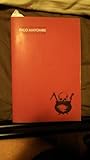
“Palo Mayombe is perhaps best known for its display of human skulls in iron cauldrons and accompanied by necromantic practices that contribute to its eerie reputation of being a cult of antinomian and hateful sorcerers. This murky reputation is from time to time reinforced by uninformed journalists and moviemakers who present Palo Mayombe in similar ways as Vodou has been presented through the glamour and horror of Hollywood. It is the age old fear of the unknown and of powers that threaten the established order that are spawned from the umbra of Palo Mayombe. The cult is marked by ambivalence replicating an intense spectre of tension between all possible contrasts, both spiritual and social. This is evident both in the history of Kongo inspired sorcery and practices as well as the tension between present day practitioners and the spiritual conclaves of the cult. Palo Mayombe can be seen either as a religion in its own right or a Kongo inspired cult. This distinction perhaps depends on the nature of ones munanso (temple) and rama (lineage). Personally, I see Palo Mayombe as a religious cult of Creole Sorcery developed in Cuba. The Kongolese heritage derives from several different and distinct regions in West Africa that over time saw a metamorphosis of land, cultures and religions giving Palo Mayombe a unique expression in its variety, but without losing its distinct nucleus. In the history of Palo Mayombe we find elite families of Kongolese aristocracy that contributed to shaping African history and myth, conflicts between the Kongolese and explorers, with the Trans-Atlantic slave trade being the blood red thread in its development. The name Palo Mayombe is a reference to the forest and nature of the Mayombe district in the upper parts of the deltas of the Kongo River, what used to be the Kingdom of Loango. For the European merchants, whether sent by the Church to convert the people or by a king greedy for land and natural resources, everything south of present day Nigeria to the beginning of the Kalahari was simply Kongo. This un-nuanced perception was caused by the linguistic similarities and of course the prejudice towards these ‘savages’ and their ‘primitive’ cultures. To write a book about Palo Mayombe is a delicate endeavor as such a presentation must be sensitive both to the social as well as the emotional memory inherited by the religion. I also consider it important to be true to the fundamental metaphysical principles of the faith if a truthful presentation of the nature of Palo Mayombe is to be given. The few attempts at presenting Palo Mayombe outside ethnographic and anthropological dissertations have not been very successful. They have been rather fragmented attempts demonstrating a lack of sensitivity not only towards the cult itself, but also its roots. Consequently a poor understanding of Palo Mayombe has been offered, often borrowing ideas and concepts from Santeria and Lucumi to explain what is a quite different spirituality. I am of the opinion that Palo Mayombe should not be explained on the basis of the theological principles of Santeria. Santeria is Yoruba inspired and not Kongo inspired and thus one will often risk imposing concepts on Palo Mayombe that distort a truthful understanding of the cult. To get down to the marrow; Santeria is a Christianized form of a Yoruba inspired faith – something that should make the great differences between Santeria and Palo Mayombe plain. Instead, Santeria is read into Palo Mayombe and the cult ends up being presented at best in a distorted form. I will accordingly refrain from this form of syncretism and rather present Palo Mayombe as a Kongo inspired cult of Creole Sorcery that is quite capable”
― Palo Mayombe: The Garden of Blood and Bones
― Palo Mayombe: The Garden of Blood and Bones
“The first account of the Witches’ Sabbath in any British trial is Lancashire witches of 1612. Anne Whittle confessed to having been admitted to the witches’ circle by the witch Elizabeth Southerns. She said that after midnight the Devil came to Elizabeth’s house and they went out to meet him. They partook of a meal and their familiars took the remnants. Elizabeth’s daughter was also charged and told that at one point some twenty witches came to their home, two of them men, with the purpose of naming her familiar and to plot the murder of Thomas Lister. Elizabeth’s daughter said after they had wined and dined the witches left in human form, but away from the house they took on the shape of horses, fowl and other animals. However, it was the conspiracy to murder Thomas Lister that most concerned the court and it was on these grounds that they were convicted.”
― Craft of the Untamed: An inspired vision of Traditional Witchcraft
― Craft of the Untamed: An inspired vision of Traditional Witchcraft
“Some can be more or less synonymous with the spot they are spirits of”
― Serpent Songs: An Anthology of Traditional Craft
― Serpent Songs: An Anthology of Traditional Craft
“The first groups to be persecuted were from Orleans in France in 1022 and Verona”
― Serpent Songs: An Anthology of Traditional Craft
― Serpent Songs: An Anthology of Traditional Craft
“The empty eye sockets of skulls watch and guard”
― Serpent Songs: An Anthology of Traditional Craft
― Serpent Songs: An Anthology of Traditional Craft
“Palo Mayombe is perhaps best known for its display of human skulls in iron cauldrons and accompanied by necromantic practices that contribute to its eerie reputation of being a cult of antinomian and hateful sorcerers. This murky reputation is from time to time reinforced by uninformed journalists and moviemakers who present Palo Mayombe in similar ways as Vodou has been presented through the glamour and horror of Hollywood. It is the age old fear of the unknown and of powers that threaten the established order that are spawned from the umbra of Palo Mayombe. The cult is marked by ambivalence replicating an intense spectre of tension between all possible contrasts, both spiritual and social. This is evident both in the history of Kongo inspired sorcery and practices as well as the tension between present day practitioners and the spiritual conclaves of the cult. Palo Mayombe can be seen either as a religion in its own right or a Kongo inspired cult. This distinction perhaps depends on the nature of ones munanso (temple) and rama (lineage). Personally, I see Palo Mayombe as a religious cult of Creole Sorcery developed in Cuba. The Kongolese heritage derives from several different and distinct regions in West Africa that over time saw a metamorphosis of land, cultures and religions giving Palo Mayombe a unique expression in its variety, but without losing its distinct nucleus. In the history of Palo Mayombe we find elite families of Kongolese aristocracy that contributed to shaping African history and myth, conflicts between the Kongolese and explorers, with the Trans-Atlantic slave trade being the blood red thread in its development.”
― Palo Mayombe: The Garden of Blood and Bones
― Palo Mayombe: The Garden of Blood and Bones
“Normal society’s aversion to the night and the other”
― Serpent Songs: An Anthology of Traditional Craft
― Serpent Songs: An Anthology of Traditional Craft
“The mystery of night travelling is disclosed in the silent world of the ‘herbs of solace’ or ‘flying ointment’. Iohannes Weyer, a student of Cornelius Agrippa, gives the following formulae: Sium (cowbane), acorum vulgare (sweet flag), pentaphyllon (cinquefoil) uespertilitoris sanguis (bat’s blood), solanum somniferum (deadly nightshade) and oleum or oil. Another traditional ointment uses root of liquorish, root of Mandrake, flowers and leaves of Datura Metel, Belladonna, Anis and oil. I would advise extreme caution with this recipe including variants utilizing aconite (monkshood). Monkshood is a frequent ingredient in flying ointments, but can be a poison capable of paralyzing the lungs, so its use is not advocated. Belladonna is its antidote. This explains why most ointments using Monkshood also used Belladonna.”
― Craft of the Untamed: An inspired vision of Traditional Witchcraft
― Craft of the Untamed: An inspired vision of Traditional Witchcraft
“The same motif is found in the 16th and 17th Century in the Italian countryside, more specifically Friuli, where the term benandanti was given to women who participated in the procession of the dead. It was also referring to others, many of them men, who declared that they were going out at night with fennel stalks to fight for the fertility of the crops against the malandanti armed with canes of sorghum. They further said that they took on the shape of mice, butterflies, hares or other animals to either journey to the procession of the dead or in their night fights. It is unclear in Ginzburg’s account whether we are here encountering two different classes of witches or if these terms refer to the same witch but in his or her aggressive and hostile aspect.”
― Craft of the Untamed: An inspired vision of Traditional Witchcraft
― Craft of the Untamed: An inspired vision of Traditional Witchcraft
“From within the pages of old diaries recently discovered is described there among my scribblings”
― Serpent Songs: An Anthology of Traditional Craft
― Serpent Songs: An Anthology of Traditional Craft
“The Horned Master governs the generative powers of the kingdom of the beasts, the raw forces of life, death and renewal which sustains the natural world.” Nigel A Jackson. The Call of the Horned Piper: 38 The Art and Craft of the Witches is found at the crossroad, where this world and the other side meets and all possibility become reality. This simple fact is often forgotten as one rushes to the Sabbath or occupies oneself with formalities of ritual. The cross marks the four quarters, the four elements, the path of Sun, Moon and Stars. The cross was fused or confused with the Greek staurus, meaning ‘rod’, ‘rood’ or ‘pole’. Various forms of phallic worship are simply, veneration for the cosmic point of possibility and becoming. It is at the crossroads we will gain all or lose all and it is natural that it is at the crossroads we gain perspective. The crossroad is a place of choice, the spirit-denizens of the crossroads are said to be tricky and unreliable and it is of course where we find the Devil. One of the most famous legends of recent times concerns the blues-man Robert Johnson (1911– 1938). He claimed that, one night, just before midnight he had gone to the crossroads. He took out his guitar and played, whereupon a big black guy appeared, tuned his guitar, played a song backwards and handed it back.2 This incident altered Johnson’s playing and his finest and most everlasting compositions were the fruit of the few years of life left to him. This legend tells us how he needed to bury himself at the crossroads, offering himself to the powers dwelling there. Business done with the Devil is said to give him the upper hand. The ill omens and malefica associated with such deals is present in Johnson’s story. He got fame and women, but he died less than three years later before he reached thirty. His body was found poisoned at a crossroads, the murderer’s identity a mystery. Around the Mississippi no less than three tombs carry the name of Robert Leroy Johnson. The image of the Devil remains one of threat, blessing, beauty and opportunity. Where we find the Devil we find danger, unpredictability and chaos. If he offers a deal we know we are in for a complicated bargain. The Devil says that change is good, that we need movement in order to progress. His world is about cunning and ordeal entwined like the serpents of past and future on the pole of ascent. It is to the crossroads we go to make decisions. It is at the crossroads we set the course for the journey. It is at the crossroads we confront ourselves and realize our”
― Craft of the Untamed: An inspired vision of Traditional Witchcraft
― Craft of the Untamed: An inspired vision of Traditional Witchcraft
“The witches travelled by air in the night to meet their master and initiator. This Mystery is intimately linked to folklore all over the world, such as the Varcolac in Romania, the Vetalas in India and Carlo Ginzburg’s night battles. Ginzburg is preoccupied with the areas of Trieste and Friuli, bordering the Slavic regions, where the legends and myths of night flight are many and detailed. This specific association between witches, lycanthropy and vampires will be further disclosed in the sixth chapter. Emma Wilby in her study about the cunning folk in Northern Europe and in particular the British Isles comments that “the Sabbath was more commonly described as occurring in churches and churchyards, or out of doors.”17 Janet Hewitt in 1661 claimed she attended Sabbaths at a place called Muryknowes where the nocturnal gathering was celebrated with ale, bread and meat.”
― Craft of the Untamed: An inspired vision of Traditional Witchcraft
― Craft of the Untamed: An inspired vision of Traditional Witchcraft
“In fact the bitter Civil War of 1642–51”
― Serpent Songs: An Anthology of Traditional Craft
― Serpent Songs: An Anthology of Traditional Craft
“While the physical structure is what qualifies a house”
― Serpent Songs: An Anthology of Traditional Craft
― Serpent Songs: An Anthology of Traditional Craft
“The Longaevi was a term used by C. S. Lewis to refer to that group of beings which rank between humans and angels”
― Serpent Songs: An Anthology of Traditional Craft
― Serpent Songs: An Anthology of Traditional Craft
“In the same period we also find stories of clergy venerating and communing with spirits considered hostile and sinister by the Church”
― Serpent Songs: An Anthology of Traditional Craft
― Serpent Songs: An Anthology of Traditional Craft
“Bogomils would incorporate all forms of useful beliefs in their own teachings”
― Serpent Songs: An Anthology of Traditional Craft
― Serpent Songs: An Anthology of Traditional Craft
“My etxe is both the house I support through my works and actions”
― Serpent Songs: An Anthology of Traditional Craft
― Serpent Songs: An Anthology of Traditional Craft
“Without going too deeply into the details we can list the following repeating themes: They took on a different shape at night, while their bodies were as dead in their bed - They went out to fight for the fertility of the land The fight was against malevolent witches or the malevolent dead The benandanti was intimately linked with the Mysteries of death, even the night flight they describe as a state of lesser death. The presence of herbs, such as the tripartite conjunction of asphodel, which is reputed for its connection with the Underworld, fennel for exorcisms and rue for protection. The presence of a mark, either invisible or visible, in the case of the latter this was usually a birth-mark or an eerie mole. The reference to ‘devils’ as their lovers and deities of power.”
― Craft of the Untamed: An inspired vision of Traditional Witchcraft
― Craft of the Untamed: An inspired vision of Traditional Witchcraft