
 Sign in with Facebook

Nicholaj de Mattos Frisvold’s Followers (62)


Nicholaj de Mattos Frisvold
Genre
Nicholaj de Mattos Frisvold isn't a Goodreads Author
(yet),
but they
do have a blog,
so here are some recent posts imported from
their feed.
Invitation to participate in Orí Retreat
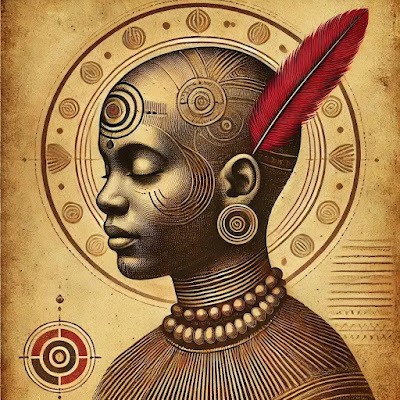
Orí inthe Ifá spiritual tradition is more thanjust a word—it is a cosmic truth, a guiding force, and the deepest part of whowe are. It is our inner divinity, our personal god, and the seat of ourdestiny. To understand Orí is to understand your path, your purpose, and yourconnection to the universe itself.
Orí literallymeans “head” in Yoruba, but in Ifá, it represents:
The HigherSelf – The divi
Read more of this blog post »


|
Craft of the Untamed: An Inspired Vision of Traditional Witchcraft
—
published
2010
—
6 editions
|
|

|
Palo Mayombe -The Garden of Blood and Bones
—
published
2011
—
6 editions
|
|

|
Pomba Gira and the Quimbanda of Mbumba Nzila
—
published
2011
—
9 editions
|
|

|
Exu & the Quimbanda of Night and Fire
—
published
2012
—
5 editions
|
|

|
Serpent Songs
by
—
published
2013
—
4 editions
|
|

|
Kiumbanda - A Complete Grammar of the Art of Exu
—
published
2006
—
2 editions
|
|

|
Obeah: A Sorcerous Ossuary
—
published
2013
—
7 editions
|
|

|
Clavicula Nox -V- Magic & Mayhem
by
—
published
2014
—
2 editions
|
|

|
Ifá: A Forest of Mystery
by |
|

|
St. Cyprian & the Sorcerous Transmutation
—
published
2013
—
2 editions
|
|
“Palo Mayombe is perhaps best known for its display of human skulls in iron cauldrons and accompanied by necromantic practices that contribute to its eerie reputation of being a cult of antinomian and hateful sorcerers. This murky reputation is from time to time reinforced by uninformed journalists and moviemakers who present Palo Mayombe in similar ways as Vodou has been presented through the glamour and horror of Hollywood. It is the age old fear of the unknown and of powers that threaten the established order that are spawned from the umbra of Palo Mayombe. The cult is marked by ambivalence replicating an intense spectre of tension between all possible contrasts, both spiritual and social. This is evident both in the history of Kongo inspired sorcery and practices as well as the tension between present day practitioners and the spiritual conclaves of the cult. Palo Mayombe can be seen either as a religion in its own right or a Kongo inspired cult. This distinction perhaps depends on the nature of ones munanso (temple) and rama (lineage). Personally, I see Palo Mayombe as a religious cult of Creole Sorcery developed in Cuba. The Kongolese heritage derives from several different and distinct regions in West Africa that over time saw a metamorphosis of land, cultures and religions giving Palo Mayombe a unique expression in its variety, but without losing its distinct nucleus. In the history of Palo Mayombe we find elite families of Kongolese aristocracy that contributed to shaping African history and myth, conflicts between the Kongolese and explorers, with the Trans-Atlantic slave trade being the blood red thread in its development. The name Palo Mayombe is a reference to the forest and nature of the Mayombe district in the upper parts of the deltas of the Kongo River, what used to be the Kingdom of Loango. For the European merchants, whether sent by the Church to convert the people or by a king greedy for land and natural resources, everything south of present day Nigeria to the beginning of the Kalahari was simply Kongo. This un-nuanced perception was caused by the linguistic similarities and of course the prejudice towards these ‘savages’ and their ‘primitive’ cultures. To write a book about Palo Mayombe is a delicate endeavor as such a presentation must be sensitive both to the social as well as the emotional memory inherited by the religion. I also consider it important to be true to the fundamental metaphysical principles of the faith if a truthful presentation of the nature of Palo Mayombe is to be given. The few attempts at presenting Palo Mayombe outside ethnographic and anthropological dissertations have not been very successful. They have been rather fragmented attempts demonstrating a lack of sensitivity not only towards the cult itself, but also its roots. Consequently a poor understanding of Palo Mayombe has been offered, often borrowing ideas and concepts from Santeria and Lucumi to explain what is a quite different spirituality. I am of the opinion that Palo Mayombe should not be explained on the basis of the theological principles of Santeria. Santeria is Yoruba inspired and not Kongo inspired and thus one will often risk imposing concepts on Palo Mayombe that distort a truthful understanding of the cult. To get down to the marrow; Santeria is a Christianized form of a Yoruba inspired faith – something that should make the great differences between Santeria and Palo Mayombe plain. Instead, Santeria is read into Palo Mayombe and the cult ends up being presented at best in a distorted form. I will accordingly refrain from this form of syncretism and rather present Palo Mayombe as a Kongo inspired cult of Creole Sorcery that is quite capable”
― Palo Mayombe: The Garden of Blood and Bones
― Palo Mayombe: The Garden of Blood and Bones
“Some can be more or less synonymous with the spot they are spirits of”
― Serpent Songs: An Anthology of Traditional Craft
― Serpent Songs: An Anthology of Traditional Craft
Is this you? Let us know. If not, help out and invite Nicholaj to Goodreads.
